BRONICA EC
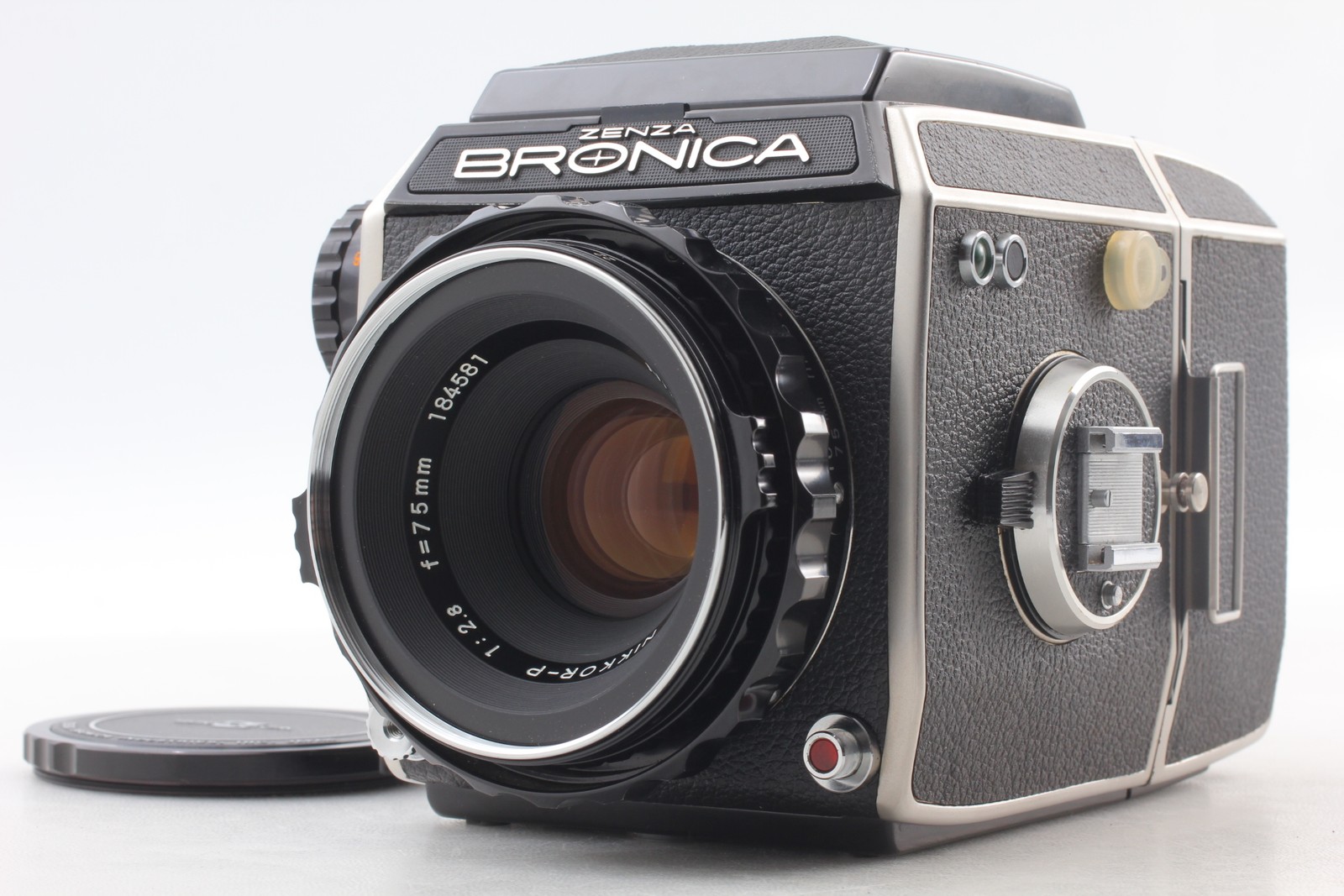
The Bronica EC is an electronically controlled, focal-plane shutter medium format single-lens reflex (SLR) camera introduced in 1972. Designed for professional and advanced amateur photographers, it was one of the first medium format SLRs to feature an all-electronic shutter system, marking a significant step in Bronica’s evolution toward automation and precision.
Overview
Released in 1972, the Bronica EC (short for "Electronic Camera") represented a pivotal advancement in the company’s product line, bridging the gap between fully mechanical systems and the emerging era of electronic exposure control. It was positioned as a more accessible alternative to the high-end Bronica S2 and S2A models, which relied on mechanical shutters and manual operation. The EC was specifically engineered to appeal to photographers seeking the benefits of medium format image quality—namely superior resolution and detail from its 6x6cm negative—combined with modern electronic convenience, including automatic exposure metering and precise shutter timing.
The camera utilized a vertically traveling focal-plane shutter with speeds electronically controlled from 1 second to 1/1000 second, plus Bulb mode. Unlike its predecessors, the EC required a 6V PX28 or 4SR44 battery to power both the shutter mechanism and the built-in CdS center-weighted light meter. This electronic dependency was both a hallmark of innovation and a limitation, as battery failure rendered the camera unusable. The EC maintained full compatibility with Bronica’s Z-C mount, allowing access to a wide range of high-quality lenses, viewfinders, and accessories developed for the Bronica system.
Despite its electronic nature, the EC retained the modular design philosophy that defined Bronica cameras: interchangeable lenses, viewfinders, focusing screens, and film backs. This flexibility made it suitable for studio, portrait, and commercial photography, where adaptability and image quality were paramount. However, the EC lacked the mechanical redundancy of earlier models, making it less reliable in field conditions where battery replacement or failure could be problematic. Production ceased in 1978, succeeded by the EC-T, which added a mechanical 1/60-second backup shutter speed for emergency use.
Specifications
| Specification | Value |
| Type | Single-Lens Reflex (SLR) |
| Film Format | 6x6cm (120 roll film) |
| Years Produced | 1972–1978 |
| Lens Mount | Bronica Z-C |
| Shutter | Electronic focal-plane shutter; 1 sec – 1/1000 sec, plus B (Bulb) |
| Metering | Built-in CdS (Cadmium Sulfide) center-weighted meter |
| Exposure Modes | Manual exposure with metered assistance (stop-down metering) |
| Viewfinder | Interchangeable pentaprism or waist-level finder; standard prism includes meter needle display |
| Dimensions | Approx. 105mm (W) × 98mm (H) × 110mm (D); weight approx. 820g (body only, no lens or film back) |
Key Features
- Electronic Focal-Plane Shutter: Precise shutter speeds from 1 sec to 1/1000 sec, electronically timed for accuracy and consistency.
- Integrated CdS Metering: Center-weighted, stop-down TTL metering with visual needle indication in the viewfinder for accurate exposure settings.
- Modular System Compatibility: Fully compatible with Bronica Z-C lenses, film backs, viewfinders, and accessories, enabling versatile configuration.
- Interchangeable Film Backs: Supports multiple film types (e.g., color, black & white, slide) via quick-swap 120 roll film backs with dark slide protection.
- Flash Synchronization: X-sync at all shutter speeds via PC terminal and hot shoe, supporting professional studio strobes.
Historical Context
The Bronica EC was introduced at a time when Japanese medium format manufacturers were rapidly innovating to challenge the dominance of European brands like Hasselblad and Rollei. Bronica, having established credibility with its mechanical S-series cameras, sought to expand its market reach by introducing electronic automation without sacrificing modularity or image quality. The EC was a direct response to growing demand for easier-to-use medium format systems that retained professional-grade performance.
Competitors during this period included the Rollei SL66 (a technically advanced but complex system camera) and the Hasselblad 500C/M (a mechanical icon with no electronic shutter). While the EC did not match the build quality or resale prestige of Hasselblad, it offered a more affordable entry point into modular 6x6 photography. Its electronic shutter allowed for more consistent timing than mechanical units, particularly at intermediate speeds, but also introduced a dependency on batteries—a controversial trade-off at the time. Market reception was mixed: professionals appreciated the metering integration and compact size, but many remained skeptical of full electronic reliance in critical shooting environments.
Collectibility & Value
Today, the Bronica EC is considered a niche collectible, valued more for its historical significance and role in Bronica’s technological progression than for widespread practical use. Units in working condition typically sell between $250 and $450 USD, depending on included accessories, lens, and film back condition. Fully functional cameras with a prism finder, meter accuracy, and a Z-C lens (such as the 80mm f/2.8) command premium prices.
When purchasing an EC, collectors and users should verify the shutter operation across all speeds, as degraded capacitors or worn shutter curtains are common after decades of storage. The CdS meter should be tested with fresh batteries (6V PX28 or 4SR44), as aging cells can damage the circuitry. Other frequent issues include sticky shutter blades, light leaks from deteriorated film back seals, and worn leatherette. Because the camera lacks a mechanical backup, it is entirely dependent on electronics—making functional examples increasingly rare. Cameras stored in dry, temperature-stable environments with intact seals are most desirable.
Similar Cameras
- Hasselblad 500C/M – Mechanical 6x6 SLR with modular design; superior build but no electronic shutter.
- Rollei SL66 – German-engineered 6x6 SLR with built-in bellows and tilt; complex but highly capable.
- Mamiya C330 – TLR system with interchangeable lenses and focusing; popular for portrait work.
- Pentax 6x7 – Large-format SLR producing 6x7cm negatives; known for sharp lenses and robust mechanics.
- Bronica EC-T – Direct successor with mechanical 1/60s backup; more reliable in field conditions.
Repair & Maintenance
The Bronica EC requires a 6V PX28 or 4SR44 battery to operate both the shutter and meter. Due to the age of most surviving units, internal capacitors may have degraded, leading to erratic shutter behavior or complete failure. Repair typically involves recapping the circuit board, cleaning the shutter mechanism, and recalibrating the timing. The CdS meter cell can lose sensitivity over time and may require replacement or recalibration. Shutter cloth may exhibit wear or oil seepage, necessitating replacement by a specialist. Repair difficulty is moderate to high due to the integrated electronics and scarcity of replacement parts. Regular maintenance includes cleaning contacts, checking film back dark slide mechanisms, and ensuring light seals are intact to prevent fogging.
eBay Listings



As an eBay Partner, we earn from qualifying purchases. This helps support our independent vintage technology research.