Bolex H16 RX-5
That quiet whir of the spring-driven mechanism, the tactile precision of hand-cranking film backward through the gate—this is the machine that taught a generation how to see in motion.
Overview
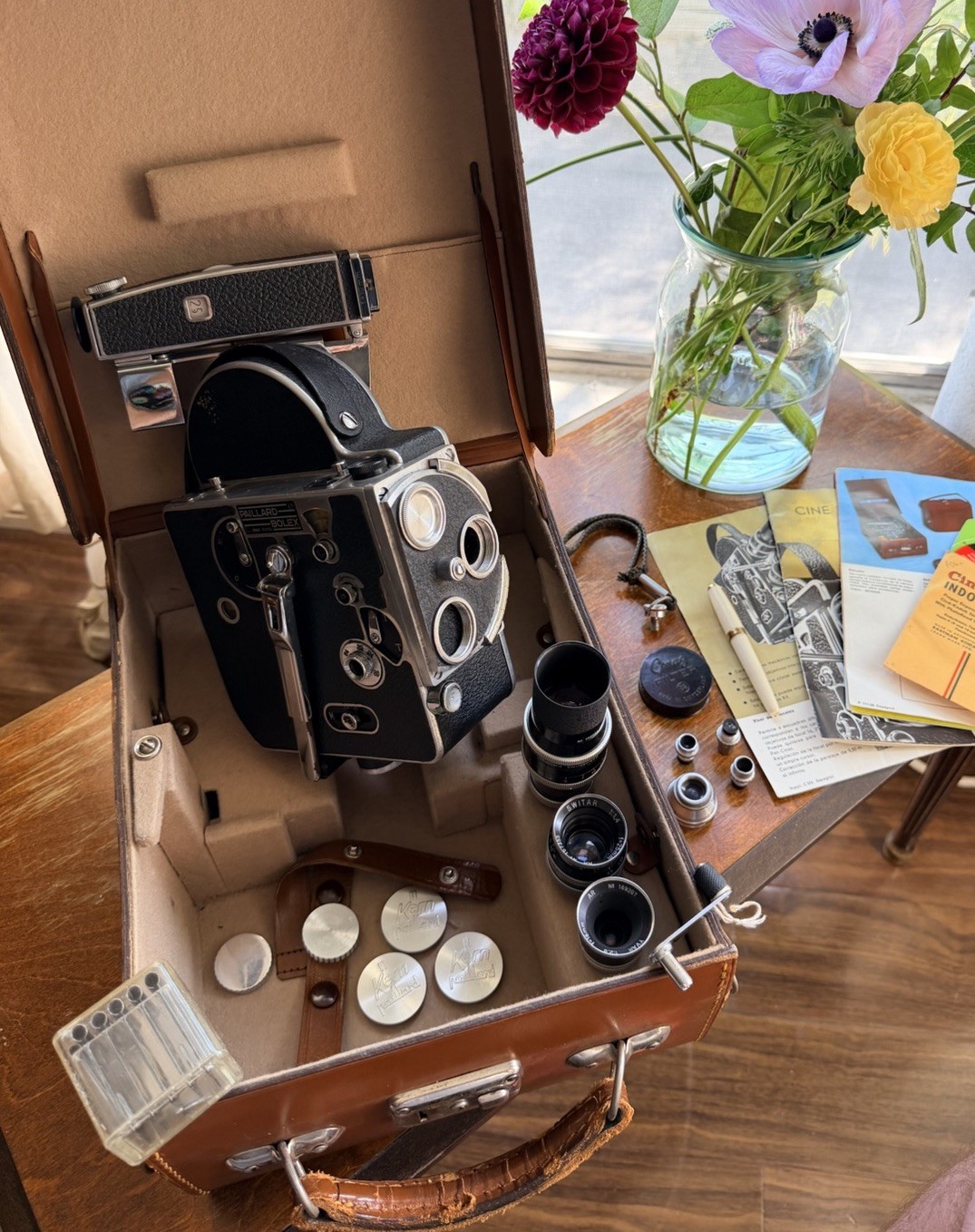
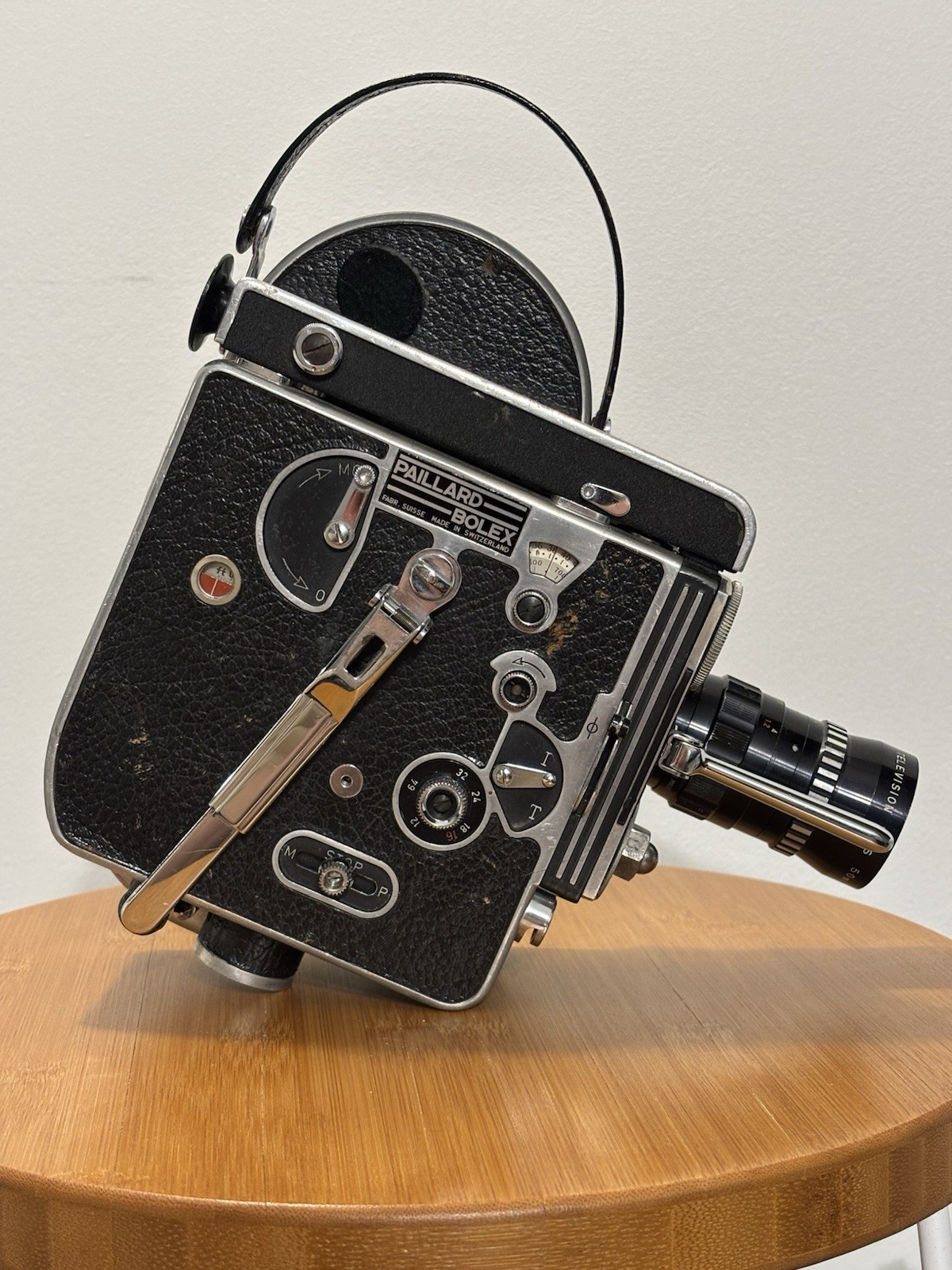
The Bolex H16 RX-5 is a spring-wound clockwork 16 mm motion picture camera made by Paillard-Bolex, a name that still carries weight in the hushed conversations of analog film devotees. While the exact production years for the RX-5 variant remain unconfirmed, it arrived as part of an evolutionary line that began in 1956 with the debut of the first H16 reflex viewfinder model—a watershed moment for filmmakers who needed precision without the bulk of studio rigs. This camera wasn’t built to be flashy; it was built to be reliable, handheld, and mechanically transparent, putting the operator in direct contact with the mechanics of image capture. It’s the kind of tool that feels alive in your hands, not because it buzzes with electronics, but because you can hear and feel every frame being pulled through the gate by sheer spring tension and human intention.
Though specific details about its place in the Bolex lineup are absent from the record, the RX-5 inherits the core DNA of the H16 series: rugged construction, modular design, and a reflex viewing system that revolutionized framing accuracy for 16 mm work. It served a vast range of users—from students learning the basics of exposure and focus to professionals capturing documentary footage, animation, and even scientific time-lapse studies. The fact that these cameras are still in use today, over thirty years later, speaks volumes. They’re not museum relics; they’re working tools kept alive by a community that values mechanical integrity over digital convenience.
Specifications
| Manufacturer | Paillard-Bolex |
| Film format | 16 mm |
| Film magazine capacity | Can be equipped with a 400-ft film magazine |
| Lens mount | Has a turret for three C-mount lenses |
| Viewfinder type | reflex viewfinder with a double prism that deflects 20 percent of the light going through the lens into the viewfinder |
| Lens compatibility | Lenses with the designation "RX" in 50 mm or less can be used on the RX models |
Key Features
Spring-Wound Clockwork Drive
Power comes from a spring-wound clockwork system, the heart of the Bolex’s portability and independence from batteries or external power. Once wound, the camera runs smoothly for a short duration—typical of spring-driven mechanisms—giving the operator a tactile sense of time passing with each frame. The absence of electric motors means silence on set, a feature prized in location shooting where noise discipline matters. It also means reliability in extreme conditions, from arctic expeditions to jungle fieldwork, where electronics might fail but a well-maintained spring mechanism will keep turning.
Automatic Film Threading
One of the RX-5’s practical advancements is automatic film threading. For a camera designed to be reloaded frequently in the field, this feature reduces the risk of misfeeds and saves precious time. You don’t need to be a lab technician to get it right—just follow the path, close the gate, and you’re ready to wind and shoot. It’s a small thing, but in the middle of a shoot, it’s the kind of detail that keeps frustration at bay.
Manual Film Transport via Clutch System
The clutch system allows the drive spring to be disengaged, enabling the operator to hand-crank the film forward or backward through the gate without resistance. This is indispensable for animation, where precise frame-by-frame positioning is required, or for checking focus and composition during setup. Unlike motorized systems that limit reverse travel or require power, the RX-5 lets you move the film infinitely in either direction—pure mechanical control, no compromises.
Compact Turret Design
The cut-off turret disc is designed so it doesn’t extend beyond the camera body in the center position, contributing to a more compact profile when lenses aren’t actively in use. This subtle design choice improves balance and reduces snagging, especially when handheld or mounted in tight spaces. The turret holds three C-mount lenses, allowing quick swaps in the field without needing additional adapters or tools—though only lenses marked "RX" for focal lengths of 50 mm or less are compatible with the reflex viewing system.
Stepless Speed Control
Speed control is stepless between 8 and 64 frames per second, a rare and powerful feature for a clockwork camera. Most spring-driven models offer fixed speeds, but the RX-5 lets you dial in any frame rate within that range, enabling smooth slow motion or time-lapse effects without changing gears. This flexibility made it a favorite for experimental filmmakers exploring temporal manipulation, long before digital post-production made such effects commonplace.
RX Lens Compatibility
The reflex viewfinder system requires special "RX" lenses for focal lengths of 50 mm or less. These lenses are marked with "RX" on the inside front of the barrel, a small but critical detail for users sourcing glass. The RX designation indicates optical modifications to accommodate the double prism system, which deflects 20 percent of the light to the viewfinder. Using non-RX lenses on shorter focal lengths can result in vignetting or improper focus, so the marking serves as both a technical requirement and a collector’s clue when authenticating gear.
Collectibility & Value
While current market prices for the Bolex H16 RX-5 are not available in the verified data, one documented unit was described as "unused and in the original box" and "likely never been used," suggesting that pristine examples do exist in private collections or long-stored inventories. Another unit with a serial number "over 350000" was identified as a "very late model," offering collectors a rough benchmark for dating units. A user manual for the Bolex H16 RX-5 / SBM is available for purchase at €5.99, indicating ongoing support from niche vendors catering to restorers and operators. However, no information is available on common failures, maintenance costs, or repair complexity, making pre-purchase inspection essential for buyers.
eBay Listings

![[Exc+5] Bolex H16 Reflex REX 3 16mm Cine Camera Nikon 13 25](https://i.ebayimg.com/images/g/7lwAAeSwhlBpmIKo/s-l1600.jpg)
As an eBay Partner, we earn from qualifying purchases. This helps support our independent vintage technology research.
Service Manuals, Schematics & Catalogs
- Catalog — archive.org
Related Models
- Bolex H16 Reflex (1956)
- Bolex H16 SBM (1972)
- Arriflex 16 BL (1965)
- Arriflex 16 SR (1975)
- Arriflex 16 ST (1952)
- Arriflex 35 BL (1972)
- Arriflex 35 IIC (1964)
- Beaulieu 4008 ZM II (1977)
- Beaulieu 5008 S (1976)
- Bell & Howell 134 (1940)