ARGUS C2
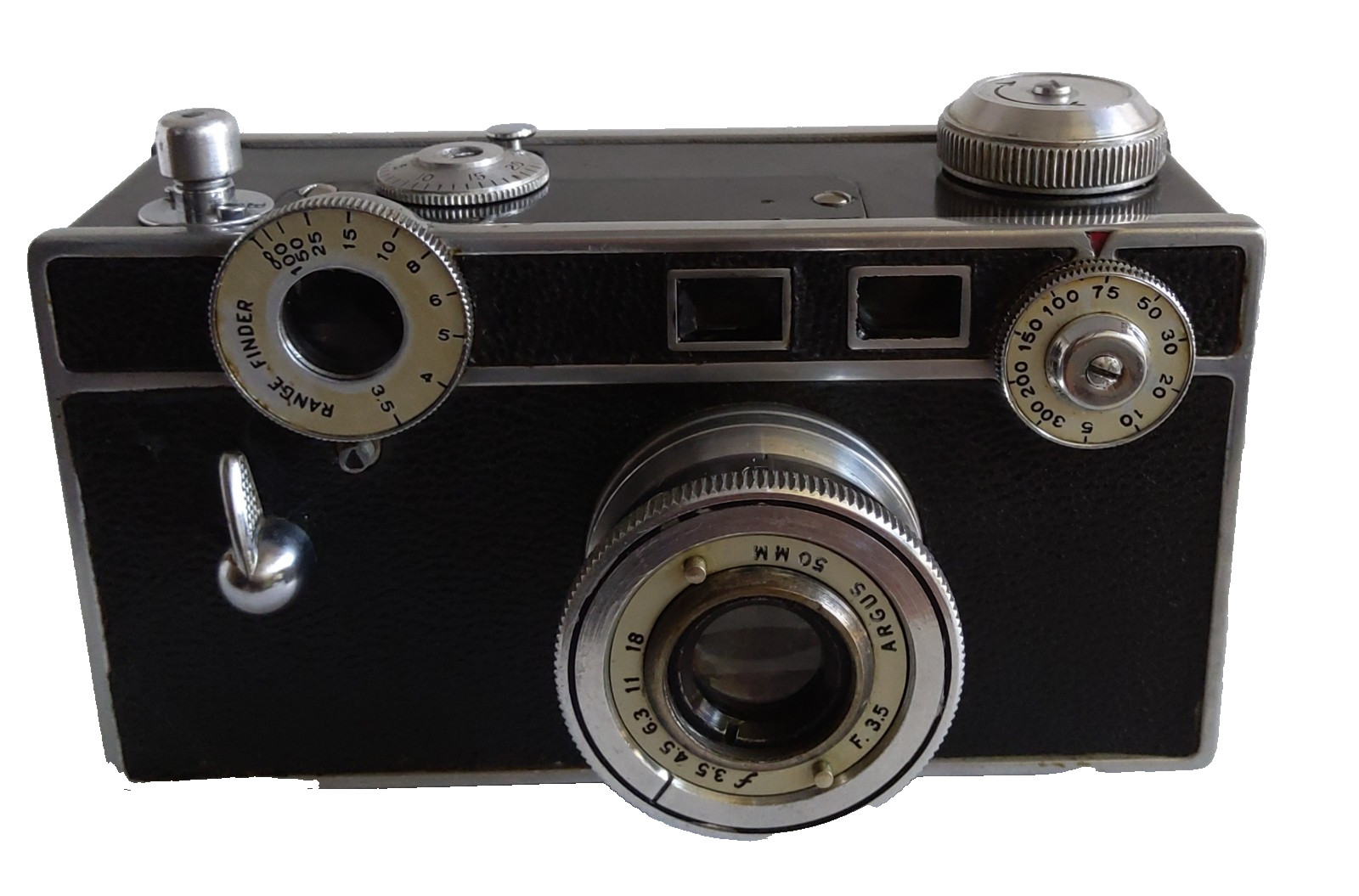
The Argus C2 is a 35mm rangefinder camera produced by Argus Cameras of Ann Arbor, Michigan, from 1938 to 1942. It served as the direct predecessor to the iconic Argus C3 and represented a significant step forward in American camera design during the late 1930s, combining robust construction with accessible mechanical operation for amateur photographers.
Overview
Introduced in 1938, the Argus C2 emerged during a period of rapid innovation in 35mm photography, as compact rangefinder cameras began to displace larger plate and roll-film formats in the consumer market. Manufactured by the International Radio Corporation (IRC), which operated under the Argus brand, the C2 was designed to offer reliable performance and improved ergonomics over earlier models like the Argus A and Argoflex series. Targeted primarily at amateur photographers and home users, the C2 provided a balance of affordability and functionality, featuring a coupled rangefinder, a fixed lens assembly, and a focal-plane shutter with a broad speed range.
The C2 was notable for its streamlined top-plate layout, which integrated the viewfinder, rangefinder window, and shutter speed dial into a single, cohesive unit—a design language that would be refined and carried forward into the C3. While visually similar to the later C3, the C2 lacks the C3’s distinctive "brick" shape and features a more rounded top housing. It was offered with several lens options, most commonly the 50mm f/3.5 or f/2.8 Cintar triplet, though some versions were equipped with higher-grade lenses such as the 50mm f/2.8 Kodak Ektar. The camera used a cloth focal-plane shutter with speeds from 1 to 1/300 second, plus Bulb, and included a self-timer and flash synchronization via a PC socket.
Historically, the C2 occupies a transitional position in Argus’s development timeline. It demonstrated the company’s growing technical competence in precision mechanical design and laid the groundwork for the C3, which would go on to become one of the best-selling American 35mm cameras of all time. The C2’s production run was relatively short, ending in 1942 due to the U.S. entry into World War II, which halted civilian camera production in favor of military contracts. As such, the C2 is less common than its successor and represents an important evolutionary stage in American camera manufacturing.
Specifications
| Specification | Value |
| Type | Rangefinder |
| Film Format | 35mm (135 cartridge) |
| Years Produced | 1938–1942 |
| Lens Mount | Fixed lens (non-interchangeable) |
| Shutter | Cloth focal-plane shutter; speeds 1, 1/5, 1/10, 1/25, 1/50, 1/100, 1/200, 1/300 sec, and B |
| Metering | None (uncoupled; handheld meter required) |
| Exposure Modes | Manual only |
| Viewfinder | Combined optical viewfinder and coincident-image rangefinder (magnification ~0.45x) |
| Dimensions | Approx. 150mm (W) × 85mm (H) × 60mm (D); weight ~700g (varies by lens) |
Key Features
- Coupled Rangefinder Focusing: One of the first American-made 35mm cameras to feature a built-in, coincident-image rangefinder, enabling accurate manual focus.
- Focal-Plane Shutter with High Speeds: Offered shutter speeds up to 1/300 second, which was fast for its era and competitive with European contemporaries.
- Interchangeable Back (on some variants): Certain models featured a removable back for quicker film loading, a rare convenience at the time.
- Flash Synchronization: Included a PC sync socket for use with flashbulbs, supporting X and M flash types via selector switch.
- Dual Accessory Shoe: Top plate includes both a standard flash/accessory shoe and a secondary cold shoe for mounting external viewfinders or rangefinders.
Historical Context
The Argus C2 was launched at a pivotal moment in photographic history. By the late 1930s, 35mm film had gained popularity due to its compactness and ease of use, driven largely by German innovations such as the Leica and Contax rangefinders. American manufacturers sought to capture a share of this growing market with domestically produced alternatives. Argus, already known for its box cameras and early 35mm models, aimed to compete with mid-tier European cameras by offering a well-built, mechanically sound rangefinder at a more accessible price point.
The C2 directly competed with cameras like the Kodak Retina I and the Wirgin Edinex, though it lacked the lens interchangeability of the Leica. Nevertheless, its robust all-metal construction, precise rangefinder, and reliable shutter made it a favorite among serious amateurs. The C2’s design influenced not only the C3 but also postwar American camera engineering. Its discontinuation in 1942 marked the end of an era, as Argus shifted production to military optics and surveillance equipment during WWII. When civilian production resumed, the C3—based heavily on the C2’s design—became the new standard.
Collectibility & Value
The Argus C2 is a sought-after model among collectors of vintage American cameras, though it remains less widely known than the C3. Its relative rarity—due to the short production window and wartime cessation—contributes to its desirability. In excellent working condition, with a clear rangefinder and functional shutter, the C2 typically commands prices between $250 and $450, with models fitted with Ektar lenses or rare accessories reaching higher values.
When evaluating a C2 for purchase, collectors should inspect the rangefinder alignment, shutter accuracy across all speeds, and the condition of the leatherette and film advance mechanism. Common issues include stiff or frozen shutter curtains, misaligned rangefinder images, and light leaks from deteriorated foam seals. As the camera lacks a battery, metering is not a concern, but the flash sync mechanism should be tested if functional flash use is intended. Original boxes, manuals, and lens caps can significantly enhance value, particularly for complete sets.
Similar Cameras
- Kodak Retina I (Type 117) – German-made 35mm rangefinder with interchangeable lenses via cassette system; introduced in 1934.
- Wirgin Edinex – German 35mm rangefinder with focal-plane shutter; contemporary competitor with similar feature set.
- Graflex 35 – American-made rangefinder produced by Graflex; less common but comparable in target market.
- Leica II (D) – Premium German rangefinder with interchangeable lenses; benchmark for quality at the time.
- Argus C3 – Direct successor; nearly identical mechanics but with refined body design and longer production run.
Repair & Maintenance
The Argus C2 requires no batteries, as it is fully mechanical. Common maintenance issues include lubrication of the shutter mechanism, cleaning of the rangefinder optics, and adjustment of the film advance gear. The cloth shutter is prone to sticking or tearing if not exercised regularly, and replacement cloth is difficult to source. Repair difficulty is moderate to high due to tight internal tolerances and limited availability of spare parts. Skilled technicians familiar with pre-war American cameras are recommended for full servicing. Regular use, proper storage in a dry environment, and periodic cleaning of viewfinder and rangefinder windows are advised to preserve functionality.
eBay Listings


As an eBay Partner, we earn from qualifying purchases. This helps support our independent vintage technology research.