Argus C-3 (1939–1966)
Overview
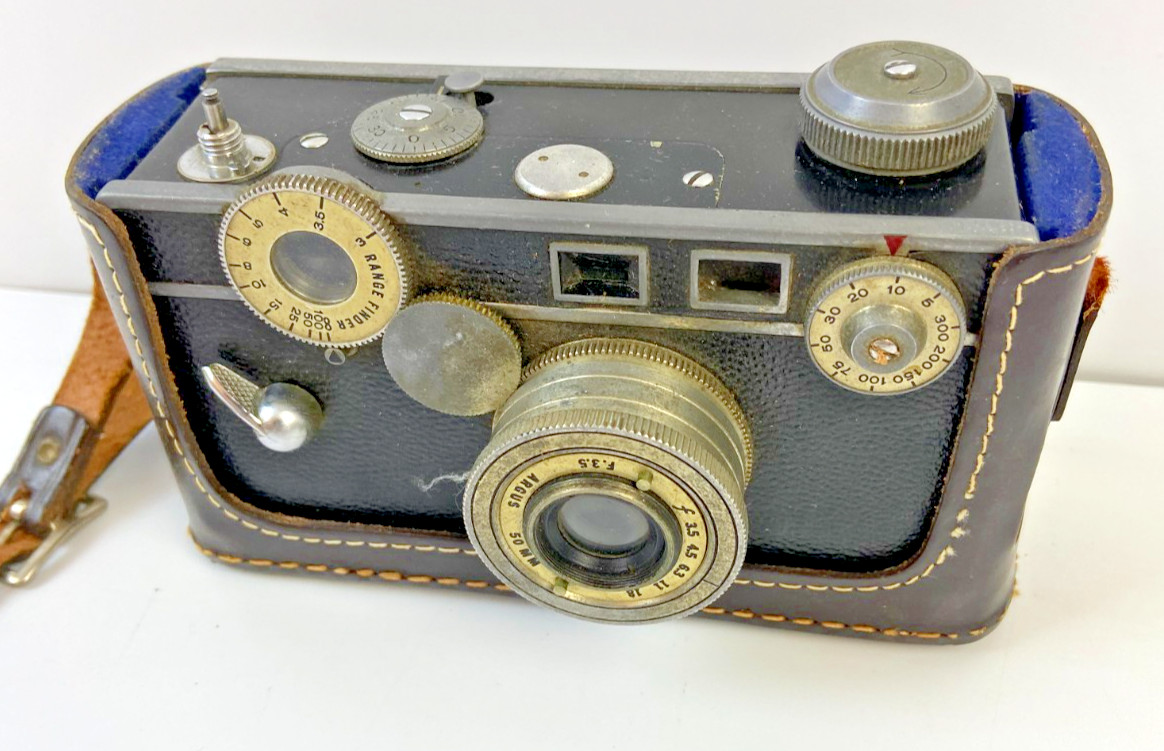
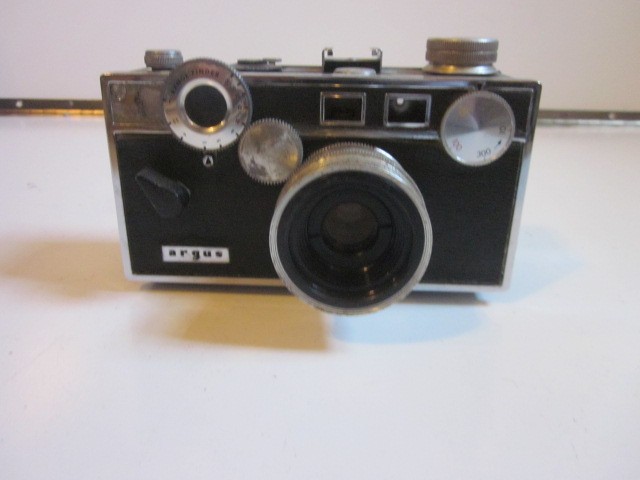
The Argus C-3 isn't subtle. It’s heavy, angular, and unapologetically utilitarian — a 35mm rangefinder built like a lunchbox and sold like popcorn at a matinee. Manufactured by Argus Cameras in Ann Arbor, Michigan, this was the people’s camera, mass-produced from 1939 to 1966 with one mission: put photography within reach of every American family. It earned its nickname — "The Infamous Brick" — honestly. Owners report it was the first camera many parents grabbed after a child was born, the go-to for vacations, holidays, and the quiet, unscripted moments in between. For decades, it was the world’s first choice among 35mm cameras, not because it was elegant or fast, but because it worked. It had all the essentials one needed; nothing more, nothing less.
Designed during a time of low-cost camera marketing strategies, the C-3 emerged from a midwestern company best known for radios, yet somehow managed to dominate household photography. Its presence in 1940s and 1950s America was overwhelming — so widespread that historians now use its photos as cultural records. It wasn’t just a camera; it was the lens through which a generation documented itself. One collector notes their personal journey began with a C-3, a common thread among enthusiasts who cut their teeth on its manual controls and unforgiving mechanics.
Specifications
| Manufacturer | Argus Cameras, Ann Arbor, Michigan |
| Film format | 35mm |
| Film type used | Kodachrome, Ektachrome |
| Lens mount | Screw mount |
| Lens | Interchangeable |
| Shutter speeds (first version, 1939–1940) | 10 shutter speeds plus Bulb |
| Shutter speeds (second variant, 1940–1942) | seven shutter speeds plus Bulb |
| Camera operation | totally manual with no batteries |
| Flash attachment | Bowl reflector flash attachment that plugged into the side |
| Flash power | Used the large M25 flash bulbs powered by a pair of 'D' cells |
| Flash bulb type | Sylvania 25B bayonet bulbs with a blue plastic coating |
| Later model feature | an ISO cold shoe (between film counter and film advance knob) |
Key Features
Bakelite Body with Industrial Heft
The C-3’s construction in brown Bakelite gives it a distinct, almost comical appearance — serious engineering wrapped in what looks like vintage radio casing. It’s not pretty, but it’s tough. The material was chosen for cost and durability, not aesthetics, and it shows. This isn’t a camera that blends in; it announces itself. Collectors note its shape make it stand out on a shelf, a physical reminder of an era when consumer electronics didn’t try to be sleek.
Interchangeable Lenses via Screw Mount
Despite its reputation as a budget model, the C-3 supported interchangeable lenses through a screw mount — a rare feature at its price point. This flexibility allowed owners to experiment, though few likely did. The system never gained the lens ecosystem of Leica or even later Japanese rangefinders, but the capability was there, a nod to ambition beneath the utilitarian shell.
Manual Operation, No Batteries Required
Everything on the C-3 is manual — focus, aperture, shutter speed, film advance. There are no batteries, no circuits, no automation. It’s a pure mechanical experience. This simplicity means longevity — no dead electronics to worry about — but also demands skill. There’s no metering, no safety net.
Flash System with M25 Bulbs
The flash system was built for the pre-electronic age. A bowl reflector plugged into the side, powered by large M25 flash bulbs — specifically Sylvania 25B bayonet types with a blue plastic coating to balance color temperature. These bulbs were bright, and dramatic. Paired with a pair of 'D' cells for power, the setup was bulky but effective for indoor shots. Later models added an ISO cold shoe between the film counter and advance knob, signaling a slow move toward modern flash compatibility.
Evolution of Shutter Speeds
Early versions (1939–1940) offered ten shutter speeds plus Bulb, a surprisingly broad range for the time. However, sources suggest the number was reduced to seven speeds plus Bulb in the 1940–1942 variant, likely to simplify manufacturing or improve reliability. The change reflects a shift from feature-rich to field-tested — less choice, more durability.
Historical Context
The Argus C-3 emerged from a company better known for radios, yet it became the most ubiquitous 35mm camera in mid-century America. Its production span — 1939 to 1966 — covers two world wars, the baby boom, and the rise of suburban family life. It was marketed as an affordable tool for everyday people, and it succeeded wildly. Its sheer numbers mean it thoroughly documented American life during those decades. The C-3 wasn’t just popular; it was foundational, a gateway device that turned amateurs into photographers, one roll of Kodachrome at a time.
Collectibility & Value
While no original price or current market values were confirmed in the research, the Argus C-3 remains actively traded on eBay and discussed in vintage camera communities. The most commonly reported issue is shutter sticking at slow speeds — a mechanical failure typical of age and dried lubricants. Repair typically involves disassembly and careful relubrication, a task detailed in available PDF manuals. Enthusiasts note that working examples are prized, though non-functional units are common. As a result, value hinges heavily on condition and operational status. The availability of owner’s manuals and repair guides helps keep these cameras alive, even after six decades.
eBay Listings

As an eBay Partner, we earn from qualifying purchases. This helps support our independent vintage technology research.