Overview
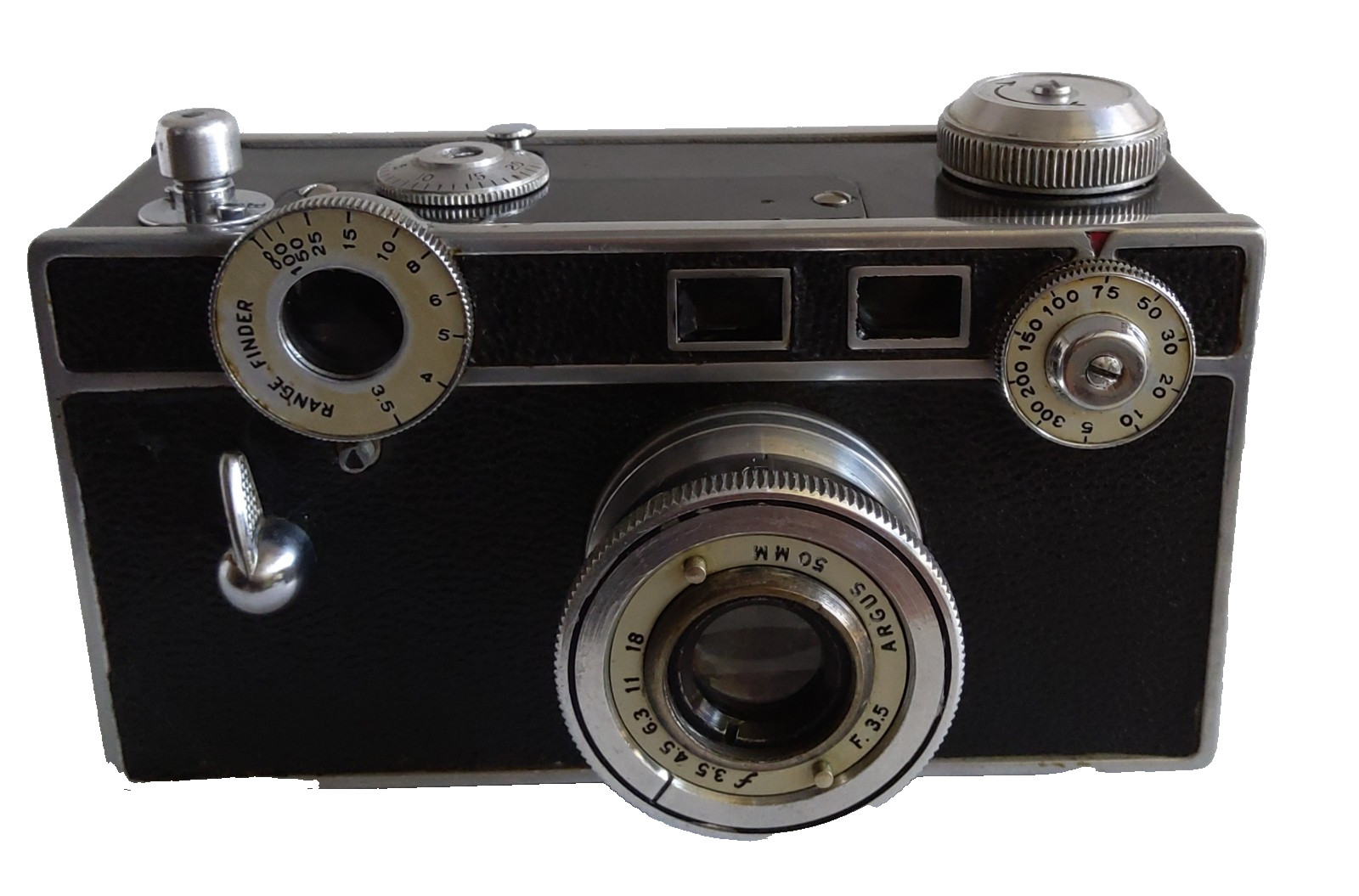
The Argus C2 isn’t a camera that flatters the eye, but it commands attention all the same. Marketed as a 35mm rangefinder camera, the C2 was engineered for durability and simplicity, not elegance—earning it the enduring nickname "Brick" among collectors and users who’ve hefted its 686-gram frame. Despite its boxy silhouette and utilitarian finish, the C2 became a popular, solid, and durable tool for amateur photographers in the pre-war and early war years.
It runs on 135 film and centers around a fixed Argus 50mm f/3.5 lens, a modest but serviceable optic for its time. The Micromatic shutter offers speeds from 1/5s to 1/300s, giving users a reasonable range for available-light photography, though reports from current owners suggest the shutter mechanism can feel “a little dodgy,” especially in untested examples. The minimum focusing distance is 1 meter (3 feet), which limits close-up work but suits general snapshot use. Owners report the camera’s screw mount—approximately 33mm in diameter—includes a coupling wheel for rangefinder alignment, a critical feature for accurate manual focusing.
Though its design has been called one of the “ugliest but coolest” rangefinders ever made, that aesthetic is part of its charm. The parallelepiped shape—essentially a rectangular prism—makes it instantly recognizable, and its presence in the hand feels substantial, even industrial. It wasn’t built to be sleek; it was built to last.
Specifications
| Manufacturer | Argus |
| Model | Argus C2 |
| Type | 35mm rangefinder camera |
| Film size | 135 |
| Lens | Argus 50mm f/3.5 |
| Shutter | Micromatic shutter |
| Shutter speeds | 1/5s – 1/300s |
| Minimum focusing distance | 1m (3 feet) |
| Dimensions | 131 x 85 x 67 mm |
| Weight | 686g (reportedly) |
| Original price | $25 |
| Mount | Screw mount, ~33mm diameter, with rangefinder coupling wheel |
Key Features
The Argus C2’s blocky, rectangular shape isn’t just a stylistic quirk—it’s structural. The parallelepiped design maximizes internal volume while simplifying manufacturing, and It’s a form that prioritizes function, and while it draws stares on the street, those stares often turn to curiosity. This isn’t a camera that blends in; it announces itself.
Geared Rangefinder Coupling via Coupling Wheel
One of the C2’s critical technical advances over its predecessor was the inclusion of a geared coupling between the lens and the rangefinder. A small coupling wheel on the lens mount interfaces with the rangefinder mechanism, translating lens rotation into rangefinder alignment. This system allows for more accurate focusing than guesswork or base-only estimation, though it requires careful calibration. When working correctly, it’s precise; when worn or misaligned, it defeats the purpose of having a rangefinder at all.
Simple Screw Mount with Integrated Rangefinder Gear
The lens attaches via a screw mount approximately 33mm in diameter—a non-standard fit that limits lens interchangeability by modern expectations. However, the integration of the rangefinder coupling gear into the mount itself was a clever solution for the time, avoiding external linkages that could snag or misalign. It’s a system designed for one lens, done well, rather than versatility.
686g Heft and 131mm Width
Weighing in at reportedly 686 grams and spanning 131mm in width, the C2 has a presence that borders on the excessive. It’s not pocketable, nor was it meant to be. The weight comes from its metal construction and dense internal layout, contributing to the “Brick” moniker. While some users find the mass reassuring, others note it’s tiring over long walks. The dimensions—131 x 85 x 67 mm—make it one of the bulkier 35mm rangefinders of its era, but that space houses a surprisingly refined optical system for the price point.
Historical Context
The Argus C2 emerged directly from the failure of its predecessor. The original Argus C, introduced in 1938, lasted only a few months in production before being replaced by the C2, which addressed early design flaws and improved rangefinder integration. The C2 itself was soon succeeded by the Argus C3, a minor revision that added flash sync sockets to the camera body—a feature absent on the C2. Around 1939 or 1940, a limited number of C2 and C3 models were exported to Great Britain and sold under the name “Minca,” a rare export variant that occasionally surfaces in European collections. All were manufactured in Ann Arbor, Michigan, at the height of Argus’s early success.
Collectibility & Value
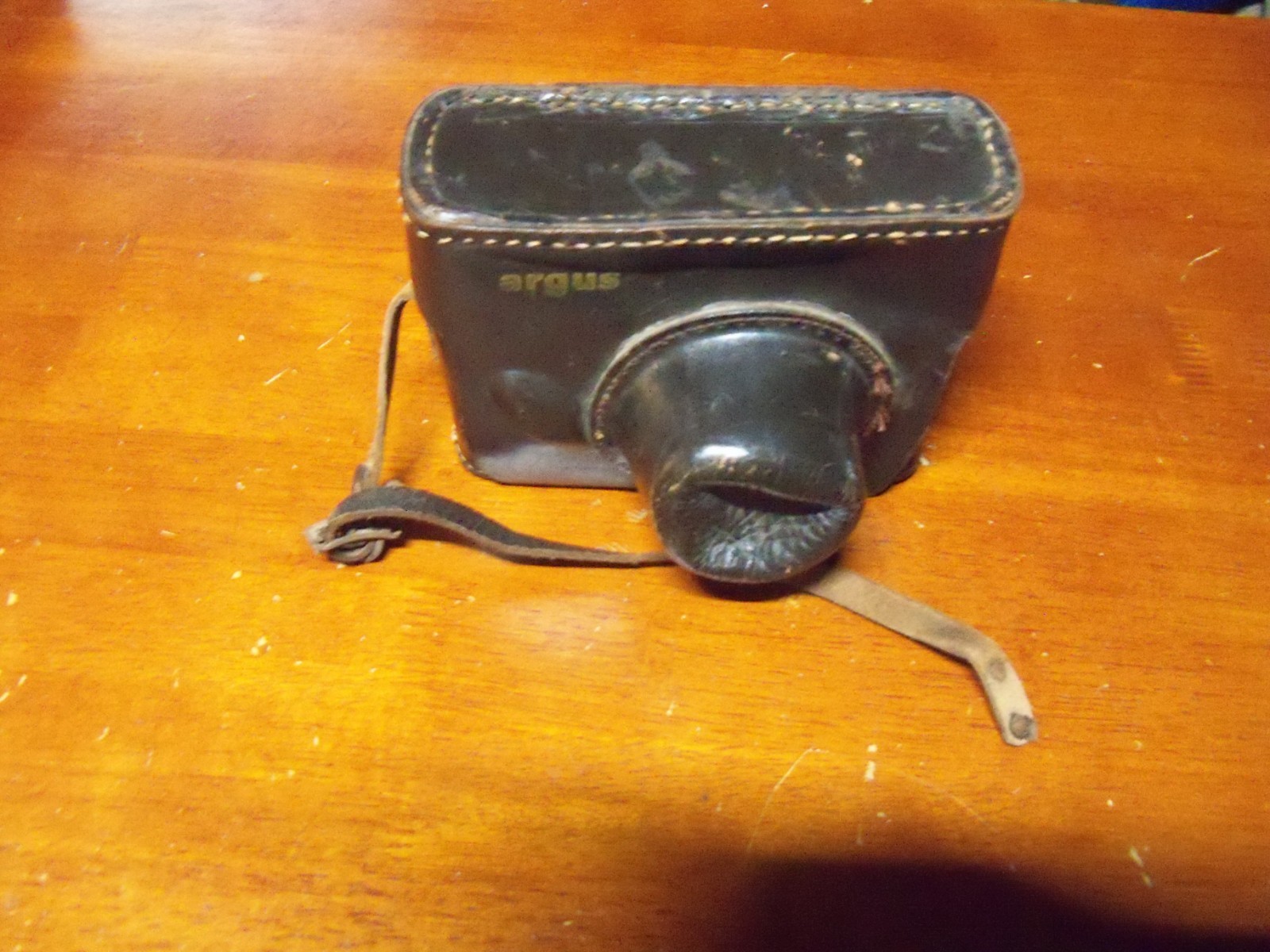
The Argus C2 trades in the lower tier of vintage camera collectibility, with recent sales reflecting modest demand. A 2012 example sold for $23.05, while another in 2022 fetched $17.85 plus shipping and import fees. More recently, a “Pre-Brick” early model listed at $40.00 plus $14.00 shipping suggests a slight uptick in niche interest, possibly fueled by the C-series’ association with the original Harry Potter films—though that fame belongs to the later C3. Examples described as “working, in excellent condition” or arriving with original leather cases command small premiums. However, the shutter mechanism remains a known weak point; one owner reported theirs “feels a little dodgy,” a reminder that functionality should never be assumed with untested units.
eBay Listings


As an eBay Partner, we earn from qualifying purchases. This helps support our independent vintage technology research.