Agfa Billy Compur (1934–1949)
Folding 120 film camera producing eight 6×9 cm images, made in two distinct pre- and post-war versions.
Overview
The Agfa Billy Compur is a folding 120 film camera that produces eight 6×9 cm images per roll. Manufactured by Agfa, it was produced in two versions: the first from 1934 to 1942, and a second variant from 1948 to 1949. Production of the first version ceased during World War II as German industry shifted to wartime manufacturing. The Billy series began in 1927, with the Billy Compur falling under Agfa’s line of 120 folding cameras.
Specifications
| Film Format | 120 film |
| Image Size | 6 x 9 cm |
| No. of Images | 8 |
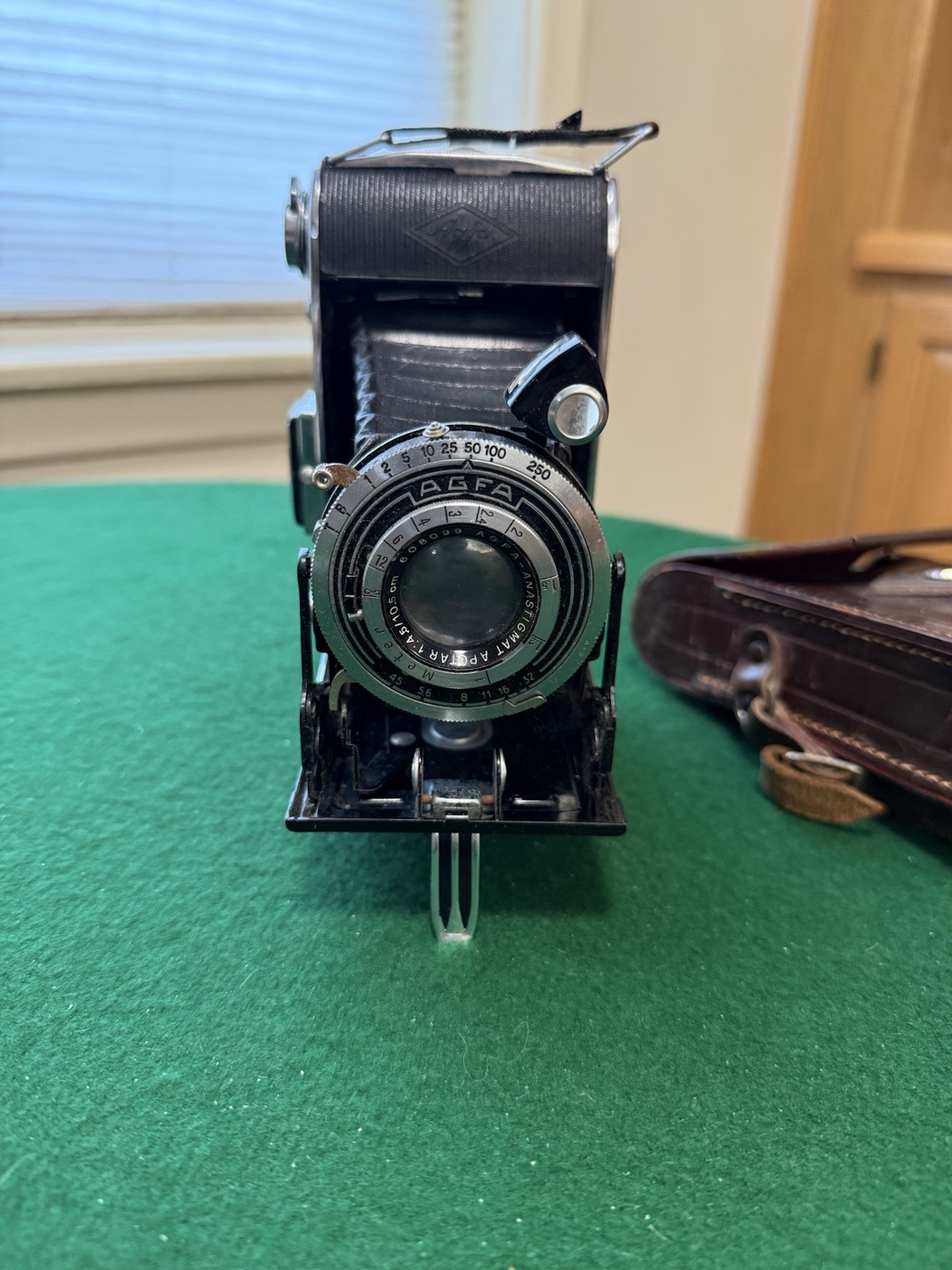
| Lens (First Version) | Anastigmat Apotar f/4.5 |
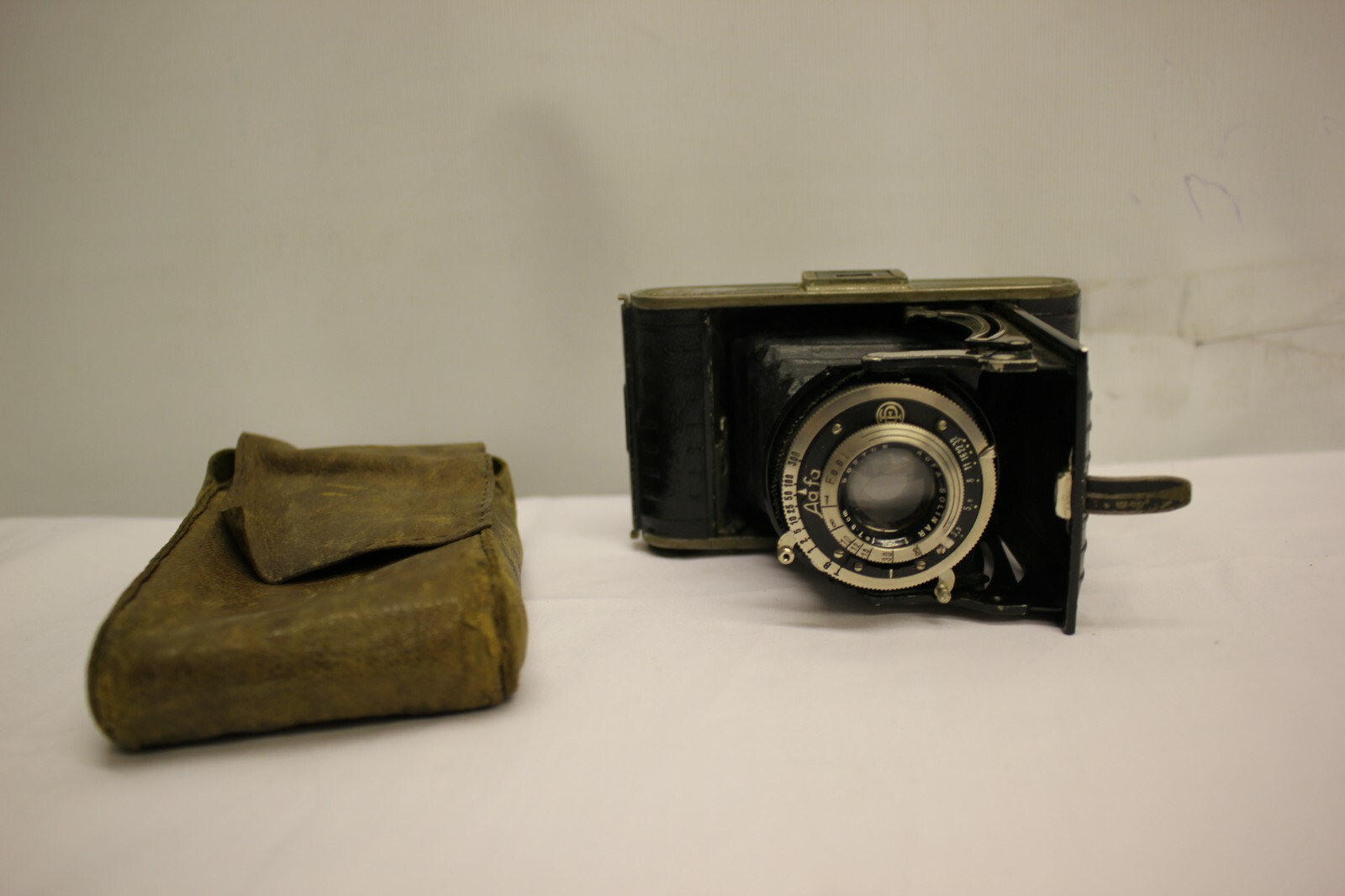
| Lens (Second Variant) | Solinar f/4.5 |
| Focal Length | 105mm |
| Focus Type | Variable |
| Focal Range | 3ft - ∞ |
| Aperture Type | Iris |
| Apertures | f/4.5 - f/32 |
| Shutter Type | Compur shutter |
| Shutter Speeds | T, B, 1s to 1/250s |
| Size Open | 105 x 160 x 127 mm |
| Size Closed | 85 x 160 x 35 mm |
| Weight | 670g |
Design
The Agfa Billy Compur features a folding bed design with self-erecting bellows and a metal construction. The first version has a top-plate viewfinder, while the second variant moves the viewfinder and shutter release to the bottom plate and includes double-exposure prevention. The pre-war model is distinguished by raised chrome strips and glossy black enamel on the side panels, with sides beautifully lacquered. Focusing is achieved by turning the front lens element. To close the camera, the user must pinch two circular plates beneath the lens to unlock and fold the front standard. The Compur shutter lacks flash synchronization, consistent with pre-war design. The second variant lost the Art Deco styling of the original, with a more subdued finish.
Context
The first version of the Agfa Billy Compur was discontinued during World War II due to industrial retooling for military production. The post-war variant, produced from 1948 to 1949, featured a Solinar lens and revised layout but retained the same core specifications. The Billy camera series began in 1927 and continued with various models until 1960.
Market
Common issues include pinholes in the bellows, particularly in the corners, due to Agfa’s use of low-quality materials at the time. Many users report bellows degradation, though some units arrive with intact bellows. The focusing mechanism can become stuck from old grease, remedied by applying lighter fluid over several days. The shutter’s self-timer is prone to sticking and should be handled carefully; if stuck, Ronsonol or naphtha may free it. The shutter cocking lever may require extra force to close as it touches the left side arms. WD40 is explicitly advised against for repairs. On some units, the shutter release lever can be misaligned and may be corrected by rotating the entire shutter unit after loosening its retaining ring.
eBay Listings


As an eBay Partner, we earn from qualifying purchases. This helps support our independent vintage technology research.