Adox Polo (1959–1964)
A humble 35mm viewfinder that quietly outclassed its price tag with real glass and a no-nonsense shutter—until the better models stole the spotlight.
Overview
There’s a quiet dignity to the Adox Polo that doesn’t announce itself like a Leica or flirt like a Retina. It’s the camera you’d find in a 1960s German schoolteacher’s coat pocket—functional, unpretentious, and built to last longer than anyone expected. Introduced in 1959, the original Adox Polo wasn’t the flashiest model in the lineup, but it carried the DNA of a company that knew film and optics. Dr. C. Schleussner Fotowerke, the brains behind ADOX, had roots stretching back to 1860, and by the mid-20th century, they were turning out everything from color reversal film to medium format folders. The Polo series was their play for the growing 35mm consumer market—a modest, manually operated viewfinder camera that didn’t pretend to be anything more than it was.
Early Polos were basic: a simple viewfinder without parallax correction, a fixed lens, and a limited shutter speed range. But even the base model came with a 45mm f/2.8 lens—either the Adox-branded Adoxar or, in later variants, the Schneider-Kreuznach Radionar L, a lens that punched well above its weight. The Radionar wasn’t a Xenon or a Summaron, but it delivered sharp, contrasty images with a softness wide open that many modern shooters chase with filters. Paired with the Pronto shutter (on the Polo 1S), which offered speeds from 1/30 to 1/250 second, the camera gave competent photographers enough control for daylight and indoor shooting with faster film. It wasn’t a system camera, didn’t meter, and certainly didn’t wind automatically—but it was honest. You composed in a modest optical window, focused by scale or estimation, and fired with a satisfyingly crisp shutter release.
The Polo evolved quickly. Within a few years, ADOX rolled out the Polo 1, Polo 1S, Polo 2, and eventually the metered Polomat and even the semi-automatic Polomatic 3S. The original Polo—sometimes called the “Polo without numbers”—was quickly overshadowed, but it laid the foundation. It shared the same compact, die-cast metal body, leather covering, and top-mounted film advance as its siblings, but lacked the improved viewfinder with framelines and the more refined shutter options. Still, it’s this simplicity that gives the earliest Polo a certain charm. It’s a camera that demands engagement, not convenience.
Specifications
| Manufacturer | Adox / Dr. C. Schleussner Fotowerke GmbH |
| Production Years | 1959–1964 |
| Camera Type | 35mm viewfinder camera |
| Film Format | 135 (35mm) |
| Shutter Type | Pronto (on Polo 1S), otherwise basic leaf shutter |
| Shutter Speeds | 1/30 – 1/250 second (Polo 1S); earlier models may have 1/30 – 1/200 or B |
| Shutter Synchronization | Yes (X-sync on later models) |
| Lens | 45mm f/2.8 Adoxar or Schneider-Kreuznach Radionar L |
| Lens Mount | Fixed |
| Aperture Range | f/2.8 to f/16 |
| Focusing | Scale focusing (distance markings) |
| Viewfinder | Separate optical viewfinder, no parallax correction |
| Frame Size | 24 x 36 mm |
| Frame Count | ~36 exposures |
| Film Advance | Knurled knob on top plate |
| Film Rewind | Crank on bottom plate |
| Battery | None (fully mechanical) |
| Flash Sync | PC terminal on later models (Polo 1S) |
| Weight | Approx. 380 g (without film) |
| Dimensions | 110 x 65 x 35 mm (approx.) |
Key Features
The Lens: More Than a Nameplate
Even the base Polo carried a lens that defied its budget billing. The 45mm f/2.8 Adoxar wasn’t just rebadged glass—it was optically identical to the Schneider-Kreuznach Radionar L used in higher-end models. Schneider built the lenses for most of the Polo line, and this 45mm design offered a natural field of view with decent sharpness across the frame when stopped down. Wide open, it rendered with a gentle glow, slightly soft corners, and a contrast that suited the grain structure of 1960s film stocks. Later models upgraded to coated versions, but even uncoated, the lens handles flare better than expected. It’s not a portrait specialist, but for street or travel use with Ilford HP5 or Agfa APX, it delivers a characterful, analog look that modern compact lenses often lack.
Pronto Shutter: Simple, but Synchronized
The Polo 1S introduced the synchronized Pronto shutter, a significant upgrade over earlier non-synchronized versions. With speeds from 1/30 to 1/250 second and a B setting, it gave photographers flexibility in varied lighting. The X-sync at all speeds (via PC terminal) made flash use reliable—a big deal in an era when many budget cameras still relied on M-sync or offered no sync at all. The shutter is leaf-type, quiet, and reliable if kept clean and lubricated. While not as refined as a Compur or Seikosha, it’s durable and serviceable. Earlier Polo models had simpler shutters with fewer speeds and no sync, making the 1S the real sweet spot for shooters who want to use flash or faster films.
Build and Handling: Compact, but Not a Toy
For a consumer-grade camera, the Polo feels substantial. The body is die-cast metal, covered in textured leatherette that ages gracefully. The film advance knob is small but positive, and the rewind crank is tucked neatly on the bottom. There’s no hot shoe, no light meter, no automation—just a film reminder dial on the back and a frame counter that resets manually. The viewfinder is small and dim by modern standards, with no parallax correction, so close-ups require estimation. But the camera fits well in the hand, balances nicely with the lens, and inspires confidence in its mechanical solidity. It’s the kind of camera that, once loaded, can be tucked into a jacket and forgotten—until you need it.
Historical Context
The late 1950s and early 1960s were a battleground for 35mm compact cameras. Japanese manufacturers like Canon, Nikon, and Minolta were pushing into the global market, while German brands like Zeiss, Voigtländer, and Wirgin fought to hold ground. ADOX, operating from Wiesbaden in what had once been the Wirgin factory (seized during WWII and later repurposed), wasn’t trying to beat Leica at its own game. Instead, the Polo series targeted middle-class photographers who wanted quality without the cost. The original Polo sat at the bottom of a surprisingly deep lineup that soon included the Polo 1S, the metered Polomat, and the Polomatic 3S—the latter boasting one of the earliest semi-automatic exposure systems in a 35mm viewfinder camera.
Competitors like the Kodak Retina I, Zeiss Ikon Contessa, and Wirgin Edinex offered similar specs, but the Polo stood out by using Schneider optics even in its mid-tier models. While the base Polo lacked the viewfinder frames and sync of its siblings, it shared the same chassis and lens mount philosophy. ADOX was leveraging its relationships with German optical houses to offer real value. By 1963, however, the writing was on the wall: SLRs were rising, and compact viewfinders were becoming passé. ADOX exited camera manufacturing by the mid-60s, shifting focus back to film and chemistry—where it would eventually re-emerge decades later as a cult favorite among analog purists.
Collectibility & Value
The original Adox Polo isn’t rare, but it’s not common either. Most surviving examples are the Polo 1 or 1S, which are more desirable due to their improved viewfinders and shutter sync. The earliest “no-number” Polo often sells for less, sometimes under $50 in working condition, simply because it lacks the refinements collectors want. Polo 1S models, especially those with the Schneider Radionar lens and intact leather, fetch $70 to $120 depending on condition. Mint examples with original case and manual can reach $140, but they’re scarce.
Common failures include stiff or stuck shutters, especially if the camera has been stored damp. The Pronto shutter, while robust, can gum up over time and requires careful cleaning—not a DIY job for beginners. The viewfinder glass may have haze or separation, and the leatherette often cracks, though replacement is straightforward. The biggest issue isn’t mechanical: it’s knowing what you’re buying. Listings often mislabel any Polo variant as “vintage Adox camera,” so buyers must check the lens engraving and shutter plate for model identification. A camera labeled “Polo” might actually be a Polo 1S—good news if you want sync and framelines.
For shooters, the Polo 1S is the best buy. It’s fully mechanical, uses readily available 35mm film, and delivers results that punch above its price. The scale focusing limits close work, but for zone focusing at f/8 or f/11, it’s perfectly usable. Service costs are moderate: a CLA (clean, lubricate, adjust) from a competent technician runs $75–$100, which makes buying a “tested working” model wise. Avoid cameras advertised as “untested”—the risk of a $40 shutter repair isn’t worth the $20 savings.
eBay Listings
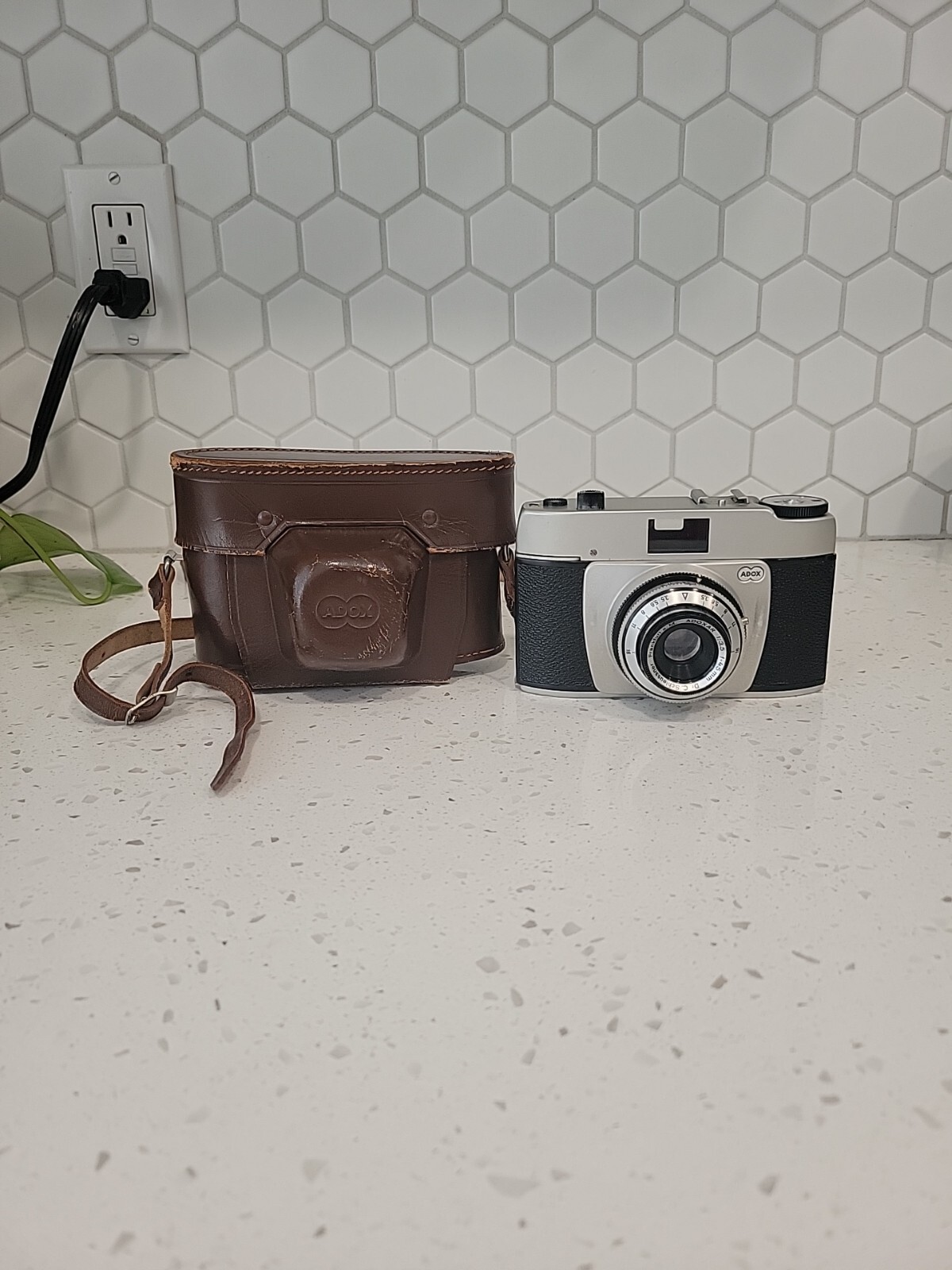


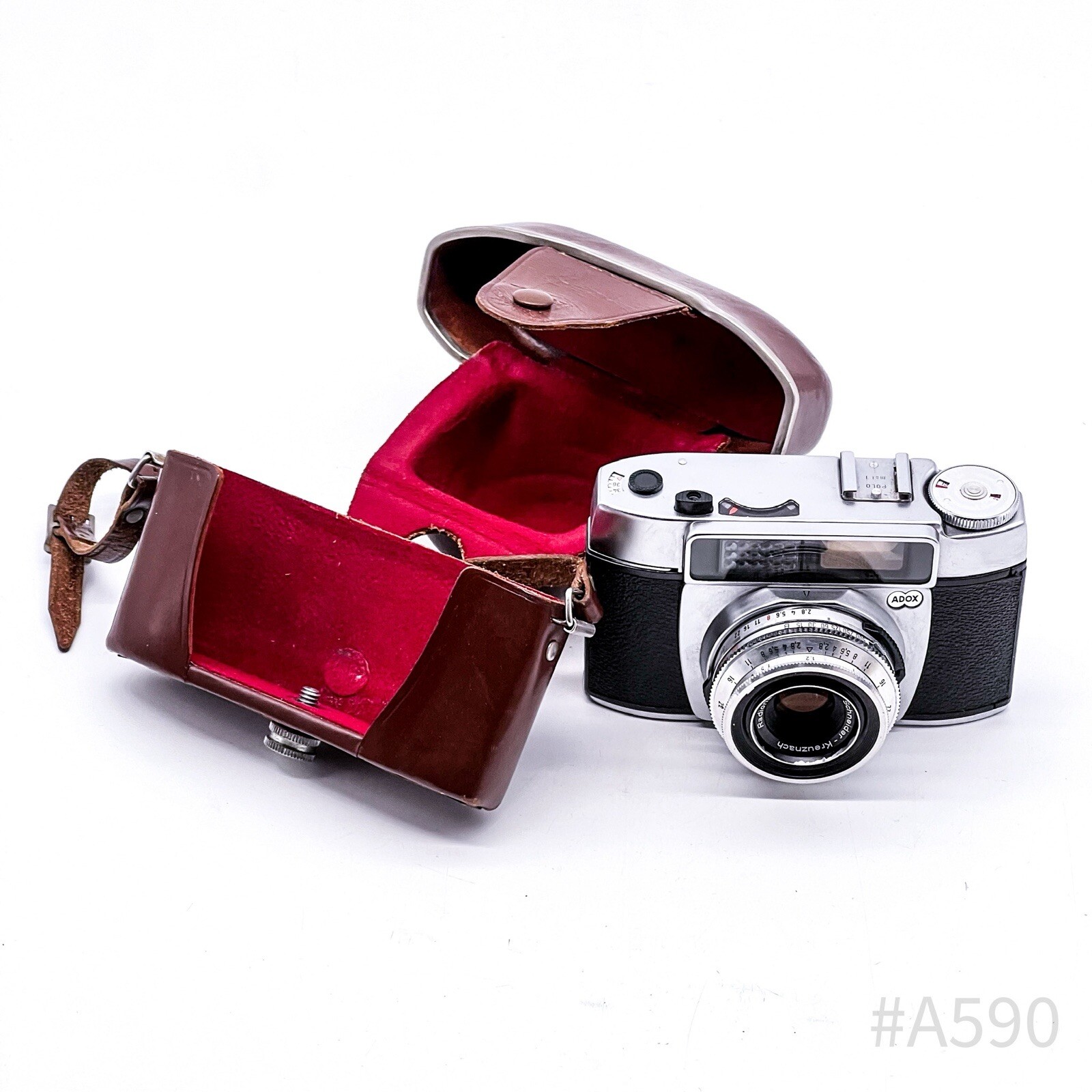
As an eBay Partner, we earn from qualifying purchases. This helps support our independent vintage technology research.