ADOX GOLF 63
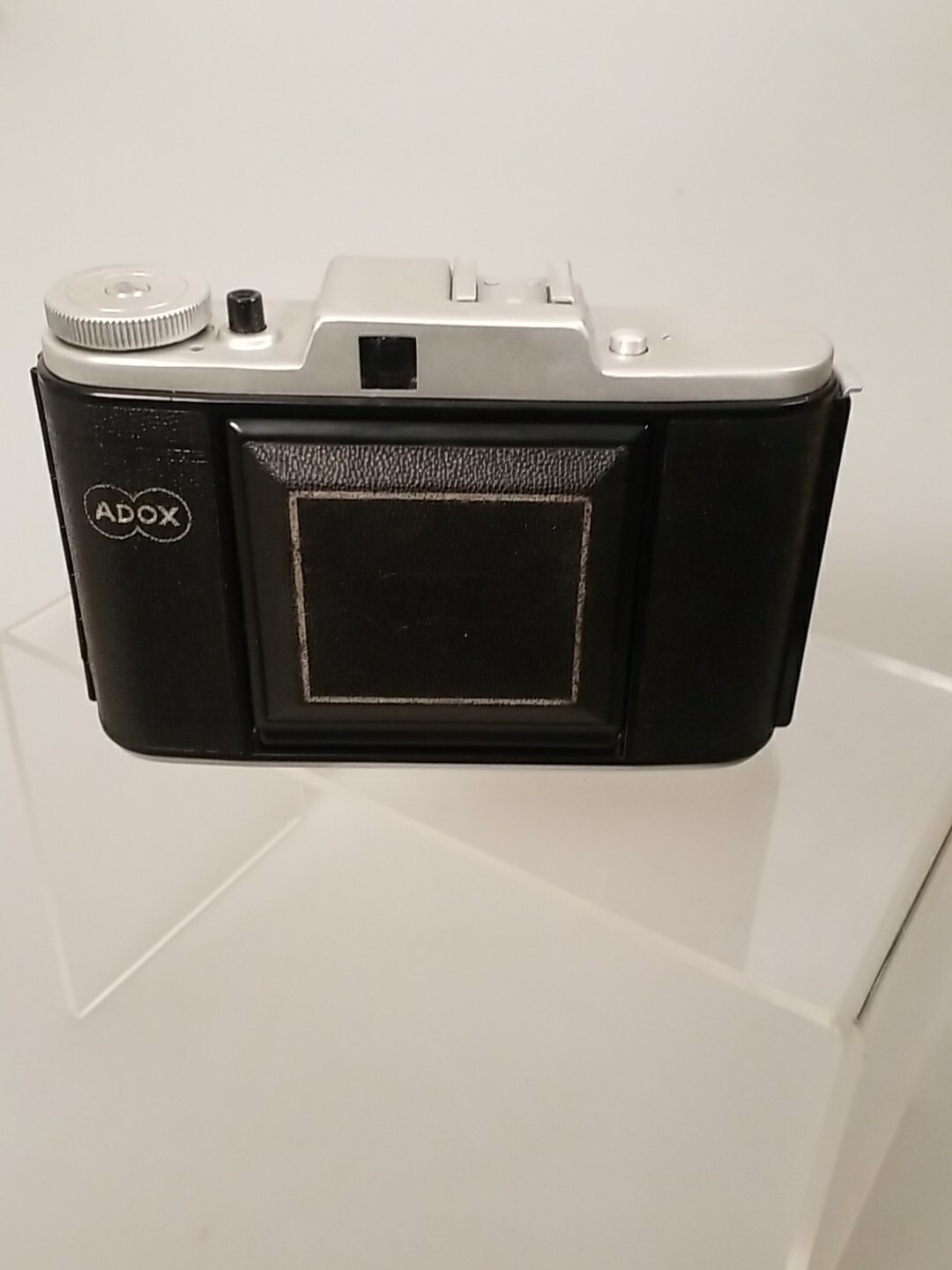
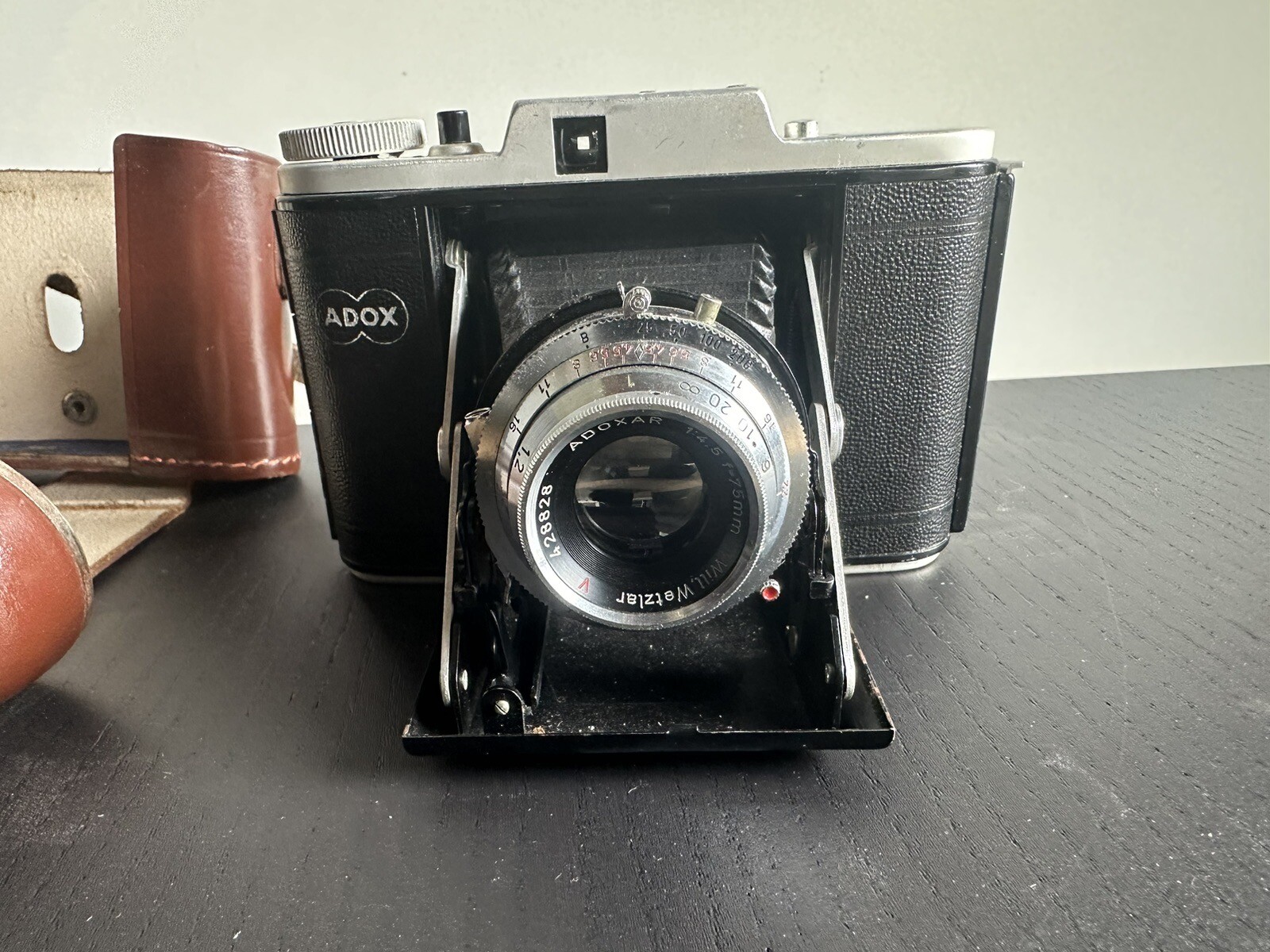
The Adox Golf 63 is a compact medium format folding camera produced by Adox, a German photographic company based in Bad Soden, from 1954 to 1959. Designed for amateur photographers seeking high-quality 6×6 cm negatives in a portable form, the Golf 63 combines precision engineering with classic German optical components, notably the Adoxar lens and Compur shutter.
Overview
Introduced in the mid-1950s, the Adox Golf 63 was part of a wave of high-quality folding cameras aimed at the enthusiast and amateur market during the golden era of medium format rollfilm photography. Adox, originally established as a supplier of photographic paper and chemicals by Dr. Hermann Wille in the 1930s, expanded into camera manufacturing through partnerships with established German optical and mechanical firms. The Golf 63 was manufactured under contract by Wirgin, a well-known camera maker based in Wiesbaden, which also produced the Edinex and later the Edixa line of cameras. This collaboration ensured solid build quality and reliable mechanics.
The Golf 63 produces twelve 6×6 cm exposures on 120 rollfilm, making it a true 6×6 folder with a bright, ground-glass waist-level viewfinder. It was marketed as a compact yet capable alternative to larger box and TLR (twin-lens reflex) cameras, offering superior lens quality and a more refined focusing system. The camera features a rigid body with a folding front standard, allowing it to collapse into a pocketable size when not in use. Its design emphasizes portability without sacrificing image quality, a hallmark of postwar German camera engineering.
Positioned between entry-level folders and professional medium format systems, the Golf 63 fit into Adox’s lineup as a premium compact model, complementing their larger Adox Flex and Adox Trio 620 cameras. While not as widely exported as contemporaries from Rollei or Zeiss Ikon, the Golf 63 earned a reputation among discerning users for its sharp optics and smooth operation. It exemplifies the trend in the 1950s of German manufacturers producing technically refined, optically excellent cameras for the growing amateur market, leveraging the country’s strong tradition in lens and precision mechanics manufacturing.
Specifications
| Specification | Value |
| Type | Folding viewfinder camera |
| Film Format | 120 film |
| Image Format | 6×6 cm |
| Years Produced | 1954–1959 |
| Lens Mount | Fixed Adoxar lens (no interchangeable mount) |
| Lens | Adoxar 75mm f/3.5 (4 elements in 3 groups, based on Tessar design) |
| Aperture Range | f/3.5 to f/22 |
| Shutter | Compur-Rapid shutter |
| Shutter Speeds | 1 sec to 1/400 sec, plus B (bulb) |
| Metering | None (uncoupled light meter required) |
| Exposure Modes | Manual only |
| Focus | Manual via front standard extension (rack-and-pinion) |
| Viewfinder | Waist-level optical viewfinder with pop-up hood |
| Focusing Screen | Ground glass with central split-image mark (later models) |
| Flash Sync | PC terminal with X and M contacts; sync speed up to 1/30 sec |
| Dimensions (closed) | Approx. 10 × 7 × 4 cm |
| Weight | Approx. 580 g (with film) |
| Construction | Leatherette-covered metal body, metal folding struts, glass lens elements |
| Film Advance | Manual via knob |
Key Features
- Adoxar 75mm f/3.5 Tessar-type lens: Delivers sharp, high-contrast images with minimal aberration, characteristic of the classic Tessar optical formula.
- Compur-Rapid shutter: Offers a full range of shutter speeds from 1 second to 1/400 sec, making it suitable for both low-light and daylight photography.
- Compact folding design: Collapses into a pocketable size, ideal for travel and street photography.
- Ground-glass waist-level finder with focusing aid: Later versions include a split-image rangefinder patch for accurate manual focusing.
- X/M flash synchronization: Allows use with both electronic flash and vintage flashbulbs, with selector switch for correct timing.
Historical Context
The Adox Golf 63 was released during a period of intense innovation and competition in the medium format camera market. The early 1950s saw German manufacturers recovering from postwar restrictions and reasserting dominance in optical engineering. Cameras like the Rolleiflex TLR, Zeiss Ikon Super Ikonta, and Kodak Retina were setting standards for quality and usability. The Golf 63 entered this competitive field as a more affordable yet optically excellent alternative, leveraging Wirgin’s mechanical expertise and Adox’s brand reputation for quality.
Despite its technical merits, the Golf 63 faced stiff competition from both TLRs and other high-end folders. Unlike the Rolleiflex, it lacked coupled focusing and a viewing lens, but it offered a brighter viewing experience and a faster maximum aperture than many contemporaries. Its primary market was European amateur photographers who valued portability and image quality over automation. Adox marketed the Golf 63 as a "gentleman’s camera"—discreet, elegant, and capable of professional-grade results. However, by the late 1950s, declining demand for rollfilm folders in favor of 35mm rangefinders and SLRs led to its discontinuation in 1959.
Collectibility & Value
The Adox Golf 63 is a moderately rare camera today, with complete working examples becoming increasingly scarce. It is sought after by collectors of German folding cameras and enthusiasts of vintage medium format systems. In excellent, fully functional condition, the Golf 63 typically sells for $300–$500 USD, with models featuring the split-image focusing screen commanding higher prices. Rarity, originality, and lens condition are key factors in valuation.
When purchasing a Golf 63, collectors should inspect the bellows for pinholes or deterioration, test the shutter speeds across all settings, and verify the lens coating condition (common issues include haze, fungus, or separation in the Adoxar lens). The Compur shutter, while durable, may require cleaning or lubrication if the camera has been stored for decades. The leather covering and folding struts should also be checked for integrity, as cracked leather or bent struts can affect usability. Because the camera lacks a light meter, users must rely on external or smartphone-based meters for accurate exposure.
Similar Cameras
- Kodak Retina IIa (Type 015) – 35mm folding camera with high-quality Schneider lens, similar in portability and build.
- Zeiss Ikon Super Ikonta C (534/16) – 120 folding camera with 75mm f/3.5 Tessar, comparable size and image quality.
- Rollei 3.5F (early models) – TLR alternative with superior optics but less portability.
- Wirgin Edinex 66 – Mechanically similar folder, also made by Wirgin, with comparable specifications.
- Balda Baldessa – Compact 35mm folder with German engineering and high build quality.
Repair & Maintenance
The Adox Golf 63 requires no batteries, as it is fully mechanical. The Compur-Rapid shutter is serviceable by experienced technicians but may suffer from oil drying or sticking at extreme speeds. Regular CLA (clean, lubricate, adjust) is recommended for long-term use. The Adoxar lens should be checked for internal cleanliness and freedom from fungus. Bellows replacement is possible but requires precision fitting. Due to the camera’s age, spare parts are limited, making preservation and careful handling essential.
eBay Listings

As an eBay Partner, we earn from qualifying purchases. This helps support our independent vintage technology research.