Yamaha T-1: The Enigmatic Prototype from Yamaha’s Golden Era
In the world of vintage audio, few names carry the weight and reverence of Yamaha. Known for their meticulous engineering, musical transparency, and enduring build quality, Yamaha’s receivers, amplifiers, and tuners from the 1970s and 1980s remain highly sought after by collectors and audiophiles alike. Among the more obscure entries in their storied catalog is the Yamaha T-1—a mysterious device that defies easy categorization and exists on the fringes of documented audio history.
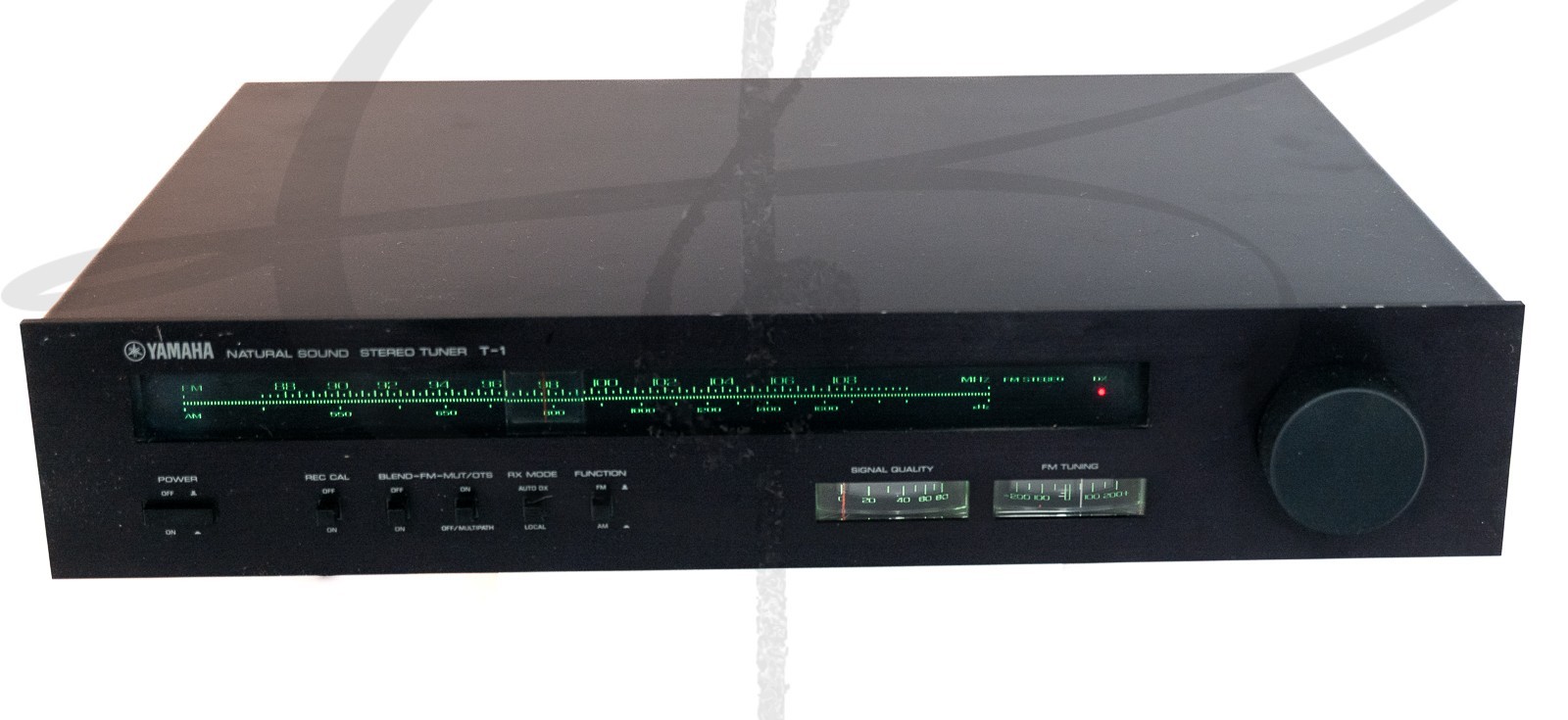
Unlike the well-known RX series receivers or the legendary M-series power amplifiers, the T-1 does not appear in any official Yamaha product brochures, service manuals, or marketing materials from the era. Yet, anecdotal evidence, forum discussions, and a handful of photos suggest that the T-1 was a real unit—possibly a prototype, internal test device, or engineering evaluation model produced in extremely limited numbers around 1975.
While definitive technical data is scarce, the T-1 represents a fascinating glimpse into Yamaha’s research and development processes during a pivotal time in audio history—the transition from tube to solid-state design, the rise of high-fidelity stereo, and the dawn of the integrated receiver as a centerpiece of the home audio system.
What Was the Yamaha T-1?
The “T” in T-1 likely stands for Test, Tuner, or Transceiver, though no consensus exists. Given its designation and the era of its presumed origin, the T-1 was likely not a consumer product but rather an internal engineering unit used for circuit testing, design validation, or quality control during the development of other Yamaha audio components.
Surviving descriptions suggest the T-1 was a compact, rack-mountable unit with a minimalist front panel—possibly featuring a VU meter, input/output selectors, and various test switches. It may have included signal generation circuitry (such as a tone oscillator), impedance matching networks, or distortion analysis tools. Some speculate it could have been used in conjunction with Yamaha’s speaker development or amplifier testing labs.
Due to its non-commercial nature, the T-1 was never mass-produced, and no official specifications were ever published. Its existence remains largely undocumented, making it a true unicorn among vintage audio enthusiasts.
Technical Specifications (Based on Available Evidence)
| Feature | Specification (Estimated) |
| Year of Origin | 1975 |
| Category | Test/Prototype Equipment |
| Function | Audio Testing / Signal Analysis (Likely) |
| Inputs | Possibly balanced XLR and unbalanced RCA |
| Outputs | Line-level, possibly speaker-level test taps |
| Power Supply | Internal linear transformer (estimated) |
| Frequency Response | Likely flat across 20Hz–20kHz (assumed) |
| Build Type | Solid-state, discrete components |
| Chassis | Steel enclosure, rack-mount compatible |
| Weight | ~5–7 lbs (estimated) |
| Dimensions (W×H×D) | ~19" × 2" × 10" (estimated) |
Note: Specifications are inferred from period Yamaha engineering practices and user accounts. No official documentation exists.
Sound Characteristics and Performance
As a non-amplifying test unit, the Yamaha T-1 does not "produce sound" in the traditional sense. However, if it included signal generation or loopback testing capabilities, its electrical performance would have been critical. Engineers would have demanded:
- Ultra-low noise floor
- Precise frequency stability
- Minimal harmonic distortion
- Accurate level calibration
If the T-1 included an oscillator or white/pink noise generator, it would have been used to measure speaker frequency response, amplifier damping factor, or room acoustics—tasks requiring exceptional accuracy. Given Yamaha’s reputation for precision, it’s reasonable to assume the T-1 met or exceeded professional broadcast-grade standards of the time.
Some collectors speculate that the T-1 may have shared circuitry with the Yamaha A-1 preamplifier or B-1 power amplifier—flagship components of the era known for their neutral, detailed sound. If true, the T-1 could represent the DNA of Yamaha’s high-end audio lineage in raw, unfiltered form.
Notable Features and Innovations
While the T-1’s exact features remain speculative, several possibilities stand out based on Yamaha’s engineering priorities in the mid-1970s:
- Discrete Solid-State Design: Unlike consumer gear that began using ICs, test equipment of this era often used discrete transistors for reliability and precision.
- Calibrated Signal Generation: If equipped with an oscillator, it likely offered selectable frequencies (e.g., 1kHz, 100Hz, 10kHz) with tight tolerance.
- Loopback Testing Capability: Could allow engineers to measure gain, phase, and distortion across a complete audio chain.
- Impedance Simulation: Possibly included dummy loads or impedance-matching networks to test amplifier stability.
- VU or Peak Metering: For monitoring signal levels during testing procedures.
The T-1 may also have featured gold-plated connectors, military-spec wiring, and heavy-duty potentiometers—hallmarks of Yamaha’s professional-grade hardware.
Common Issues and Maintenance
Given its age and rarity, any surviving Yamaha T-1 would require careful evaluation. Common issues likely include:
- Capacitor Degradation: Electrolytic capacitors in the power supply may have dried out, risking failure or noise.
- Oxidized Switches and Pots: Decades of inactivity can lead to crackling or intermittent connections.
- Dust and Corrosion: Especially if stored improperly, internal circuitry may suffer from environmental damage.
- Missing Documentation: Without schematics or service manuals, repair is challenging.
Owners or collectors fortunate enough to encounter a T-1 should treat it as a museum-grade artifact. Powering it up should only be done after a thorough inspection by a technician experienced in vintage Japanese audio gear. A slow reformation of capacitors and cleaning of controls with appropriate contact cleaner may be necessary.
Current Market Value and Collectibility
The Yamaha T-1 is not a commercial product, and as such, it has no established market value. However, its extreme rarity and connection to Yamaha’s golden age make it a highly desirable collector’s item for niche enthusiasts.
In recent years, interest in vintage test equipment—especially from iconic audio brands—has grown. Units like the Sony TCM series, TEAC test decks, and Denon service monitors have fetched high prices at auction. A verified Yamaha T-1, especially one with provenance (e.g., from a former Yamaha engineer or service center), could command $1,000–$3,000 or more among serious collectors.
Authentication is key. Given the lack of documentation, any T-1 should be scrutinized for:
- Original Yamaha labeling and part numbers
- Consistency with 1970s manufacturing techniques
- Internal circuitry matching Yamaha’s design language
Conclusion: A Legend in the Shadows
The Yamaha T-1 may never be fully understood. It lacks the fame of the RX-5000 or the sonic legend of the NS-1000 speakers. Yet, in its obscurity lies a quiet significance. It represents the unseen backbone of audio excellence—the tools engineers used to craft the gear we cherish today.
For the vintage audio enthusiast, the T-1 is more than a curiosity; it’s a symbol of precision, dedication, and the pursuit of sonic truth. Whether it was used to calibrate a flagship receiver or test a prototype speaker, the T-1 played a role—however small—in shaping the sound of an era.
As more information surfaces and collectors continue to explore the hidden corners of audio history, the legend of the Yamaha T-1 may one day be fully revealed. Until then, it remains a whispered name among the cognoscenti—a ghost in the machine, silently humming with the spirit of 1970s Japanese engineering.
eBay Listings



As an eBay Partner, we earn from qualifying purchases. This helps support our independent vintage technology research.
Related Models
- Yamaha HP-3 (1978)
- Yamaha NS-1000 (1977)
- Yamaha NS-1000M (1977)
- Yamaha NS-1000X-II (1978)
- Yamaha NS-1000X (1977)
- Akai AM-2850 (1975)
- Akai AP-206 (1975)
- Nakamichi BX-1 (1985)
- Acoustic Research research-ar-17 (1978)
- Acoustic Research AR-19 (1994)