Yamaha R-700: The Forgotten Gem of Vintage Preamplifier Design
In the pantheon of classic Japanese audio equipment from the 1970s, Yamaha stands out not only for its musical instruments but also for its sophisticated, no-nonsense approach to high-fidelity electronics. Among its lineup of receivers, power amplifiers, and tuners, the Yamaha R-700 occupies a special place as a high-performance preamplifier released during the golden age of analog audio. Though not as widely celebrated as some of its contemporaries from brands like Marantz or Sansui, the R-700 represents a quiet triumph of engineering philosophy—offering precision, musicality, and build quality that continue to earn respect among vintage audio enthusiasts today.
Introduced in 1975, the R-700 was part of Yamaha’s premium series of separates, designed to pair with high-current power amplifiers like the B-700 or B-770. At a time when integrated receivers dominated the market, Yamaha’s commitment to component separates signaled a dedication to audiophiles who valued signal purity, modular system building, and long-term serviceability. The R-700 was engineered to be the central nervous system of such a system—offering clean gain, flexible source selection, and a level of control precision that was ahead of its time.
Technical Specifications
The Yamaha R-700 was built with a fully discrete, dual-mono preamplifier circuit design, avoiding integrated circuits in favor of individual transistors and precision resistors. This design philosophy minimized signal path interference and contributed to the unit’s low noise floor and wide dynamic range.
| Specification | Detail |
| Model | Yamaha R-700 |
| Year Introduced | 1975 |
| Category | Preamplifier |
| Number of Inputs | 5 (Phono MM, Tape, Tuner, Aux, 2nd Phono) |
| Tone Controls | Bass, Treble (±12dB at 100Hz/10kHz) |
| Balance Control | Yes, dual-gang potentiometer |
| Input Sensitivity | Phono: 3.5mV; Line: 150mV |
| Output Level | 150mV (standard line-level out) |
| Frequency Response | 20Hz–20kHz (±0.5dB) |
| Total Harmonic Distortion | <0.05% (1kHz, rated output) |
| Signal-to-Noise Ratio | 80dB (A-weighted, IEC) |
| Power Supply | Internal linear transformer, dual rail |
| Power Consumption | 35W |
| Dimensions (W×H×D) | 435 × 146 × 335 mm |
| Weight | 10.5 kg (23.1 lbs) |
| Finish Options | Black or Walnut woodgrain side panels |
The R-700 featured both MM and second phono inputs, a rare inclusion that allowed users to connect two turntables without an external switcher—a thoughtful touch for serious vinyl collectors. Its tape loop was fully buffered, enabling clean recording and monitoring without signal degradation. The preamp also included louderness contour and mono switch options, catering to both critical listening and casual use.
Sound Characteristics and Performance
The sonic signature of the Yamaha R-700 is best described as neutral with a touch of warmth—a hallmark of Yamaha’s balanced engineering ethos. Unlike some of its more colored contemporaries, the R-700 doesn’t impose a strong sonic personality. Instead, it acts as a transparent conduit, allowing the character of the source and speakers to shine through.
The phono stage, in particular, is highly regarded. With a well-designed RIAA equalization network and low-noise JFET input transistors, it delivers excellent channel separation and tight bass response—ideal for vintage cartridges like the Shure M97xE or Audio-Technica AT1200. Line-level performance is equally impressive, with a wide soundstage, precise imaging, and a smooth top end that avoids the harshness sometimes found in early solid-state gear.
When paired with a high-current power amplifier like the Yamaha B-770 or even modern tube amps, the R-700 reveals its ability to handle complex musical passages with composure. Orchestral works, jazz ensembles, and rock recordings all benefit from its clean gain structure and excellent transient response.
Notable Features and Innovations
While the R-700 may appear conservative in design, it incorporated several forward-thinking features:
- Dual Phono Inputs: A rare feature even among high-end preamps of the era, allowing direct connection of two turntables.
- High-Quality Alps Potentiometers: Used for volume and balance controls, ensuring smooth operation and long-term reliability.
- Discrete Circuitry: Avoided op-amps in favor of discrete transistor stages, reducing reliance on ICs that could degrade over time.
- Heavy-Duty Chassis: Constructed with a rigid steel frame and thick aluminum front panel, minimizing microphonics and vibration.
- Gold-Plated RCA Jacks: For improved signal integrity and corrosion resistance.
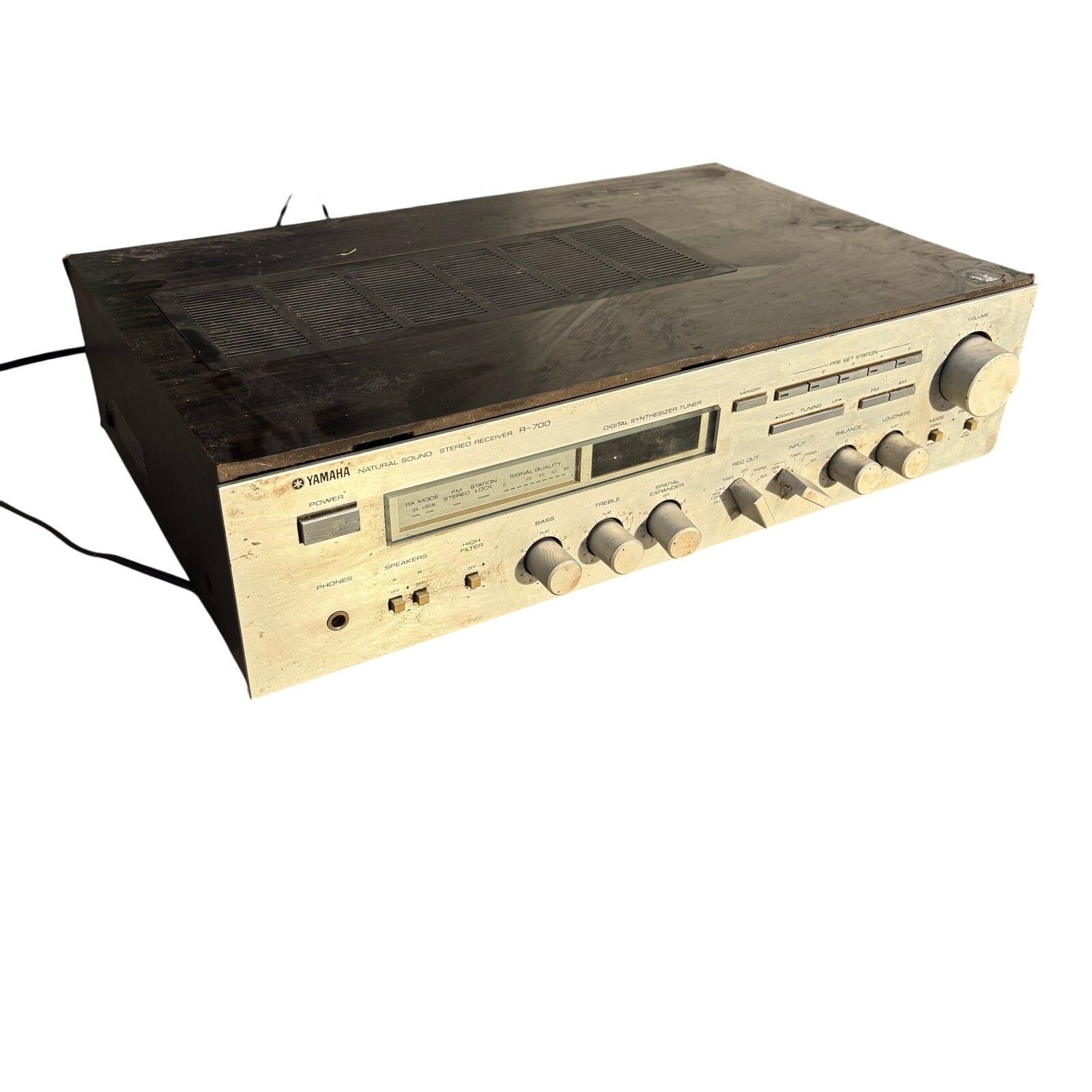
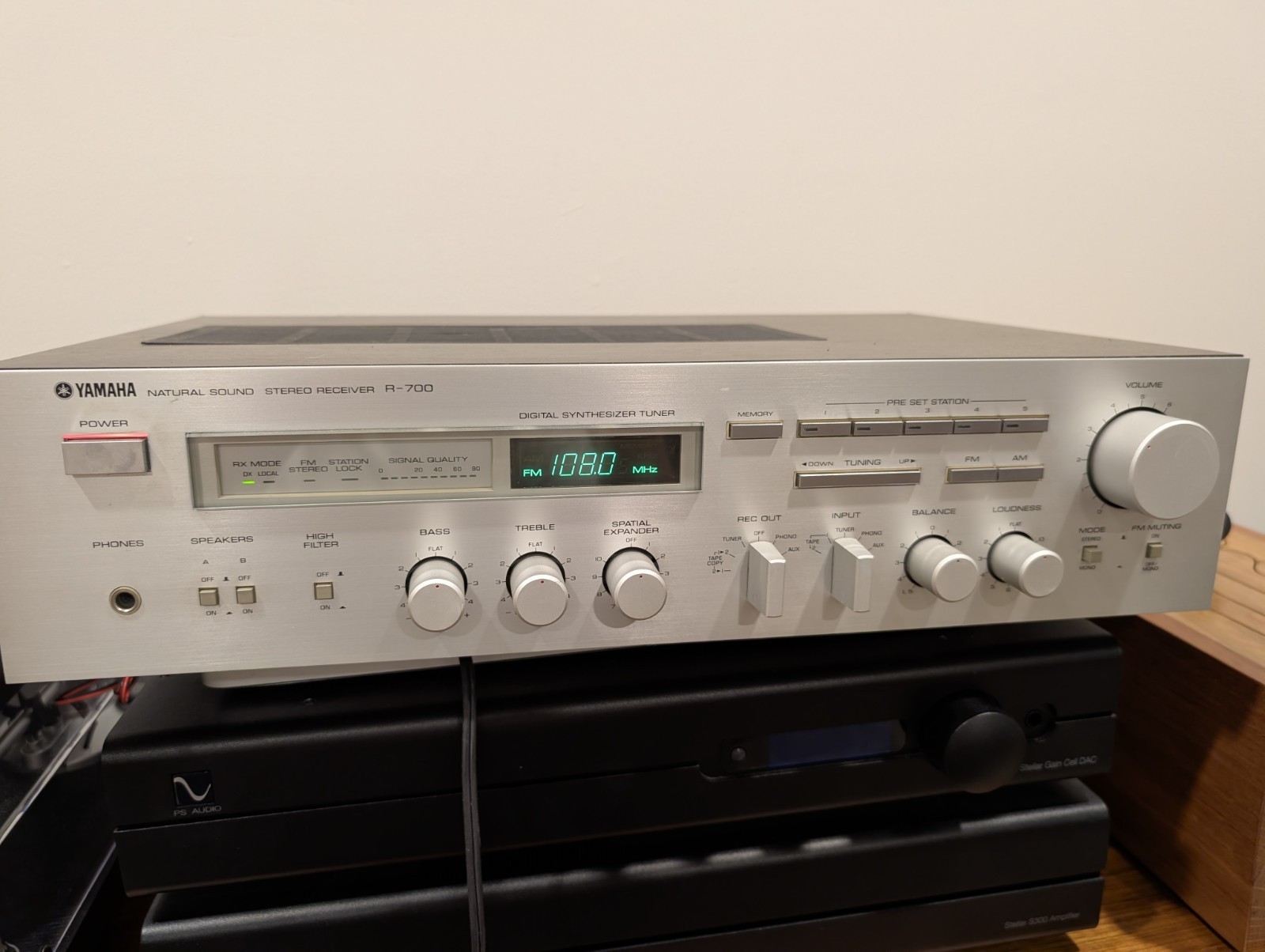
The front panel layout is clean and functional, with large, knurled aluminum knobs and a central VU meter (on some variants) for monitoring output levels—a feature more commonly seen on professional gear. The walnut side panels (available on select models) add a touch of warmth to its otherwise utilitarian aesthetic.
Common Issues and Maintenance
Like all vintage electronics from the 1970s, the Yamaha R-700 requires attention to aging components. While generally reliable, common issues include:
- Deteriorating Electrolytic Capacitors: The power supply and signal path capacitors may need replacement after 45+ years. Symptoms include hum, low output, or channel imbalance.
- Noisy Potentiometers: The Alps volume and tone controls can develop crackles. Cleaning with contact cleaner may help, but replacement is often necessary.
- Oxidized Switch Contacts: The input and function switches can become intermittent. DeoxIT treatment or careful disassembly and cleaning are recommended.
- Worn Selector Knob Detents: The mechanical feel of the input selector may become loose over time due to worn springs or plastic parts.
A full recap (capacitor replacement) and cleaning of all controls and switches are strongly advised for any R-700 acquired today. Given its discrete design, repairs are generally straightforward for experienced technicians, and service manuals are occasionally available through vintage audio forums.
Current Market Value and Collectibility
The Yamaha R-700 is not a mainstream collectible like the Marantz 2270 or Sansui G-3300, but it has a quiet following among Yamaha loyalists and preamp enthusiasts. Units in good working condition typically sell for $250–$400, with fully restored examples commanding up to $500, especially if paired with matching Yamaha power amps.
Its value lies not in rarity, but in performance and system synergy. For those building a vintage Yamaha separates system, the R-700 is a cornerstone component. It also appeals to minimalist audiophiles who appreciate its understated design and transparent sound.
While not a flashy showpiece, the R-700 is increasingly recognized as a sleeper classic—a preamp that delivers far more than its modest reputation suggests.
Conclusion and Legacy
The Yamaha R-700 may not have the cult status of some of its peers, but it embodies the quiet excellence that defined Yamaha’s approach to high-fidelity audio in the 1970s. It’s a preamplifier built for music lovers who valued accuracy, durability, and simplicity over flash and gimmicks.
Today, the R-700 stands as a testament to an era when Japanese engineering met analog artistry. It may not shout for attention, but in a well-tuned system, it sings with clarity, grace, and authority. For the discerning vintage audio enthusiast, the Yamaha R-700 is not just a component—it’s a quiet revelation.
eBay Listings


As an eBay Partner, we earn from qualifying purchases. This helps support our independent vintage technology research.
Related Models
- Yamaha HP-1 (1974)
- Yamaha A-1 (1970)
- Yamaha A-1020 (1978)
- Yamaha A-450 (1978)
- Yamaha A-550 (1978)
- Luxman L-530 (1975)
- Luxman R-404 (1975)
- Luxman RV-371 (1975)
- Luxman SQ-38U (1975)
- Luxman T-14 (1972)