Yamaha R-500: The Tuner That Tuned Into Excellence
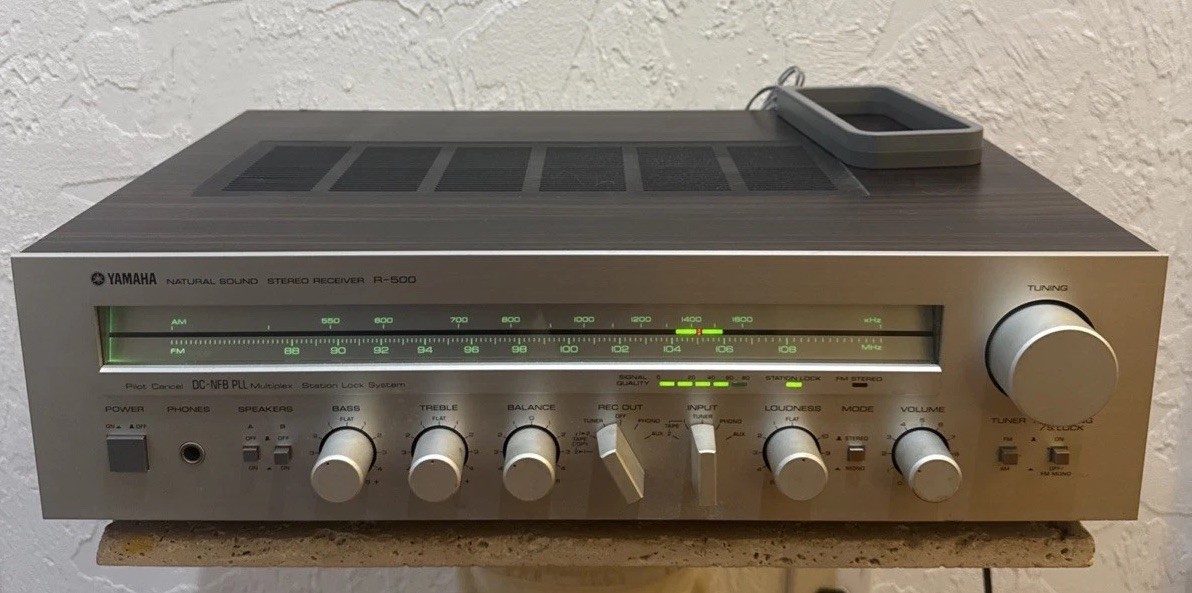
In the golden era of high-fidelity audio during the mid-1970s, Yamaha was rapidly establishing itself as a serious contender in the world of premium audio equipment. While the brand is often celebrated for its legendary receivers like the CR-800 and integrated amplifiers such as the B-7, its standalone FM tuners—particularly the Yamaha R-500—were equally impressive, if somewhat underappreciated. Released in 1975, the R-500 was designed for audiophiles who demanded superior FM reception, precise tuning, and a level of sonic transparency that could match the finest components of its time.
Though not a receiver or amplifier, the Yamaha R-500 occupies a special place in vintage audio history as a dedicated FM tuner that brought broadcast music to life with remarkable fidelity. At a time when FM radio was experiencing a cultural renaissance—offering stereo broadcasts, classical music, jazz, and progressive rock—the R-500 gave listeners a front-row seat to the golden age of radio.
Technical Specifications
The Yamaha R-500 was engineered with meticulous attention to signal purity and tuning accuracy. As a standalone FM tuner, it focused exclusively on delivering the best possible reception without compromise. Its design reflects Yamaha’s philosophy of combining advanced engineering with user-friendly operation.
| Specification | Detail |
| Model | Yamaha R-500 |
| Year of Release | 1975 |
| Type | FM Stereo Tuner |
| Tuning System | Analog needle meter with mechanical dial |
| Frequency Range | 87.5–108 MHz |
| Tuning Steps | 50 kHz (manual tuning) |
| IF Bandwidth | ±200 kHz (stereo), ±50 kHz (mono) |
| Signal-to-Noise Ratio | 70 dB (typical) |
| Total Harmonic Distortion | <0.5% (1 kHz, stereo) |
| Output Level | 0.5 V RMS (at 100 mV input) |
| Output Impedance | 10 kΩ |
| Input Sensitivity | 10 µV (for 30 dB quieting, stereo) |
| Antenna Inputs | 75Ω (coaxial), 300Ω (twin-lead) |
| Audio Outputs | RCA (L/R), unbalanced |
| Power Supply | 120V AC, 60 Hz (North American version) |
| Power Consumption | 18 watts |
| Dimensions (W×H×D) | 435 × 146 × 321 mm (17.1 × 5.8 × 12.6 in) |
| Weight | 8.1 kg (17.8 lbs) |
The R-500 employed a double-conversion superheterodyne circuit with a phase-locked loop (PLL) system for stable local oscillator performance—advanced for its time. This helped minimize drift and improved stereo separation, ensuring that broadcasts remained clear even under marginal signal conditions. The tuner also featured a stereo/mono switch, allowing users to optimize reception in weak signal areas by switching to mono for improved signal-to-noise ratio.
Sound Characteristics and Performance
The Yamaha R-500 was not just about technical specs—it was built to sound good. Yamaha’s engineers prioritized musicality, and the R-500 delivered a warm, natural tonal balance that complemented the broadcast material of the era. Whether tuning into a live orchestral performance from a public radio station or catching a rare jazz set, the R-500 rendered music with clarity, depth, and a surprising sense of space.
Stereo imaging was precise, with well-defined channel separation that brought dimensionality to FM broadcasts. The tuner’s low distortion and wide dynamic range allowed it to handle complex musical passages without congestion, making it a favorite among classical and jazz enthusiasts.
One of the standout qualities of the R-500 was its quiet background. Thanks to effective shielding and a clean power supply design, hiss and interference were kept to a minimum. When paired with a high-quality preamp and amplifier, the R-500 could extract every nuance from a stereo FM signal, rivaling even some CD players of the 1980s in terms of midrange purity.
Notable Features and Innovations
While the R-500 may appear modest compared to today’s digital tuners, it was packed with thoughtful features for its era:
- Precision Needle Meter: The large, centrally located tuning meter provided visual feedback for peak signal strength, making it easy to fine-tune stations for optimal reception.
- Mechanical Counter Dial: Unlike digital frequency displays that came later, the R-500 used a mechanical dial with a frequency window, offering a tactile, analog experience that many vintage enthusiasts still appreciate.
- High-Quality RF Front End: Designed to reject adjacent channel interference, the RF stage ensured clean reception even in crowded urban environments.
- Dual Antenna Inputs: The inclusion of both 75Ω coaxial and 300Ω twin-lead inputs made it compatible with a wide range of antenna systems, from simple rabbit ears to outdoor rooftop antennas.
- Sturdy Chassis Construction: Housed in a heavy-gauge steel chassis with a brushed aluminum front panel, the R-500 felt substantial and well-damped, reducing microphonic effects and vibration.
Yamaha also paid close attention to grounding and circuit layout, minimizing crosstalk and electromagnetic interference—hallmarks of a truly high-end tuner.
Common Issues and Maintenance
Like all vintage electronics, the Yamaha R-500 benefits from periodic maintenance. After nearly 50 years, certain components may degrade:
- Electrolytic Capacitors: The power supply and audio coupling capacitors may dry out over time. A recap (capacitor replacement) by a qualified technician can restore performance and prevent potential damage.
- Tuning Potentiometer and Switches: The tuning knob uses a potentiometer that can become noisy with age. Cleaning with contact cleaner may help, but replacement is sometimes necessary.
- Rubber Drive Belt (if applicable): Some early tuners used rubber belts in the tuning mechanism, though the R-500 primarily relies on a direct mechanical linkage. Still, inspect for any signs of degradation.
- Antenna Terminals: Corrosion on the 300Ω screw terminals can affect reception. Cleaning with electrical contact spray and ensuring tight connections is recommended.
Overall, the R-500 is known for its reliability, and units in good condition are still fully functional today—especially if they’ve been stored properly and used regularly.
Current Market Value and Collectibility
The Yamaha R-500 is not as widely collected as some of Yamaha’s more famous receivers, but it has a loyal following among FM tuner enthusiasts and vintage radio aficionados. Its value has been steadily rising as high-quality standalone tuners become rarer.
As of 2024, a fully functional Yamaha R-500 in good cosmetic condition typically sells for $150–$300, depending on region and included accessories. Units with original packaging, manuals, or exceptional condition (especially with a clean needle meter and unscratched faceplate) can command higher prices.
While not a “blue chip” collector’s item like a Marantz 10B or a McIntosh MR78, the R-500 represents excellent value for those building a vintage system focused on broadcast listening or seeking a high-performance tuner to pair with classic separates.
Conclusion and Legacy
The Yamaha R-500 may not have the fame of a receiver or amplifier, but it exemplifies Yamaha’s commitment to audio excellence across all product categories. As a dedicated FM tuner, it offered audiophiles a way to experience the full potential of FM stereo broadcasting at a time when radio was a primary source of high-fidelity music.
Today, the R-500 stands as a testament to an era when manufacturers built components to last—engineered for performance, built to endure, and designed to deliver musical enjoyment. Whether you're a vintage radio enthusiast, a collector of Yamaha gear, or simply someone who appreciates the warmth of analog FM, the Yamaha R-500 remains a compelling and rewarding piece of audio history.
For those lucky enough to find one in good condition, the R-500 isn’t just a tuner—it’s a time machine to the golden age of FM.
eBay Listings


As an eBay Partner, we earn from qualifying purchases. This helps support our independent vintage technology research.
Related Models
- Yamaha CR-450 (1972)
- Yamaha CR-820 (1977)
- Yamaha CR-840 (1978)
- Yamaha R-300 (1977)
- Yamaha R-5 (1972)
- Aiwa CS-250 (1978)
- Denon TU-1500RD (1995)
- Denon TU-280 (1976)
- Denon TU-501 (1977)
- Denon TU-550 (1978)