Yamaha R-5: The Forgotten Tuner That Defined Early Yamaha Excellence
In the golden era of high-fidelity audio, when manufacturers were pushing the boundaries of analog reception and sound purity, Yamaha quietly introduced a piece of equipment that would become a cult favorite among FM tuning enthusiasts: the Yamaha R-5. Released in 1972, this FM tuner predates Yamaha’s more famous receivers and amplifiers but stands as a testament to the company’s early commitment to precision engineering, musical transparency, and broadcast fidelity. Though not widely known outside collector circles, the R-5 is a milestone in Yamaha’s audio evolution and a rare gem for vintage tuners.
Unlike Yamaha’s later all-in-one receivers, the R-5 was a dedicated FM tuner, designed for audiophiles who valued clean signal paths and superior reception. At a time when many manufacturers were beginning to integrate tuners into receivers—often compromising performance—the R-5 represented a purist approach. It was engineered for those who still listened to FM broadcasts with reverence, whether it was classical music from public radio, live jazz sessions, or early stereo rock experiments.
Technical Specifications
The Yamaha R-5 was built during a transitional period in audio technology, bridging the gap between tube-era warmth and the emerging solid-state precision. It features a fully discrete transistorized front end, a hallmark of high-end tuners of the early 1970s. Its design emphasizes low noise, high selectivity, and stable stereo separation—critical for capturing the full fidelity of FM broadcasts before signal degradation became common.
| Specification | Detail |
| Model | Yamaha R-5 |
| Year of Release | 1972 |
| Type | FM Stereo Tuner |
| Tuning Method | Analog Dial with Mechanical Counter |
| Frequency Range | 87.5–108 MHz |
| Tuning Steps | Continuous (analog) |
| IF Frequency | 10.7 MHz |
| Sensitivity | 1.8 µV for 30 dB SNR (mono) |
| Selectivity | 75 dB at ±400 kHz |
| Stereo Separation | 40 dB at 1 kHz |
| S/N Ratio (Stereo) | 60 dB (weighted) |
| Output Level | 0.5 V RMS (at 50 mV input) |
| Output Impedance | 1 kΩ |
| Audio Outputs | RCA (L/R), Fixed |
| Power Requirement | 120V AC, 60 Hz, ~15W |
| Dimensions (W×H×D) | 435 × 146 × 325 mm (17.1 × 5.7 × 12.8") |
| Weight | 9.5 kg (20.9 lbs) |
| Finish | Black or Silver (chassis with wood end panels) |
The R-5 features a dual-gauge tuning display: a large main dial for coarse tuning and a smaller mechanical digital counter for precise frequency readout—a sophisticated feature for its time. This counter, while not as refined as later digital displays, allowed users to accurately return to favorite stations, a significant advantage in an era of crowded FM bands.
Sound Characteristics and Performance
The Yamaha R-5 delivers a sound signature that is remarkably neutral and detailed, avoiding the excessive brightness or muffled warmth that plagued many tuners of the era. Its stereo imaging is wide and stable, with excellent channel separation that preserves the spatial cues embedded in FM broadcasts. The tuner’s low noise floor ensures that even weak stations come through with clarity, and its high selectivity prevents adjacent channel interference—a common problem in urban environments.
Listeners often describe the R-5’s sound as “effortless” and “natural,” with a smooth high-frequency response that doesn’t fatigue over long listening sessions. Bass response is tight and well-controlled, thanks to a well-designed de-emphasis circuit and high-quality output stage. When paired with a high-fidelity preamplifier and amplifier, the R-5 reveals the full potential of analog FM—something modern digital tuners often fail to capture.
Notable Features and Innovations
While not flashy by today’s standards, the R-5 introduced several features that were advanced for 1972:
- Mechanical Digital Frequency Counter: One of the earliest implementations of a digital readout in a consumer tuner, allowing for precise tuning and repeatability.
- High-Gain RF Front End: Designed for weak signal areas, making it ideal for rural or fringe reception.
- Discrete Component Design: No ICs in the signal path—pure analog circuitry for maximum fidelity.
- Dual-Level Tuning Knob: A large outer ring for coarse tuning and a smaller inner knob for fine adjustments, enhancing user control.
- Stereo Pilot Indicator: A bright neon lamp clearly shows when a stereo signal is locked, a satisfying visual cue for listeners.
The build quality is exceptional: a heavy steel chassis, high-quality potentiometers, and robust RCA jacks all contribute to long-term reliability. The front panel features a classic Yamaha aesthetic—clean, functional, and elegant, with a brushed metal finish and minimalist labeling.
Common Issues and Maintenance
As with any 50-year-old electronics, the Yamaha R-5 requires some care to perform at its best. Common issues include:
- Deteriorated Electrolytic Capacitors: The power supply and audio coupling capacitors may need replacement to restore proper voltage and prevent hum.
- Tuning Dial Stiffness: The mechanical counter and tuning mechanism can become stiff over time; cleaning and lubrication of the dial string and gears are recommended.
- Oxidized Switches and Pots: The band selector and volume pot (if equipped in later variants) may develop crackling; contact cleaner can help, but replacement may be necessary.
- Weak Neon Indicator: The stereo lock lamp may dim or fail; replacement with a modern neon or LED equivalent is straightforward.
Restoration is generally straightforward for experienced technicians. Replacement parts, while not abundant, can be sourced through vintage audio forums or specialized suppliers. Because the R-5 uses discrete transistors rather than proprietary ICs, repairs are more feasible than with later models.
Current Market Value and Collectibility
The Yamaha R-5 is rare and increasingly collectible. Few units were produced compared to Yamaha’s mass-market receivers, and even fewer have survived in working condition. On the secondary market, a fully functional R-5 in good cosmetic condition typically sells for $300–$500, with pristine, unmodified examples commanding higher prices among serious collectors.
Its value is driven not just by nostalgia but by actual performance. Unlike many vintage tuners that are collected as decor, the R-5 remains a genuinely competitive FM tuner when properly restored. Audiophiles who still enjoy FM radio—especially in regions with strong analog broadcasts—prize the R-5 for its musicality and reliability.
It also holds historical significance as one of Yamaha’s first high-end tuners, paving the way for legendary models like the T-700 and T-2000. For Yamaha collectors, the R-5 is a cornerstone piece—a missing link between the company’s musical instrument heritage and its rise as an audio giant.
Conclusion and Legacy
The Yamaha R-5 may not have the fame of a Marantz 10B or a Luxman SQ-65, but it occupies a quiet but important place in audio history. It represents Yamaha’s early dedication to high-fidelity engineering and their belief that even a tuner deserved the same attention to detail as an amplifier or speaker.
Today, the R-5 is more than a relic—it’s a reminder of a time when radio was an art form, and listening was an experience. For the vintage audio enthusiast, restoring an R-5 isn’t just about preserving the past; it’s about reconnecting with the purity of analog FM, one crystal-clear broadcast at a time.
If you’re lucky enough to find one in good condition, don’t let it pass. The Yamaha R-5 is a rare blend of performance, craftsmanship, and historical significance—a true sleeper classic of the vintage tuner world.
eBay Listings
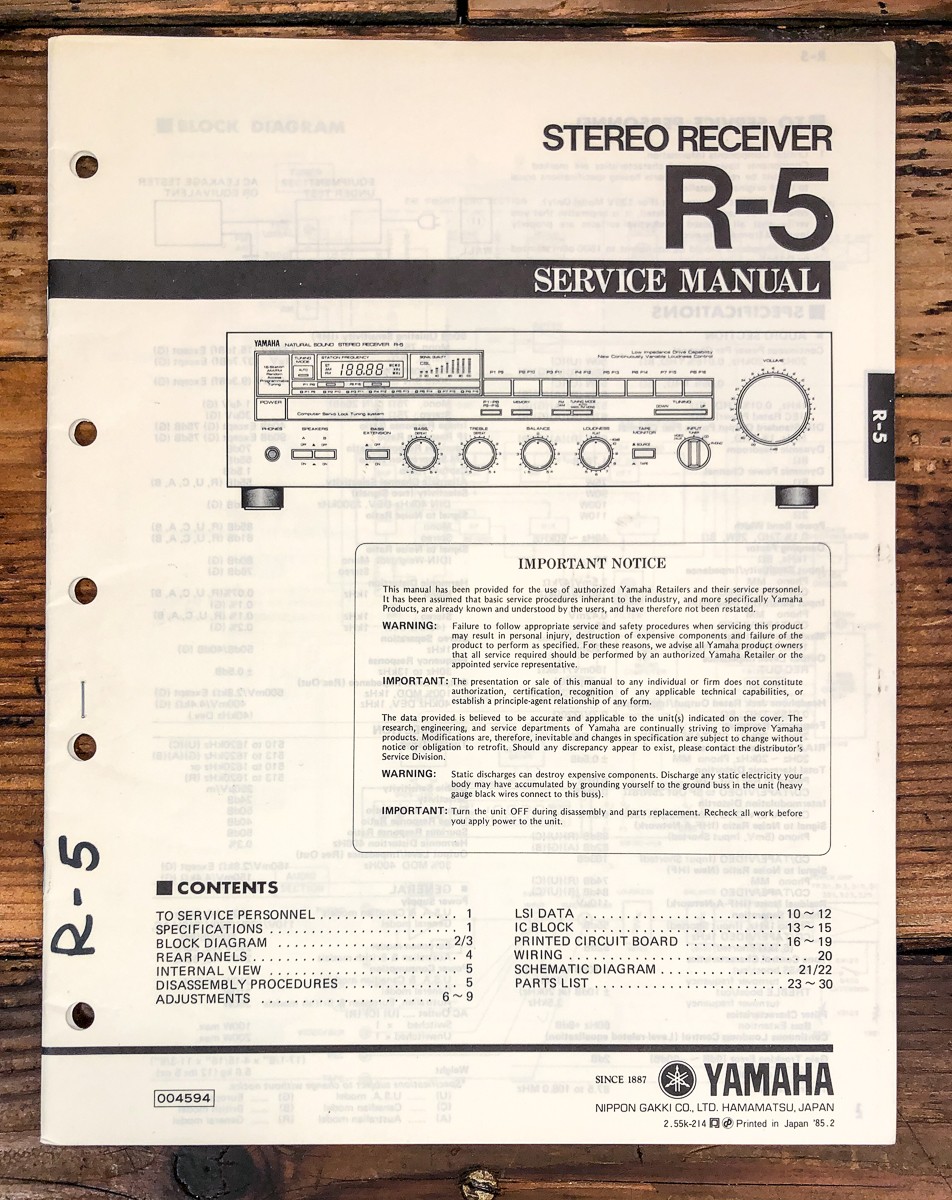

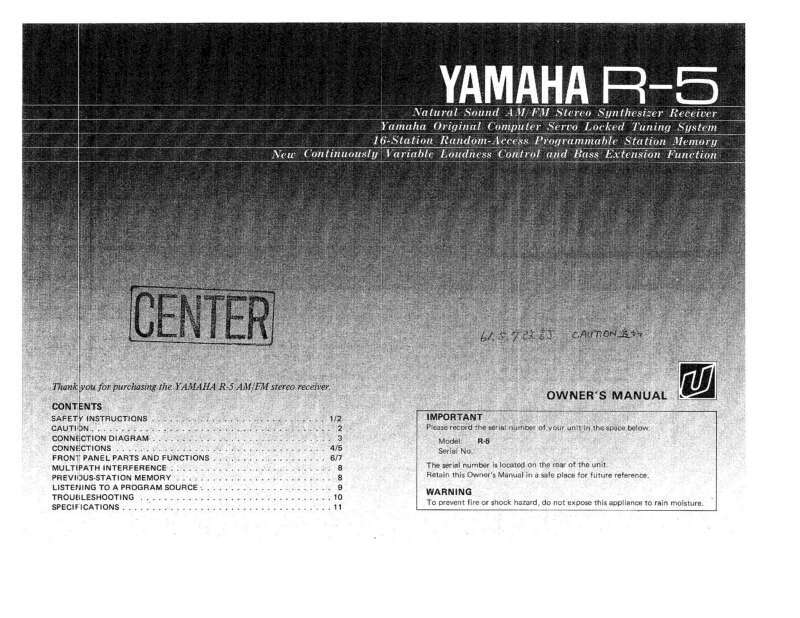

As an eBay Partner, we earn from qualifying purchases. This helps support our independent vintage technology research.
Related Models
- Yamaha CR-450 (1972)
- Yamaha CR-820 (1977)
- Yamaha CR-840 (1978)
- Yamaha R-300 (1977)
- Yamaha R-500 (1975)
- Aiwa CS-250 (1978)
- Denon TU-1500RD (1995)
- Denon TU-280 (1976)
- Denon TU-501 (1977)
- Denon TU-550 (1978)