Yamaha NS-690: The Quintessential Late-70s Bookshelf Speaker
In the golden era of high-fidelity audio, Yamaha stood out as a pioneer in crafting speakers that balanced performance, durability, and aesthetic elegance. Among their extensive lineup from the late 1970s, the Yamaha NS-690 holds a special place as a refined bookshelf speaker that brought concert-hall realism into living rooms around the world. Though not as widely discussed today as some of Yamaha’s flagship floorstanders like the NS-1000M, the NS-690 remains a cherished model among vintage audio enthusiasts for its musicality, build quality, and timeless design.
Introduced in 1978, the NS-690 arrived during a transformative period in speaker design. The 1970s saw rapid innovation in materials, crossover engineering, and cabinet construction, and Yamaha was at the forefront of this movement. The NS-690 was part of a broader family of NS (Natural Sound) series speakers, which aimed to deliver accurate, uncolored audio reproduction—a philosophy that would come to define Yamaha’s acoustic identity.
Technical Specifications
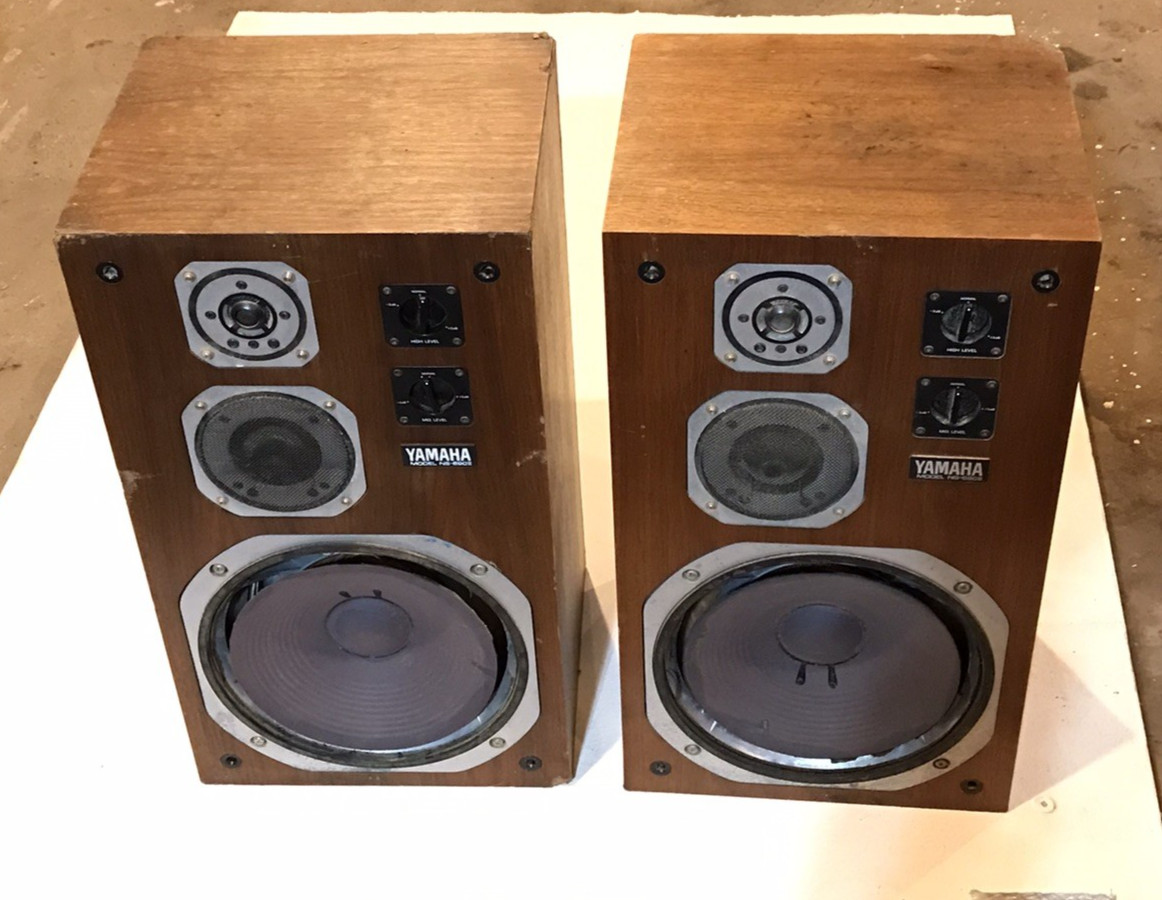
The NS-690 was engineered as a compact two-way bookshelf speaker, designed for smaller listening environments or as part of a secondary system. Despite its modest size, it featured thoughtful engineering that reflected Yamaha’s commitment to high fidelity.
| Specification | Detail |
| Model | NS-690 |
| Manufacturer | Yamaha Corporation |
| Year Introduced | 1978 |
| Type | Passive, two-way bookshelf speaker |
| Driver Configuration | 1 x 8" woofer, 1 x 1" dome tweeter |
| Frequency Response | 45 Hz – 20 kHz |
| Sensitivity | 88 dB (1W/1m) |
| Nominal Impedance | 8 ohms |
| Recommended Amp Power | 20–100 watts |
| Crossover Frequency | 3.5 kHz |
| Enclosure Type | Bass-reflex (rear ported) |
| Cabinet Finish | Walnut or rosewood woodgrain vinyl |
| Dimensions (H×W×D) | 390 × 230 × 240 mm (15.4" × 9.1" × 9.4") |
| Weight | 7.5 kg (16.5 lbs) per speaker |
The 8-inch woofer utilized a paper cone with a rubber surround, a common but effective choice for the era, offering a warm midrange and solid bass extension for its size. The dome tweeter, likely made of soft fabric, provided smooth high-frequency reproduction without the harshness sometimes associated with early metal tweeters. The bass-reflex design enhanced low-end response, allowing the NS-690 to deliver surprisingly full sound despite its compact cabinet.
Sound Characteristics and Performance
The Yamaha NS-690 is best described as a speaker with a balanced, natural tonal character. It doesn’t lean toward exaggerated bass or bright highs—instead, it presents music with clarity and coherence. This makes it particularly well-suited for acoustic jazz, classical, and vocal recordings, where tonal accuracy is paramount.
Midrange reproduction is one of the NS-690’s strongest suits. Voices come through with presence and intimacy, and instruments like pianos, guitars, and strings are rendered with a lifelike texture. The 8-inch woofer allows the speaker to dip into the lower registers effectively, delivering bass that’s tight and controlled rather than boomy. While it won’t rattle walls like a modern subwoofer, it offers respectable low-end for a bookshelf design of its era.
The tweeter complements the woofer with a smooth, non-fatiguing top end. Cymbals shimmer without sibilance, and high notes from violins or flutes retain their air and detail. The crossover at 3.5 kHz is well-executed, with minimal phase distortion and a seamless handoff between drivers.
Overall, the NS-690 excels in creating a cohesive soundstage with good imaging. When paired with a quality integrated amplifier from the same era—such as a Yamaha B-100 or a Marantz PM-6400—the result is a listening experience that feels organic and deeply engaging.
Notable Features and Innovations
While the NS-690 may not have introduced groundbreaking technology like some of Yamaha’s later models, it embodies several design philosophies that were ahead of their time:
- Natural Sound Philosophy: Yamaha’s NS series was built around the idea of accurate, uncolored sound. The NS-690 reflects this with its neutral voicing and minimal cabinet resonance.
- Rigorous Cabinet Construction: The MDF (medium-density fiberboard) cabinet, though modest in size, is well-braced and finished with high-quality woodgrain vinyl. This helped reduce unwanted vibrations and gave the speaker a premium look.
- Dual Binding Posts: Unlike many budget speakers of the era, the NS-690 featured dual binding posts, allowing for bi-wiring—a feature typically reserved for higher-end models.
- Aesthetic Elegance: With its gently curved baffle and warm woodgrain finish, the NS-690 was as much a piece of furniture as it was audio equipment. It blended seamlessly into 1970s living rooms, appealing to both audiophiles and design-conscious consumers.
Common Issues and Maintenance
As with any vintage speaker, the Yamaha NS-690 may require some care after decades of use. The most common issues include:
- Aged Foam Surrounds: The rubber surrounds on the woofer can dry out and crumble over time, leading to reduced bass response or rattling. Re-foaming is a common and cost-effective restoration.
- Tweeter Degradation: While generally durable, the fabric dome tweeter may lose its damping fluid or develop tears. Testing with a multimeter and listening for distortion can identify problems.
- Crossover Component Aging: Electrolytic capacitors in the crossover network can degrade, affecting tonal balance. Replacing them with modern equivalents can restore original performance.
- Cosmetic Wear: The woodgrain vinyl may peel at the edges or show scratches. While this doesn’t affect sound, careful restoration with vinyl repair kits can improve appearance.
Regular cleaning, proper placement away from moisture and direct sunlight, and using a protective grill (if available) can extend the life of these speakers significantly.
Current Market Value and Collectibility
The Yamaha NS-690 is not a rare collector’s item like the NS-1000, but it has developed a loyal following among vintage audio enthusiasts. In good working condition, a pair typically sells for $150–$300 USD, depending on cosmetic condition, originality, and geographic location.
Restored pairs—especially those with re-foamed drivers and updated crossovers—often command higher prices. Original, unmodified units with clean grills and intact labels are particularly desirable.
While not a mainstream collectible, the NS-690 is valued for its authentic 1970s sound, solid build, and compatibility with classic receivers. It’s also a favorite among those building period-correct stereo systems or seeking a warm, analog listening experience.
Conclusion and Legacy
The Yamaha NS-690 may not have made headlines like some of its more famous siblings, but it represents the quiet excellence of Yamaha’s engineering during one of audio’s most innovative decades. It delivers a musical, balanced sound in a compact, elegant package—perfect for the discerning listener who values authenticity over flash.
Today, the NS-690 stands as a testament to a time when speakers were built to last, designed with care, and voiced for real music lovers. Whether you’re restoring a vintage setup or simply seeking a pair of honest-sounding bookshelf speakers, the NS-690 remains a compelling choice. It’s not just a relic of the past—it’s a window into the soul of analog audio, still singing clearly after more than four decades.
eBay Listings



As an eBay Partner, we earn from qualifying purchases. This helps support our independent vintage technology research.
Related Models
- Yamaha HP-3 (1978)
- Yamaha NS-1000 (1977)
- Yamaha NS-1000M (1977)
- Yamaha NS-1000X-II (1978)
- Yamaha NS-1000X (1977)
- Akai AM-2850 (1975)
- Akai AP-206 (1975)
- Nakamichi BX-1 (1985)
- Acoustic Research research-ar-17 (1978)
- Acoustic Research AR-19 (1994)