Yamaha NS-615: Compact Classic from Yamaha’s Golden Era
In the early 1980s, Yamaha was solidifying its reputation as a manufacturer of reliable, well-engineered audio equipment that balanced performance, durability, and value. The Yamaha NS-615, introduced around 1982, was part of a broad family of bookshelf speakers designed for home stereo systems during the height of the component audio era. Though not one of Yamaha’s flagship models like the legendary NS-1000 or NS-2000, the NS-615 carved out a quiet but enduring legacy among listeners who appreciated its clean sound, compact footprint, and classic aesthetic.
While detailed technical documentation and marketing materials for the NS-615 are scarce today, surviving units and owner recollections paint a clear picture of a modest yet thoughtful design—characteristic of Yamaha’s philosophy at the time: no frills, solid build, and musical accuracy above all.
Technical Specifications
The NS-615 was a two-way, bass-reflex bookshelf speaker aimed at mid-tier stereo systems. It was often paired with Yamaha receivers like the CR-620, C-60, or M-60 amplifiers, forming a cohesive and balanced audio chain. Its design reflects Yamaha’s engineering principles of the early '80s: conservative crossover design, reliable drivers, and a focus on real-world listening performance over technical showmanship.
| Specification | Detail |
| Model | NS-615 |
| Type | 2-way, bass-reflex bookshelf speaker |
| Driver Configuration | 1 x 13cm (5") woofer, 1 x 2.5cm (1") dome tweeter |
| Frequency Response | 65 Hz – 25 kHz |
| Sensitivity | 86 dB (2.83V/1m) |
| Nominal Impedance | 6 ohms |
| Recommended Amp Power | 10–100 watts |
| Crossover Frequency | Approximately 3.5 kHz (estimated) |
| Enclosure Finish | Wood grain vinyl (walnut or black) |
| Dimensions (H×W×D) | 280 × 160 × 175 mm (11 × 6.3 × 6.9 in) |
| Weight | 3.8 kg (8.4 lbs) per speaker |
The compact cabinet, constructed from medium-density fiberboard (MDF) with a wood-grain vinyl wrap, was designed to minimize resonance while blending into period living rooms. The front baffle was slightly curved, a design touch common in Yamaha speakers of the era, which helped reduce diffraction effects and gave the speaker a distinctive profile.
Sound Characteristics and Performance
The NS-615 delivers a balanced, neutral sound signature that leans slightly toward warmth—typical of Yamaha’s tuning philosophy in the 1980s. The 13cm woofer, made with a paper composite cone, provides clean midrange reproduction with modest bass extension down to 65 Hz. While not intended for high-impact bass performance, the NS-615 handles acoustic, jazz, and vocal-centric music with clarity and composure.
The 2.5cm soft dome tweeter is a standout feature. Unlike some budget speakers of the time that used harsher horn or metal dome designs, Yamaha opted for a smooth, rolled-off high-frequency response that avoids sibilance and listener fatigue. This makes the NS-615 particularly well-suited for long listening sessions and vintage recordings, where high-end grain can be distracting.
With a sensitivity of 86 dB, the NS-615 is not especially efficient, but it pairs well with mid-powered vintage receivers (30–60 watts) without strain. Its 6-ohm impedance is compatible with most amplifiers of the era, though modern users should ensure their equipment can handle lower impedance loads.
The stereo imaging is surprisingly wide for such a small cabinet, and the speakers perform best when positioned at ear level, slightly toed-in. While they don’t fill large rooms with authority, they excel in small to medium-sized listening spaces—perfect for bedroom setups, offices, or secondary systems.
Notable Features and Design
One of the NS-615’s strengths lies in its understated but thoughtful design:
- Bass-Reflex Porting: A rear-firing port enhances bass response and efficiency, allowing the small cabinet to produce more low-end than a sealed design of similar size.
- Minimalist Crossover: Yamaha used a simple first-order crossover network, which contributes to phase coherence and a natural sound. While not as precise as higher-order designs, it avoids the coloration that can come from complex filtering.
- Magnetic Shielding: Some versions of the NS-615 were magnetically shielded, making them safe to place near CRT televisions—a practical feature in the pre-digital living room.
- Classic Aesthetic: The wood-grain finish and clean front baffle with minimal branding reflect the tasteful industrial design Yamaha was known for. The small size and unobtrusive look make them easy to integrate into vintage or modern decors.
Common Issues and Maintenance
As with any vintage speaker, the NS-615 can suffer from age-related wear. Common issues include:
- Aged Foam Surrounds: The most frequent problem. The foam used on the woofer’s surround degrades over time, leading to flaking and loss of bass response. Replacement with modern butyl rubber surrounds is a common and effective fix.
- Tweeter Failure: While generally reliable, the soft dome tweeters can fail if overdriven or exposed to high-frequency distortion. Some owners report tweeter burnout after decades of use, especially when paired with high-gain amplifiers.
- Crossover Component Drift: Electrolytic capacitors in the crossover may dry out or change value, affecting tonal balance. Replacing these with modern equivalents can restore original performance.
- Cabinet Wear: The vinyl finish can peel or scratch, especially on edges. While this doesn’t affect sound, it impacts collectibility.
Maintenance is straightforward: inspect the woofers for crumbling foam, listen for rattles or distortion, and consider having the crossovers serviced if the sound seems off. Re-foaming kits are widely available online and can extend the life of these speakers for decades more.
Current Market Value and Collectibility
The Yamaha NS-615 is not a high-demand collector’s item like the NS-10 or NS-1000M, but it holds steady appeal among vintage audio enthusiasts looking for affordable, functional bookshelf speakers with authentic 1980s charm.
In working condition, a pair of NS-615s typically sells for $75–$150 on the secondhand market (as of 2024), depending on cosmetic condition and whether they’ve been refurbished. Fully restored units with new surrounds and recapped crossovers may command slightly higher prices.
They are particularly sought after by:
- Vintage Yamaha system builders aiming for model-matched components
- Audiophiles on a budget seeking warm, natural sound
- Retro decor enthusiasts who appreciate their compact size and classic look
While not a “holy grail” speaker, the NS-615 represents excellent value for listeners who want authentic vintage sound without breaking the bank.
Conclusion and Legacy
The Yamaha NS-615 may not have made headlines in its day, but it exemplifies the quiet excellence of Yamaha’s mid-tier speaker designs from the early 1980s. It wasn’t built to impress with raw power or flashy specs, but to deliver honest, fatigue-free sound in real-world listening environments.
Today, it stands as a testament to an era when audio gear was built to last, designed with care, and intended to bring music into the home with clarity and warmth. For those discovering vintage audio, the NS-615 offers a low-risk entry point into the world of classic speakers. For longtime collectors, it’s a nostalgic reminder of a time when a simple bookshelf speaker could deliver a surprisingly rich and engaging musical experience.
If you stumble upon a pair in good condition—or are willing to invest a little in restoration—the Yamaha NS-615 remains a worthwhile addition to any vintage setup. It may not be legendary, but it’s certainly lovable.
eBay Listings


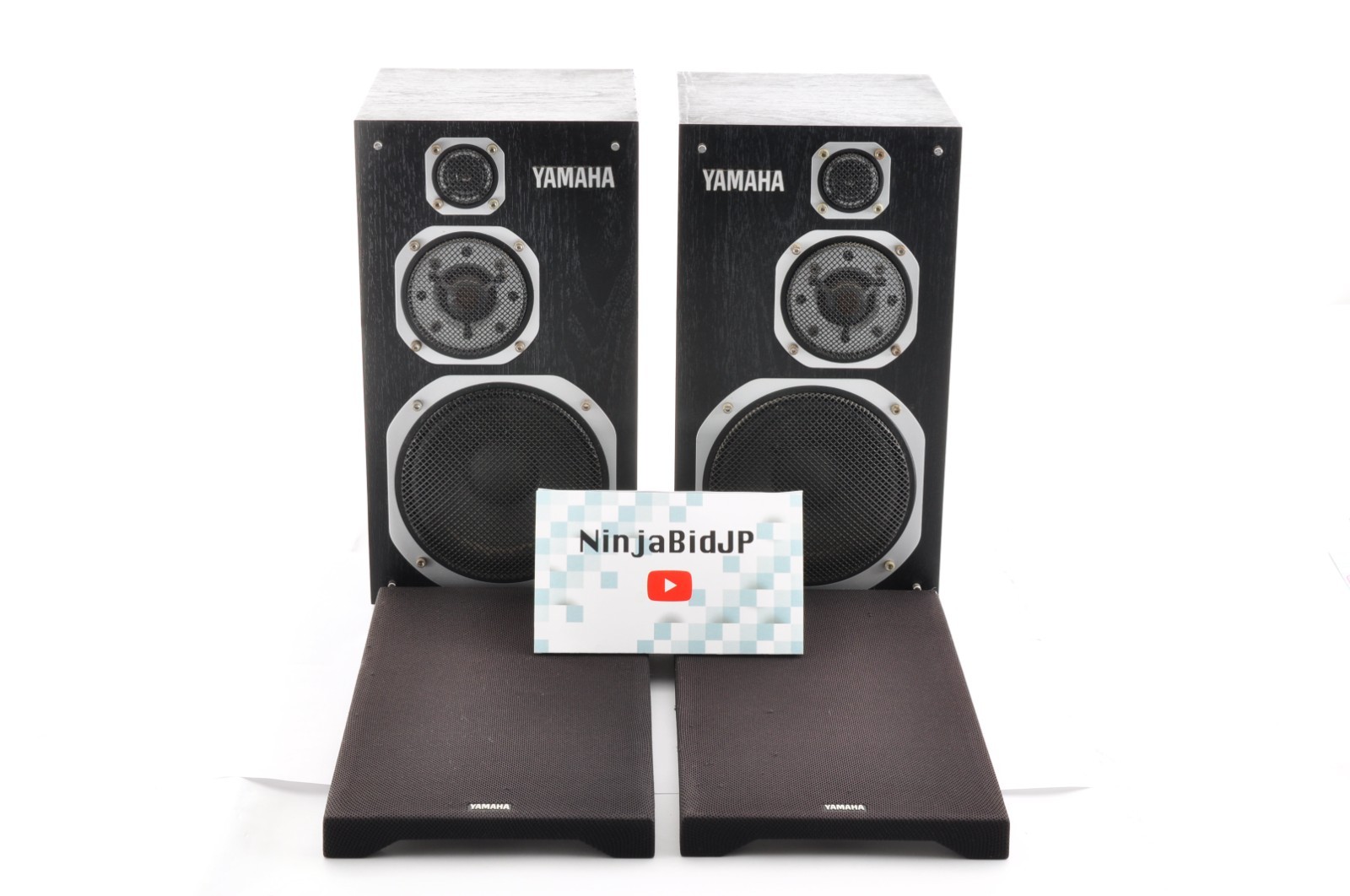

As an eBay Partner, we earn from qualifying purchases. This helps support our independent vintage technology research.
Related Models
- Yamaha HP-3 (1978)
- Yamaha NS-1000 (1977)
- Yamaha NS-1000M (1977)
- Yamaha NS-1000X-II (1978)
- Yamaha NS-1000X (1977)
- Akai AM-2850 (1975)
- Akai AP-206 (1975)
- Nakamichi BX-1 (1985)
- Acoustic Research research-ar-17 (1978)
- Acoustic Research AR-19 (1994)