Yamaha NS-2000: The Pinnacle of 1980s High-End Loudspeaker Engineering
In the pantheon of vintage high-end audio, few loudspeakers command the reverence and awe of the Yamaha NS-2000. Introduced in 1986, this flagship floor-standing speaker represented the absolute zenith of Yamaha’s acoustic engineering and craftsmanship during the golden era of analog fidelity. More than just a speaker, the NS-2000 was a statement—a bold declaration that no compromise was too great in the pursuit of sonic perfection. With its rare beryllium drivers, hand-finished walnut veneer, and obsessive attention to detail, the NS-2000 remains one of the most coveted and legendary loudspeakers in audiophile history.
A Statement of Excellence
The mid-1980s saw a fierce competition among Japanese audio manufacturers to produce the ultimate reference loudspeaker. While brands like Technics, Denon, and Kenwood pushed boundaries, Yamaha’s answer was the NS-2000—a speaker so meticulously engineered and so exquisitely built that it stood apart from its contemporaries. It was not merely a product of mass production; each unit was hand-assembled in Japan, with cabinet work finished to furniture-grade standards. The NS-2000 wasn’t just designed to reproduce music—it was built to elevate the listening experience into something transcendent.
Positioned at the top of Yamaha’s NS (Natural Sound) series, the NS-2000 followed in the footsteps of earlier icons like the NS-1000M, but took the concept to new heights. It was the first—and remains one of the very few—consumer loudspeakers to feature beryllium in both its tweeter and midrange drivers, a material prized for its exceptional stiffness-to-density ratio and ability to reproduce high frequencies with astonishing speed and clarity.
Technical Specifications
| Specification | Detail |
| Model | NS-2000 |
| Type | 3-way, bass-reflex floor-standing speaker |
| Frequency Response | 25 Hz – 40 kHz |
| Sensitivity | 90 dB (1W/1m) |
| Nominal Impedance | 6 Ω (compatible with most high-end amps) |
| Crossover Frequencies | 500 Hz, 4.2 kHz |
| Tweeter | 25 mm beryllium dome |
| Midrange | 80 mm beryllium cone |
| Woofers | Dual 300 mm (12") paper-cone woofers |
| Cabinet Material | Solid walnut with hand-rubbed finish |
| Dimensions (H×W×D) | 1,150 × 340 × 470 mm |
| Weight | 45 kg (99 lbs) per speaker |
| Year of Release | 1986 |
| Origin | Japan |
Sound Characteristics and Performance
The Yamaha NS-2000 delivers a sound that is at once detailed, dynamic, and emotionally engaging. Its use of beryllium—still a rare and expensive material in driver construction—gives the speaker a unique tonal signature. The tweeter is exceptionally fast and low in distortion, capable of rendering the finest nuances in cymbals, strings, and vocal sibilance without harshness or fatigue. The midrange driver, also made from beryllium, offers a transparency and immediacy that brings voices and instruments startlingly close to the listener, with a natural timbre that few speakers of any era can match.
The dual 12-inch woofers provide deep, articulate bass that extends down to 25 Hz. While not as thunderous as some modern subwoofers, the bass is tight, well-controlled, and perfectly integrated with the midrange—thanks in part to Yamaha’s advanced crossover design and cabinet bracing. The speaker’s 90 dB sensitivity ensures it can be driven effectively by a wide range of tube and solid-state amplifiers, though it truly sings when paired with high-current, high-resolution electronics.
Listeners often describe the NS-2000’s soundstage as expansive and three-dimensional, with precise imaging and excellent depth. Whether reproducing a solo piano, a full symphony, or a rock ensemble, the speaker maintains composure and coherence, revealing layers of detail that lesser systems simply cannot resolve.
Notable Features and Innovations
The NS-2000 was packed with cutting-edge technology and design choices that set it apart:
- Beryllium Drivers: The use of beryllium in both the tweeter and midrange was revolutionary. Beryllium is five times stiffer than steel yet lighter than aluminum, allowing for minimal distortion and ultra-fast transient response. Yamaha’s mastery in working with this difficult material (due to its toxicity during manufacturing) underscored their engineering prowess.
- Hand-Crafted Cabinet: The cabinet is constructed from solid walnut, with extensive internal bracing to eliminate resonance. Each enclosure was hand-sanded and finished with multiple coats of lacquer, then polished to a piano-like sheen. The result is both a sonic and visual masterpiece.
- Advanced Crossover Network: Utilizing high-quality components and point-to-point wiring, the crossover is designed to preserve signal integrity and ensure seamless integration between drivers.
- Dual-Woofer Bass System: The two 12-inch woofers operate in a push-pull configuration within a large bass-reflex cabinet, enhancing bass linearity and reducing cabinet vibration.
- Magnetic Shielding: Unusual for high-end speakers of the time, the NS-2000 included magnetic shielding, allowing it to be placed near CRT televisions without interference—reflecting Yamaha’s vision of a high-fidelity system integrated into the living space.
Common Issues and Maintenance
Due to their age and complexity, vintage NS-2000 speakers require careful attention. The most common issues include:
- Aging Crossover Components: Capacitors and inductors in the crossover may degrade over time, leading to tonal imbalances or reduced performance. A professional recapping using audiophile-grade parts is often recommended for optimal sound.
- Beryllium Driver Concerns: While beryllium itself is stable, the surrounds on the midrange and tweeter can dry out or crack after decades of use. Replacement requires specialized service due to the rarity and value of the drivers.
- Cabinet Finish Wear: The beautiful walnut finish can show scratches or fading, especially in direct sunlight. Gentle polishing with non-abrasive furniture wax can restore luster, but refinishing should be left to experts.
- Weight and Placement: At nearly 100 lbs each, the NS-2000s are extremely heavy. Proper placement on sturdy flooring and isolation feet is essential to prevent damage and optimize bass response.
Owners are strongly advised to have the speakers inspected by a qualified technician familiar with vintage high-end gear before extensive use.
Current Market Value and Collectibility
Today, the Yamaha NS-2000 is a highly sought-after collector’s item. Original pairs in good condition regularly sell for $10,000 to $20,000 USD, with pristine, low-hour examples commanding even higher prices. Their rarity—only a few thousand pairs were ever made—combined with their legendary status, ensures strong demand among audiophiles and vintage audio enthusiasts.
Factors that influence value include:
- Originality (unmodified drivers and crossovers)
- Cabinet condition (especially the finish and absence of cracks)
- Service history
- Inclusion of original grilles and documentation
While modern speakers may surpass the NS-2000 in raw measurements, few match its combination of engineering ambition, sonic character, and aesthetic grandeur.
Conclusion: A Legacy of Sonic Artistry
The Yamaha NS-2000 is more than a loudspeaker—it’s a monument to the passion, precision, and artistry that defined high-end audio in the 1980s. It represents a time when manufacturers weren’t afraid to spend whatever it took to achieve perfection, even if the result was prohibitively expensive. With its beryllium drivers, hand-built cabinet, and uncompromising performance, the NS-2000 remains a benchmark against which all other speakers are measured.
For those lucky enough to hear—or own—a pair, the NS-2000 offers not just sound, but a profound musical experience. It’s a reminder that in the world of vintage audio, some legends aren’t just hype—they’re real, and they still sing.
eBay Listings

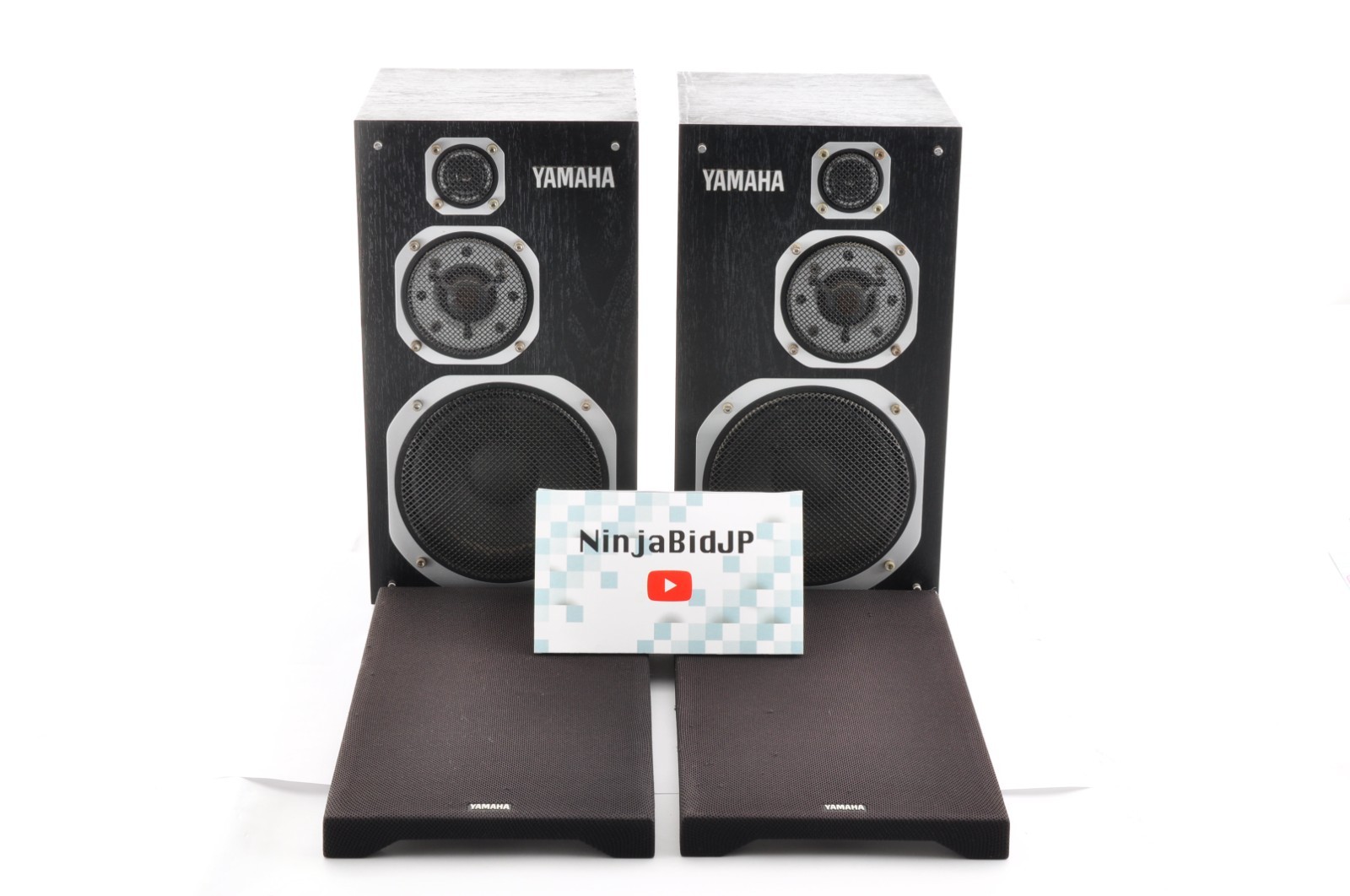


As an eBay Partner, we earn from qualifying purchases. This helps support our independent vintage technology research.
Related Models
- Yamaha HP-3 (1978)
- Yamaha NS-1000 (1977)
- Yamaha NS-1000M (1977)
- Yamaha NS-1000X-II (1978)
- Yamaha NS-1000X (1977)
- Akai AM-2850 (1975)
- Akai AP-206 (1975)
- Nakamichi BX-1 (1985)
- Acoustic Research research-ar-17 (1978)
- Acoustic Research AR-19 (1994)