Yamaha NS-1000X-II: The Refined Legend of Studio-Grade Accuracy
In the late 1970s, Yamaha cemented its reputation in the high-fidelity world with a bold leap forward in speaker design: the NS-1000 series. Among these, the NS-1000X-II stands as a refined evolution of the already-acclaimed NS-1000X, representing a pinnacle of Japanese engineering and sonic transparency. Though less widely documented than its more famous sibling, the NS-10, the NS-1000X-II was built for a different purpose — not for the control room’s brutal honesty, but for the audiophile’s pursuit of lifelike, detailed sound reproduction in the home.
Released in 1978, the NS-1000X-II was part of Yamaha’s elite “Grand Piano” series of speakers, so named for their rich wood veneer finishes and premium build quality. These were not mass-market products; they were handcrafted statements of audio excellence, designed for discerning listeners who demanded both aesthetic elegance and technical precision.
While the original NS-1000X already featured beryllium dome tweeters and midranges — a rare and advanced material choice at the time — the NS-1000X-II introduced subtle but meaningful upgrades. These included revised crossover components, improved damping materials, and enhanced cabinet bracing to reduce resonance. The result was a speaker that retained the lightning-fast transient response of beryllium while offering a smoother, more balanced tonal presentation — a refinement that made it even more suitable for extended listening sessions.
Technical Specifications
| Specification | Detail |
| Model | NS-1000X-II |
| Type | 3-way, bass-reflex floorstanding |
| Drivers | 1" Beryllium dome tweeter, 3" Beryllium dome midrange, 12" paper cone woofer |
| Frequency Response | 35 Hz – 40 kHz |
| Crossover Frequencies | 700 Hz (woofer/mid), 5 kHz (mid/tweeter) |
| Sensitivity | 91 dB (1W/1m) |
| Nominal Impedance | 6 ohms |
| Recommended Amp Power | 20–150 watts |
| Cabinet Finish | Rosewood or walnut veneer (Grand Piano) |
| Dimensions (H×W×D) | 98.5 × 30 × 37.5 cm (38.8 × 11.8 × 14.8 in) |
| Weight | 32 kg (70.5 lbs) per speaker |
Sound Characteristics and Performance
The sonic signature of the NS-1000X-II is defined by its use of beryllium drivers, a material prized for its exceptional stiffness-to-mass ratio. This allows the tweeter and midrange to respond with near-instantaneous speed, delivering exceptional clarity, detail retrieval, and low distortion — even at high volumes.
The 1-inch beryllium tweeter produces an airy, extended high end that avoids the harshness sometimes associated with metal domes. Instead, it offers a smooth yet revealing top end, making cymbals shimmer and strings breathe with natural texture. Paired with the 3-inch beryllium midrange, the vocal and instrumental midband is exceptionally transparent, with precise imaging and excellent tonal neutrality.
The 12-inch woofer, while more conventional in material (paper composite), is well-matched to the upper drivers. It delivers deep, controlled bass down to 35 Hz, with a tightness that complements the speaker’s overall analytical character. The bass is not overly warm or bloated — it’s accurate, making the NS-1000X-II ideal for critical listening and genre-spanning versatility, from classical to rock.
Thanks to its high sensitivity (91 dB), the NS-1000X-II works beautifully with a wide range of amplifiers, from vintage tube gear to modern solid-state designs. However, it truly shines when paired with clean, detailed amplification that can harness its resolving power without adding coloration.
Notable Features and Innovations
The NS-1000X-II was a technological showcase for Yamaha in the late 1970s. Its most groundbreaking feature was the use of beryllium in both the tweeter and midrange drivers — a rarity even today due to the material’s cost and toxicity during manufacturing. At the time, only a handful of manufacturers (like JBL and Altec) experimented with beryllium, making Yamaha’s adoption of it in a consumer speaker a bold statement.
Other notable features include:
- Advanced crossover network: Utilizing high-quality capacitors and air-core inductors to preserve signal integrity.
- Rigid MDF cabinet with internal bracing: Minimizes panel resonance and coloration.
- Dual rear-firing bass reflex ports: Enhances low-frequency extension and reduces port noise.
- Hand-finished wood veneer: Available in luxurious rosewood or walnut, giving the speakers a timeless, high-end aesthetic.
Yamaha also paid close attention to time alignment, ensuring that the acoustic centers of the drivers were vertically aligned to create a coherent wavefront — a design principle that improves stereo imaging and soundstage depth.
Common Issues and Maintenance
As with any vintage speaker, the NS-1000X-II requires careful attention over time. The most common issues include:
- Aging crossover components: Capacitors can dry out or drift in value, leading to tonal imbalances. Re-capping with modern audiophile-grade parts is often recommended.
- Woofer surround degradation: The foam surrounds on the 12" woofer may deteriorate after 40+ years, causing a loss of bass or rattling. Foam replacement kits are available from specialty restoration services.
- Beryllium driver concerns: While the drivers themselves are robust, beryllium dust is hazardous if the domes are damaged. Never attempt to disassemble or repair beryllium drivers without proper safety precautions.
- Cabinet finish wear: The wood veneer, while beautiful, can show scratches or fading. Gentle polishing with non-abrasive products can restore luster.
Regular inspection, proper placement (away from moisture and direct sunlight), and use with clean power will extend the life of these speakers significantly.
Current Market Value and Collectibility
The NS-1000X-II is a rare and sought-after collector’s item, especially in good condition with original finishes and functioning drivers. While not as ubiquitous as the NS-10, its status among vintage audio enthusiasts is growing, particularly among those who appreciate beryllium driver technology and Yamaha’s golden-era craftsmanship.
On the secondary market, fully functional pairs in excellent cosmetic and sonic condition can fetch between $1,800 and $3,000 USD, depending on location and provenance. Original packaging, manuals, or rare finishes (such as special-order colors) can increase value.
Its collectibility is bolstered by its lineage — as part of the NS-1000 series, it shares DNA with Yamaha’s most ambitious speaker designs. Audiophiles who value transparency, speed, and build quality often seek out the NS-1000X-II as a centerpiece for vintage high-end systems.
Conclusion and Legacy
The Yamaha NS-1000X-II is more than just a speaker — it’s a testament to a moment when Japanese audio engineering reached new heights of sophistication. It combines cutting-edge materials (beryllium), meticulous construction, and a neutral, revealing sound that remains competitive even by modern standards.
While overshadowed in pop culture by the NS-10’s studio dominance, the NS-1000X-II represents a different ideal: the pursuit of high-fidelity in the home. It was built for those who wanted not just to hear music, but to experience it — with all its nuance, dynamics, and emotional depth.
Today, the NS-1000X-II stands as a hidden gem of vintage audio, cherished by collectors and audiophiles alike. For those lucky enough to own or audition a well-maintained pair, it offers a rare window into Yamaha’s golden age — a time when innovation, craftsmanship, and musicality converged in perfect harmony.
eBay Listings

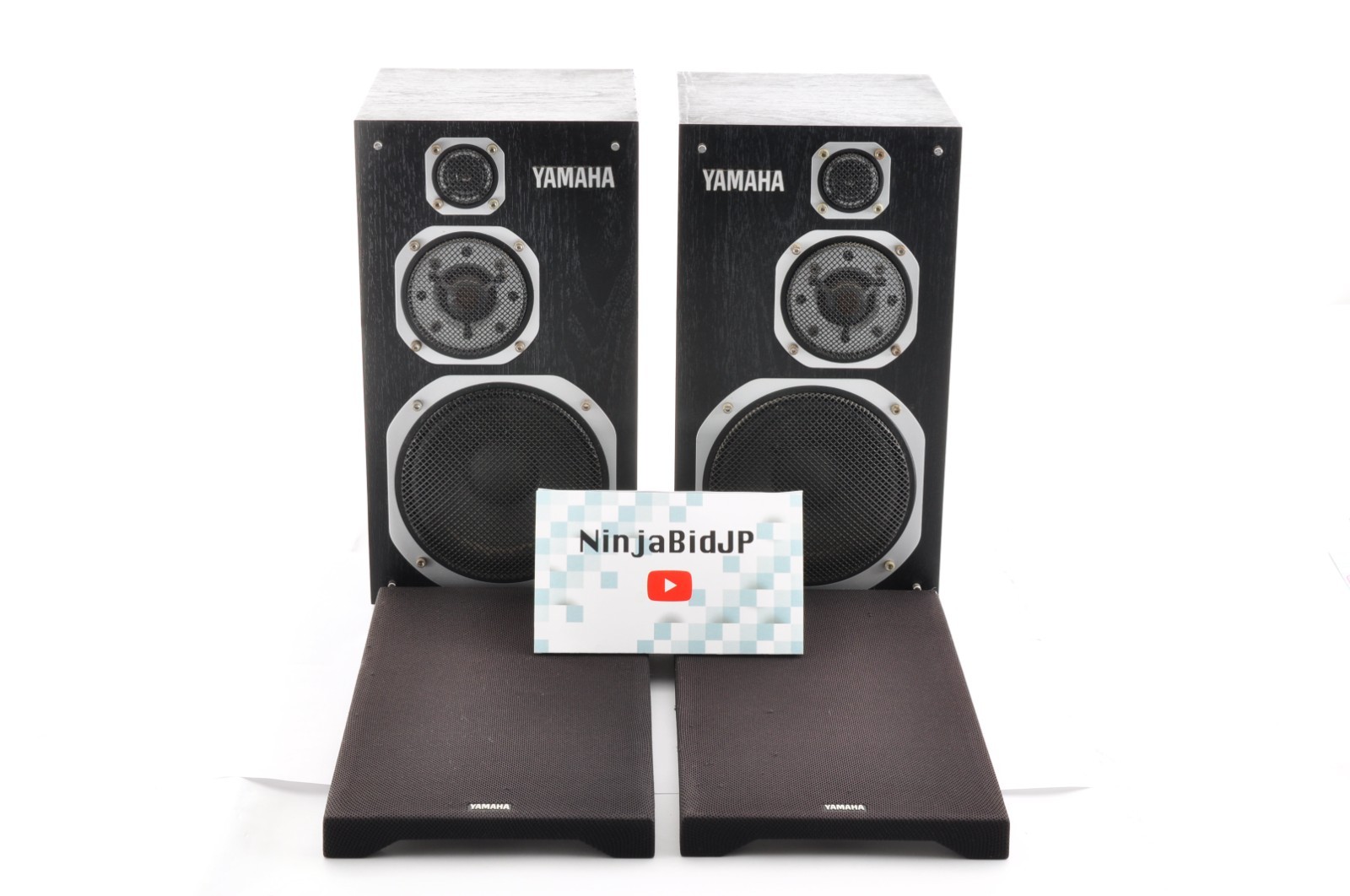


As an eBay Partner, we earn from qualifying purchases. This helps support our independent vintage technology research.
Related Models
- Yamaha HP-3 (1978)
- Yamaha NS-1000 (1977)
- Yamaha NS-1000M (1977)
- Yamaha NS-1000X (1977)
- Yamaha NS-10M (1978)
- Akai AM-2850 (1975)
- Akai AP-206 (1975)
- Nakamichi BX-1 (1985)
- Acoustic Research research-ar-17 (1978)
- Acoustic Research AR-19 (1994)