Yamaha NS-1000M: The Pinnacle of 1970s High-Fidelity Loudspeaker Engineering
When it comes to legendary loudspeakers from the golden era of high-fidelity audio, few models command as much respect among audiophiles and studio engineers as the Yamaha NS-1000M. Introduced in 1977, this compact yet powerful bookshelf speaker represented the zenith of Yamaha’s acoustic innovation during the late 1970s. Though often overshadowed in popular memory by its more ubiquitous sibling, the NS-10, the NS-1000M was a far more refined and technically advanced design—crafted not for the mainstream market, but for critical listening environments where sonic accuracy and material excellence were paramount.
Part of Yamaha’s elite “M” series (the “M” standing for Monitor), the NS-1000M was engineered to deliver studio-grade transparency in a domestic setting. It combined exotic materials, meticulous crossover design, and a compact sealed enclosure to produce a speaker that was both revealing and musically engaging. Today, the NS-1000M is revered as a rare gem among vintage audio collectors and remains a sought-after reference monitor for those who appreciate the marriage of engineering precision and sonic purity.
Technical Specifications
| Specification | Detail |
| Model | NS-1000M |
| Year Introduced | 1977 |
| Type | 2-way, sealed enclosure |
| Driver Configuration | 1 x 8" woofer, 1 x 1" beryllium dome tweeter |
| Frequency Response | 45 Hz – 30 kHz |
| Sensitivity | 89 dB (2.83V/1m) |
| Nominal Impedance | 6 Ω |
| Recommended Amp Power | 20 – 100 watts |
| Crossover Frequency | 2.5 kHz |
| Enclosure Type | Acoustic suspension (sealed) |
| Dimensions (H×W×D) | 355 × 229 × 280 mm (14 × 9 × 11 inches) |
| Weight | 10.5 kg (23.1 lbs) per speaker |
| Finish Options | Walnut veneer, black ash |
Sound Characteristics and Performance
The NS-1000M delivers a remarkably balanced and transparent sound signature that leans toward neutrality with a slight warmth in the midrange—typical of Yamaha’s house sound during this era. Its sealed (acoustic suspension) cabinet design ensures tight, controlled bass response with minimal overhang, making it ideal for critical listening and time-domain accuracy.
The star of the show is Yamaha’s 1-inch beryllium dome tweeter, a rare and advanced material choice even by today’s standards. Beryllium is significantly lighter and stiffer than aluminum or titanium, allowing the tweeter to reproduce high frequencies with exceptional speed, clarity, and low distortion. This results in an extended high-frequency response up to 30 kHz, capturing air and detail in a way few vintage tweeters can match.
The 8-inch woofer, constructed with a carbon-fiber-reinforced pulp cone, provides articulate midrange and punchy lower mids. While bass extension is limited by the small sealed cabinet (rolling off below 45 Hz), the NS-1000M never sounds thin or anemic. Instead, it offers a coherent, time-aligned presentation that emphasizes rhythm, texture, and spatial precision.
In practice, the NS-1000M excels with acoustic jazz, classical, and vocal recordings, where its transparency allows subtle nuances in performance to shine through. It’s less forgiving of poor recordings—a hallmark of a true monitor—making it a favorite among audiophiles who value honesty over euphony.
Notable Features and Innovations
The NS-1000M was packed with engineering innovations that set it apart from other speakers of its time:
- Beryllium Dome Tweeter: One of the first consumer speakers to use beryllium in the high-frequency driver, predating even some modern high-end models. This material choice drastically reduced breakup modes and improved transient response.
- Advanced Crossover Network: Utilizing high-quality capacitors and air-core inductors, the crossover was designed for minimal phase distortion and seamless driver integration. The 2.5 kHz crossover point was carefully chosen to optimize the overlap between the woofer and tweeter.
- Damped Sealed Enclosure: The compact MDF cabinet features internal damping and bracing to minimize resonance. The acoustic suspension design eliminates port noise and ensures linear bass response, albeit with reduced low-end extension.
- Magnetic Shielding: Unusual for the time, the NS-1000M included magnetic shielding, allowing it to be placed near video equipment—a nod to its potential use in broadcast or studio control rooms.
- High Build Quality: Each unit was hand-assembled and rigorously tested, reflecting Yamaha’s commitment to precision manufacturing. The real wood veneer finishes (walnut or black ash) gave the speaker a refined, professional appearance.
Common Issues and Maintenance
While the NS-1000M is a robustly built speaker, age has introduced some common concerns for current owners:
- Tweeter Degradation: The beryllium dome tweeters are durable, but the surround material can dry out over time, leading to crackling or distortion at high volumes. Re-foaming or professional restoration is recommended for heavily used units.
- Crossover Component Aging: Electrolytic capacitors in the crossover may degrade after 40+ years, potentially affecting tonal balance. Replacing these with modern audiophile-grade components can restore original performance.
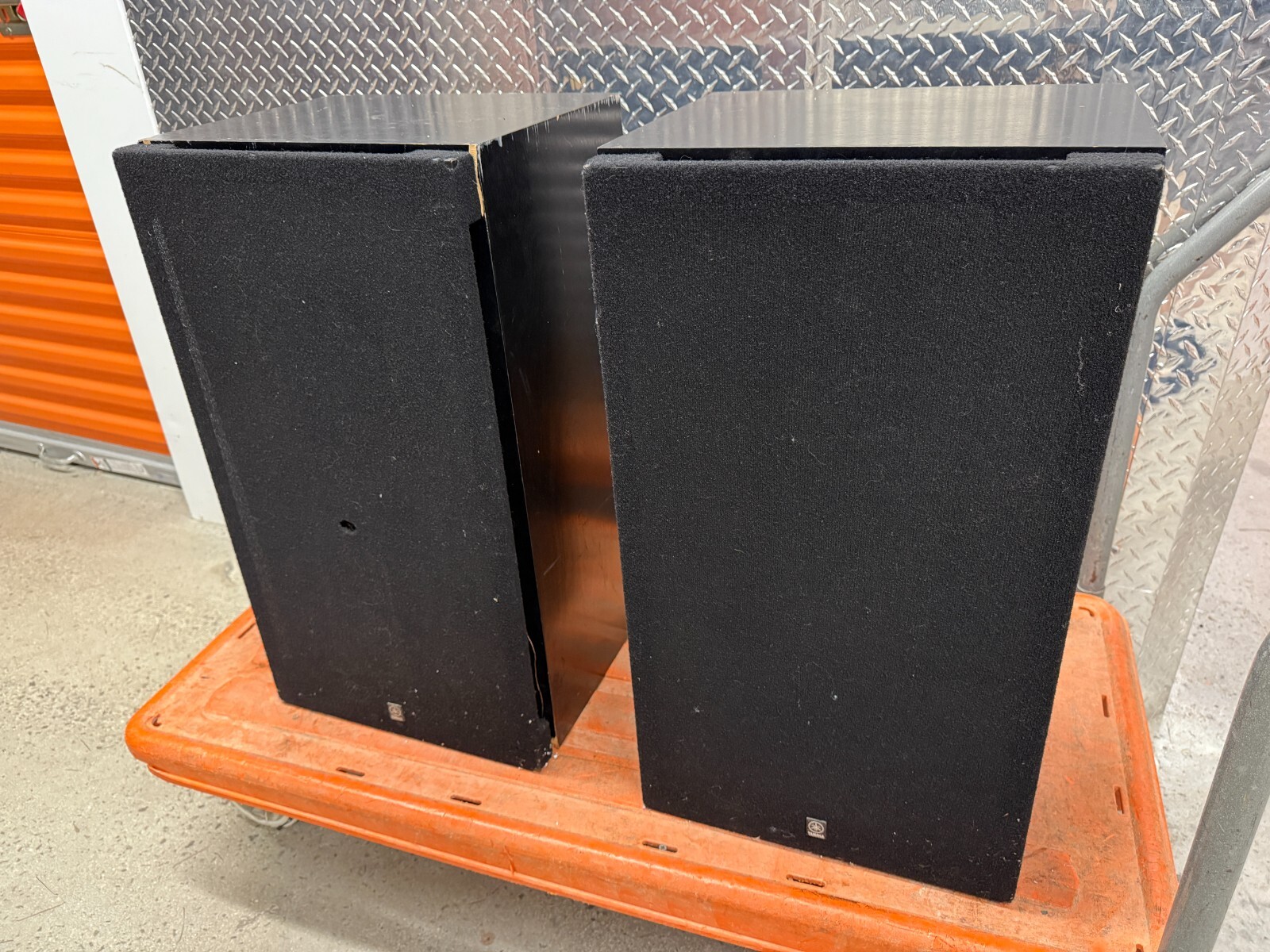
- Baffle Delamination: Some early models exhibit veneer lifting on the front baffle due to adhesive breakdown. While cosmetic, it can affect resale value.
- Beryllium Safety Note: Beryllium is toxic if inhaled as dust, so never attempt to disassemble or sand the tweeter dome. If replacement is necessary, use only qualified technicians familiar with beryllium handling.
Regular cleaning with a soft cloth and keeping the speakers away from direct sunlight and humidity will help preserve their condition. For optimal performance, bi-amping is possible with minor modification, though the original passive crossover is well-engineered for single-amp use.
Current Market Value and Collectibility
The Yamaha NS-1000M is a rare and increasingly collectible speaker. While not as widely known as the NS-10, its superior build, exotic materials, and limited production run have made it a cult favorite. Pairs in good condition typically sell between $1,200 and $2,500 USD, with mint, unmodified examples commanding higher prices—especially those with original packaging and documentation.
Collectors value the NS-1000M not only for its sound but as a historical artifact of Japanese audio engineering prowess in the 1970s. Its use of beryllium, precision manufacturing, and studio-monitor philosophy place it alongside other elite speakers of the era, such as the Tannoy Westminster or JBL L100.
Conclusion and Legacy
The Yamaha NS-1000M stands as a quiet masterpiece of vintage loudspeaker design—a monitor built for truth, not flattery. It may not have achieved the commercial fame of other Yamaha models, but among those in the know, it’s regarded as one of the finest bookshelf speakers ever made.
Its legacy lives on in Yamaha’s continued commitment to high-resolution audio and in the modern NS-5000, which revives the beryllium tweeter technology in a contemporary flagship. For vintage audio enthusiasts, the NS-1000M offers a rare opportunity to own a piece of audio history that sounds as compelling today as it did over four decades ago.
If you’re lucky enough to encounter a well-maintained pair, don’t hesitate—these are not just speakers, but sonic time capsules from the peak of analog fidelity.
eBay Listings



As an eBay Partner, we earn from qualifying purchases. This helps support our independent vintage technology research.
Related Models
- Yamaha HP-3 (1978)
- Yamaha NS-1000 (1977)
- Yamaha NS-1000X-II (1978)
- Yamaha NS-1000X (1977)
- Yamaha NS-10M (1978)
- Akai AM-2850 (1975)
- Akai AP-206 (1975)
- Nakamichi BX-1 (1985)
- Acoustic Research research-ar-17 (1978)
- Acoustic Research AR-19 (1994)