Yamaha NS-1000: The Pinnacle of 1970s High-End Bookshelf Design
In the golden era of high-fidelity audio during the late 1970s, Yamaha made a bold statement with the release of the NS-1000, a bookshelf speaker that defied expectations and redefined what compact loudspeakers could achieve. Though often overshadowed by its more famous floor-standing siblings like the NS-2000, the NS-1000 remains a revered model among vintage audio enthusiasts for its advanced engineering, refined sound, and elegant craftsmanship. As one of Yamaha’s flagship bookshelf designs, the NS-1000 represented the company’s commitment to marrying cutting-edge acoustic research with premium materials and meticulous build quality.
Released in 1977, the NS-1000 was part of Yamaha’s elite “NS” (Natural Sound) series, a line dedicated to achieving sonic transparency and lifelike reproduction. At a time when many manufacturers were chasing power and size, Yamaha focused on precision, coherence, and musicality—values that continue to resonate with audiophiles today.
Technical Specifications
| Specification | Detail |
| Model | NS-1000 |
| Type | 2-way bass reflex bookshelf speaker |
| Driver Configuration | 1 x 28mm beryllium dome tweeter 1 x 250mm polyurethane-coated paper cone woofer |
| Frequency Response | 45 Hz – 25 kHz |
| Sensitivity | 88 dB (1W/1m) |
| Nominal Impedance | 6 ohms |
| Recommended Amp Power | 20 – 120 watts |
| Crossover Frequency | 2.8 kHz |
| Enclosure Type | Bass reflex with rear-firing port |
| Cabinet Finish | Rosewood or walnut real wood veneer |
| Dimensions (H×W×D) | 410 × 270 × 305 mm |
| Weight | 13.5 kg per speaker |
Sound Characteristics and Performance
The Yamaha NS-1000 delivers a remarkably balanced and detailed sound for a speaker of its size. Its most celebrated feature is the 28mm beryllium dome tweeter, a rare and advanced component even by today’s standards. Beryllium is prized for its exceptional stiffness-to-mass ratio, allowing the tweeter to reproduce high frequencies with astonishing clarity, speed, and minimal distortion. The result is a crisp, airy top end that remains smooth and non-fatiguing—ideal for extended listening sessions.
Paired with the tweeter is a large 250mm (10-inch) polyurethane-coated paper cone woofer, which provides deep, controlled bass for a bookshelf design. While not matching the sub-bass extension of larger floorstanders, the NS-1000 reaches down to 45 Hz, making it capable of handling orchestral and jazz recordings with authority. The bass is tight and well-damped, avoiding the boominess that plagued many compact speakers of the era.
The crossover, set at 2.8 kHz, is carefully tuned to ensure a seamless transition between drivers. Yamaha’s engineers paid close attention to time alignment and phase coherence, contributing to a cohesive soundstage with precise imaging. Whether playing classical, rock, or vocal jazz, the NS-1000 presents music with a natural tonal balance and excellent dynamic range.
One of the speaker’s most appealing traits is its ability to sound effortless and transparent. It doesn’t call attention to itself; instead, it disappears sonically, allowing the listener to focus on the music. This neutrality made it a favorite among critical listeners and studio engineers—though it never achieved the same studio-monitor fame as the NS-1000M’s smaller cousin, the NS-10.
Notable Features and Innovations
The NS-1000 was packed with innovations that set it apart from its contemporaries:
- Beryllium Tweeter: One of the first consumer speakers to use beryllium in the high-frequency driver, a material now found only in ultra-high-end models.
- Polyurethane-Coated Woofer: Yamaha’s proprietary cone material offered excellent damping and reduced breakup modes, resulting in cleaner midrange and bass.
- Real Wood Veneer Cabinet: Available in luxurious rosewood or walnut finishes, the cabinet was not only beautiful but also acoustically inert, minimizing resonance.
- Rear-Firing Bass Reflex Port: This design helped integrate the speaker into the room more naturally and reduced boundary interference compared to front-ported models.
- High-Quality Internal Wiring and Components: Yamaha used oxygen-free copper wiring and precision capacitors in the crossover, reflecting its commitment to quality throughout.
The attention to detail extended to the speaker’s binding posts, which were robust and compatible with banana plugs or bare wire—uncommon in many Japanese speakers of the time.
Common Issues and Maintenance
As with any vintage audio equipment, the Yamaha NS-1000 requires some care to maintain optimal performance:
- Surround Deterioration: The foam or rubber surrounds on the woofer can dry out or crack after 40+ years. Re-foaming or full reconing is often necessary and widely available through specialist restoration services.
- Crossover Component Aging: Electrolytic capacitors in the crossover may degrade over time, leading to muffled sound or imbalance. A professional recapping can restore clarity and dynamics.
- Beryllium Tweeter Care: While durable, beryllium tweeters can be damaged by overdriving or clipping. Always pair the NS-1000 with a clean, well-matched amplifier.
- Cabinet Scratches and Wear: The real wood veneer is beautiful but susceptible to scratches and fading. Gentle cleaning with wood-safe products and placement out of direct sunlight will preserve its luster.
Regular inspection and preventive maintenance can extend the life of these speakers indefinitely. Given their build quality and repairability, many NS-1000s still perform exceptionally well today.
Current Market Value and Collectibility
The Yamaha NS-1000 is a sought-after model among vintage speaker collectors, though it remains more accessible than rarer flagships like the NS-2000. In good working condition, a pair typically sells for $800–$1,500 USD, depending on finish, originality, and whether they’ve been restored. Units in mint, all-original condition with documentation can command higher prices, especially in Japan and Europe.
While not as ubiquitous as the NS-10, the NS-1000 has a loyal following due to its superior sound quality and understated elegance. It appeals to listeners who value musicality over flash, and its compact size makes it ideal for smaller listening rooms.
Conclusion and Legacy
The Yamaha NS-1000 stands as a testament to Yamaha’s engineering excellence during the 1970s. It combined exotic materials, thoughtful design, and audiophile-grade performance in a compact, elegant package. Though it never achieved mass-market fame, it earned deep respect among those who heard it.
Today, the NS-1000 is more than just a vintage speaker—it’s a piece of audio history. It represents a time when Japanese manufacturers were pushing the boundaries of what was possible in home audio, blending innovation with craftsmanship. For the discerning listener, restoring and enjoying a pair of NS-1000s is not just about nostalgia; it’s about experiencing a benchmark in high-fidelity sound that still holds up decades later.
If you’re lucky enough to find a well-maintained pair, treat them with care—they’re not just speakers, they’re sonic heirlooms.
eBay Listings

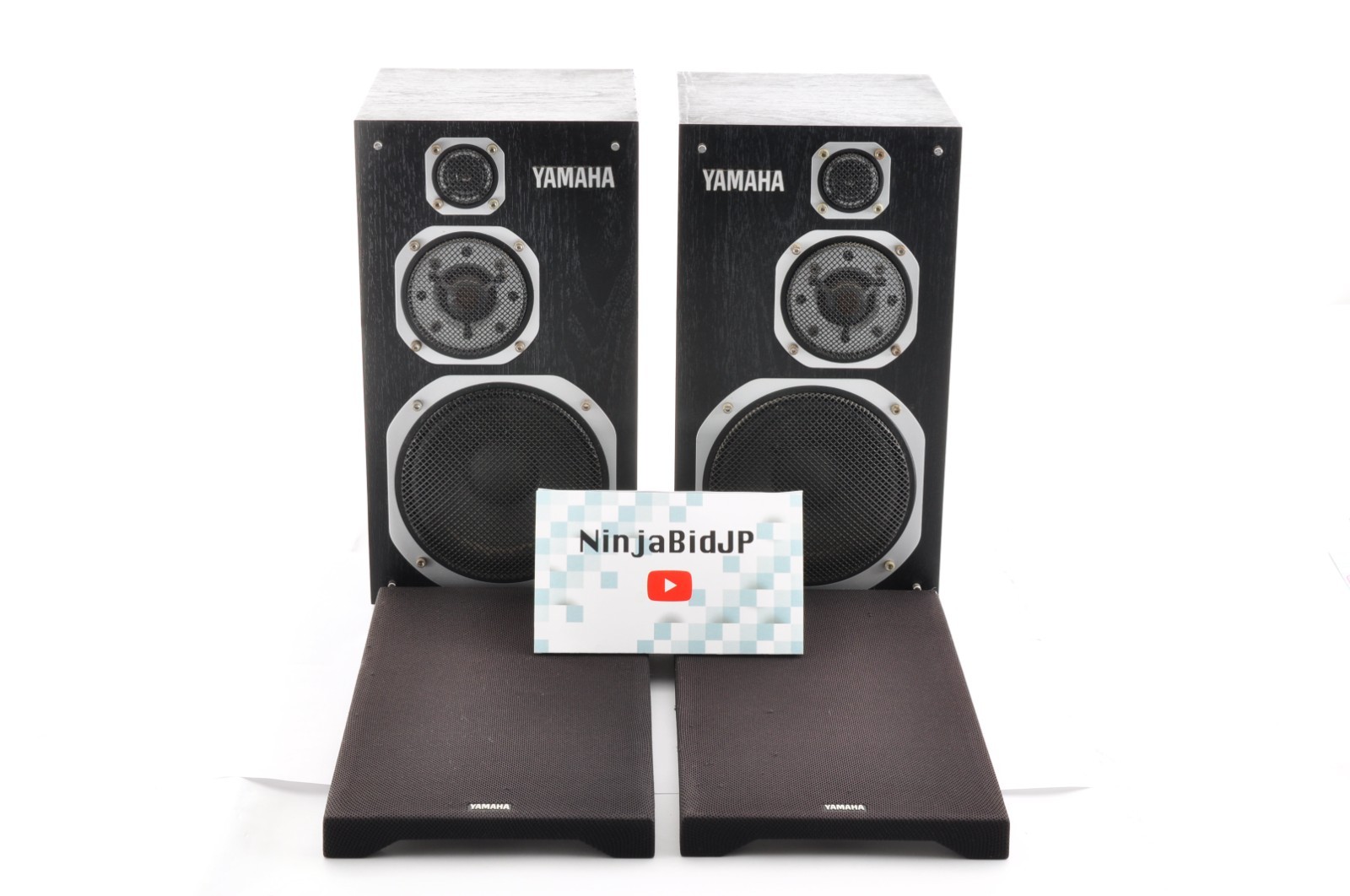


As an eBay Partner, we earn from qualifying purchases. This helps support our independent vintage technology research.
Related Models
- Yamaha HP-3 (1978)
- Yamaha NS-1000M (1977)
- Yamaha NS-1000X-II (1978)
- Yamaha NS-1000X (1977)
- Yamaha NS-10M (1978)
- Akai AM-2850 (1975)
- Akai AP-206 (1975)
- Nakamichi BX-1 (1985)
- Acoustic Research research-ar-17 (1978)
- Acoustic Research AR-19 (1994)