Yamaha HP-3: A Forgotten Gem in Vintage Headphone History
In the late 1970s, as high-fidelity audio systems flourished and personal listening began to gain traction, Yamaha quietly introduced the HP-3, a dynamic stereo headphone that, while not as widely celebrated as some of its contemporaries, remains a noteworthy artifact of Japanese audio engineering. Unlike the mass-market headphones of today, the HP-3 was crafted during an era when audio gear was built to last—mechanically robust, sonically refined, and designed for serious listeners. Though overshadowed by later models and limited in production, the Yamaha HP-3 has developed a quiet cult following among vintage audio enthusiasts who appreciate its understated elegance and balanced sonic signature.
Historical Context
The late 1970s marked a pivotal time for headphone development. With the rise of portable audio—foreshadowing the Walkman revolution of the 1980s—manufacturers began to take personal listening more seriously. Yamaha, already respected for its musical instruments and expanding into consumer audio, released the HP-3 as part of a small but thoughtful lineup of headphones aimed at audiophiles and studio users. While not marketed as a professional monitoring tool like the Sennheiser HD 25 or AKG K240, the HP-3 occupied a niche as a high-quality consumer-grade headphone suitable for home use with receivers, tuners, and early cassette decks.
The HP-3 was built during a golden age of analog audio, when design prioritized durability and sonic neutrality over flashy aesthetics or noise cancellation. It reflects Yamaha’s philosophy of musical accuracy and reliability—principles that would later define their acclaimed NS-series speakers and receivers.
Technical Specifications
| Specification | Detail |
| Model | HP-3 |
| Manufacturer | Yamaha Corporation |
| Year Introduced | 1978 |
| Transducer Type | Dynamic, open-back |
| Impedance | 120 Ω (estimated) |
| Sensitivity | ~96 dB/mW (estimated) |
| Frequency Response | 20 Hz – 20 kHz (claimed) |
| Driver Size | 40 mm (approximate) |
| Connector | 1/4" (6.35 mm) stereo jack |
| Cable Length | 3 meters (straight cable) |
| Weight | ~220 g (without cable) |
| Earpad Type | Soft foam with synthetic leather |
| Headband | Padded, self-adjusting metal frame |
| Design | Over-ear, open-back |
Note: Official documentation for the HP-3 is scarce, and many specifications are based on user measurements and period catalogs.
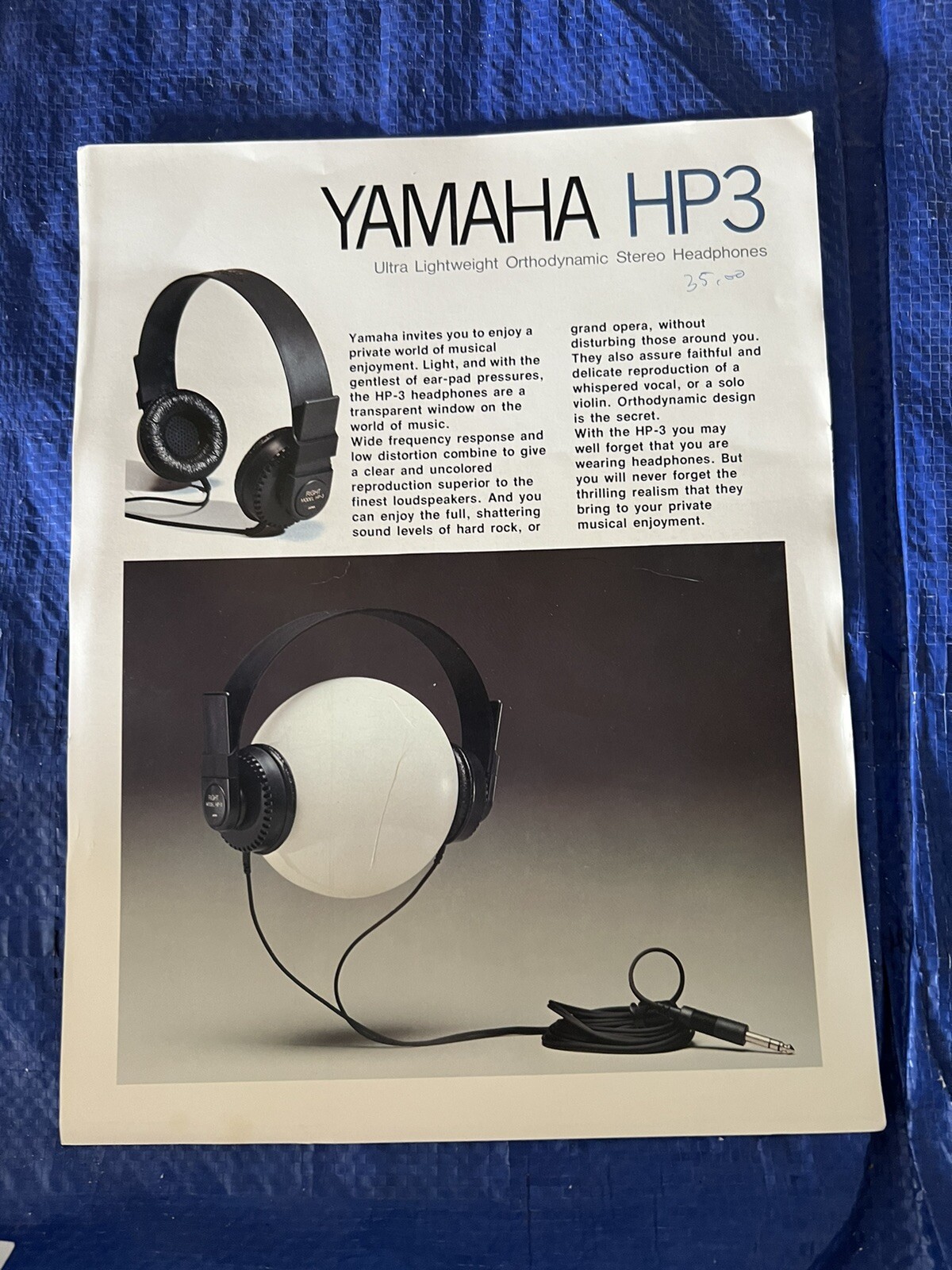
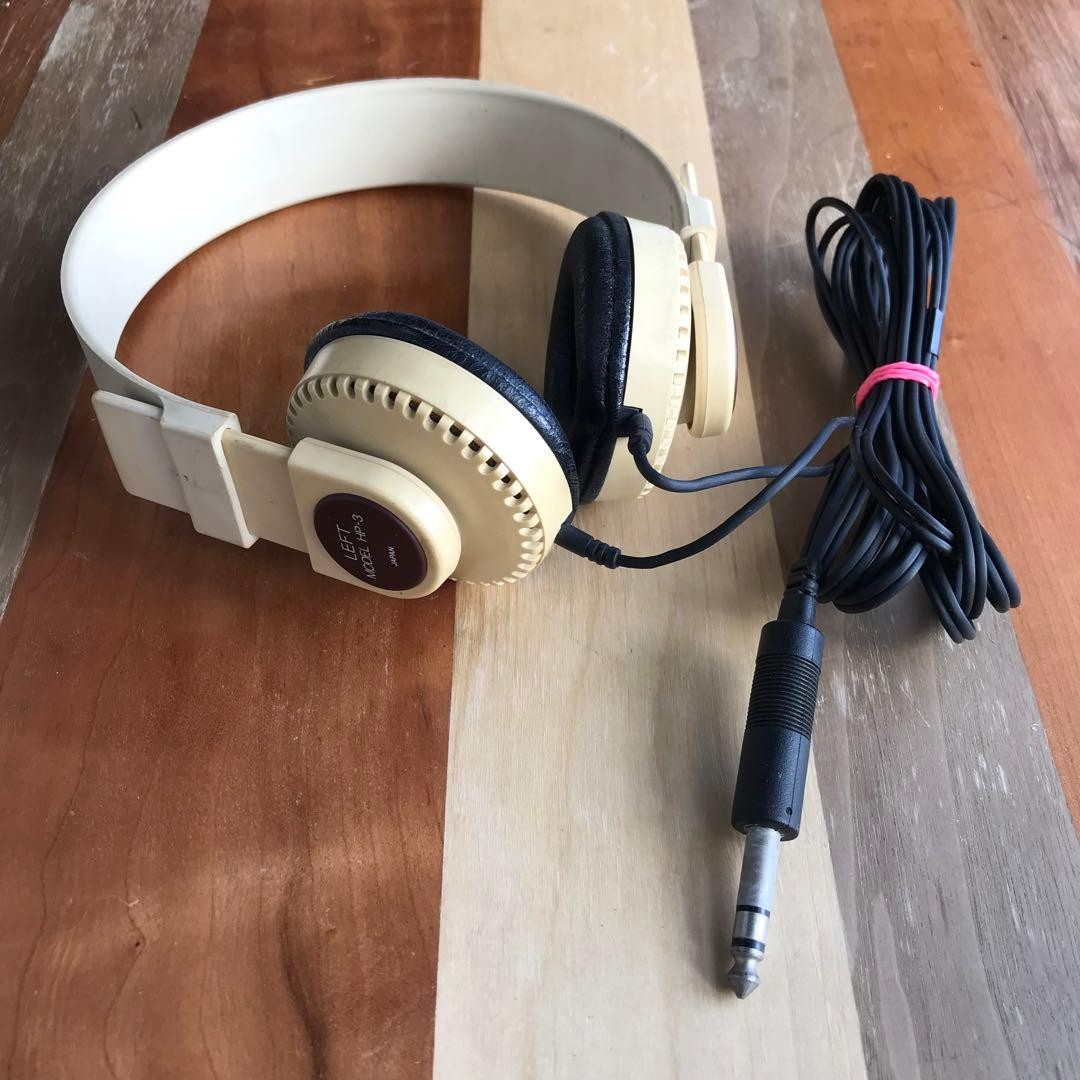
The HP-3 features a classic open-back design, allowing for a more natural, spacious soundstage—a hallmark of Yamaha’s acoustic philosophy. Its 40 mm drivers are housed in large, vented earcups made of durable ABS plastic with a matte black finish. The self-adjusting headband ensures a comfortable fit, while the thick, non-detachable cable terminates in a gold-plated 1/4" stereo jack, indicating its intended use with home audio equipment rather than portable devices.
Sound Characteristics and Performance
The Yamaha HP-3 delivers a remarkably balanced and transparent sound for its era. Its frequency response is impressively flat, with a slight warmth in the midrange that adds musicality without muddying detail. Bass response is tight and controlled—never overpowering—making it ideal for classical, jazz, and acoustic recordings. The open-back design contributes to an airy, three-dimensional soundstage, with instruments well-separated and positioned naturally in space.
Treble is smooth and extended, avoiding the harshness that plagued many budget headphones of the time. While not as detailed as modern high-end planar magnetics or electrostatics, the HP-3 holds its own against contemporaries like the Koss Pro 4AA or Sennheiser HD 414, offering a more neutral tonal balance than the famously bass-heavy Koss models.
Its 120 Ω impedance suggests it was designed for use with home amplifiers or receivers rather than low-powered portable devices. While modern smartphones or laptops may struggle to drive them to optimal volume, the HP-3 performs beautifully when paired with vintage integrated amplifiers or tube headphone amps, where its clarity and composure truly shine.
Notable Features and Innovations
While not revolutionary, the HP-3 incorporates several thoughtful design elements:
- Open-back acoustics: Promotes natural sound dispersion and reduces ear fatigue during long listening sessions.
- Self-adjusting headband: A simple yet effective metal spring mechanism ensures a secure, comfortable fit across head sizes.
- High-quality materials: Durable construction with metal-reinforced yokes and thick cabling reflects Yamaha’s build standards.
- Gold-plated connector: Minimizes signal loss and corrosion over time.
- Ventilated earcups: Enhance airflow and reduce pressure buildup, contributing to a more open sound.
Though lacking modern conveniences like detachable cables or foldable hinges, the HP-3 was built for longevity. Its no-nonsense design speaks to an era when audio gear was expected to last decades.
Common Issues and Maintenance
Due to their age, surviving HP-3 units often require restoration. Common issues include:
- Deteriorated earpads: The original foam and synthetic leather tend to crack or disintegrate. Replacement pads are not mass-produced, but 3D-printed or custom-cut foam solutions are available from niche audio restoration vendors.
- Cable brittleness: The PVC insulation may become stiff or crack over time. Re-cabling with modern braided wire is a popular upgrade.
- Driver wear: While rare, some units exhibit reduced output or imbalance due to aging voice coils. Cleaning and refoaming may restore performance.
- Headband fatigue: The metal spring can lose tension. Gentle bending can restore fit, but care must be taken to avoid breakage.
Maintenance is straightforward for those with basic DIY skills. Cleaning with isopropyl alcohol, replacing pads, and storing in a dry environment will preserve the HP-3 for years to come.
Current Market Value and Collectibility
The Yamaha HP-3 is a rare find. Never a high-volume product, it has become increasingly scarce on the secondhand market. Units in working condition typically sell for $80–$150, depending on cosmetic state and provenance. Fully restored models with upgraded cables or pads may command higher prices among collectors.
While not as sought-after as the legendary Yamaha YH-1 or later NS-10-inspired headphones, the HP-3 appeals to vintage audio purists who value understated performance and historical significance. It’s particularly prized by those building period-correct 1970s listening setups.
Its collectibility is enhanced by Yamaha’s reputation for musical accuracy and the headphone’s role in the company’s early foray into personal audio—a precursor to later successes like the acclaimed YH-5000SE.
Conclusion and Legacy
The Yamaha HP-3 may not be a household name, but it represents an important chapter in the evolution of personal audio. Built with care, engineered for fidelity, and designed for the serious listener, it embodies the ethos of a time when audio gear was crafted to serve the music—not the marketing.
Though overshadowed by flashier models, the HP-3 remains a rewarding listen for those who discover it. Its balanced sound, open-back clarity, and vintage charm make it more than just a relic—it’s a testament to Yamaha’s enduring commitment to musical truth.
For collectors, restorers, and analog enthusiasts, the HP-3 is a hidden gem: a quiet achiever from an era when sound quality mattered above all else. If you stumble upon a working pair, consider restoring them—not just as a nostalgic project, but as a window into the soul of vintage high-fidelity audio.
eBay Listings


As an eBay Partner, we earn from qualifying purchases. This helps support our independent vintage technology research.
Related Models
- Yamaha NS-1000 (1977)
- Yamaha NS-1000M (1977)
- Yamaha NS-1000X-II (1978)
- Yamaha NS-1000X (1977)
- Yamaha NS-10M (1978)
- Akai AM-2850 (1975)
- Akai AP-206 (1975)
- Nakamichi BX-1 (1985)
- Acoustic Research research-ar-17 (1978)
- Acoustic Research AR-19 (1994)