Yamaha CT-610 (1977–1978)
A no-nonsense tuner with digital precision in an analog world—built for stability, not show.
Overview
You won’t find flashy knobs or mirrored finishes on the Yamaha CT-610. This is a tuner that speaks in clean lines, solid weight, and the quiet confidence of a well-engineered circuit. Built between 1977 and 1978, it was Yamaha’s answer to the growing demand for reliable, high-performance tuners that could anchor a serious stereo system without breaking the bank. At $225 when new—no small sum back then—it wasn’t entry-level, but it wasn’t trying to be. Instead, it split the difference: a component built with care, tuned for accuracy, and designed to disappear into the background while delivering consistent, clear reception.
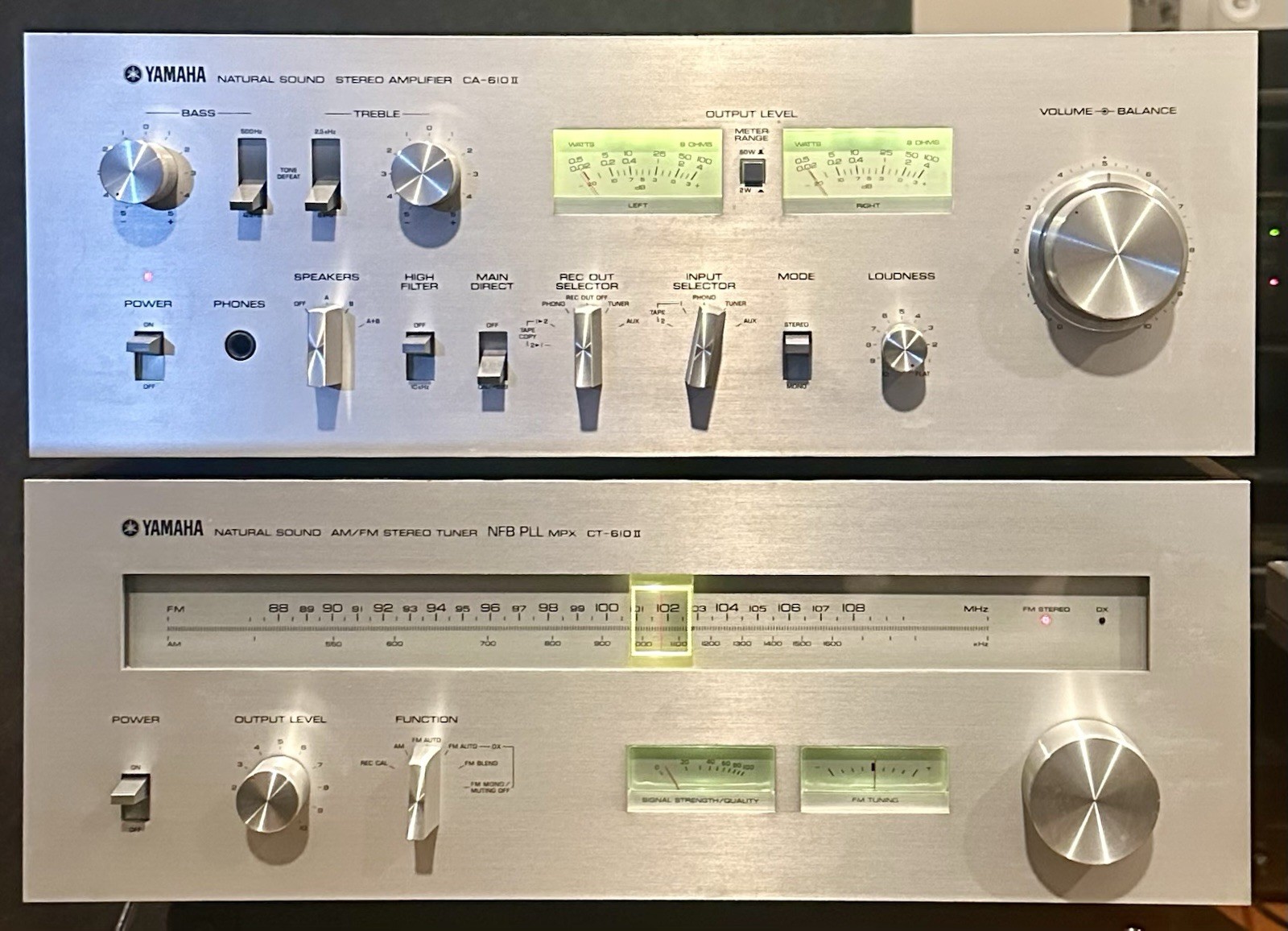
It shares DNA with Yamaha’s flagship CT-7000, drawing on the same engineering know-how that made the top-tier model a standout. But where the CT-7000 dazzled with specs and prestige, the CT-610 got down to business. It’s the kind of piece you’d find in a well-curated system of the era—paired, for example, with the Yamaha CA-610 integrated amplifier—where it would hum along, day after day, pulling in stations with a kind of quiet reliability that owners came to depend on.
And depend on it they did. The CT-610 wasn’t about wow factors. It was about staying locked on frequency, rejecting interference, and passing along a clean signal to the amplifier. In an age when tuning drift and static were common complaints, that kind of consistency was worth its weight in gold.
Specifications
| Manufacturer | Yamaha |
| Type | Mono/Stereo Tuner |
| Tuning Bands | FM, AM |
| Tuning Scale | Analogue |
| FM Tuning Range | 88 to 108 MHz |
| AM Tuning Range | 525 to 1605 kHz |
| Sensitivity | 1.8uV (FM) |
| Signal to Noise Ratio | 71dB (FM), 50dB (AM) |
| Distortion | 0.8% (FM), 0.6% (AM) |
| Selectivity | 75dB (FM), 25dB (AM) |
| Frequency response | 20Hz to 15kHz (FM) |
| Output | 500mV (FM), 125mV (AM) |
| Semiconductors | 22 x transistors, 3 x IC, 1 x FET, 10 x diodes |
| Dimensions (W x H x D) | 435 x 160 x 349 mm |
| Weight | 6 kg |
| Electric power requirements | Input voltage: 220 / 240 V, Input frequency: 50 / 60 Hz |
| Power consumption | 7 watts |
Key Features
Quartz-Locked Digital Frequency Synthesizer
One of the CT-610’s standout features—and a big reason it still has fans today—is its quartz-locked digital frequency synthesizer. This wasn’t just a gimmick. It meant the tuner could lock onto stations with exceptional stability, resisting the kind of frequency drift that plagued many analog-tuned receivers of the time. Once you set your station, it stayed put. No nudging, no retuning, no frustration. It was a taste of the digital future, wrapped in a brushed steel faceplate.
Engineered for Clarity
Yamaha didn’t cut corners on the fundamentals. With low distortion (0.8% on FM), high sensitivity (1.8uV), and a strong 71dB signal-to-noise ratio on FM, the CT-610 delivered clean, listenable signal even under less-than-ideal reception conditions. The AM band, while not as refined, still managed a respectable 50dB S/N ratio and 25dB selectivity—enough to pull in distant stations without being overwhelmed by interference. It wasn’t the most sensitive tuner ever made, but it was honest, predictable, and well-balanced.
Analog Tuning with Digital Backbone
Despite its digital synthesizer, the CT-610 kept the user interface refreshingly simple: an analog tuning dial. No numeric displays, no push-button presets (at least not on this model), just a smooth knob that let you glide through the band. The digital backend handled the precision; the front end stayed tactile and intuitive. It’s a design philosophy that feels oddly modern—technology working quietly behind the scenes so the user doesn’t have to.
Historical Context
The CT-610 emerged during a time when high-fidelity audio was moving from niche hobby to mainstream aspiration. Yamaha, already respected for its musical instruments and amplifiers, was building a reputation for serious audio components. The CT-610 wasn’t the star of the lineup—that honor went to the CT-7000—but it carried the same engineering DNA, just distilled into a more accessible form. At $225, it offered a slice of top-tier performance at a price point that made sense for serious listeners who didn’t need every bell and whistle.
It was built for a market that valued longevity and performance over flash. And with its 22 transistors, 3 ICs, and quartz-locked tuning, it showed Yamaha wasn’t cutting corners just because it wasn’t the flagship.
Collectibility & Value
The Yamaha CT-610 isn’t a showstopper at vintage audio shows, but it’s quietly appreciated by those who know. It doesn’t command the prices of rare or exotic tuners, but it’s not forgotten either. Recent listings show a wide range: from €50 for a project unit to €500 for fully serviced examples. There’s even a listing for a “restoration kit” on Reverb—proof that there’s enough interest to support a small aftermarket.
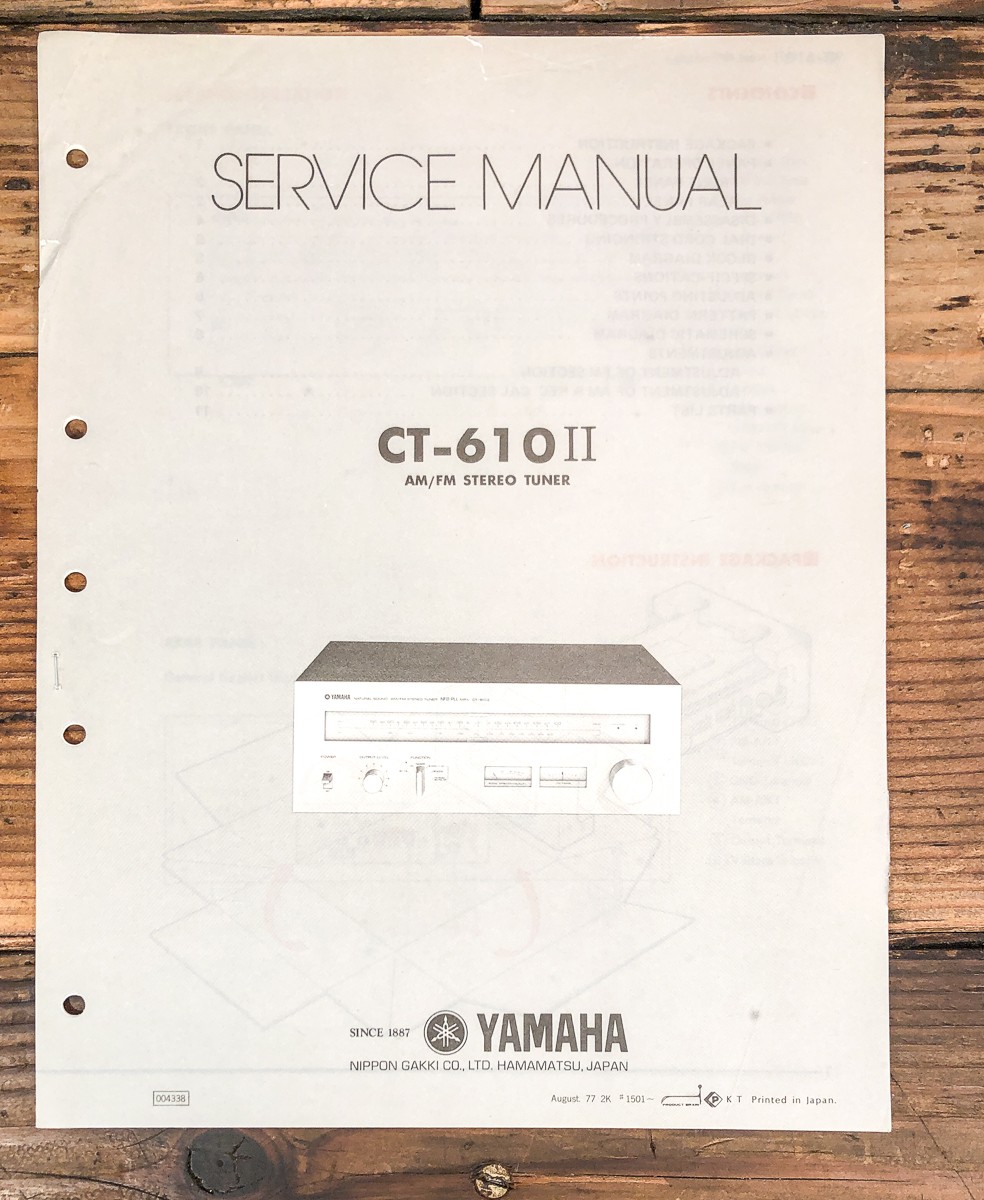
The most common red flags for buyers? Tuning drift, static noise, no power, or failure to pick up stations despite a good antenna. These are often signs of aging capacitors or dirty connections—typical for a unit pushing 50 years old. A full recap and cleaning can bring one back to life, and given the availability of a service manual for the CT-610 II (priced at $12.95 from Analog Alley Manuals), it’s a feasible project for the DIY-inclined.
If you’re building out a vintage Yamaha stack, the CT-610 pairs perfectly with the CA-610 amplifier. Together, they form a compact, coherent system that sounds great and looks the part. On its own, it’s a solid, no-drama tuner that does exactly what it’s supposed to—no more, no less.
eBay Listings

As an eBay Partner, we earn from qualifying purchases. This helps support our independent vintage technology research.
Related Models
- Yamaha CT-7000 (1978)
- Yamaha CT-710 (1976)
- Yamaha CT-810 (1978)
- Yamaha TC-1000 (1978)
- Yamaha TC-320A (1978)
- Sony TC-2050SD (1978)
- Aiwa AD-F990 (1993)
- Kenwood KX-3060 (1982)
- Sony TC-2130A (1974)
- Sony TC-2220 (1972)