Yamaha CR-1000: The Forgotten Pioneer of Integrated Control Centers
In the early 1970s, as high-fidelity audio systems grew in complexity, manufacturers began exploring ways to streamline user experience without sacrificing performance. Among these innovators, Yamaha stood out not only for its musical instrument heritage but also for its bold forays into audio electronics. One of the most intriguing and lesser-known products from this era is the Yamaha CR-1000—a sophisticated "control center" that defied easy categorization. More than just a preamp or tuner, the CR-1000 represented Yamaha’s vision of a centralized hub for the modern stereo system. Though it never achieved the fame of the company’s later receivers or the legendary NS-1000 speakers, the CR-1000 remains a fascinating artifact of 1970s audio engineering.
A Vision of System Integration
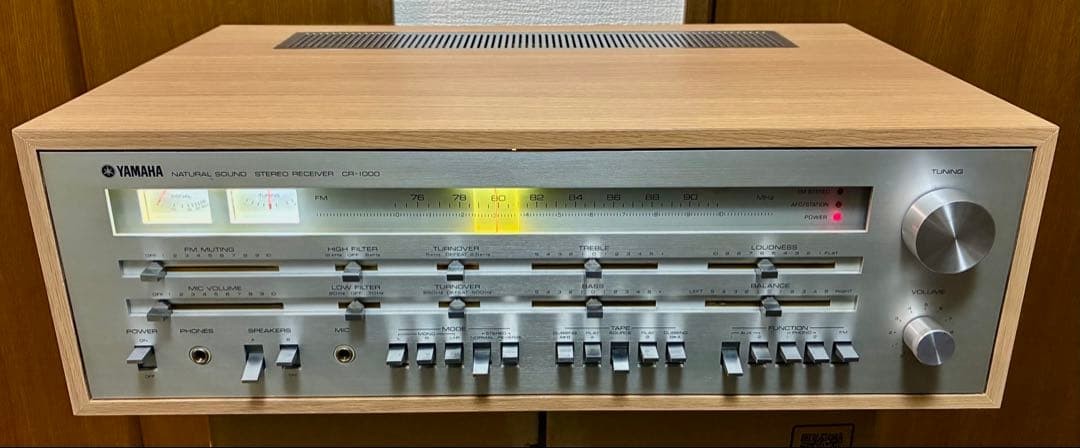
Released in 1973, the Yamaha CR-1000 emerged during a transitional period in consumer audio. Home stereo systems were shifting from simple two-component setups (turntable and amplifier) to elaborate multi-source configurations including tape decks, tuners, and later, early digital sources. The CR-1000 was Yamaha’s answer to the clutter and complexity of managing multiple components. It combined a high-quality AM/FM tuner, a preamplifier section with multiple inputs, and a unique system control interface—all housed in a sleek, minimalist chassis that reflected the design sensibilities of the era.
Unlike conventional receivers, the CR-1000 did not include a built-in power amplifier. Instead, it was designed as a control and signal routing center, intended to be paired with separate power amplifiers. This modular approach appealed to audiophiles who valued component separation and upgradeability, long before the term "high-end" became commonplace.
Technical Specifications
The CR-1000 was engineered with precision and built to last, featuring discrete transistor circuitry and high-quality potentiometers. While detailed service manuals are scarce today, surviving units and user reports confirm its robust construction and thoughtful design.
| Specification | Detail |
| Model | Yamaha CR-1000 |
| Year Introduced | 1973 |
| Category | Control Center (Tuner + Preamp) |
| Tuner Bands | AM, FM |
| Tuner Type | Analog dial with illuminated tuning meter |
| Inputs | 3 Line-Level (RCA), 1 Phono (MM) |
| Outputs | 1 Main Output (RCA), Tape Out (RCA) |
| Power Output | Not applicable (preamp only) |
| Impedance | Not applicable |
| Frequency Response | 20Hz – 20kHz (±1dB) |
| Total Harmonic Distortion | <0.1% (typical) |
| Signal-to-Noise Ratio | >70dB (A-weighted) |
| Power Supply | Internal transformer, 110–120V AC (US model) |
| Dimensions (W×H×D) | 430 × 145 × 330 mm (17 × 5.7 × 13 in) |
| Weight | 9.5 kg (21 lbs) |
| Finish | Black faceplate with brushed aluminum trim |
The front panel featured a large, centrally located tuning dial with a glowing S-meter for FM signal strength, flanked by input selectors, volume, balance, and bass/treble controls. The build quality was exceptional for its time—thick steel chassis, heavy-duty knobs, and a reassuring weight that signaled durability.
Sound Characteristics and Performance
The CR-1000 delivered a sound signature that was clean, detailed, and dynamically expressive, typical of Yamaha’s engineering philosophy in the 1970s. Its preamp stage used discrete components rather than integrated circuits, contributing to a warm yet transparent tonal balance. The phono stage, designed for moving magnet (MM) cartridges, offered solid RIAA equalization with low noise—important for vinyl enthusiasts of the era.
The FM tuner section was particularly impressive, featuring double conversion superheterodyne circuitry and excellent selectivity, allowing for clear reception even in urban environments with strong signal interference. Many users reported that the CR-1000 outperformed standalone tuners of the same period in terms of stereo separation and signal stability.
When paired with high-quality power amplifiers—such as the contemporaneous Yamaha B-100 or B-200—the CR-1000 formed the heart of a system capable of lifelike imaging and nuanced musical reproduction. Its lack of built-in power amp meant it avoided the compromises often found in all-in-one designs, preserving signal purity from source to output.
Notable Features and Innovations
The CR-1000 stood out for several forward-thinking features:
- Centralized System Control: One of the earliest attempts at a unified control center, allowing users to manage source selection, volume, and tuning from a single unit.
- Illuminated Tuning Display: The glowing S-meter and frequency dial provided both functionality and visual appeal, enhancing the user experience in dimly lit listening rooms.
- Modular Design Philosophy: By separating preamp/tuner functions from power amplification, Yamaha anticipated the component-based systems that would dominate high-end audio in the 1980s.
- High Build Quality: Over-engineered chassis and premium components ensured longevity, a hallmark of Yamaha’s approach during this golden era of audio.
Common Issues and Maintenance
Today, the Yamaha CR-1000 is a rare find, and surviving units require careful attention. Common issues include:
- Capacitor Aging: Electrolytic capacitors in the power supply and signal path may have dried out, leading to hum, noise, or channel imbalance. A full recapping is recommended for long-term reliability.
- Tuning Dial Stiffness: The mechanical tuner mechanism can become sticky or noisy over time. Cleaning and lubrication of the tuning capacitor and associated linkages are essential.
- Oxidized Controls: Potentiometers and switches often suffer from oxidation, causing crackling or intermittent contact. Contact cleaner (e.g., DeoxIT) can restore smooth operation.
- Rubber Degrade: Any rubber components (e.g., feet, internal dampers) may have hardened or crumbled and should be replaced.
Due to the scarcity of service manuals, restoration often requires reverse-engineering or consultation with vintage audio forums. However, the circuitry is relatively straightforward, and many of the components are standard discrete transistors and resistors, making repairs feasible for experienced technicians.
Current Market Value and Collectibility
The CR-1000 is not widely known, which keeps it under the radar of mainstream collectors. However, among Yamaha enthusiasts and vintage audio aficionados, it is gaining recognition as a unique piece of audio history. Units in working condition typically sell for $250–$400, depending on cosmetic condition and functionality. Fully restored examples with documented service history may command higher prices, especially when paired with matching Yamaha components.
Its collectibility is enhanced by its rarity and design significance—it represents a transitional moment when audio manufacturers began rethinking system architecture. While not as iconic as the Marantz 2270 or Pioneer SX-1980, the CR-1000 appeals to collectors who appreciate innovation and understated elegance.
Conclusion: A Hidden Gem of 1970s Audio
The Yamaha CR-1000 may not have been a commercial blockbuster, but it embodies the spirit of experimentation and craftsmanship that defined the early 1970s audio boom. As a hybrid tuner-preamp control center, it offered a glimpse into the future of integrated audio systems—long before smart hubs and digital interfaces became commonplace.
For the modern audiophile or vintage collector, the CR-1000 is more than just a nostalgic curiosity. It’s a functional, sonically rewarding component that pairs beautifully with classic power amps and turntables. Restoring one is a labor of love, but the reward is a system centerpiece that delivers both performance and historical charm.
In an age of streaming and miniaturization, the CR-1000 reminds us of a time when listening to music was a tactile, deliberate experience—one tuned, switched, and savored, one knob at a time.
eBay Listings



As an eBay Partner, we earn from qualifying purchases. This helps support our independent vintage technology research.
Related Models
- Yamaha HP-1 (1974)
- Yamaha A-1 (1970)
- Yamaha A-1020 (1978)
- Yamaha A-450 (1978)
- Yamaha A-550 (1978)
- Luxman L-530 (1975)
- Luxman R-404 (1975)
- Luxman RV-371 (1975)
- Luxman SQ-38U (1975)
- Luxman T-14 (1972)