Yamaha CA-600: The Forgotten Pioneer of Integrated Control
In the early 1970s, Yamaha was rapidly expanding its footprint in the high-fidelity audio market, moving beyond its roots in musical instruments to become a serious contender in home audio engineering. Among its more unique offerings from this formative period was the Yamaha CA-600, a sophisticated control amplifier that defied easy categorization. Not quite a full integrated amplifier, yet more than a simple preamplifier, the CA-600 occupied a niche role as a "control amplifier"—a device designed to manage multiple audio sources and deliver pristine signal routing with minimal coloration.
Released in 1972, the CA-600 emerged during a golden era of analog audio innovation, when manufacturers were experimenting with circuit topologies, build quality, and user interface design. While not as widely recognized as Yamaha’s later RX-series receivers or the legendary M-series power amplifiers, the CA-600 holds a quiet prestige among collectors and purists who appreciate its elegant engineering and understated performance.
Technical Specifications
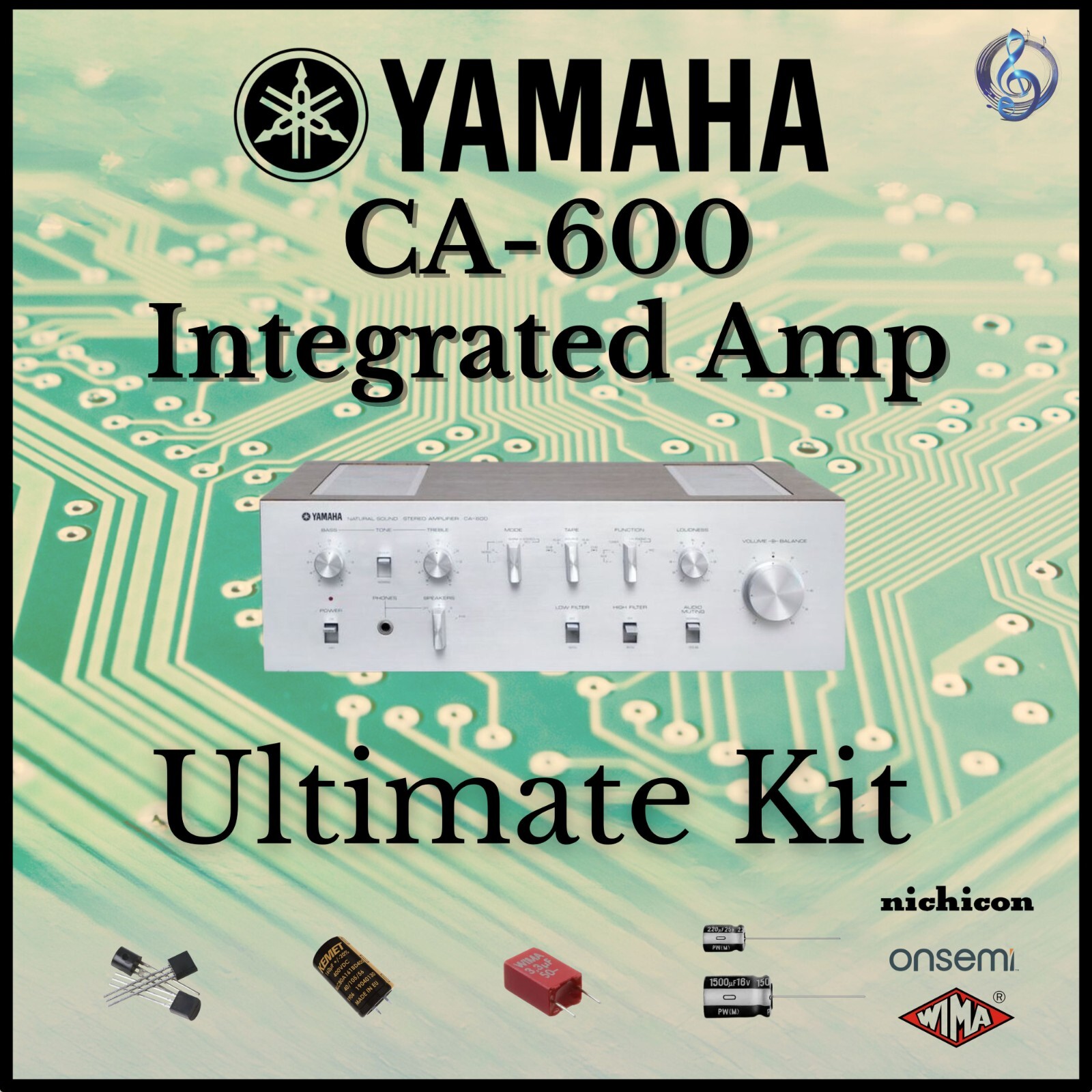
The CA-600 was engineered as a preamplifier with integrated source switching and tone controls, but without a built-in power amplifier—making it ideal for use with separate power amps of the era, such as the Yamaha B-6 or B-7. It featured a clean, symmetrical layout on the front panel, with large rotary knobs and a minimalist aesthetic typical of early Yamaha hi-fi gear.
| Specification | Detail |
| Model | CA-600 |
| Year Introduced | 1972 |
| Manufacturer | Yamaha Corporation, Japan |
| Category | Control Amplifier / Preamplifier |
| Inputs | 3 Line-Level (Tape, Aux, Phono) |
| Outputs | Main Out, Tape Out, Headphone Out |
| Phono Input | Yes (MM only) |
| Tone Controls | Bass, Treble (±12dB at 100Hz/10kHz) |
| Volume Control | Dual-gang logarithmic potentiometer |
| Frequency Response | 20Hz – 20kHz (±1dB) |
| Total Harmonic Distortion | <0.1% (1kHz, rated output) |
| Signal-to-Noise Ratio | >70dB (A-weighted, line input) |
| Power Supply | Internal transformer, regulated DC rails |
| Dimensions (W×H×D) | 430 × 146 × 318 mm |
| Weight | 8.2 kg (18.1 lbs) |
| Finish | Black or Silver (brushed aluminum face) |
The CA-600 featured a discrete transistor-based design—common for Yamaha during this period—avoiding integrated circuits in favor of precision discrete components for greater transparency and serviceability. Its phono stage was tailored for moving magnet (MM) cartridges, with RIAA equalization applied via passive networks and low-noise transistor amplification. The line stages were designed for wide bandwidth and low output impedance, ensuring compatibility with a range of power amplifiers.
Sound Characteristics and Performance
The sonic signature of the Yamaha CA-600 is best described as balanced, neutral, and highly transparent. Unlike some of its contemporaries that leaned into warm, tube-like coloration, the CA-600 aimed for accuracy and clarity. This makes it a favorite among listeners who value faithful signal reproduction over euphonic enhancement.
In practice, the CA-600 delivers a clean midrange with excellent vocal clarity, tight bass control, and extended, non-fatiguing highs. Its low distortion and wide dynamic range allow it to handle complex musical passages with composure. When paired with a high-quality power amplifier—such as Yamaha’s own B-series or third-party models from Sansui or Pioneer—the CA-600 reveals its true potential as a transparent signal hub.
The headphone amplifier, while not as powerful as modern standards, performs admirably with 32–300 ohm headphones of the era, offering sufficient drive for late-night listening without strain.
Notable Features and Innovations
While the CA-600 may appear modest by today’s standards, it introduced several thoughtful features that reflected Yamaha’s growing expertise in audio electronics:
- Modular Internal Layout: The CA-600 used a modular design with clearly separated power supply, phono preamp, and line-stage sections. This reduced crosstalk and interference, improving channel separation and signal purity.
- Precision Attenuation: The volume control employed a high-quality dual-gang potentiometer with smooth, precise tracking between channels—critical for maintaining stereo imaging.
- Tape Loop Functionality: Independent tape monitor switching allowed users to record from any source and monitor the tape input seamlessly, a feature prized by audiophiles who recorded from vinyl or radio.
- Front-Panel Metering (on select variants): Some later production runs included a dual VU meter option, allowing users to monitor output levels—a rare feature in preamplifiers of this class.
- Robust Build Quality: The CA-600 was built to last, with a heavy steel chassis, high-grade connectors, and point-to-point wiring in critical signal paths.
Common Issues and Maintenance
As with any vintage electronics from the early 1970s, the Yamaha CA-600 requires careful evaluation before use. Common issues include:
- Capacitor Degradation: Electrolytic capacitors in the power supply and signal path may have dried out, leading to hum, reduced performance, or complete failure. A full recapping by a qualified technician is strongly recommended.
- Potentiometer Noise: The volume and tone controls can develop crackling or channel imbalance due to oxidation. Cleaning with contact cleaner may help, but replacement with modern equivalents (while preserving originality) is often necessary.
- Phono Stage Sensitivity: The MM phono input, while well-designed, can become noisy over time due to aging transistors or resistor drift. Replacing input transistors with modern low-noise types (e.g., 2SC732 or equivalent) can restore optimal performance.
- Oxidized Switches: The source and tape monitor switches may develop intermittent connections. Regular use and contact cleaning can prevent this.
Despite these age-related concerns, the CA-600 is generally reliable when maintained. Its discrete design makes troubleshooting and repair more accessible than modern IC-based gear.
Current Market Value and Collectibility
The Yamaha CA-600 is a rare find on the vintage audio market. It was never produced in the same numbers as Yamaha’s more popular receivers or power amps, and few units have survived in working condition. As of 2024, a fully serviced and operational CA-600 typically sells for $300–$500, depending on finish, included accessories, and cosmetic condition.
Collectors value the CA-600 not for its fame, but for its engineering integrity and historical significance as part of Yamaha’s transition into serious high-fidelity electronics. It appeals particularly to enthusiasts restoring period-correct systems from the early 1970s or seeking a transparent, low-feedback preamp for vintage setups.
Units in original silver finish with intact labeling and knobs command a premium, especially when paired with matching Yamaha components like the B-6 amplifier or FR series speakers.
Conclusion and Legacy
The Yamaha CA-600 may not be a household name, but it represents an important chapter in Yamaha’s audio journey—a time when the company was refining its philosophy of "sound for emotion" through meticulous engineering. As a control amplifier, it bridged the gap between simple preamps and full integrated systems, offering flexibility and fidelity to discerning listeners.
Though overshadowed by later Yamaha classics, the CA-600 deserves recognition for its clean design, robust construction, and transparent sound. For the vintage audio enthusiast, it’s more than a relic—it’s a functional piece of hi-fi history that continues to deliver musical enjoyment when properly cared for.
If you’re building a 1970s-era system or simply appreciate understated Japanese engineering, the Yamaha CA-600 is a hidden gem worth seeking out.
eBay Listings


As an eBay Partner, we earn from qualifying purchases. This helps support our independent vintage technology research.
Related Models
- Yamaha HP-1 (1974)
- Yamaha A-1 (1970)
- Yamaha A-1020 (1978)
- Yamaha A-450 (1978)
- Yamaha A-550 (1978)
- Luxman L-530 (1975)
- Luxman R-404 (1975)
- Luxman RV-371 (1975)
- Luxman SQ-38U (1975)
- Luxman T-14 (1972)