Yamaha CA-1000: The Forgotten Pioneer of Modular Preamp Design
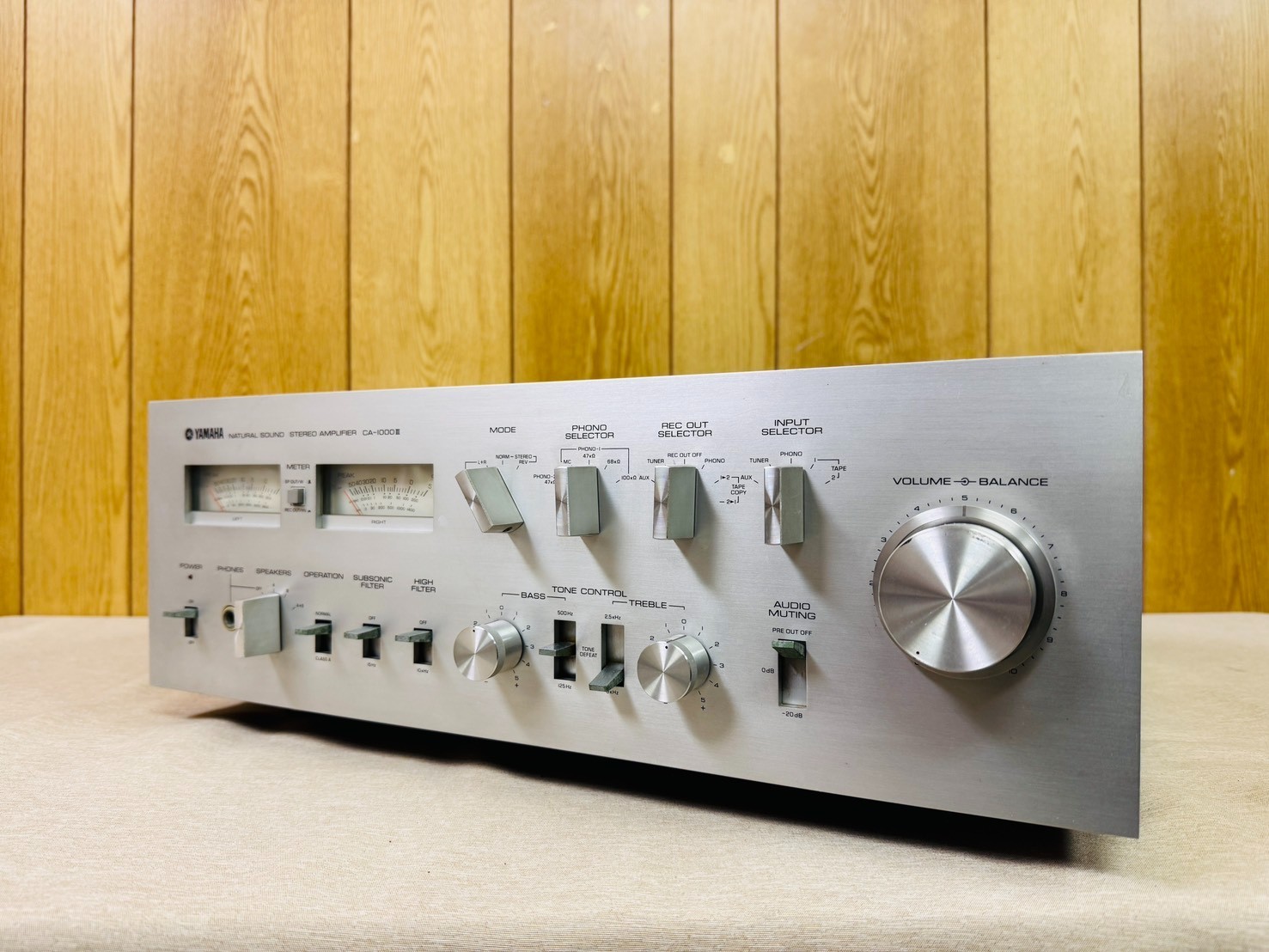
In the mid-1970s, Yamaha emerged as a serious contender in the high-fidelity audio market, not just with receivers and amplifiers, but with bold, forward-thinking designs that pushed the boundaries of what home audio equipment could be. Among these was the Yamaha CA-1000, a preamplifier that, while not as widely celebrated as some of its contemporaries, stands out as a remarkable example of Japanese engineering ingenuity during the golden age of analog audio.
Released in 1975, the CA-1000 was not a conventional preamp. It was part of Yamaha’s short-lived but ambitious foray into modular audio systems, where components could be combined, upgraded, or reconfigured to suit the user’s needs. This philosophy was ahead of its time—predating modern modular electronics by decades—and the CA-1000 served as the central control unit in this ecosystem.
Though often overshadowed by more popular models like the CA-810 or later integrated amps such as the B-2 and M-4 series, the CA-1000 has quietly gained a cult following among vintage audio enthusiasts who appreciate its unique design, build quality, and the sheer rarity of the unit today.
Technical Specifications
| Specification | Detail |
| Model | Yamaha CA-1000 |
| Year Introduced | 1975 |
| Category | Preamplifier (Modular Control Unit) |
| Inputs | 4 (Phono MM, Tuner, Tape, Aux) |
| Outputs | Main Out, Tape Out, Headphone Out |
| Frequency Response | 20Hz – 20kHz (+/-0.5dB) |
| Total Harmonic Distortion | <0.05% (1kHz, rated output) |
| Signal-to-Noise Ratio | 80dB (Phono), 90dB (Line) |
| Tone Controls | Bass, Treble (±12dB at 100Hz/10kHz) |
| Balance Control | Yes |
| Power Supply | Internal (derived from connected power amp) |
| Dimensions | 430mm (W) × 145mm (H) × 325mm (D) |
| Weight | 9.8 kg (21.6 lbs) |
| Finish | Black textured chassis with brushed aluminum faceplate |
Unlike most preamps of the era, the CA-1000 was designed to work in tandem with Yamaha’s MA-series modular power amplifiers (such as the MA-1000 or MA-800), which housed their own power supplies and output stages. The CA-1000 itself did not contain a power amplifier section and relied on a dedicated connection bus to deliver signal and control functions to the paired amp. This modular approach allowed for easier servicing, future upgrades, and reduced signal degradation by minimizing internal wiring.
Sound Characteristics and Performance
The CA-1000 is known for delivering a clean, transparent, and dynamically expressive sound—hallmarks of Yamaha’s design philosophy during the 1970s. Its phono stage, designed for moving magnet (MM) cartridges, is particularly well-regarded for its low noise floor and accurate RIAA equalization, making it a solid choice for vinyl enthusiasts of the era.
In listening tests (as reported by collectors and restorers), the CA-1000 presents a balanced tonal character—neither overly warm nor clinical. It preserves the natural timbre of instruments and vocals, with a slightly forward midrange that gives music presence without harshness. The bass is tight and well-controlled, while the highs remain detailed without becoming fatiguing.
One of the standout qualities of the CA-1000 is its exceptional channel separation and low crosstalk, thanks to its discrete transistor circuitry and careful layout. This contributes to a wide, stable soundstage—impressive for a preamp of its time.
Notable Features and Innovations
The CA-1000 was packed with features that were advanced for the mid-1970s:
- Modular Integration System: The most distinctive feature. The CA-1000 connected to compatible Yamaha power amps via a multi-pin bus, allowing for seamless integration and eliminating the need for traditional RCA interconnects between pre and power stages.
- Discrete Transistor Design: At a time when integrated circuits were becoming common, Yamaha opted for a fully discrete transistor signal path, which audiophiles often prefer for its sonic purity and repairability.
- Precision Passive Components: High-quality resistors, capacitors, and potentiometers were used throughout, including a rare dual-gang stepped attenuator for volume control in some production runs—offering precise, repeatable level settings.
- Headphone Amplifier: A built-in headphone amp with a front-panel 1/4" jack, unusual for preamps of this class at the time, and capable of driving high-impedance headphones effectively.
- Tape Monitoring and Source Bypass: Full tape loop functionality with independent monitoring, allowing users to record from any source without interrupting playback.
- Blue VU Meters: Iconic dual VU meters with blue backlighting, providing both aesthetic appeal and real-time signal level monitoring.
Common Issues and Maintenance
Due to its age and relative rarity, finding a fully functional CA-1000 today is a challenge. Common issues include:
- Capacitor Degradation: Electrolytic capacitors in the power regulation and signal path often need replacement after 40+ years. This is critical for restoring proper performance and preventing damage.
- Oxidized Controls: The tone, balance, and volume potentiometers can become scratchy or noisy. Cleaning with contact cleaner may help, but replacement with modern equivalents (or NOS parts) is often necessary.
- Failing Relays: The CA-1000 uses relays for input selection and tape monitoring. These can stick or fail over time and may require cleaning or replacement.
- Wiring and Connectors: The modular bus connector and internal wiring can suffer from corrosion or fatigue. Inspecting and reseating connections is recommended during restoration.
- VU Meter Calibration: The meters may drift or become unresponsive. They can often be recalibrated or repaired by specialists familiar with vintage analog meters.
Because of its modular nature, sourcing compatible power amplifiers (like the MA-1000) can be difficult. However, with some adaptation, the CA-1000 can be used as a standalone line preamp by wiring its outputs to standard RCA jacks.
Current Market Value and Collectibility
The Yamaha CA-1000 is a rare find on the vintage audio market. Complete, working units with matching power amplifiers can command $800–$1,500, depending on condition and provenance. Units in original packaging with documentation are even rarer and may fetch higher prices among serious collectors.
Its value is driven more by historical significance and uniqueness than by widespread fame. Unlike mass-market receivers from Pioneer or Sony, the CA-1000 was a niche product, likely produced in limited numbers. This scarcity, combined with its innovative modular design, makes it a prized addition to any collection of vintage Japanese audio gear.
Enthusiasts of modular electronics, Yamaha history, or 1970s high-end audio often seek out the CA-1000 not just for its sound, but as a tangible piece of audio engineering evolution.
Conclusion and Legacy
The Yamaha CA-1000 may not be the most famous vintage preamp, but it represents a bold and imaginative chapter in Yamaha’s audio history. It embodies the spirit of experimentation that defined the 1970s—a time when manufacturers weren’t just building better amplifiers, but rethinking how audio systems should be designed, used, and upgraded.
While the modular concept never became mainstream, the CA-1000’s influence can be seen in later high-end separates and even in today’s customizable audio platforms. For the collector or restorer, the CA-1000 offers a rewarding challenge and a chance to own a truly unique piece of audio history.
If you’re lucky enough to find one in good condition—or have the patience to restore one—you’re not just acquiring a preamplifier. You’re preserving a vision of the future, as imagined in 1975—a future where audio systems were not fixed boxes, but living, evolving instruments of sound.
eBay Listings


As an eBay Partner, we earn from qualifying purchases. This helps support our independent vintage technology research.
Service Manuals & Schematics
- Service Manual — archive.org
Related Models
- Yamaha HP-1 (1974)
- Yamaha A-1 (1970)
- Yamaha A-1020 (1978)
- Yamaha A-450 (1978)
- Yamaha A-550 (1978)
- Luxman L-530 (1975)
- Luxman R-404 (1975)
- Luxman RV-371 (1975)
- Luxman SQ-38U (1975)
- Luxman T-14 (1972)