Yamaha A-450: The Balanced Powerhouse of the Late '70s
In the golden era of high-fidelity audio, when Japanese manufacturers were rapidly gaining global recognition for their engineering excellence, Yamaha stood out not just for innovation, but for musicality. The Yamaha A-450, introduced in 1978, was a pivotal model in Yamaha’s expanding line of integrated amplifiers. Though not as widely celebrated as some of its contemporaries like the A-1 or A-3, the A-450 carved out a loyal following among audiophiles who valued precision, reliability, and a natural tonal balance.
Positioned as a mid-to-high-tier integrated amplifier, the A-450 offered a compelling blend of performance and practicality. It arrived during a period when integrated amplifiers were becoming the centerpiece of home audio systems—replacing the more complex and expensive preamp/power amp combinations for many listeners. Yamaha, already respected for its musical instruments and growing reputation in audio electronics, used the A-450 to showcase its philosophy: technical accuracy married to musical expression.
Technical Specifications
The Yamaha A-450 was engineered with a focus on stability, clarity, and long-term reliability. It featured a robust power supply and a conservative yet effective circuit design that delivered clean, dynamic sound without harshness.
| Specification | Detail |
| Model | Yamaha A-450 |
| Year Introduced | 1978 |
| Type | Integrated Amplifier |
| Power Output | 45W per channel (8Ω, RMS, both channels driven) |
| Frequency Response | 20Hz – 20kHz (+0/-1dB) |
| Total Harmonic Distortion | <0.05% (1kHz, rated power) |
| Input Sensitivity | 2.5mV (MM), 150mV (Line) |
| Input Impedance | 47kΩ (Line), 47kΩ/1kΩ (MM) |
| Output Impedance | 8Ω minimum recommended load |
| Damping Factor | 40 (8Ω, 1kHz) |
| Signal-to-Noise Ratio | 80dB (MM), 90dB (Line) |
| Tone Controls | Bass ±10dB at 100Hz, Treble ±10dB at 10kHz |
| Inputs | 2x Line, 1x Phono (MM) |
| Outputs | 1x Pre-out, 1x Tape Loop |
| Speaker Outputs | A/B or A+B selectable |
| Power Supply | Toroidal-derived (estimated) |
| Dimensions (W×H×D) | 435 × 146 × 321 mm |
| Weight | 13.5 kg (approx.) |
| Finish | Black or Silver (brushed aluminum face) |
The A-450 employed a discrete transistor-based design—no integrated circuits in the signal path—which was typical of high-quality amplifiers of the era. Its phono stage was optimized for moving magnet (MM) cartridges, offering a clean RIAA equalization curve with low noise, making it a great match for turntable-centric systems of the late '70s.
Sound Characteristics and Performance
The Yamaha A-450 is often described as having a neutral yet musical sound signature. Unlike some of its more aggressive-sounding contemporaries, the A-450 avoids brightness or forwardness, instead presenting a smooth, well-balanced presentation across the frequency spectrum.
- Bass: Tight, controlled, and well-defined. The 45-watt output may seem modest by today’s standards, but in a well-matched system and room, it delivers surprising authority and punch. The damping factor of 40 ensures good driver control, especially with efficient speakers.
- Midrange: Clear and natural, with excellent vocal reproduction. Instruments like acoustic guitar, piano, and strings are rendered with realism and presence, without artificial warmth or coloration.
- Treble: Smooth and extended, without sibilance or glare. Cymbals and high-hats retain their shimmer without becoming fatiguing, making the A-450 ideal for extended listening sessions.
Its performance shines with a wide range of speakers, particularly those with 89dB+ sensitivity and 8Ω impedance. While it can drive more demanding loads, pairing it with highly inefficient or low-impedance speakers may reveal its power limitations.
Notable Features and Innovations
While not revolutionary, the A-450 incorporated several thoughtful design elements that reflected Yamaha’s attention to user experience:
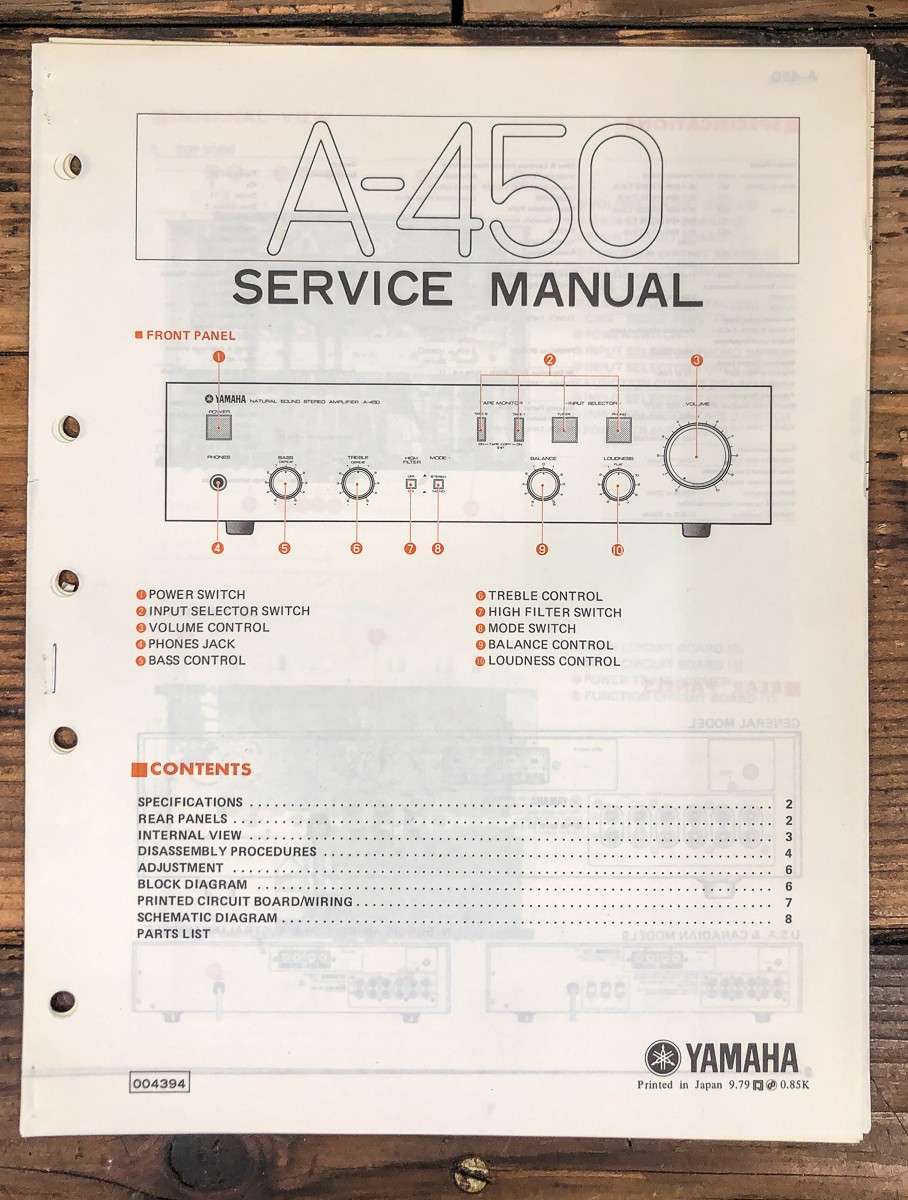
- A/B Speaker Selection: A useful feature for comparing speaker pairs or using different rooms. The ability to switch between Speaker A, B, or both adds flexibility uncommon in amplifiers at this price point.
- Tape Monitor Function: Allows users to switch between live and recorded sources seamlessly—a hallmark of the era’s design philosophy.
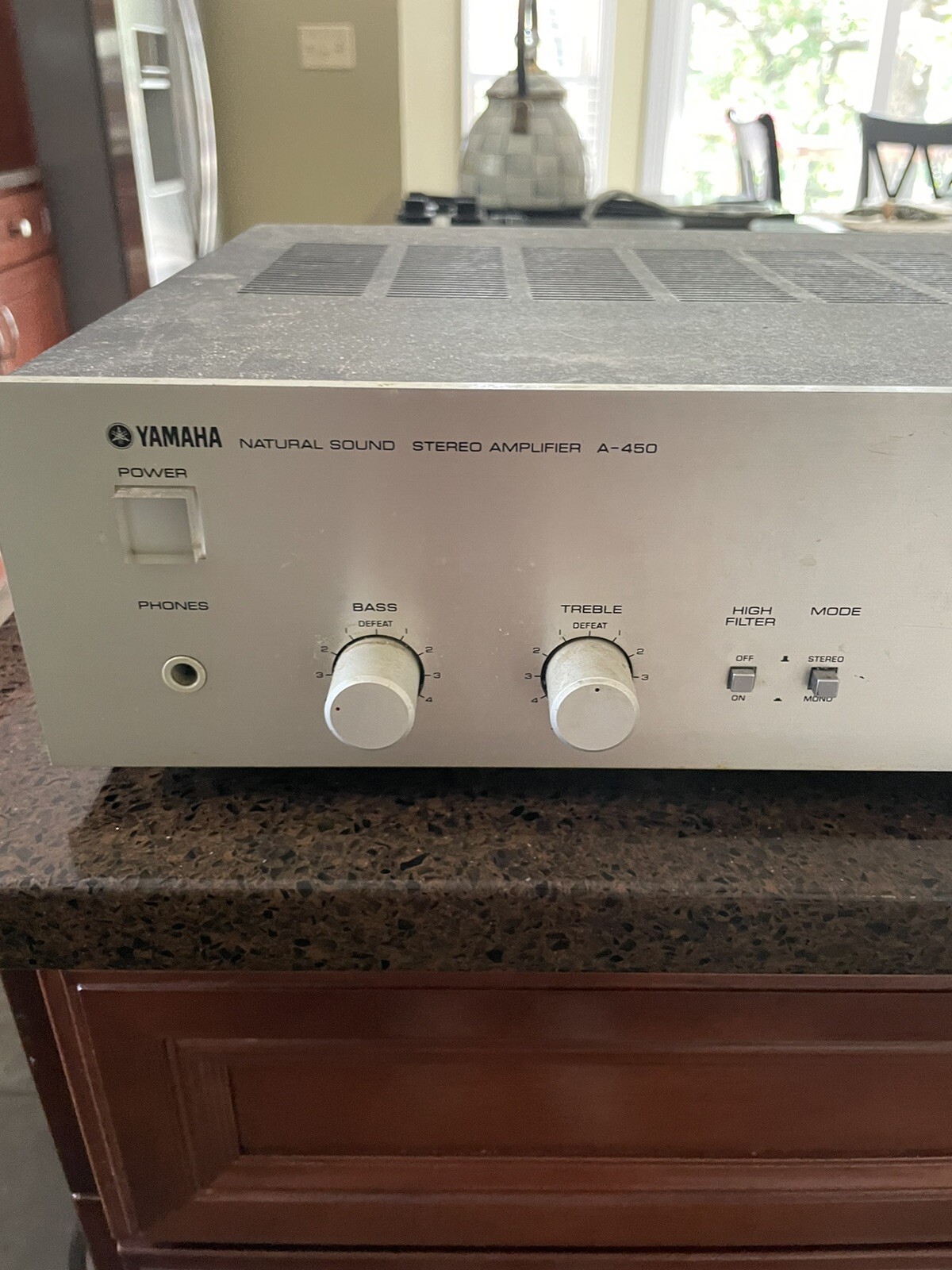
- High-Quality Build: The A-450 features a heavy chassis, a large toroidal-style power transformer (inferred from weight and performance), and high-quality potentiometers. The front panel includes a large, centrally mounted volume knob flanked by source and tone controls, all with a tactile, reassuring feel.
- Phono Stage Integration: At a time when turntables were the primary source, Yamaha ensured the MM phono stage was well-shielded and low-noise, making the A-450 a true all-in-one solution for vinyl lovers.
Common Issues and Maintenance
Like all vintage electronics, the Yamaha A-450 benefits from periodic maintenance, especially if it has been in continuous use or stored for years.
- Capacitor Aging: Electrolytic capacitors in the power supply and signal path may degrade over time, leading to hum, reduced performance, or channel imbalance. A full recapping by a qualified technician is recommended for units that haven’t been serviced in decades.
- Potentiometer Noise: The volume and balance controls may develop crackling or channel dropouts. Cleaning with contact cleaner can help, but replacement may be necessary if wear is advanced.
- Binding Post Tightness: The original speaker terminals can loosen over time. Check and tighten them carefully to avoid poor connections or corrosion.
- Dust and Oxidation: Internal dust buildup can affect performance. A careful cleaning and inspection of the circuit boards and connectors is advisable.
With proper care, the A-450 is remarkably reliable. Its conservative design and high build quality mean many units still function perfectly today—over 45 years later.
Current Market Value and Collectibility
The Yamaha A-450 is not a "holy grail" amplifier, but it has quietly gained appreciation among vintage audio enthusiasts. It’s often overlooked in favor of flashier models, but its balanced sound and solid construction make it a sleeper favorite.
- Market Value: Typically sells between $150 and $300, depending on condition, finish, and whether it has been serviced.
- Collectibility: Moderate. It’s not as rare or iconic as the Yamaha A-1 or A-3, but it’s increasingly sought after by those building period-correct systems or seeking affordable, high-quality vintage sound.
- Restoration Potential: High. Due to its straightforward design and availability of service documentation, the A-450 is a great candidate for restoration.
Conclusion and Legacy
The Yamaha A-450 may not have made headlines in its day, but it exemplifies the quiet excellence that defined Yamaha’s approach to audio engineering in the 1970s. It wasn’t about hype or extreme specs—it was about delivering honest, musical sound with reliability and grace.
Today, the A-450 stands as a testament to an era when amplifiers were built to last and designed to serve the music, not the marketing. For the vintage audio enthusiast, it offers a rewarding listening experience, a solid platform for a classic system, and a tangible connection to a pivotal moment in audio history.
If you stumble upon a well-maintained A-450, don’t overlook it. Behind its understated front panel lies a timeless performer—one that continues to deliver the Yamaha promise: sound that moves you.
eBay Listings


As an eBay Partner, we earn from qualifying purchases. This helps support our independent vintage technology research.
Related Models
- Yamaha HP-1 (1974)
- Yamaha A-1 (1970)
- Yamaha A-1020 (1978)
- Yamaha A-550 (1978)
- Yamaha A-7 (1975)
- Luxman L-530 (1975)
- Luxman R-404 (1975)
- Luxman RV-371 (1975)
- Luxman SQ-38U (1975)
- Luxman T-14 (1972)