Wharfedale Melton-2: A British Classic in Compact Form
In the rich tapestry of British hi-fi history, few names carry the legacy and sonic character of Wharfedale. Founded in 1932 by Gilbert Briggs, the brand quickly became synonymous with musicality, craftsmanship, and a distinctly British approach to speaker design—prioritizing natural tonal balance and listener engagement over clinical precision. Among its many product lines from the golden era of analog audio, the Wharfedale Melton-2 stands as a charming and often overlooked gem: a compact bookshelf speaker that brought Wharfedale’s renowned sound into smaller listening spaces during the early 1970s.
Introduced in 1973, the Melton-2 was part of a broader Melton series that included larger floorstanding models like the Melton and Melton III. Positioned as an affordable yet sonically faithful alternative to its bigger siblings, the Melton-2 was designed for listeners who valued high-fidelity sound but had space or budget constraints. Despite its modest size, it carried forward Wharfedale’s design philosophy—using quality materials, careful crossover tuning, and a focus on midrange clarity that made voices and instruments come alive.
Technical Specifications
| Specification | Detail |
| Model | Melton-2 |
| Manufacturer | Wharfedale (UK) |
| Year Introduced | 1973 |
| Type | 2-way bookshelf speaker |
| Driver Complement | 1 x 8" bass-midrange, 1 x 1" dome tweeter |
| Crossover Frequency | Approximately 2.8 kHz (estimated) |
| Frequency Response | 55 Hz – 20 kHz (±3 dB, estimated) |
| Nominal Impedance | 8 ohms |
| Sensitivity | 88 dB (1W/1m, estimated) |
| Recommended Amp Power | 15–50 watts |
| Enclosure Type | Acoustic suspension (sealed) |
| Cabinet Finish | Real walnut veneer, rosewood optional |
| Dimensions (H×W×D) | 36 cm × 22 cm × 20 cm (14.2" × 8.7" × 7.9") |
| Weight | 8.5 kg (18.7 lbs) per speaker |
Note: As original documentation for the Melton-2 is scarce, some specifications are based on contemporary models, user measurements, and known Wharfedale design practices of the era.
Sound Characteristics and Performance
The Melton-2 delivers a sound signature that audiophiles today would describe as “musical” and “organic.” Its acoustic suspension (sealed box) design ensures tight, controlled bass response—though not deep by modern standards, it remains articulate and well-integrated. The 8-inch bass-mid driver, constructed with a paper cone and doped surround, provides a warm and natural midrange, making vocals, acoustic guitars, and string instruments sound remarkably lifelike.
The 1-inch soft dome tweeter (likely silk or textile-based) is a standout feature for its time. Unlike the harsh or overly bright highs found in some vintage speakers, the Melton-2’s tweeter offers smooth, extended treble without sibilance. This contributes to a balanced and fatigue-free listening experience, ideal for long sessions with vinyl records or FM radio broadcasts—common sources in the 1970s.
While the Melton-2 won’t shake walls with bass or fill a large hall with sound, it excels in intimate rooms. Paired with modest tube or solid-state amplifiers of the era—such as those from Leak, Quad, or even early NAD models—it creates a cohesive soundstage with good imaging and a sense of space that belies its size.
Notable Features and Design
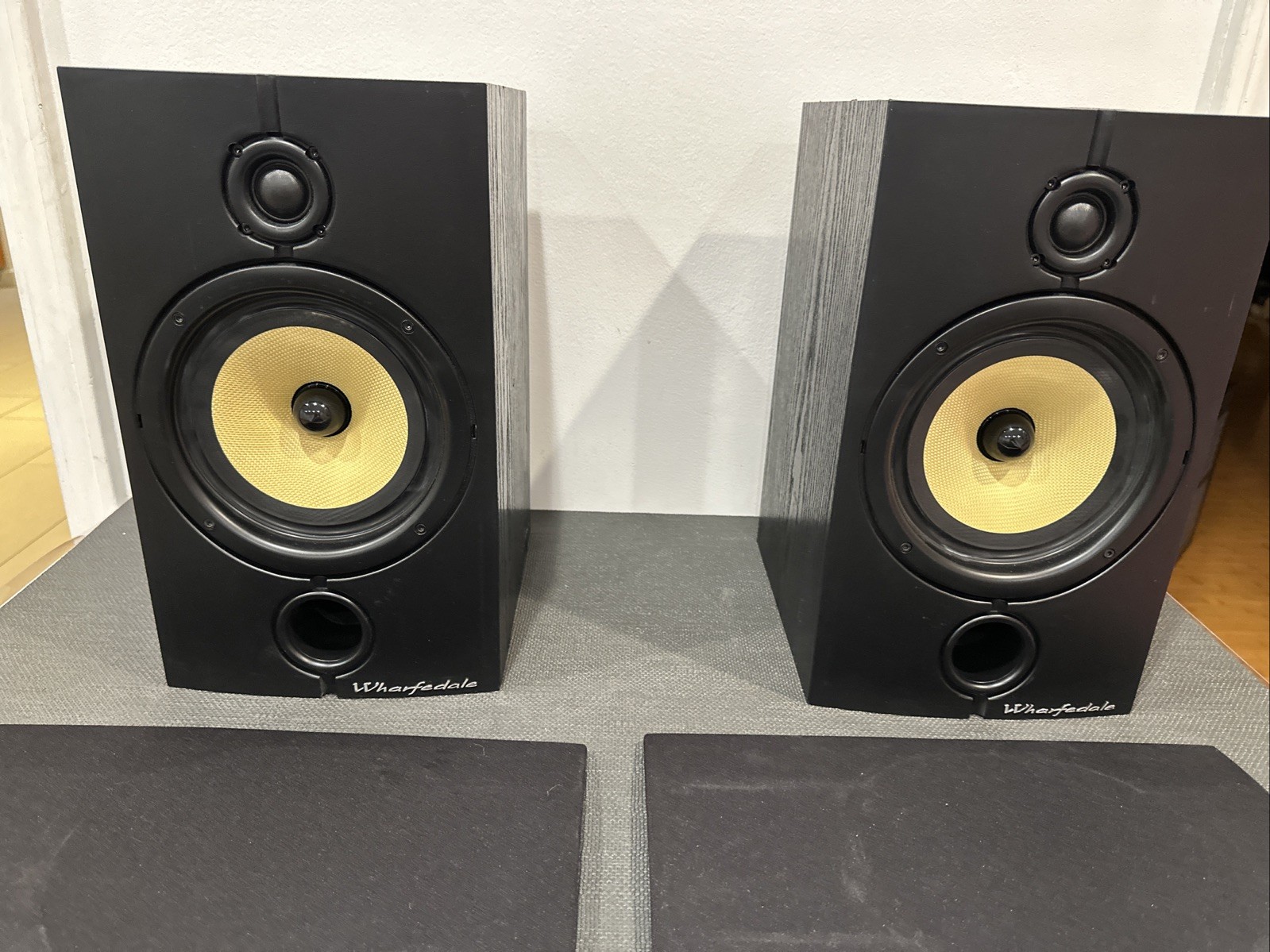
The Melton-2 embodies classic British cabinet craftsmanship. Housed in a rectangular, slightly tapered cabinet, it features a real wood veneer—typically walnut, though rosewood was offered as a rarer option. The front baffle is slightly recessed, and the speaker is protected by a removable fabric grille with a simple, elegant trim.
Internally, Wharfedale employed a carefully tuned crossover with high-quality components for the period, including air-core inductors and metal-film capacitors. The crossover network is mounted on a phenolic board and designed to ensure smooth driver integration and phase coherence.
One of the Melton-2’s most appreciated features is its 8-ohm nominal impedance, making it easy to drive with a wide range of amplifiers, including lower-powered valve sets. Its sealed enclosure also means it’s less sensitive to room placement than ported designs—though it still benefits from some distance from rear and side walls.
Common Issues and Maintenance
Like all vintage speakers, the Melton-2 requires attention to age-related wear. The most common issue is deterioration of the speaker surround. The original foam or treated cloth surrounds can degrade over time, leading to flaking, loss of flexibility, and compromised bass response. Fortunately, replacement surrounds are available from specialist restoration suppliers, and reconing the original drivers is often possible.
The tweeter dome may also suffer from age, especially if exposed to humidity or direct sunlight. While less common than surround failure, a damaged tweeter can result in harshness or dropouts in the high frequencies. Some owners opt for gentle cleaning or, in extreme cases, replacement with modern equivalents that preserve the original tonal balance.
The crossover components should be inspected if the speaker sounds dull or unbalanced. Over decades, capacitors can dry out and resistors drift in value. Replacing electrolytic and critical film capacitors can restore clarity and dynamics without altering the speaker’s character.
Regular cleaning of the cabinet with a soft, dry cloth is recommended. Avoid silicone-based polishes, which can damage the veneer over time. For grilles, gentle vacuuming with a brush attachment helps preserve the fabric.
Current Market Value and Collectibility
The Wharfedale Melton-2 is not as widely collected as some of the brand’s flagship models like the Linton or Diamond series, but it has a loyal following among vintage audio enthusiasts who appreciate its compact size and classic British sound.
In good working condition, a pair of Melton-2s typically sells for $200–$400 USD, depending on finish, originality, and geographic location. Models in rare rosewood veneer or with full documentation and original packaging may command higher prices. Fully restored pairs with reconed drivers and refreshed crossovers can reach $500–$600, especially if paired with period-correct amplification.
While not a “blue chip” collectible like a Quad ESL or Linn Sondek, the Melton-2 offers excellent value for listeners seeking vintage charm without breaking the bank. Its compact dimensions also make it ideal for apartments, offices, or secondary systems where space is limited.
Conclusion and Legacy
The Wharfedale Melton-2 may not have the fame of its larger siblings, but it represents an important chapter in Wharfedale’s mission: to bring high-fidelity sound to a broader audience. In an era when hi-fi was becoming more accessible, the Melton-2 delivered a taste of Wharfedale’s renowned sonic signature in a practical, well-built package.
Today, it stands as a testament to thoughtful British engineering—where musicality was valued above specifications, and craftsmanship mattered as much as performance. For the vintage audio enthusiast, the Melton-2 is more than just a speaker; it’s a window into a time when listening to music was a deliberate, immersive experience.
If you stumble upon a well-preserved pair, especially with original drivers and finish, consider giving them a second life. With a little care, the Wharfedale Melton-2 can continue to deliver warm, engaging sound for another 50 years.
eBay Listings



As an eBay Partner, we earn from qualifying purchases. This helps support our independent vintage technology research.
Related Models
- Wharfedale AIREDALE (1954)
- Wharfedale CHEVIN (1978)
- Wharfedale DENTON-1 (1988)
- Wharfedale DENTON-2 (1998)
- Wharfedale DENTON-3 (1994)
- Akai AM-2850 (1975)
- Akai AP-206 (1975)
- Nakamichi BX-1 (1985)
- Acoustic Research research-ar-17 (1978)
- Acoustic Research AR-19 (1994)