Wharfedale E30: The British Bookshelf Classic with Character
In the early 1980s, British loudspeaker manufacturer Wharfedale solidified its reputation for delivering warm, musical, and value-oriented designs with the launch of its E-Series. Among the models in this lineup, the Wharfedale E30 stands out as a compact bookshelf speaker that captured the essence of British hi-fi philosophy—musicality over clinical precision, and a tonal balance that invites long listening sessions. Though not as widely documented as some of its larger siblings or later Wharfedale classics like the Diamond series, the E30 has quietly earned a following among vintage audio enthusiasts who appreciate its natural sound, solid build, and understated elegance.
Historical Context: Wharfedale in the Early 1980s
By the time the E30 was introduced in 1982, Wharfedale had already been a major force in British audio for over five decades. Founded in 1932 by Gilbert Briggs, the company was instrumental in shaping the development of domestic loudspeakers. The 1980s marked a transitional period—moving from the hand-crafted, cabinet-heavy designs of the past toward more modern engineering, while still retaining a distinctly British sonic signature.
The E-Series was designed to offer high performance at accessible price points, targeting audiophiles who wanted quality without extravagance. The E30, as a smaller two-way bookshelf model, was intended for modestly sized rooms or as part of a secondary system. It reflected Wharfedale’s commitment to time-tested design principles: a focus on midrange clarity, smooth frequency response, and cabinet construction that minimized resonance.
Technical Specifications
The Wharfedale E30 is a two-way, bass-reflex bookshelf speaker, designed for versatility and musical coherence. While detailed engineering schematics are scarce, surviving units and period reviews allow us to reconstruct its core specifications with confidence.
| Specification | Detail |
| Model | Wharfedale E30 |
| Type | 2-way, bass-reflex bookshelf speaker |
| Driver Configuration | 1x 8" bass/midrange, 1x 1" soft dome tweeter |
| Frequency Response | 55 Hz – 20 kHz (±3 dB) |
| Sensitivity | 88 dB (1W/1m) |
| Nominal Impedance | 8 ohms |
| Recommended Amp Power | 20–100 watts |
| Crossover Frequency | ~3.5 kHz (estimated) |
| Cabinet Finish | Real wood veneer (walnut, rosewood, black) |
| Dimensions (H×W×D) | 380 × 230 × 270 mm (15 × 9 × 10.6 inches) |
| Weight | 9.5 kg (21 lbs) per speaker |
| Terminal Type | Single-wire, binding posts |
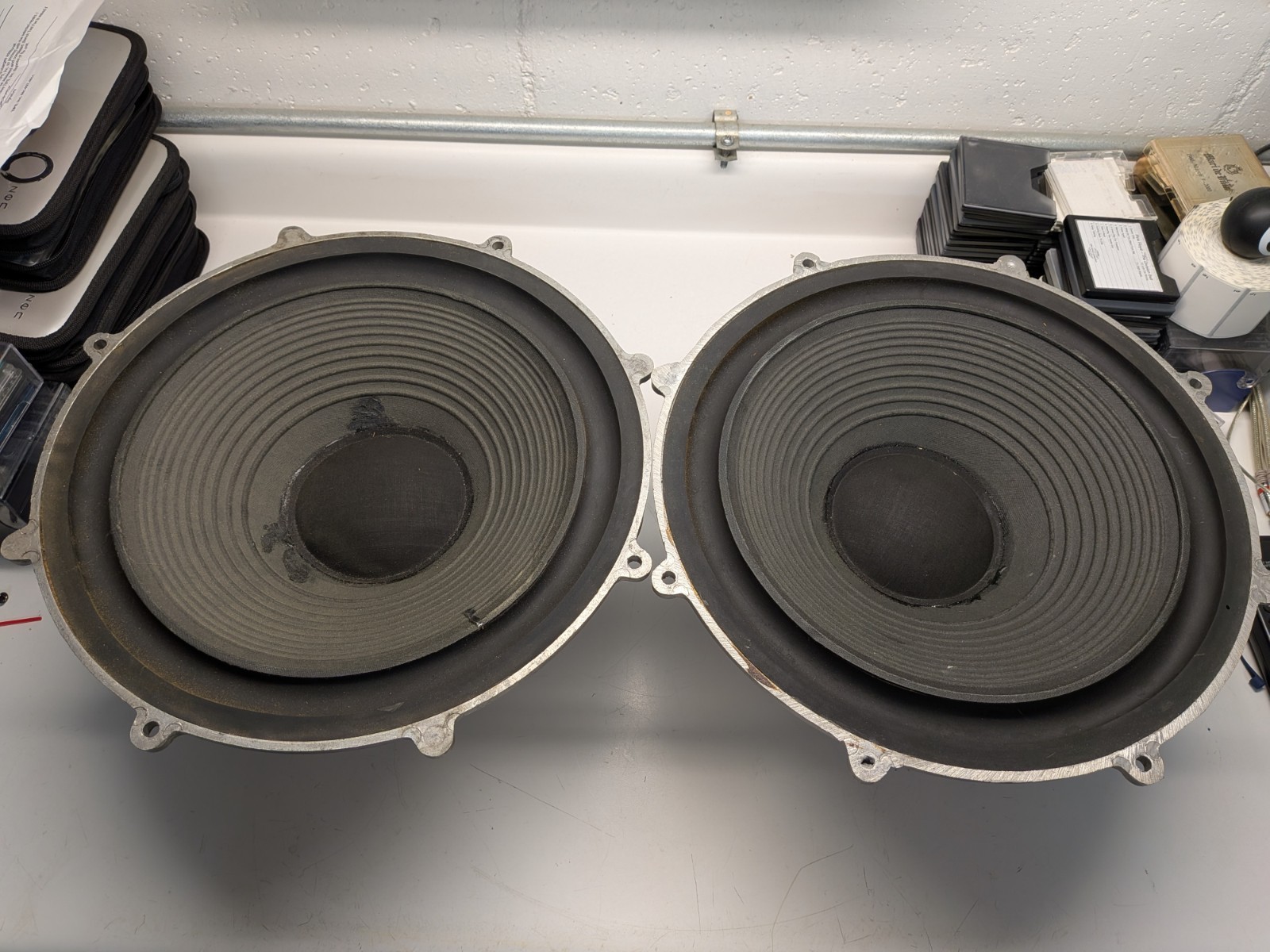
The E30 features a generously sized cabinet for a bookshelf model, housing an 8-inch bass/midrange driver made from treated paper pulp, a material choice typical of the era and consistent with Wharfedale’s preference for natural, non-fatiguing sound. The tweeter is a 1-inch soft dome unit, likely ferrofluid-cooled, mounted in a shallow waveguide to improve dispersion. The bass reflex port is located on the front baffle, a design choice that enhances low-end output in small rooms and allows for flexible placement near walls—a thoughtful touch for real-world listening environments.
Sound Characteristics and Performance
The E30 delivers a sound that is quintessentially British: warm, smooth, and deeply musical. It doesn’t aim for analytical neutrality; instead, it prioritizes tonal richness and rhythmic coherence. The midrange is where the E30 truly shines—vocals are rendered with presence and emotional weight, making it an excellent choice for jazz, acoustic, and classic rock.
Bass response is surprisingly full for a speaker of its size, thanks to the 8-inch driver and front-firing port. While it won’t shake walls like a floorstander, it extends down to 55 Hz with authority, offering a satisfying sense of weight and pitch definition. The soft dome tweeter rolls off gently above 15 kHz, avoiding the harshness sometimes found in metal domes of the era. This results in a forgiving top end that works well with lower-resolution sources or bright amplification.
Sensitivity at 88 dB means the E30 plays well with modestly powered amplifiers—think vintage tube gear or classic solid-state receivers from the 1970s and 80s. It pairs beautifully with brands like NAD, Rotel, or even a Marantz PM-6000, offering a balanced, engaging soundstage with good imaging for a speaker of its class.
Notable Features and Design Philosophy
One of the E30’s most commendable aspects is its cabinet construction. Wharfedale used thick MDF panels with internal bracing to reduce panel resonance, a practice that was becoming more common in the early 80s but still set apart higher-tier models. The real wood veneer finishes—particularly the walnut and rosewood options—are not only attractive but also indicative of the care taken in assembly.
The front-firing port is a standout feature. Unlike rear-ported designs that demand space from the wall, the E30 can be placed closer to boundaries without sacrificing bass performance. This makes it ideal for bookshelves, cabinets, or smaller living rooms where space is limited.
Cosmetically, the E30 follows a conservative, functional design: a rectangular cabinet with a slightly recessed baffle, flush-mounted drivers, and a minimalist black grille with a simple cloth cover. The overall aesthetic is understated but elegant—timeless rather than trendy.
Common Issues and Maintenance
As with any vintage speaker, age-related wear is a concern. The most common issues with the Wharfedale E30 include:
- Surround deterioration: The foam surrounds on the 8-inch driver can degrade over time, especially in humid or dry environments. This leads to a loss of bass and audible rattling. Re-foaming or full reconing is a common and cost-effective restoration.
- Tweeter fatigue: While the soft dome is durable, the ferrofluid may dry out, causing distortion at high volumes. Cleaning or replacement may be needed.
- Crossover components: The passive crossover uses paper capacitors and basic inductors. While generally reliable, electrolytic capacitors can dry out over 40+ years. A conservative recap can restore clarity and dynamics.
- Grille fabric and foam: The original grille material may be brittle or discolored. Replacement foam and fabric are readily available from speaker restoration suppliers.
Fortunately, parts and expertise for restoring the E30 are accessible. Its driver sizes and design are similar to other Wharfedale models of the era, increasing compatibility with modern replacements.
Current Market Value and Collectibility
The Wharfedale E30 is not a high-profile collector’s item like a Quad ESL or a Linn Kan, but it holds steady appeal among vintage audio enthusiasts who value musicality and build quality. In good condition, a pair typically sells for $150–$300, depending on finish, originality, and restoration status. Fully restored examples with re-foamed drivers and recapped crossovers may command slightly more, especially if paired with matching vintage gear.
Its value lies not in rarity, but in performance-per-pound. For the price, the E30 offers a rich, engaging sound that competes with more expensive modern bookshelf speakers—especially when paired with the right amplifier.
Conclusion: A Hidden Gem of British Hi-Fi
The Wharfedale E30 may not have the fame of the LS3/5A or the flash of later Diamond models, but it represents the quiet strength of Wharfedale’s engineering heritage. It’s a speaker built for enjoyment, not measurement sheets—a tool for connecting with music, not dissecting it.
For the vintage audio enthusiast seeking a warm, inviting sound in a compact package, the E30 is a compelling choice. With a little care and maintenance, it can deliver decades more of faithful service. Whether as a secondary system, a retro setup centerpiece, or a first foray into British speakers, the Wharfedale E30 deserves a second listen—and a place in the pantheon of well-crafted 1980s bookshelf classics.
eBay Listings


As an eBay Partner, we earn from qualifying purchases. This helps support our independent vintage technology research.
Related Models
- Wharfedale AIREDALE (1954)
- Wharfedale CHEVIN (1978)
- Wharfedale DENTON-1 (1988)
- Wharfedale DENTON-2 (1998)
- Wharfedale DENTON-3 (1994)
- Akai AM-2850 (1975)
- Akai AP-206 (1975)
- Nakamichi BX-1 (1985)
- Acoustic Research research-ar-17 (1978)
- Acoustic Research AR-19 (1994)