Western Electric 756A (1949)
A 10-inch relic from the dawn of high-fidelity, whispered about in forums and priced like buried treasure—this is the speaker that makes collectors pause, even if details are scarce.
Overview
The Western Electric 756A isn’t just a speaker—it’s a ghost. You won’t find datasheets or glossy brochures, no vintage ads touting its prowess. What you get instead is reverence in fragments: a mention here, a photo there, a price tag that makes your eyes water. Known officially as the WE 756A loudspeaker, it exists on the fringes of audio legend, a pre-Altec production piece from an era when Western Electric wasn’t just building gear—they were defining sound itself. It’s the bigger, nicer brother to the Western Electric 755, a speaker that’s already earned its keep in collector lore as a highly sought-after piece. That lineage means the 756A inherits more than just size; it inherits expectation.
And yet, for all its mystique, the 756A remains stubbornly opaque. No one’s dug up the original specs sheet. No service manual has surfaced with impedance curves or cone material notes. What we do know is this: it’s a 10-inch speaker, likely designed for public address or studio monitoring applications before high fidelity became a living room affair. It predates the Altec era, placing it in that nebulous post-war moment when telephone infrastructure and audio engineering still shared the same DNA. These weren’t built for audiophiles—they were built to last, to project, to perform under load. But somewhere along the way, they got rediscovered, pulled from old installations, and reclassified as sonic artifacts.
One owner on Audiogon recalled installing a pair in a basement ceiling three decades ago and summed it up simply: they “sounded great.” That’s not much, but it’s something. In a world obsessed with measurements and flat frequency responses, that offhand remark carries weight. It wasn’t a review, it wasn’t a shootout—it was just truth in passing. And maybe that’s how the 756A should be understood: not as a spec sheet anomaly, but as a voice from a time when sound didn’t need to be perfect, just present.
Specifications
| Manufacturer | Western Electric |
| Model | 756A |
| Product Type | loudspeaker |
| Size | 10" |
Historical Context
The Western Electric 756A is described as "pre Altec production," a subtle but meaningful label. Altec Lansing emerged as a dominant force in professional audio after acquiring components and designs from Western Electric in the late 1940s and early 1950s. To be “pre-Altec” means the 756A belongs to the final chapter of Western Electric’s direct involvement in loudspeaker manufacturing before that knowledge was spun off, licensed, or sold. It places the 756A in a narrow window—likely the late 1940s—when WE still controlled the entire chain, from telephone systems to theater sound. This wasn’t just engineering; it was institutional memory in metal and paper.
Collectibility & Value
If you’re looking to buy a Western Electric 756A, prepare for a hunt. One listing on eBay in September 2023 asked US $5,000.00—tagged as “Super Rare.” Another, on PicClick, showed a price of $1,700.00. That kind of spread tells you everything: there’s no established market, no grading system, no baseline. Prices are set by whoever shows up first with cash and courage. The scarcity isn’t just about numbers; it’s about awareness. These weren’t consumer products, so they didn’t go home in cardboard boxes. They went into buildings, theaters, maybe military installations—places where they were forgotten, scrapped, or left to rot.
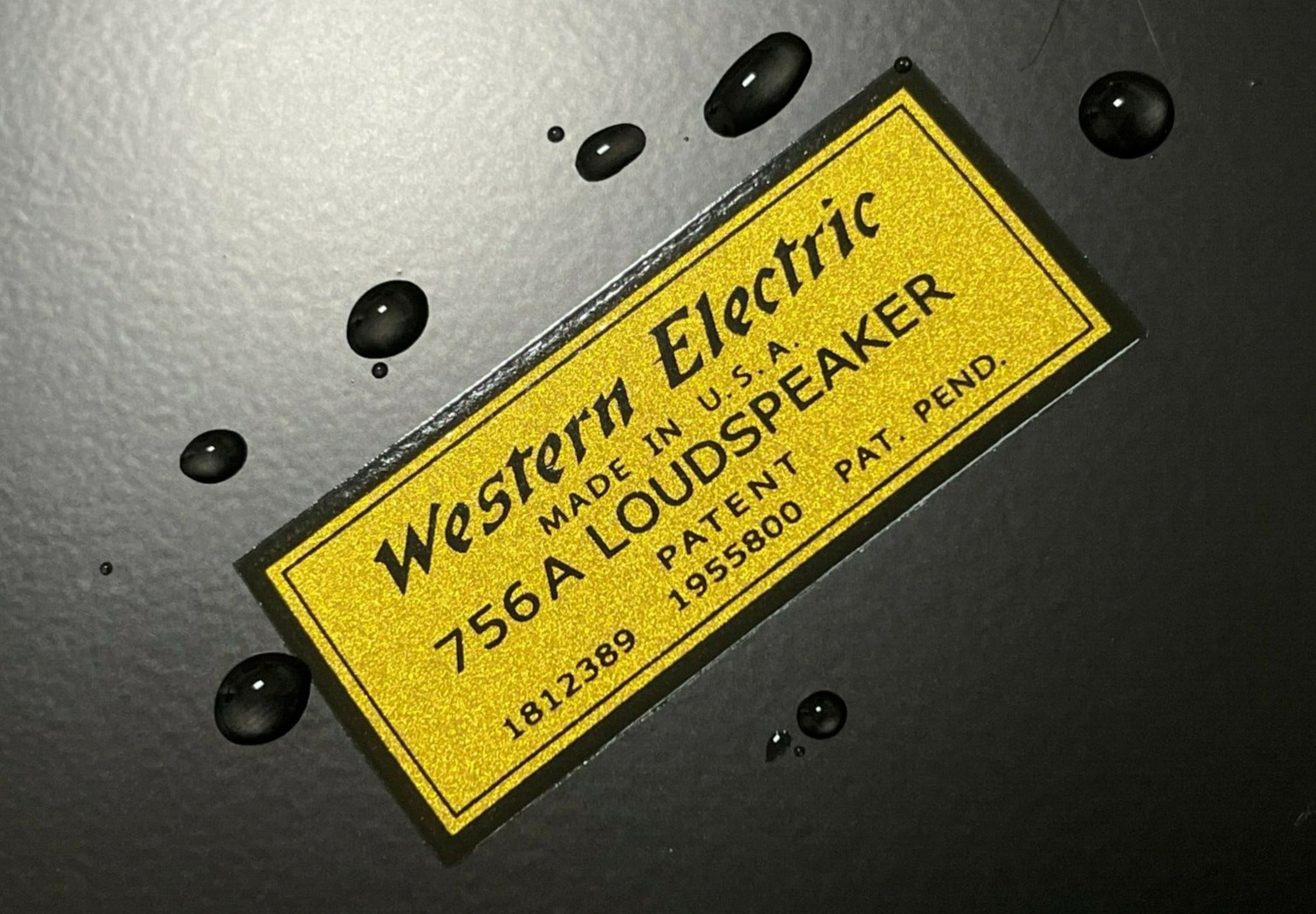
Still, the mystique grows. The 755 is already known as a highly sought-after speaker, and the 756A, as its larger sibling, rides that coattail—though with even less documentation. Reproduction water slide decals for the "WESTERN ELECTRIC 756A LOUDSPEAKER" are available, which says something about demand: people want these to look right, even if they can’t hear them. But beware—condition is everything. With no data on common failures or repair needs, buying one is a leap of faith. Is the voice coil original? Is the cone delaminating? Is the basket rusted through? These questions can’t be answered from a distance. This isn’t a speaker you buy online and plug in. It’s a project, a restoration, a conversation starter that might not speak at all.
eBay Listings


As an eBay Partner, we earn from qualifying purchases. This helps support our independent vintage technology research.
Related Models
- Western Electric 12A (1926)
- Western Electric 13A (1928)
- Western Electric 15A (1930)
- Western Electric 22A Horn (1933)
- Western Electric 24A Horn (1935)
- Akai AM-2850 (1975)
- Akai AP-206 (1975)
- Nakamichi BX-1 (1985)
- Acoustic Research research-ar-17 (1978)
- Acoustic Research AR-19 (1994)