Western Electric 755A (1947)
The moment you hear a 755A, you understand why people still argue about paper cones and field coils in 2026.
Overview
There’s a reason the Western Electric 755A still shows up in late-night forum threads and hushed audiophile conversations: it’s one of those rare drivers that doesn’t just reproduce sound—it seems to remember it. Born in the late 1940s, this 8-inch full-range unit wasn’t designed for living rooms or hi-fi racks. It was built for movie theaters, railroad stations, and broadcast studios—places where clarity under pressure wasn’t a luxury, it was the job. And yet, almost by accident, it became a cornerstone of early high-end home audio, seized upon by DIYers who recognized something special in its voice. Owners report it with near-religious reverence, calling it the “world’s best 8-inch full-range driver,” a claim that sounds hyperbolic until you’ve heard one sing.
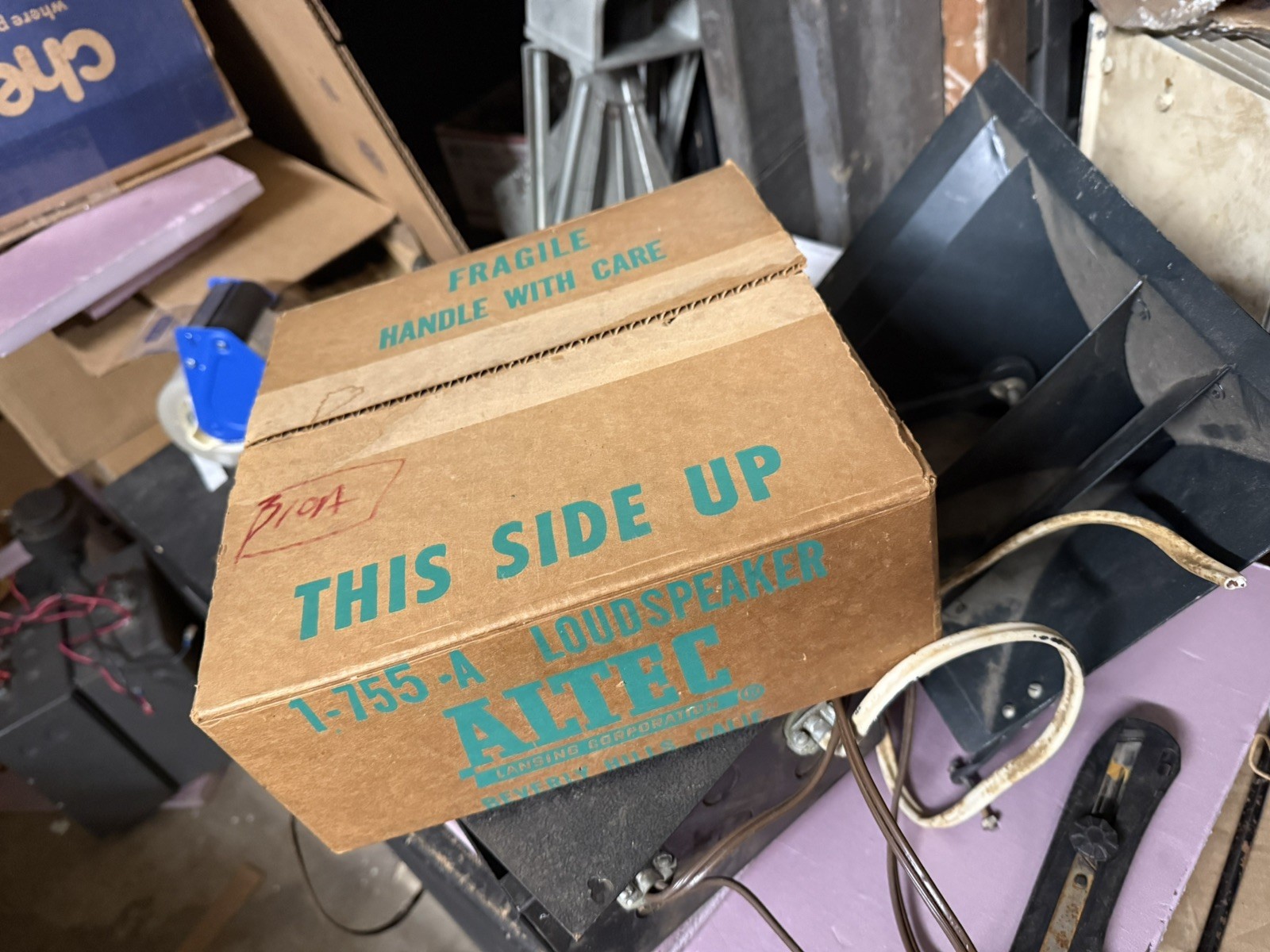
The 755A is not a speaker you plug into a modern receiver and forget. It’s a commitment. It demands low-power tube amplification—think 8 watts max—and rewards that restraint with a clarity and presence that many say no modern driver has matched. It was never about brute force; it was about fidelity. And while Western Electric eventually moved on, stopping in-house production by the early 1950s, the 755A’s reputation only grew. Later versions made by KS and Altec kept the design alive, but collectors consistently point to the original “silver era” units as the peak—drivers with bright zinc plating, inspection stamps, and that unmistakable WE build quality.
Specifications
| Manufacturer | Western Electric (WECO) |
| Size | 8 inch |
| Type | Full range driver |
| Power handling | 5 watts |
| Frequency response | 80 Hz to 15,000 Hz |
| Impedance | 8 ohms |
| Cone material | Paper |
| Magnet material | Alnico |
| Frame material | Cast aluminum |
| Model | Cone31 |
| Outer Diameter | 8.6875" - 221mm |
| Voice Coil Diameter | 2.0" - 51mm |
| Depth | 0.875" - 22mm |
| Surround Material | Paper |
| Dust Cap | Built-in |
| Weight | 5 grams (cone assembly weight) |
Key Features
Single-cone, full-range design
The 755A doesn’t bother with crossovers or tweeters. It’s a single-cone, full-range loudspeaker, relying on the precision of its paper cone and supple surround to handle everything from midbass to upper mids. This simplicity is part of its magic—there’s no phase distortion, no crossover artifacts. What you get is a direct, unfiltered path from amplifier to air. The cone itself is made from a rugged, well-formulated paper compound, suspended by both a spider and a paper surround, both designed for compliance and longevity. It’s a design philosophy that prioritizes coherence over convenience.
Field coil electromagnet system
One of the 755A’s most distinctive features is its use of a field coil electromagnet instead of a permanent magnet. This means the magnetic field that drives the voice coil isn’t static—it’s powered, typically from a separate supply. The result is a stronger, more stable field, which translates to higher sensitivity and tighter control over the cone. It’s a design that adds complexity (and another thing that can fail), but also contributes to the speaker’s legendary clarity, especially in the midrange. The magnets themselves are Alnico, known for their warmth and dynamic punch, and the voice coil leads are solid—no flimsy stranded wire here.
“Silver era” craftsmanship
The earliest 755A units, often referred to as the “silver era” drivers, are the most sought after. Their bright zinc-plated finish isn’t just cosmetic—it’s a hallmark of a time when Western Electric stamped each unit with an inspector’s signature and edge markings, a final quality check before shipping. The edge damping compound used on the surround is still supple and tacky on well-preserved units, a detail that matters because it affects how the cone behaves at excursion limits. These aren’t mass-produced components; they’re hand-inspected artifacts from an era when audio hardware was built to last decades, not product cycles.
Historical Context
The 755A emerged in the late 1940s as the successor to the earlier 755 model, part of Western Electric’s Professional Series of loudspeakers. It was designed for environments where speech intelligibility was critical—movie theaters, public address systems, broadcast studios. It wasn’t marketed as a home audio product, but that didn’t stop early hi-fi enthusiasts from snatching them up. By the early 1950s, Western Electric had ceased in-house production, a shift that marked the end of an era. The design lived on through KS and later Altec, but collectors consistently rank the original WE-made “silver era” units as the best sounding of all 755 variants. The grey crinkle paint versions that followed are considered a very close second, but the zinc-plated originals remain the benchmark.
Collectibility & Value
Today, a matched pair of original Western Electric 755A drivers can command $7,900.00, reflecting their status as holy grail components for vintage audio collectors. They’re treasured not just for their sound, but for their craftsmanship and historical significance. However, they’re not without vulnerabilities. The field coil can fail—a serious issue that requires rewinding or replacement—and the cone itself is susceptible to damage from physical impact or environmental exposure. Metal dust in the magnetic gap is considered the worst possible contaminant, as it can scratch the pole piece and ruin performance. Cosmetic fading from direct sunlight is also common, though less critical. Replacement cones are available for $78.95 USD (as of 2022), but sourcing original, unblemished units in working condition is increasingly difficult. Given their age and application history—often mounted on walls or in ceilings—many drivers have been exposed to moisture, dirt, and UV light, making fully restored examples rare and expensive.
eBay Listings



As an eBay Partner, we earn from qualifying purchases. This helps support our independent vintage technology research.
Related Models
- Western Electric 12A (1926)
- Western Electric 13A (1928)
- Western Electric 15A (1930)
- Western Electric 22A Horn (1933)
- Western Electric 24A Horn (1935)
- Akai AM-2850 (1975)
- Akai AP-206 (1975)
- Nakamichi BX-1 (1985)
- Acoustic Research research-ar-17 (1978)
- Acoustic Research AR-19 (1994)