Western Electric 110A (1937)
The first compressor you never knew existed—born in a radio booth, built to make voices carry farther without blowing out transmitters.
Overview
The Western Electric 110A isn’t the kind of gear you see on studio shelves or auction feeds. It’s more myth than machine at this point—rare, foundational, and shrouded in the quiet hum of early broadcast infrastructure. But if you care about how dynamic control entered the audio world, the 110A is where the story starts. Introduced in 1937, this unit wasn’t built for musicians or recordists—it was forged in the fires of AM radio, where over-modulation meant fines, distortion, and angry regulators. The 110A, officially dubbed the 110-A Program Amplifier, was the first commercially offered compressor in the United States, a title it wears without contest. It didn’t just shape sound; it shaped the business of broadcasting by letting stations squeeze more perceived volume out of their transmitters without crossing legal limits.
Western Electric, already a powerhouse in telephone and audio infrastructure, didn’t set out to invent a new category—they were solving an engineering problem. But in doing so, they gave birth to a tool that would echo through decades of recording. The 110A wasn’t about color or vibe; it was about control, reliability, and staying on air. It was quickly followed by the RCA 96-A, Collins 26C, Gates 17-B, and Wilcox 57-D, but the 110A had already staked its claim. One engineer reportedly put it best: “Almost everyone offered a compressor by 1938. I am fairly certain the Western Electric 110A came first, RCA 96-A next, then the Collins, Gates, and Webster units.” That’s not just bragging rights—it’s a timeline.
What made the 110A work was its use of a bridge network with varying arms to achieve gain reduction, a clever analog solution that relied on selenium rectifiers in each arm. No ICs, no VCA chips, no optical cells—just passive components reacting to signal levels in real time. It wasn’t fast by modern standards, and it certainly wasn’t subtle, but it was effective. And crucially, it delivered results: one source notes it could increase average audio level by 3 dB, effectively doubling a station’s broadcast reach without touching transmitter power. That kind of efficiency didn’t just impress engineers—it saved money and expanded audiences.
Specifications
| Manufacturer | Western Electric |
| Model | 110A |
| Type | Compressor/Limiter (automatic amplifier), Program Amplifier |
| Introduction Year | 1937 |
| Dimensions | 19¼ inches high and 7½ inches deep |
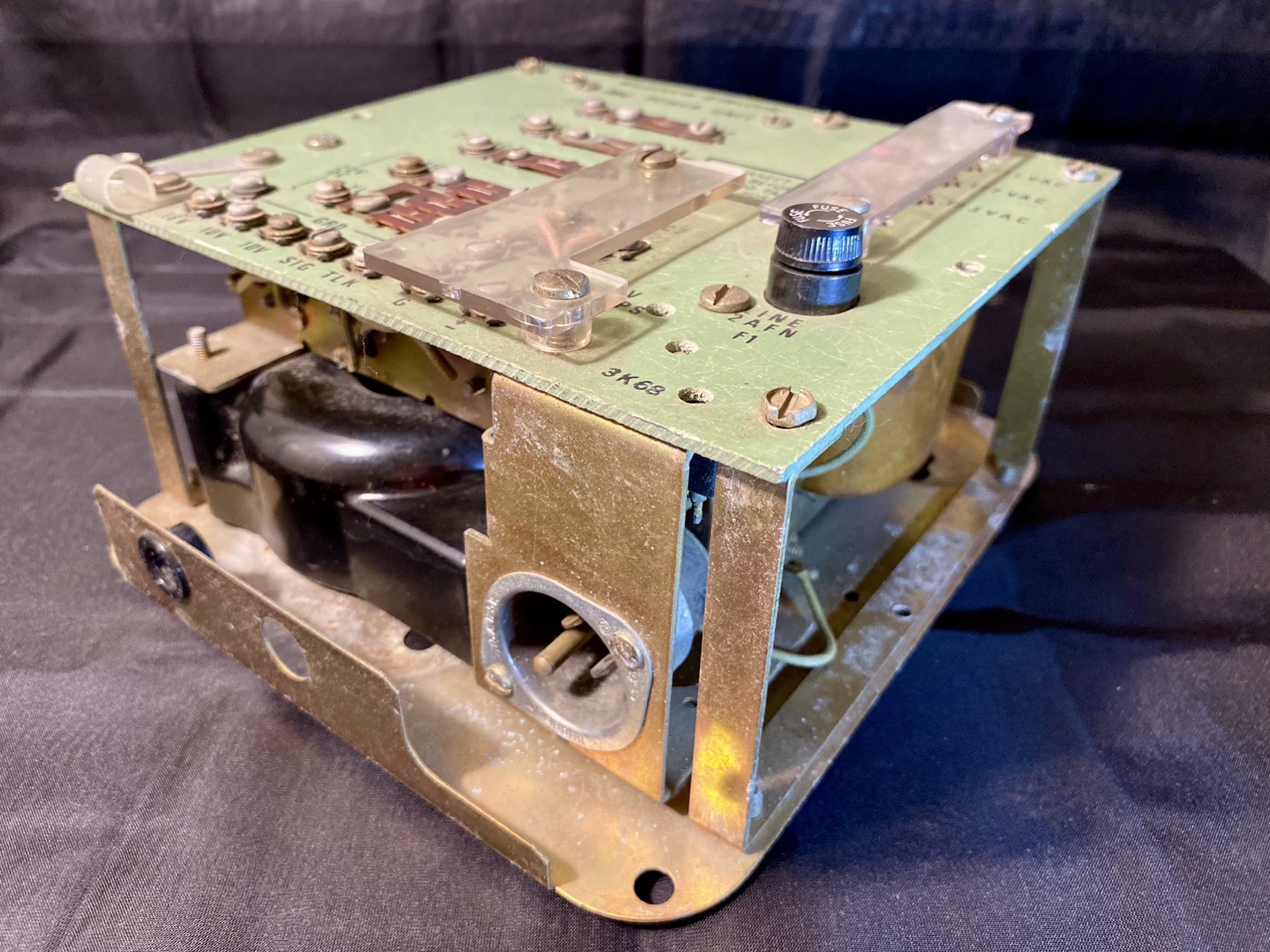
| Construction | Built on a recessed metal panel. Main components, including vacuum tubes, capacitors, and pads, are located at the rear of the panel, while the terminals and wiring sit in the recessed front portion, covered by a face mat. |
| Core Technology | Bridge network with varying network arms for gain reduction |
| Rectifier Type | Selenium rectifiers in each arm of bridge network |
Key Features
The Bridge Network: Analog Intelligence Before the Term Existed
The heart of the 110A’s operation is its bridge network—a configuration where gain reduction is achieved not by a sidechain or feedback loop, but by shifting the balance across variable arms in the circuit. As signal levels rise, the network responds by altering the gain path, effectively clamping down on peaks before they become problematic. This wasn’t compression in the musical sense; it was automatic level control with a single mission: keep modulation within bounds. There were no knobs for ratio or threshold—just calibrated response curves designed to react predictably to voice and program material. It was elegant in its simplicity, a product of an era when “set it and forget it” wasn’t a slogan—it was the only option.
Selenium Rectifiers: The Forgotten Workhorse
Each arm of the bridge relied on selenium rectifiers, a technology that was robust and efficient for its time but has since become a liability for preservation. These components degrade over decades, often crumbling into dust or leaking conductive residue that can damage surrounding circuitry. While they were a smart choice in 1937—offering solid-state reliability long before silicon took over—they’re now one of the biggest hurdles in restoring a working 110A.
Industrial Build, Hidden Layout
This wasn’t a piece of gear meant to look pretty on a rack. The 110A was built for broadcast racks and utility closets, constructed on a recessed metal panel that keeps the delicate components—tubes, capacitors, attenuator pads—shielded at the rear. The front holds the wiring and terminals under a face mat, protecting connections from accidental shorts or tampering. It’s a utilitarian design that prioritizes serviceability and durability over aesthetics. At 19¼ inches high and 7½ inches deep, it’s a tall, narrow unit—likely designed to fit vertically in equipment bays where space was tight. There’s no front-panel metering, no gain reduction display, no input/output controls. What you see is what the engineer set—and likely left alone for months at a time.
Historical Context
The 110A was born out of necessity: AM radio stations in the 1930s were pushing their transmitters to the limit to be heard over competitors, but over-modulation caused distortion and regulatory penalties. The 110A solved that by automatically controlling peak levels, ensuring consistent modulation without sacrificing average loudness. It wasn’t just a limiter—it was a program amplifier, designed to make broadcasts sound fuller and more present. That 3 dB increase in average level wasn’t just technical trivia; it meant a station could cover twice the area with the same transmitter power. In an era where reach equaled revenue, that was revolutionary.
And it didn’t stay alone for long. By 1938, RCA, Collins, Gates, and Wilcox had all entered the game, proving the concept had legs. But the 110A was first—recognized not just as a product, but as the origin point of broadcast compression in the U.S. Its legacy isn’t in surviving units or collector demand (there’s zero market data), but in the idea it proved: that automatic gain control could be reliable, effective, and commercially viable. Every broadcast compressor that followed, from the LA-2A to the 1176, owes it a debt—whether they know it or not.
eBay Listings

As an eBay Partner, we earn from qualifying purchases. This helps support our independent vintage technology research.