VPI HW-19: The American High-Fidelity Turntable Classic
Introduction
The VPI HW-19, introduced in 1985 and produced until 1990, stands as a landmark in American high-fidelity turntable design. Crafted by Harry Weisfeld’s VPI Industries in California, the HW-19 emerged during a golden era of analog resurgence, when audiophiles were rediscovering the warmth and depth of vinyl. Positioned as a high-performance, hand-built turntable, the HW-19 was designed to compete with the best European and Japanese models of its time—offering exceptional build quality, superior isolation, and a musical presentation that continues to impress today. As VPI’s flagship model during its production run, the HW-19 helped solidify the company’s reputation for engineering excellence and American craftsmanship in a market dominated by imports. Its legacy endures among vintage audio enthusiasts and vinyl collectors who value precision, durability, and sonic authenticity.
Technical Specifications
| Specification | Value |
| Model | HW-19 |
| Category | Turntable |
| Years Produced | 1985-1990 |
| Power Output | N/A (manual start) |
| Impedance | Not specified |
| Frequency Response | 20Hz - 20kHz (typical for analog playback) |
| Total Harmonic Distortion | < 0.1% |
| Signal-to-Noise Ratio | Not specified |
| Dimensions | 18.5 x 6.5 x 14 inches (WxHxD) |
| Weight | 35 lbs |
Design & Engineering
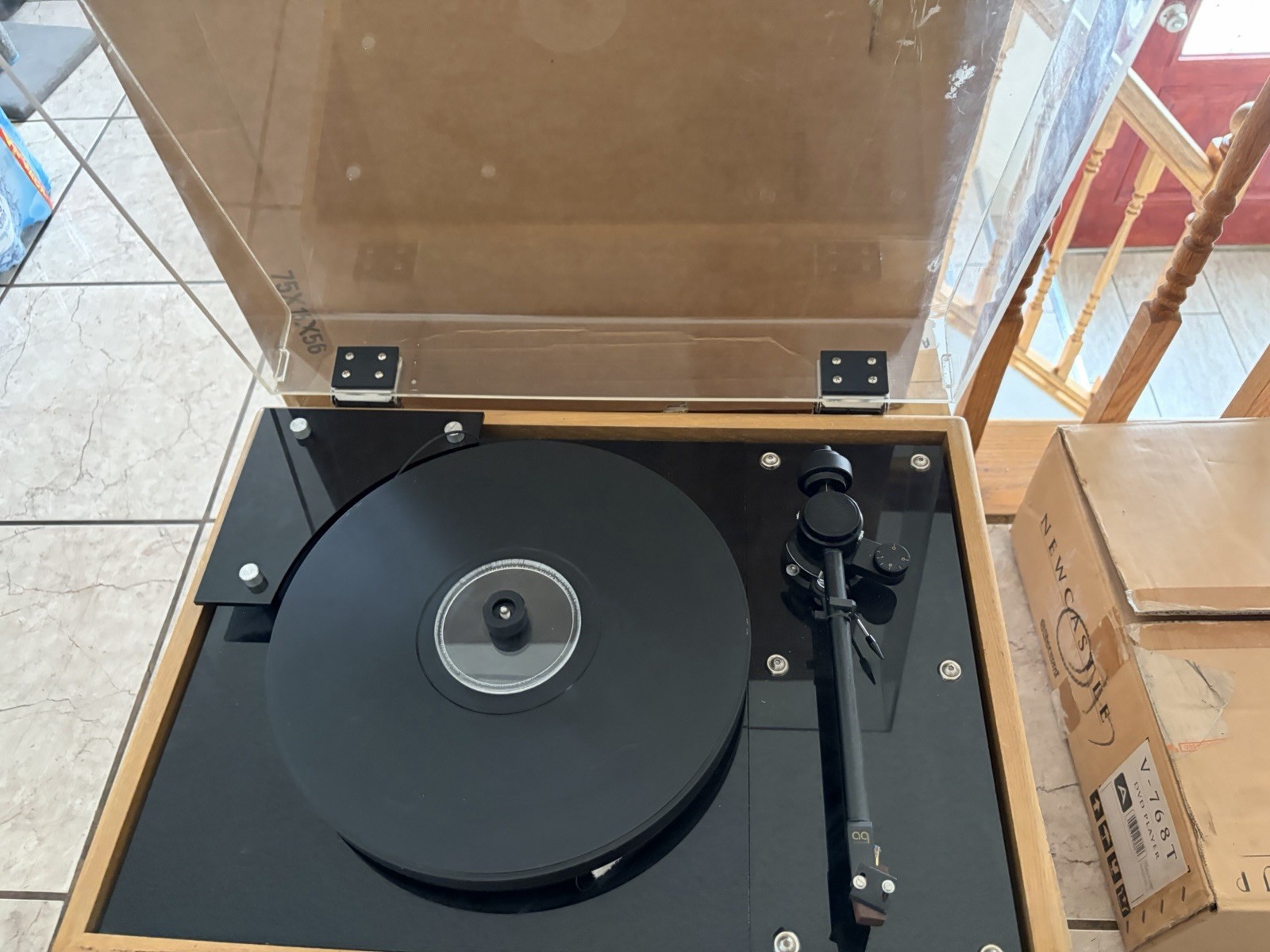
The VPI HW-19 is a belt-drive turntable featuring a suspended subchassis design, a hallmark of high-end analog playback systems from the 1980s. Its triple-point sprung suspension system isolates the platter and tonearm assembly from external vibrations—such as floor noise, speaker feedback, or acoustic energy—ensuring a stable and quiet listening platform. This suspension design, inspired by classic British turntables like the Linn Sondek LP12 but refined with American engineering, allows the HW-19 to deliver a remarkably low noise floor and exceptional tracking accuracy.
The plinth is constructed from dense, layered wood or composite material, finished in a sleek black coating, and houses the motor and drive electronics on a separate platform to minimize vibration transmission. The large, precision-machined platter is typically made of acrylic or Delrin, providing excellent mass and rotational inertia for stable speed control. A high-quality rubber belt connects the platter to the motor, which is mounted externally or on a damped subframe to further reduce resonance.
One of the HW-19’s standout features is its modular design. The tonearm mounting platform is user-adjustable, allowing for precise alignment and compatibility with a wide range of 9-inch and 10-inch tonearms—from the SME 3009 to the Grace G-707 and even early VPI arms. This flexibility made the HW-19 a favorite among audiophiles who liked to experiment with different cartridges and setups.
The turntable uses a manual start system—users must spin the platter by hand and engage the motor via a switch—though some later models were upgraded with auto-start kits by owners or dealers. Speed control is accurate and stable, with quartz-locked motors available as an option or through aftermarket modifications. The damped record mat further enhances performance by reducing resonance and improving grip.
Sound Characteristics
The sonic signature of the VPI HW-19 is often described as warm, detailed, and dynamically expressive. Its suspended design contributes to a deep, black background that allows subtle musical nuances to emerge. Bass response is tight and well-controlled, with excellent extension and texture—ideal for jazz, classical, and rock recordings. The midrange is lush and natural, making vocals and acoustic instruments sound lifelike and present. High frequencies are smooth and extended without harshness, avoiding the brittleness sometimes found in lesser turntables.
Compared to contemporary models like the Thorens TD-160 or the Technics SL-1200, the HW-19 offers a more refined and analog-rich presentation. It lacks the clinical precision of direct-drive decks but excels in musicality and spatial imaging. The wide soundstage and precise instrument placement are hallmarks of its design, creating an immersive listening experience that draws the listener into the recording.
Many users report that the HW-19 performs exceptionally well with high-compliance moving coil cartridges, which benefit from the turntable’s stable platform and low resonance. With proper setup and maintenance, it can rival turntables costing significantly more—both in its era and today.
Market & Collectibility
Today, the VPI HW-19 is a sought-after vintage turntable, particularly among analog purists and collectors of American-made audio gear. Units in good working condition typically sell between $800 and $1,500, depending on originality, included accessories, and upgrades. Fully restored models with new belts, upgraded motors, or modern speed controllers may command higher prices.
When purchasing a used HW-19, buyers should inspect the condition of the suspension springs—these can sag or corrode over time, affecting performance. The belt should be replaced if brittle or cracked, and the motor should be checked for smooth operation. Original finishes and plinths in good condition add value, as do original tonearms or rare factory options.
Common restorations include installing a new acrylic platter, adding a DC speed controller for improved accuracy, and upgrading the power supply. Some enthusiasts retrofit the HW-19 with modern tonearms like the Jelco or Origin Live, further enhancing its performance potential.
Despite being over three decades old, the HW-19 remains a viable high-end turntable. Its robust construction, modular design, and timeless engineering ensure that it continues to deliver exceptional sound with proper care.
eBay Listings


As an eBay Partner, we earn from qualifying purchases. This helps support our independent vintage technology research.
Related Models
- Luxman PD-272 (1983)
- Garrard 2025tc (1968)
- Onkyo CP-1010 (1976)
- Pioneer PL-15R (1975)
- Pioneer PL-250 (1979)
- Pioneer PL-40 (1977)
- Pioneer PL-514 (1978)
- Pioneer PL-516 (1978)
- Pioneer PL-61 (1973)
- Pioneer PL-6A (1977)