Technics ST-G7 (1984)
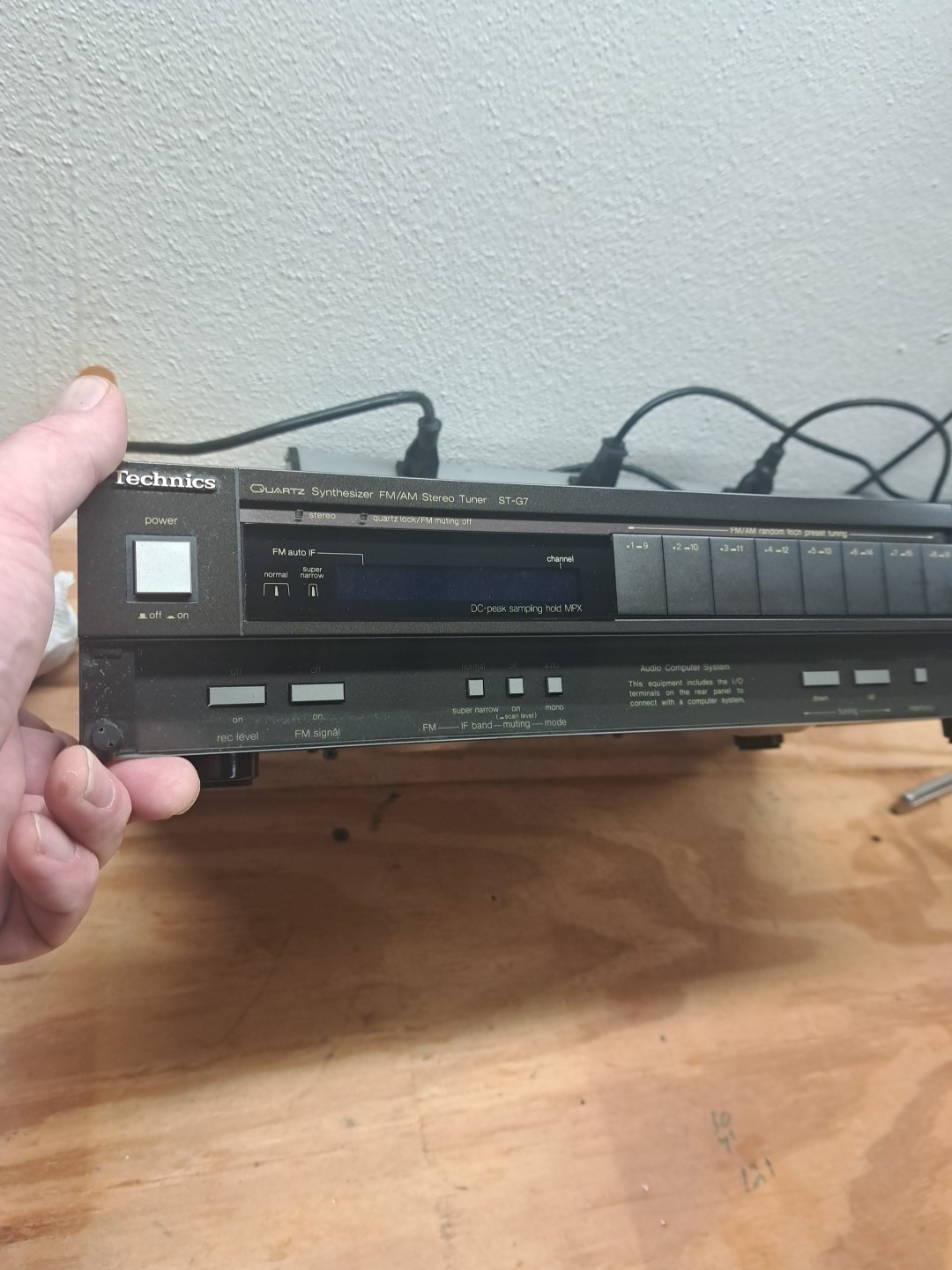
The Technics ST-G7 is a high-fidelity analog tuner introduced in 1984 as part of Technics' prestigious 'G' series. Designed for audiophiles and serious listeners, the ST-G7 combines advanced analog tuning circuitry with emerging digital convenience features, offering exceptional FM and AM reception quality, precise quartz-locked tuning, and a refined user experience. Though not a cassette deck itself, it was often paired with Technics' high-end tape decks to form a complete analog audio system.
Despite its lack of amplification or speaker output, the ST-G7 stands out for its clean signal path, low noise floor, and excellent stereo separation—hallmarks of late-era analog tuner design before the full transition to digital DSP-based systems.
Specifications
| Feature | Specification |
| Year of Production | 1984–1986 |
| Tuning System | Quartz PLL synthesized tuning |
| Presets | 30 total (20 FM, 10 AM) |
| Tuning Modes | Auto and manual tuning |
| FM Sensitivity | 10.3 dBf (0.8 μV) for 50 dB S/N |
| AM Sensitivity | 300 μV/m for 20 dB S/N |
| IF Bandwidth Options | Normal / Wide (switchable) |
| Display Features | Signal strength meter, center tuning indicator |
| Special Features | Muting function, tape dubbing capability, IF bandwidth selector |
| Construction | Wood side panels, metal chassis |
| Impedance | N/A (line-level output only) |
| Power Requirements | N/A (requires external amplifier and power source) |
| Dimensions | 435 × 138 × 330 mm |
| Weight | 9.5 kg |
Historical Context
The ST-G7 represents the peak of analog tuner engineering during the early 1980s. As part of Technics' elite 'G' series, it was designed to deliver reference-grade broadcast reception with the reliability and precision expected from a high-end audio brand. The use of quartz PLL (Phase-Locked Loop) synthesis ensured exceptional frequency stability, eliminating the tuning drift common in earlier analog tuners.
With 30 station presets, the ST-G7 bridged the gap between traditional analog tuning and the digital convenience that would dominate the late 1980s. Its dual IF bandwidth selector allowed users to optimize reception—using wide bandwidth for strong local stations to enhance audio fullness, or narrow bandwidth to reduce noise and interference on distant or weak signals.
The inclusion of signal strength and center tuning meters provided visual feedback for optimal tuning accuracy, a feature prized by enthusiasts. Combined with its elegant design—featuring real wood side panels and a clean, functional front panel—the ST-G7 was both a technical and aesthetic statement.
Sound Signature
The ST-G7 delivers a clean, transparent sound with minimal distortion and a low noise floor. FM reception is particularly impressive, with excellent stereo separation and dynamic range. The wide IF bandwidth setting opens up the soundstage, adding warmth and presence, while the narrow setting enhances clarity in noisy environments. AM reception is also strong for its era, with good selectivity and reduced heterodyne interference.
As a line-level tuner, it preserves signal integrity and pairs exceptionally well with high-quality preamplifiers and power amps, making it a favorite among vintage audio purists.
Maintenance and Common Issues
While the ST-G7 is well-built, age-related issues are common after decades of use. Regular maintenance ensures optimal performance:
- Dirty or worn selector switches and potentiometers: Can cause static, dropouts, or channel imbalance. Clean with high-quality contact cleaner (e.g., DeoxIT) or consider replacement if worn.
- Aging capacitors: Electrolytic capacitors in the power supply and audio coupling circuits may degrade. Recapping is recommended for units that have been powered off for years.
- Display backlight failure: The tuning meter backlight may fail due to aging bulbs. Replacement with modern LED equivalents is possible with minor modification.
- Alignment drift: Over time, IF and RF stages may drift, reducing sensitivity. A professional alignment using proper test equipment is advised for best reception.
- Dust and oxidation: Regular cleaning of connectors and internal components helps maintain signal integrity.
Collectibility and Market Value
The Technics ST-G7 holds a collectibility rating of 7/10, appealing to vintage audio enthusiasts and Technics collectors. Its integration into high-end systems, solid build quality, and advanced tuning technology for its time contribute to its enduring appeal.
As of 2024, the market value ranges from $150 to $300, depending on condition, functionality, and geographic location. Fully operational units with clean meters, responsive tuning, and original finish command the higher end of the range.
Conclusion
The Technics ST-G7 is a testament to the sophistication of late analog tuner design. Combining precision quartz-locked tuning, user-friendly presets, and audiophile-grade reception, it remains a sought-after component for vintage stereo systems. While not a standalone amplifier or cassette deck, its role as a high-performance tuner makes it a valuable addition to any classic audio setup—especially when paired with other components from the Technics 'G' series.
eBay Listings


As an eBay Partner, we earn from qualifying purchases. This helps support our independent vintage technology research.
Related Models
- Technics ST-5 (1973)
- Technics ST-8077 (1977)
- Technics ST-G8 (1983)
- Aiwa CS-250 (1978)
- Denon TU-1500RD (1995)
- Denon TU-280 (1976)
- Denon TU-501 (1977)
- Denon TU-550 (1978)
- Denon TU-750S (1975)
- Luxman R-1030 (1979)