Teac W-525-R: The Quiet Master of Reel-to-Reel Fidelity
In the late 1970s, when cassette tapes were beginning to dominate the portable audio market, Teac stood firmly behind the enduring quality of reel-to-reel tape technology. The Teac W-525-R, introduced in 1979, was part of a lineage of precision tape decks that bridged the gap between professional studio gear and high-end home audio. Though not as widely celebrated as some of its siblings in the Tascam or X series, the W-525-R carved out a quiet reputation among audiophiles and recording enthusiasts for its solid engineering, clean signal path, and reliable mechanical performance.
At a time when many manufacturers were downsizing or abandoning reel-to-reel formats, Teac continued to refine its tape deck designs with meticulous attention to detail. The W-525-R was aimed at serious listeners and semi-professional users who valued analog warmth, low noise, and the ability to archive or mix music with fidelity that far surpassed consumer cassettes. Housed in a sleek, minimalist chassis with a brushed aluminum faceplate and intuitive layout, the W-525-R exudes the understated elegance typical of Japanese high-fidelity gear from the era.
Technical Specifications
The Teac W-525-R was engineered for versatility and precision, supporting both 7.5 and 3.75 inches per second (ips) tape speeds—ideal for balancing sound quality and tape economy. It was a 1/4-inch, 2-track stereo recorder, capable of both playback and recording, and featured a three-head configuration (separate record, playback, and erase heads) for optimal performance.
| Specification | Detail |
| Format | 1/4-inch reel-to-reel tape |
| Tracks | 2-track stereo |
| Tape Speeds | 7.5 ips, 3.75 ips |
| Heads | 3-head system (erase, record, playback) |
| Motor Type | Dual capstan servo-controlled motors |
| Frequency Response | 30Hz – 20kHz (at 7.5 ips) |
| Signal-to-Noise Ratio | >60 dB (Dolby B NR) |
| Wow and Flutter | <0.15% (WRMS) |
| Input/Output | Line In/Out (RCA), Mic In (RCA) |
| Recording Modes | Full-track mono, stereo |
| Power Supply | 120V AC, 60Hz (North American model) |
| Dimensions | 440 mm (W) × 145 mm (H) × 350 mm (D) |
| Weight | 11.5 kg (approx. 25.3 lbs) |
The W-525-R utilized a rubber-driven capstan system with servo-controlled motors to maintain consistent tape speed and reduce mechanical noise. Its three-head design allowed for precise monitoring of recordings in real time—a feature highly valued by home recordists. The electronics featured discrete transistor circuitry, avoiding the integrated op-amps common in lower-tier models, contributing to a cleaner, more transparent sound.
Sound Characteristics and Performance
The sonic signature of the Teac W-525-R is best described as balanced, detailed, and naturally warm—hallmarks of high-quality analog tape reproduction. At 7.5 ips, the deck delivers a frequency response that extends well into the audible range, with a smooth roll-off at the extremes. Bass is tight and well-controlled, without the flabbiness sometimes associated with lower-end tape systems, while the midrange is lush and present—ideal for vocals and acoustic instruments.
Treble reproduction is clear but never harsh, thanks to the precision gap alignment of the playback head and the high-quality tape formulations of the era. When paired with a good preamp and used with Type I (ferric) or Type II (chrome) tapes, the W-525-R produces a soundstage that is both wide and deep, with excellent imaging and separation.
With Dolby B noise reduction engaged, tape hiss is significantly reduced, making it suitable for quiet passages and classical recordings. However, many purists prefer to run the deck in "flat" mode (without noise reduction) to preserve the full harmonic character of the analog signal.
Notable Features and Innovations
While the W-525-R may not have been packed with flashy features, its design prioritized reliability, ease of use, and signal integrity:
- Three-Head Configuration: Enabled accurate real-time monitoring during recording, a feature typically found in professional decks.
- Dual Capstan Drive: Improved tape-to-head contact and reduced speed fluctuations, minimizing wow and flutter.
- Front-Panel Tape Selector: Allowed quick adjustment of bias and equalization settings for different tape types (ferric, chrome).
- Level and Peak Indicators: Dual VU meters provided visual feedback for input and output levels, crucial for avoiding distortion.
- Direct Drive Reel Motors: Ensured smooth winding and consistent tension, reducing tape wear and print-through.
- Metal Chassis and Damped Deck Plate: Reduced vibration and external resonance, contributing to cleaner playback.
The W-525-R also featured a record inhibit switch and cueing control, making it suitable for editing and broadcast-style applications. Its RCA jacks were high-quality and shielded, minimizing interference in sensitive setups.
Common Issues and Maintenance
Like all vintage reel-to-reel decks, the Teac W-525-R requires regular maintenance to perform at its best. After 40+ years, the most common issues include:
- Deteriorated Rubber Components: The pinch roller, drive belts (if used), and idler tires can harden or crack. Replacement with modern equivalents is essential.
- Dirty or Worn Heads: Accumulated oxide residue can degrade sound quality. Regular cleaning with isopropyl alcohol and demagnetizing are recommended.
- Capstan and Pinch Roller Wear: These should be inspected for grooves or uneven wear, which can affect speed stability.
- Sticky Mode Switches or Pots: Oxidation in the tape type selector or level controls can cause noise. Contact cleaner or pot replacement may be needed.
- Capacitor Aging: The power supply and audio coupling capacitors may need recapping to restore optimal performance and prevent damage.
Finding original service manuals can be challenging, but the W-525-R shares design elements with other Teac and Tascam models of the era, making some parts and repair techniques interchangeable. Enthusiast forums and vintage audio communities often share schematics and refurbishment guides.
Current Market Value and Collectibility
The Teac W-525-R is not as widely collected as the legendary A-2340 or the Tascam 38, but it has gained a following among analog tape enthusiasts and DIY restorers. In working condition, it typically sells for $300 to $500, depending on cosmetic condition, completeness (including reels and power cord), and performance after servicing.
Fully restored units with new belts, cleaned heads, and recapped electronics can command higher prices, especially if paired with original documentation or rare accessories. While not a "blue chip" vintage item like a Revox or Studer, the W-525-R offers excellent value for those seeking genuine reel-to-reel sound without the premium price tag.
Its relative obscurity also means fewer clones or counterfeit parts, and original units are generally easy to verify through model numbers and build quality.
Conclusion and Legacy
The Teac W-525-R stands as a testament to Teac’s commitment to analog fidelity during a transitional period in audio history. While it didn’t revolutionize the market, it delivered professional-grade performance with consumer accessibility—a hallmark of Teac’s engineering philosophy.
Today, the W-525-R appeals to a niche but passionate audience: home archivists transferring old tapes, musicians seeking analog warmth, and collectors who appreciate the tactile ritual of threading tape and watching reels spin. It’s not the flashiest deck, nor the rarest, but in its quiet competence, it embodies the essence of what made reel-to-reel recording so beloved.
For those willing to invest in its upkeep, the Teac W-525-R remains a rewarding gateway into the rich, organic world of analog tape—a format that continues to captivate ears and hearts, one revolution at a time.
eBay Listings

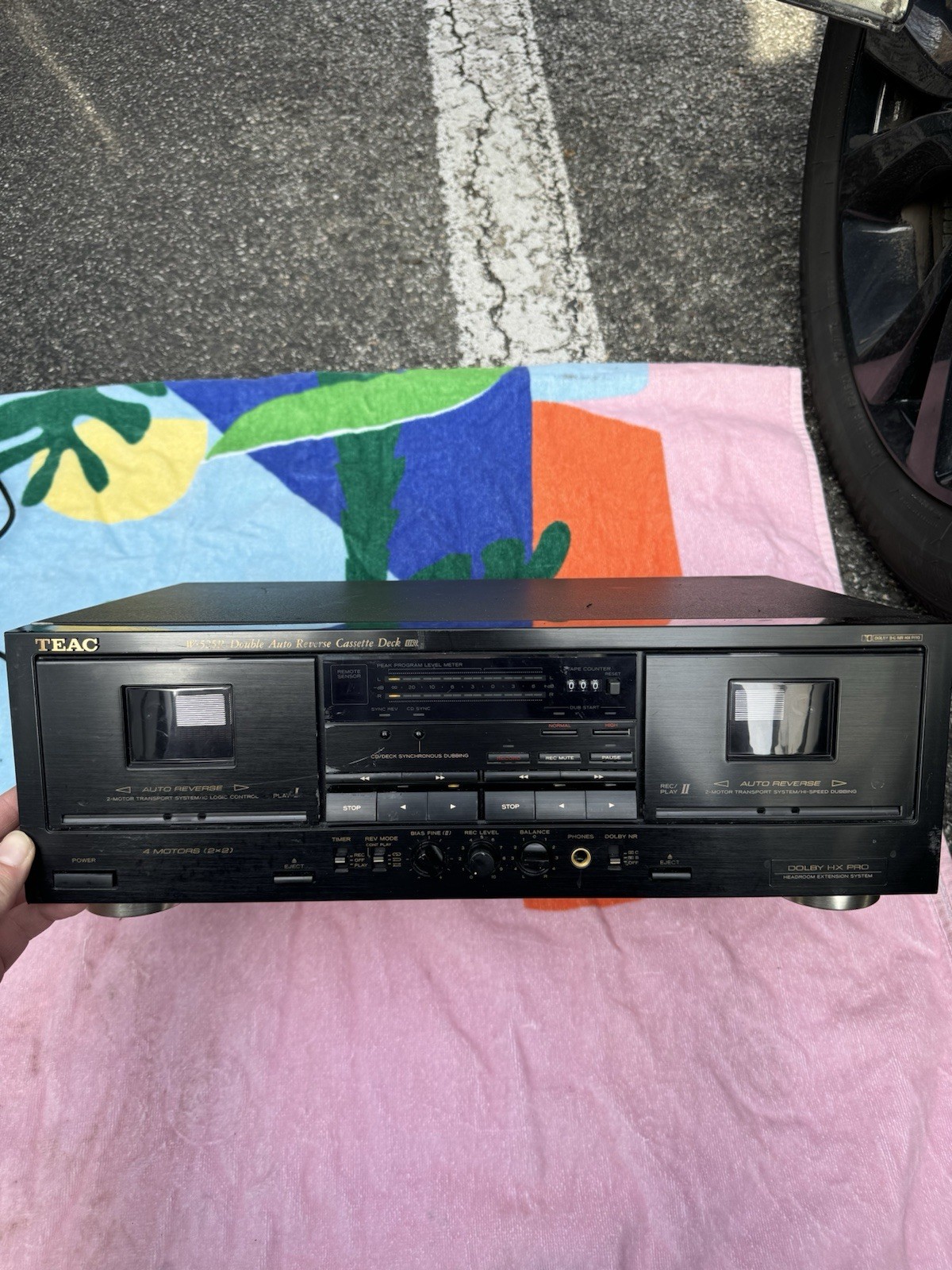


As an eBay Partner, we earn from qualifying purchases. This helps support our independent vintage technology research.
Related Models
- Teac A-6700DX (1980)
- Teac A-105 (1975)
- Teac A-106 (1975)
- Teac A-170 (1976)
- Teac A-2300 (1978)
- Sony TC-2050SD (1978)
- Aiwa AD-F990 (1993)
- Kenwood KX-3060 (1982)
- Sony TC-2130A (1974)
- Sony TC-2220 (1972)