Teac W-485-C: The Forgotten Hybrid of Reel-to-Reel Fidelity and Cartridge Convenience
In the mid-1970s, as the audio world teetered between the golden age of analog tape and the rising tide of compact cassettes, Teac—already renowned for its high-quality reel-to-reel recorders—introduced a curious and innovative hybrid: the Teac W-485-C. This device defied easy categorization, sitting at the intersection of professional-grade tape fidelity and consumer-friendly convenience. Not quite a traditional open-reel machine, nor a cassette deck, the W-485-C utilized a proprietary reel-to-reel cartridge system, offering audiophiles a unique blend of ease-of-use and superior sound quality at a time when most were settling for the compromises of compact tape formats.
Though obscure today and overshadowed by Teac’s more famous open-reel models like the A-3340 or the X-1000 series, the W-485-C remains a fascinating artifact of Teac’s experimental era—a bold attempt to preserve the sonic integrity of reel-to-reel recording while eliminating the hassle of threading tape manually.
Technical Specifications
The Teac W-485-C operated on a closed-loop, cartridge-based reel-to-reel system, where the tape was enclosed in a protective housing much like a cassette, but with full 1/4-inch tape running at professional speeds. This allowed for higher fidelity than standard cassettes while maintaining user-friendliness.
| Specification | Detail |
| Manufacturer | Teac Corporation |
| Model | W-485-C |
| Year Introduced | 1975 |
| Format | Reel-to-reel cartridge (1/4" tape) |
| Tape Speed | 7.5 ips (inches per second) |
| Tracks | 2-track, stereo |
| Tape Width | 1/4 inch |
| Recording System | AC bias, full-track mono or stereo playback |
| Head Configuration | Single play/record head |
| Motors | Direct-drive capstan, dual reel motors |
| Frequency Response | 30 Hz – 18 kHz (typical) |
| Signal-to-Noise Ratio | Approx. 60 dB |
| Input/Output | RCA line in/out, 1/4" headphone jack |
| Power Requirements | 120V AC, 60 Hz (North American models) |
| Dimensions | 14.5" × 10.2" × 4.3" (W×D×H) |
| Weight | 12.1 lbs (5.5 kg) |
The W-485-C used Teac’s proprietary W-series cartridges, which housed 30 feet of 1/4-inch tape and provided approximately 12 minutes of stereo recording or playback per cartridge at 7.5 ips. While this limited runtime compared to open-reel reels, it was sufficient for demos, voice memos, or short musical passages—ideal for musicians, broadcasters, and educators.
Sound Characteristics and Performance
Sonically, the W-485-C outperformed nearly all consumer cassette decks of its era. The use of 1/4-inch tape at 7.5 ips—a speed considered standard for professional reel-to-reel machines—allowed for a wider frequency response and significantly lower tape hiss than the 1.875 ips norm of compact cassettes. The result was a warm, detailed, and dynamically rich sound with excellent stereo imaging.
The machine employed a fixed-record-level system with manual input sensitivity control, meaning users had to carefully set levels before recording to avoid distortion. There was no Dolby or dbx noise reduction, so the inherent noise floor was higher than noise-reduced cassette systems, but still respectable for a cartridge-based format.
Playback was smooth and stable, thanks to the direct-drive capstan and rubber pinch roller system. Wow and flutter were minimal—typically under 0.2%, which was impressive for a consumer-oriented tape transport. The integrated amplifier drove headphones adequately, though external monitoring via line output to a receiver or mixer delivered the best sonic results.
Notable Features and Innovations
The W-485-C’s most striking innovation was its cartridge-based reel-to-reel design, which eliminated the need for manual tape threading—a major barrier to entry for casual users. Simply insert the cartridge, press play, and the machine automatically engaged the tape path. This made it accessible to non-technical users while preserving much of the sonic advantage of open-reel tape.
Other notable features included:
- Front-loading cartridge system with clear window for tape visibility
- Dual VU meters for real-time level monitoring during recording
- Metal construction with wood-grain vinyl finish, typical of Teac’s mid-70s aesthetic
- Bidirectional operation—no need to flip the cartridge
- Auto-stop at tape end
- Record safety switch to prevent accidental overwriting
The design prioritized durability and ease of use, with large, tactile controls and a clean, minimalist front panel. Despite its compact size, the W-485-C felt solid and well-built, a hallmark of Teac’s engineering during this period.
Common Issues and Maintenance
Today, the Teac W-485-C is a rare find, and surviving units often require restoration. The most common issues include:
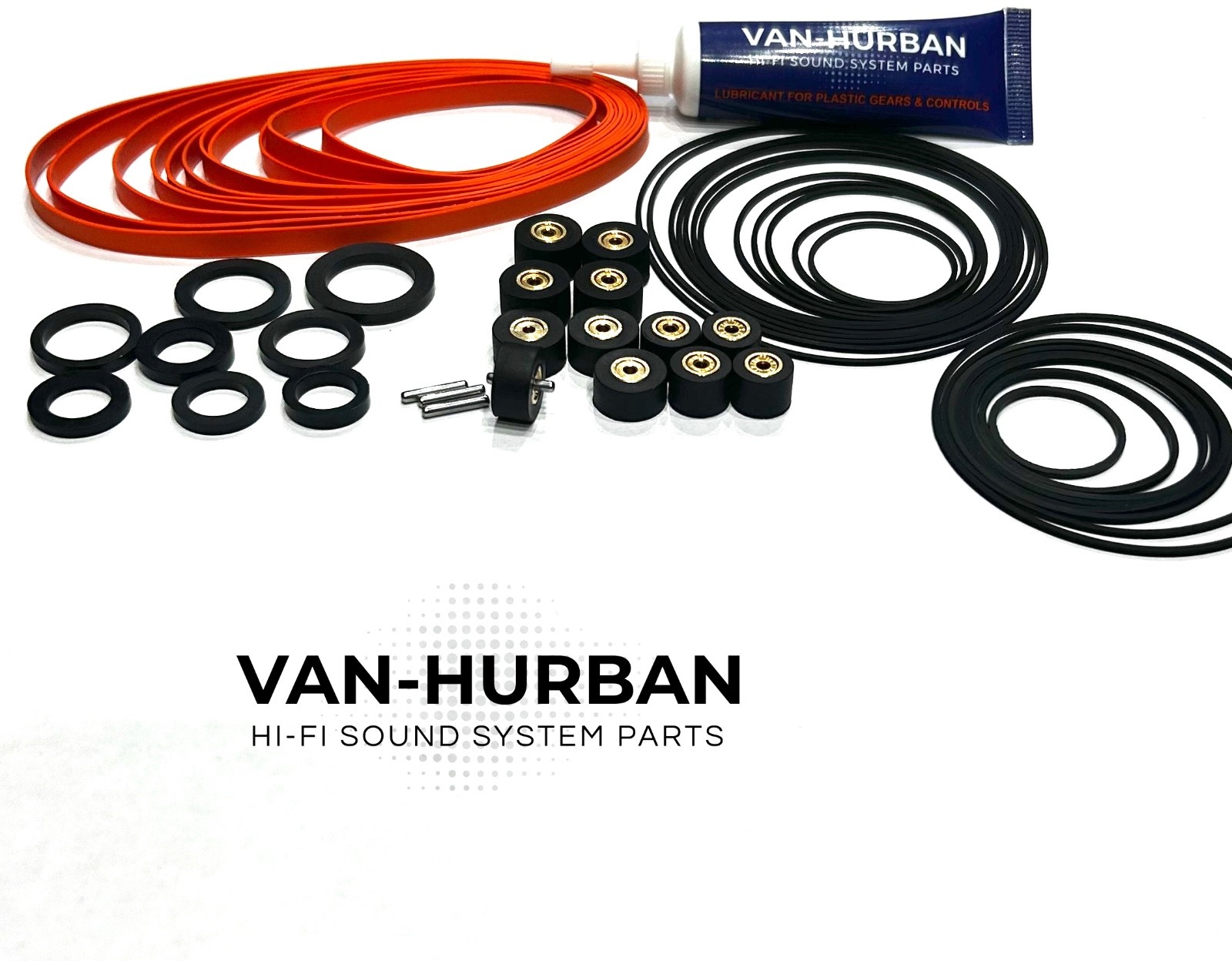
- Deteriorated rubber parts: Pinch rollers and capstan tires harden over time, leading to speed instability and poor tape contact. Replacement with modern equivalents is essential.
- Dirty or worn tape heads: Accumulated oxide buildup or head wear can degrade high-frequency response. Cleaning with isopropyl alcohol and demagnetizing are recommended.
- Capacitor aging: Electrolytic capacitors in the power supply and audio circuits may leak or lose capacitance, potentially causing hum or channel imbalance.
- Cartridge availability: Original W-series cartridges are extremely rare. Some users have adapted other cartridge formats, but compatibility is limited.
Regular maintenance—cleaning, demagnetizing, and lubrication of transport mechanisms—will extend the life of any surviving unit. Due to the proprietary nature of the system, repair parts are not widely available, making skilled technician intervention crucial.
Current Market Value and Collectibility
The Teac W-485-C is a niche collector’s item, valued more for its historical curiosity and engineering ingenuity than practical use. Units in working condition typically sell for $250–$400, depending on cosmetic condition and completeness (including original cartridges and power cord). Non-working units may go for as little as $100.
Collectors of obscure tape formats, Teac enthusiasts, and analog audio historians are the primary market. Its rarity and unique format make it a conversation piece, though its limited software support (few pre-recorded cartridges exist) hampers everyday usability.
It occasionally appears on eBay, Reverb, and specialty vintage audio forums, often described as “a reel-to-reel for cassette users” or “Teac’s answer to the 8-track, but with better sound.”
Conclusion and Legacy
The Teac W-485-C never achieved mainstream success, likely due to its limited recording time, proprietary format, and the rapid rise of high-fidelity cassette decks with Dolby B and later Dolby C. By the late 1970s, even Teac had shifted focus to cassette and open-reel models, leaving the W-485-C as a brief but fascinating detour in the company’s history.
Yet, its legacy endures as a bold experiment in bridging the gap between professional sound and consumer convenience. It represents a moment when manufacturers were still exploring alternatives to the cassette, striving to deliver better fidelity without sacrificing ease of use.
For today’s vintage audio enthusiasts, the W-485-C is more than just a machine—it’s a testament to analog innovation, a forgotten hybrid that dared to be different. While it may not be practical for daily use, it holds a special place in the story of tape recording: a rare blend of elegance, engineering, and ambition from one of Japan’s most respected audio brands.
eBay Listings



As an eBay Partner, we earn from qualifying purchases. This helps support our independent vintage technology research.
Related Models
- Teac A-2340R (1975)
- Teac V-30 (1975)
- Teac W-416 (1975)
- Teac A-108-SYNC (1978)
- Teac A-110 (1978)
- Akai AM-2850 (1975)
- Akai AP-206 (1975)
- Nakamichi BX-1 (1985)
- Acoustic Research research-ar-17 (1978)
- Acoustic Research AR-19 (1994)