Teac W-300: A Masterpiece of Analog Tape Fidelity
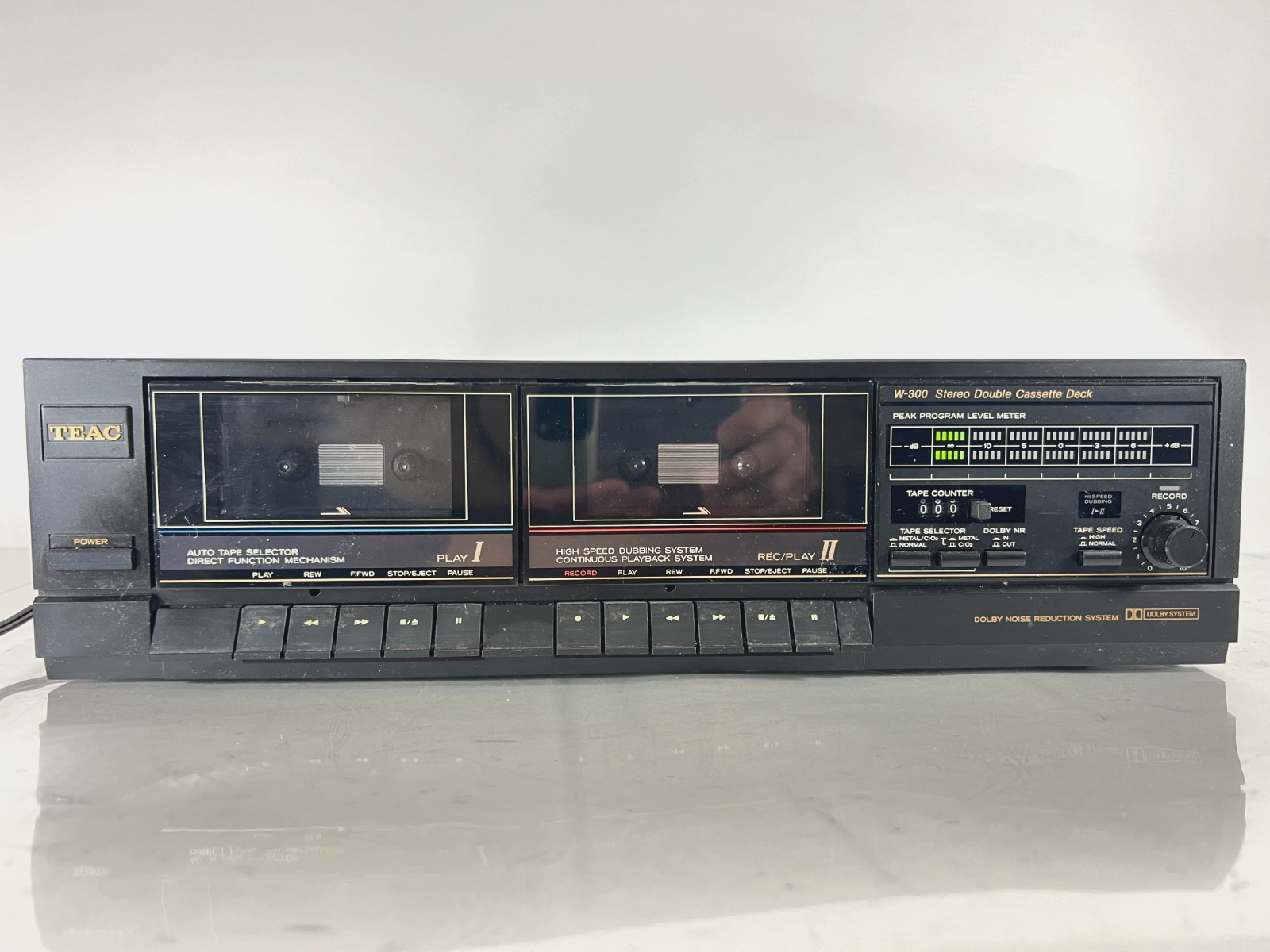
In the late 1970s, when high-fidelity audio was reaching new heights of engineering excellence, Teac emerged as a dominant force in the reel-to-reel tape deck market. Among their most respected models was the Teac W-300, a semi-professional open-reel tape recorder that combined precision mechanics, refined electronics, and elegant design. Though not as widely celebrated as some of its siblings like the A-3340 or X-1000, the W-300 carved out a loyal following among audiophiles, broadcast engineers, and home recording enthusiasts who valued reliability, clarity, and musicality in equal measure.
Released around 1978, the W-300 arrived during a golden era for analog tape—when studios and serious listeners alike still regarded reel-to-reel as the ultimate medium for capturing and reproducing music with warmth, depth, and dynamic range unmatched by early cassette decks or consumer-grade recorders. Teac, already known for its meticulous build quality and innovation in tape transport design, engineered the W-300 to deliver professional-level performance at a more accessible price point.
Technical Specifications
The Teac W-300 was designed as a 1/4-inch, 2-track stereo recorder with support for both 7.5 ips and 15 ips tape speeds, allowing users to balance between extended recording time and high-fidelity playback. It accepted standard 10.5" reels and featured a three-motor, direct-drive capstan system—a hallmark of high-end Teac designs—ensuring exceptional speed stability and minimal wow and flutter.
| Specification | Detail |
| Format | 1/4-inch open reel, 2-track stereo |
| Tape Speeds | 7.5 ips, 15 ips |
| Track Configuration | 2-track, full-track mono / stereo play |
| Motors | 3-motor direct drive (capstan & reels) |
| Wow and Flutter | < 0.20% (15 ips, RMS) |
| Frequency Response | 30Hz – 18kHz (15 ips, +3/-6dB) |
| Signal-to-Noise Ratio | > 62 dB (Dolby B) |
| Input/Output Levels | Line: 0.316V, Mic: 1.6mV |
| Inputs | 2 x RCA (Line), 1 x 1/4" (Mic) |
| Outputs | 2 x RCA (Line) |
| Head Configuration | Separate record, playback, erase heads |
| Equalization | 120µs / 70µs (selectable) |
| Noise Reduction | Dolby B (switchable) |
| Power Requirements | 120V AC, 60Hz, 45W |
| Dimensions (W×H×D) | 445 × 146 × 356 mm |
| Weight | 13.6 kg (30 lbs) |
The W-300 featured separate record and playback heads, a feature typically reserved for higher-end studio machines, which allowed for optimized head alignment and improved sound quality. The heads themselves were made from high-permeability permalloy, known for excellent high-frequency response and low distortion. The inclusion of Dolby B noise reduction—a relatively new consumer feature at the time—helped reduce tape hiss without overly dulling the high end, making the W-300 a favorite for duplicating LPs and mastering home recordings.
Sound Characteristics and Performance
The Teac W-300 is celebrated for its musical, natural tonal balance—a sound signature that many describe as “warm but detailed.” Unlike some tape decks that lean too heavily into brightness or excessive bass, the W-300 strikes a remarkable equilibrium, capturing the essence of analog tape without overwhelming coloration.
At 15 ips, the deck reveals its full potential: extended highs, tight bass response, and a spacious stereo image that brings recordings to life. The frequency response is impressively flat across the audible spectrum, and the low wow and flutter contribute to a rock-solid soundstage. When paired with high-quality tape (such as Ampex 456 or BASF SM468), the W-300 can produce results that rival much more expensive studio recorders.
Even at 7.5 ips, the W-300 performs admirably. While there’s a slight roll-off in the extreme highs, the midrange remains lush and articulate—ideal for voice recording, jazz, or classical music where nuance matters more than sheer bandwidth.
Notable Features and Innovations
Several design choices set the W-300 apart from its contemporaries:
- Three-Motor Direct Drive System: Each reel and the capstan are driven by independent motors, eliminating the need for belts or idler wheels. This ensures precise tension control and consistent tape speed—critical for low wow and flutter.
- Front-Panel Speed Selection: Unlike many decks that hide speed controls on the rear or top panel, the W-300 places them front and center, making operation intuitive.
- Dolby B Integration: At a time when noise reduction was still gaining traction in the consumer market, Dolby B gave the W-300 a competitive edge in clarity and dynamic range.
- Professional-Grade Heads: The use of permalloy heads and separate record/playback elements was rare in semi-pro decks and contributed significantly to its sonic accuracy.
- Solid Chassis Construction: Housed in a rigid steel frame with a brushed aluminum front panel, the W-300 feels substantial and well-damped, minimizing vibration and resonance.
Common Issues and Maintenance
Like all vintage reel-to-reel decks, the Teac W-300 requires regular maintenance to perform at its best. After decades of use (or disuse), common issues include:
- Deteriorated Rubber Parts: While the W-300 uses direct drive, it still has rubber idlers in the reel table mechanism and pressure pads. These can harden or crack over time and should be replaced.
- Dirty or Worn Heads: Tape heads accumulate oxide buildup and may require demagnetization and cleaning. If the playback head is worn, high frequencies will diminish noticeably.
- Capstan Bearing Dryness: The capstan shaft may seize if not lubricated periodically. A light application of synthetic oil can restore smooth operation.
- Capacitor Aging: Electrolytic capacitors in the power supply and audio circuits may leak or lose capacitance, potentially causing hum, channel imbalance, or failure to power on. A full recapping is recommended for long-term reliability.
Owners are advised to have the deck serviced by a qualified technician familiar with vintage tape equipment. Proper alignment of the heads (azimuth, height, and gap) is also essential for optimal stereo imaging and frequency response.
Current Market Value and Collectibility
The Teac W-300 is not as widely collected as the legendary A-3300 or X-1000, but it has seen growing interest in recent years due to its excellent build quality and faithful sound reproduction. In working condition, a well-maintained W-300 typically sells for $400–$700, depending on cosmetics, completeness, and performance.
Fully restored units with new belts, cleaned heads, and recapped electronics can command higher prices, especially if they include original boxes, manuals, or accessories. While not a “rare” model, the W-300 is increasingly sought after by analog enthusiasts looking for a reliable, no-frills recorder that delivers professional results without the premium price tag.
Conclusion and Legacy
The Teac W-300 stands as a quiet achiever in the storied history of Japanese reel-to-reel engineering. It may not have the flashy chrome accents of a Tandberg or the studio pedigree of a Studer, but it embodies the Teac philosophy: precision, reliability, and musical truth.
For today’s audiophiles, the W-300 offers a gateway into the magic of analog tape—whether for archiving vinyl collections, creating master tapes, or simply experiencing music as it was meant to be heard: warm, organic, and alive. In an age of digital perfection, the W-300 reminds us that sometimes, the best sound isn’t the cleanest—it’s the one that moves you.
If you’re lucky enough to find a working W-300, treat it well, service it properly, and let it spin some tape. You’ll hear why analog never really went away.
eBay Listings


As an eBay Partner, we earn from qualifying purchases. This helps support our independent vintage technology research.
Related Models
- Teac A-6700DX (1980)
- Teac A-105 (1975)
- Teac A-106 (1975)
- Teac A-170 (1976)
- Teac A-2300 (1978)
- Sony TC-2050SD (1978)
- Aiwa AD-F990 (1993)
- Kenwood KX-3060 (1982)
- Sony TC-2130A (1974)
- Sony TC-2220 (1972)