TEAC V8030
A heavyweight auto-reverse three-header from TEAC's 1991 lineup. Owners still argue about its transport, and they keep buying rubber parts for it.
Overview
The TEAC V8030 is a stereo cassette deck from TEAC's early-nineties catalog. A 1991 TEAC brochure lists it alongside the V6030S, V5010, and V7010, though no source sets out a hierarchy among them. The sources do agree that it is an auto-reverse deck. A German owner's review, the remembered brochure copy, and forum catalog references all say so. One German owner bought the deck new in 1991 for DM 1,300 and put it simply: "I bought it new in 1991 for 1,300 DM and have no regrets."
That owner's memory is the closest thing to a launch date the research turns up. No source states production years, and no official original price survives. There is only the DM 1,300 German purchase and a separate UK brochure memory of £329.95. Different markets, different currencies, so the two don't conflict. The German review calls the deck "very heavy and solidly built," and forum praise says much the same.
The model numbering has a wrinkle. The research sources discuss both the V8030 and a V8030S, and none says whether they are the same product, different revisions, or sequential models. Hifiengine's entry, the one with full specs, is explicitly for the V8030S. The German review and the Tapeheads quotes refer to the V8030. Treat them as related but unconfirmed, and don't assume the specs transfer.
Specifications
Because the sources split between the V8030 and the V8030S, the spec sheet carries a caveat. The most complete data is hifiengine's listing for the V8030S: a 4-track, 2-channel stereo format running at 4.76 cm/s, with three heads and Dolby B and C noise reduction. Equalization is listed at 3180 µs / 70 µs. Those figures formally belong to the S-variant in that source. The German review of the V8030 proper says Dolby B and C work "perfectly" on that deck, so noise reduction carries over with confidence. The three-head configuration is only confirmed for the V8030S. A remembered brochure line describing the V8030 as "auto reverse, 3-head" suggests the non-S version had the same arrangement.
Motor count is murky. One unnamed listing source claims two motors and a "closed-loop dual capstan" transport. A forum member says the opposite: a single capstan, no direct drive. These conflict, and with no third source to break the tie, the transport architecture of the V8030 is unresolved. The German owner's description of the deck as heavy and solidly built at least implies a substantial mechanism.
The figures collectors actually want are missing: frequency response, wow and flutter, signal-to-noise ratio. A Vintage Cassette page has a specifications table for the V8030, but the text is too degraded to match row values to the right column. The numbers are in the raw text, with 20-20,000Hz figures and a 0.025% wow-and-flutter value near the table. They can't be reliably tied to the V8030 versus adjacent models, so treat them as missing.
Key Features / Design
Auto-reverse is the headline feature, confirmed by three independent sources: the German owner's review, the 1991 brochure memory, and forum catalog references. On a deck of this era, that meant uninterrupted playback of both sides of a cassette. TEAC built it into a chassis owners consistently describe as substantial. The German reviewer's phrase "very heavy and solidly built" lines up with the Tapeheads member who called the V8030 "one of the best decks Teac ever made."
Dolby B and C cover the practical range of tape hiss management for the early nineties. B is for compatibility with older recordings. C is the more aggressive noise reduction that was standard on higher-end decks of the period. The German owner reports both work perfectly, and the same source gave the deck's frequency response a "very good" verdict.
The three-head configuration, assuming it carries over from the V8030S listing, means separate playback and record heads. You can monitor the tape signal while recording, rather than just the source. That separates serious recording decks from casual machines, and it fits the V8030's place in a lineup that included the V6030S and V7010. The 4-track, 2-channel format is standard for stereo compact cassettes, and 4.76 cm/s is the universal compact cassette speed.
Several things the sources don't say: head material (sendust versus permalloy), motor type (direct drive versus belt), and the single-versus-dual capstan answer. The unnamed source claiming closed-loop dual capstan operation would put the V8030 in serious transport territory, but without corroboration it stays unverified.
Historical Context
TEAC's 1991 lineup, per the remembered brochure, grouped the V8030 with the V6030S, V5010, and V7010. The Glass Telephone article discusses the V-8030 alongside the V-9010, though the extractable text cuts off before any relationship between the two is stated. The V8030 sat in a crowded field of TEAC decks from the early nineties, when the company was still producing serious cassette hardware.
The German owner's 1991 purchase at DM 1,300 places the deck at a mid-to-upper price point in the German market of the time. The UK brochure memory of £329.95 is roughly consistent with that positioning once currency differences are accounted for. An AudioKarma member compared the V8030 to its sibling the V6030S and found the V8030 "sounds more open than the 6030S." The fragment doesn't clarify the test conditions.
No source says why TEAC built this deck, what market segment it targeted, or who its named competitors were at launch. In the research it is a deck that exists, that its owners rate well, and that shared a brochure with several siblings. Period magazine coverage focused on receivers rather than cassette decks. The only publication chunks available concern A/V receivers from Technics, Sony, and JVC, with no cassette deck content to cite.
Collectibility & Market
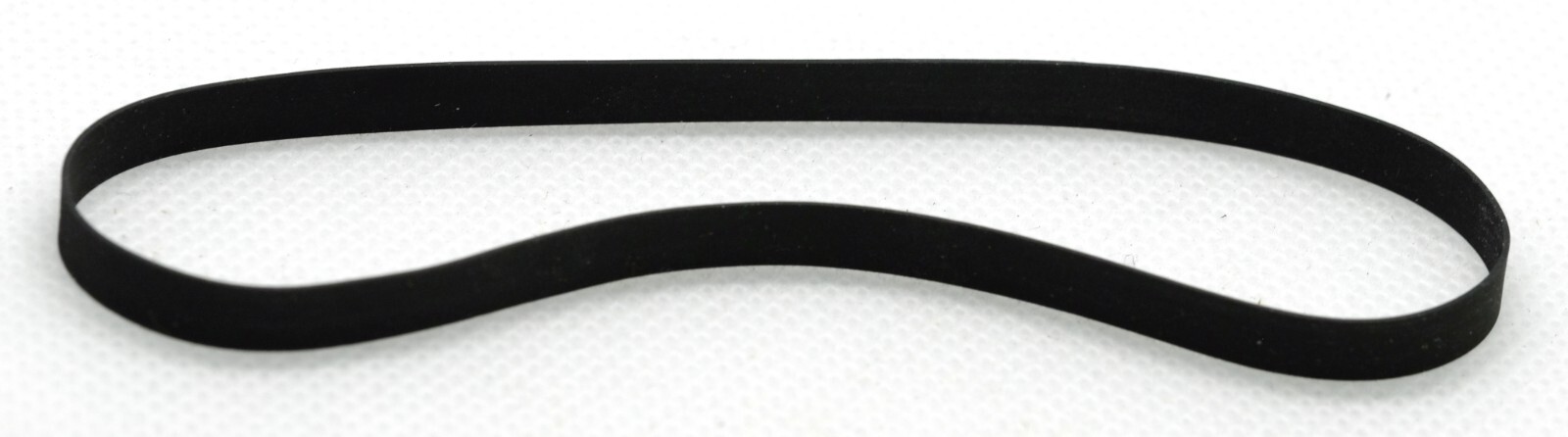
Owners speak warmly of the V8030, but maintenance on a thirty-year-old cassette deck is the real story for anyone considering one today. The German owner who bought new in 1991 reports the deck "has never needed repair except the belt." That is a belt replacement after roughly two decades. Tapeheads members confirm the rubber problem from a different angle: the idler tire hardens and slips, and needs a new belt or tire.
Beyond the rubber, one Tapeheads member reports a known failure in the loading mechanism: the gear cracks. Another reports the capstan motor develops a hum after many years. These are the usual failure modes of aging cassette decks: rubber hardens, plastic gets brittle, motors wear. None are fatal if caught early, but they're not trivial fixes for someone without repair experience.
Owner sentiment runs strongly positive despite the maintenance. The German owner's "Sounds great, no problems whatsoever" pairs with the Tapeheads member's assessment that the V8030 is "one of the best decks Teac ever made." The same German source praises the frequency response and Dolby performance. An AudioKarma member who compared the V8030 to its sibling the V6030S found the V8030 "sounds more open than the 6030S." The fragment doesn't clarify the test conditions.
On pricing, the research offers only the original purchase memories: DM 1,300 in Germany in 1991, and £329.95 per the UK brochure recollection. No current used-market prices appear in any source, and no spare-parts availability information survives. With known rubber and gear issues, parts sourcing is a real question to settle before buying. Expect to replace belts and tires, and possibly source a loading gear.
The unresolved questions around the S-variant and the transport configuration mean the V8030 is not a deck for spec-sheet collectors. It suits someone who wants a heavy, good-sounding auto-reverse three-header and doesn't mind replacing rubber. The German owner reports no regrets after three decades.
As an eBay Partner, we earn from qualifying purchases. This helps support our independent vintage technology research.
eBay Listings
As an eBay Partner, we earn from qualifying purchases. This helps support our independent vintage technology research.