Teac V-8030-S: The Studio-Grade Reel-to-Reel Workhorse
In the late 1970s, as multitrack recording began to move beyond major commercial studios and into the hands of independent musicians and project studios, Teac—through its professional Tascam division—emerged as a pioneer in making professional-quality recording gear accessible. The Teac V-8030-S, introduced in 1979, stands as a prime example of this democratization of studio technology. Though not a consumer stereo component like Teac’s more famous cassette decks or integrated amplifiers, the V-8030-S was a serious open-reel tape recorder aimed squarely at the professional and semi-professional market. It represented a significant leap in reliability, sonic fidelity, and usability for project studio engineers and producers looking to capture high-resolution analog recordings.
Historical Context: Teac and the Rise of Project Studios
Teac Corporation, founded in Japan in 1953, initially gained recognition for its precision in manufacturing tape transport mechanisms. By the 1970s, Teac had established Tascam (Teac Audio Systems Company) as its professional audio arm, focusing on multitrack recorders, mixers, and studio accessories. The V-8030-S was part of a broader movement to bring studio-grade gear to smaller budgets without sacrificing core performance.
At a time when 24-track recorders from Studer or Ampex could cost tens of thousands of dollars, the V-8030-S offered a compelling alternative: a rugged, 1/4-inch 2-track stereo recorder capable of operating at 15 or 30 inches per second (ips), with professional-level electronics and a robust tape transport system. It was commonly used for mastering, stereo monitoring, location recording, and as a high-fidelity playback machine in control rooms.
Though not a multitrack machine (unlike Tascam’s famous 38 or 80-8 models), the V-8030-S filled a crucial niche: a no-nonsense, high-performance stereo recorder built for accuracy and durability.
Technical Specifications
The V-8030-S was engineered with the precision expected of a mastering-grade recorder. It featured a dual-capstan tape transport system for exceptional speed stability, quartz-locked servo control for minimal wow and flutter, and discrete transistorized circuitry throughout the signal path.
| Specification | Detail |
| Format | 1/4-inch 2-track stereo |
| Tape Speeds | 15 ips, 30 ips (switchable) |
| Track Configuration | Full-track mono, half-track stereo, 4-track (with adapter) |
| Frequency Response | 30Hz – 20kHz ±2dB (30 ips, 250nWb/m), 40Hz – 18kHz ±2dB (15 ips) |
| Wow and Flutter | < 0.07% (WRMS, 30 ips, JIS) |
| Signal-to-Noise Ratio | > 62 dB (Dolby B), > 68 dB (Dolby C) |
| Input/Output Levels | Line: +4 dBm (balanced), Mic: -60 dBm |
| Inputs | 2 x XLR (mic), 2 x 1/4" TRS (line) |
| Outputs | 2 x XLR, 2 x 1/4" TRS (balanced) |
| Equalization Settings | 120µs, 70µs, 35µs (switchable for different tape types) |
| Noise Reduction | Dolby B and C (switchable) |
| Motors | Dual DC servo motors (capstan and reel) |
| Power Supply | 115V or 230V AC, 50/60 Hz |
| Dimensions | 483 mm (W) × 178 mm (H) × 445 mm (D) |
| Weight | 22 kg (48.5 lbs) |
The machine used a three-head configuration (erase, record, playback) with a dedicated reproduce head for accurate monitoring without print-through. It also featured a record safety switch, variable pitch control (±6%), and a large, easy-to-read VU meter bridge for precise level monitoring.
Sound Characteristics and Performance
The Teac V-8030-S was engineered for transparency and neutrality—qualities essential in mastering and critical listening environments. Unlike some consumer tape decks that colored the sound with warmth or compression, the V-8030-S aimed for accuracy. Its discrete Class-A preamp design delivered a clean, dynamic sound with excellent transient response and low distortion.
At 30 ips, the machine achieved a wide frequency response and low noise floor, making it suitable for high-resolution stereo recording and archival transfers. The inclusion of both Dolby B and C noise reduction systems allowed users to maximize dynamic range, especially when using standard or high-bias tapes.
Many engineers praised the V-8030-S for its tight bass response and extended highs, with minimal phase shift across the spectrum. Its ability to handle high input levels without distortion made it ideal for recording live orchestral sessions or dynamic jazz ensembles.
Notable Features and Innovations
Several design choices set the V-8030-S apart from its contemporaries:
- Quartz-Locked Speed Control: Ensured exceptional speed stability, critical for pitch accuracy and synchronization in studio environments.
- Balanced I/O: Professional XLR and TRS connections allowed for integration into complex studio setups with minimal noise.
- Switchable EQ and Bias: Enabled compatibility with a wide range of tape formulations (normal, high, and metal), giving users flexibility in tape choice.
- Dual Capstan Transport: Reduced tape flutter and improved head-to-tape contact for consistent playback.
- Remote Control Capability: Optional remote allowed transport control from a mixing console, enhancing workflow efficiency.
The front panel was logically laid out, with tactile switches and clear labeling—hallmarks of Teac’s user-centric design philosophy. The large, centrally mounted VU meters provided excellent visual feedback, and the tape counter could be zeroed at any point for cueing.
Common Issues and Maintenance
Like all reel-to-reel machines of its era, the V-8030-S requires regular maintenance to perform optimally. Common issues include:
- Deteriorated Rubber Components: Idler tires, pinch rollers, and belts can harden or crack over time. Replacement with modern equivalents is essential.
- Head Alignment Drift: The record and playback heads may require realignment, especially if the machine has been moved or used heavily.
- Dirty or Oxidized Heads and Guides: Tape heads, capstans, and guides should be cleaned regularly with isopropyl alcohol to prevent dropouts and high-frequency loss.
- Capacitor Aging: The internal power supply and audio circuits may suffer from dried-out electrolytic capacitors, leading to noise or instability.
Restoring a V-8030-S typically involves a full recapping, rubber replacement, and calibration by a technician experienced with professional tape machines. When properly maintained, however, the V-8030-S is remarkably reliable and can continue to deliver studio-grade performance decades after its manufacture.
Current Market Value and Collectibility
The Teac V-8030-S is not as widely collected as consumer cassette decks like the A-2300S or CD-2340, but it holds a respected place among analog audio enthusiasts and studio historians. Units in good working condition typically sell for $800 to $1,500, depending on completeness, service history, and included accessories (such as remote controls or calibration tapes).
Its value is driven more by utility than nostalgia—engineers restoring vintage studios or analog enthusiasts digitizing tape archives often seek out the V-8030-S for its accuracy and durability. While not a “rare” machine, fully serviced examples are increasingly scarce.
Conclusion: A Legacy of Professional Precision
The Teac V-8030-S may not have the name recognition of a Studer A80 or a Revox B77, but it represents an important chapter in the history of accessible professional audio. As part of Teac’s push into the studio market through Tascam, the V-8030-S delivered broadcast- and mastering-grade performance at a fraction of the cost of European counterparts.
Today, it stands as a testament to Japanese engineering excellence in the analog era—a machine built not for show, but for serious work. For the analog purist, the home archivist, or the studio restorer, the V-8030-S remains a compelling choice: a no-compromise recorder that captures the warmth and depth of analog tape with remarkable clarity and precision.
If you’re lucky enough to find one in good condition, treat it to a proper service, thread up a fresh reel of 499 or SM900, and experience why engineers trusted Teac to preserve music at its finest.
eBay Listings


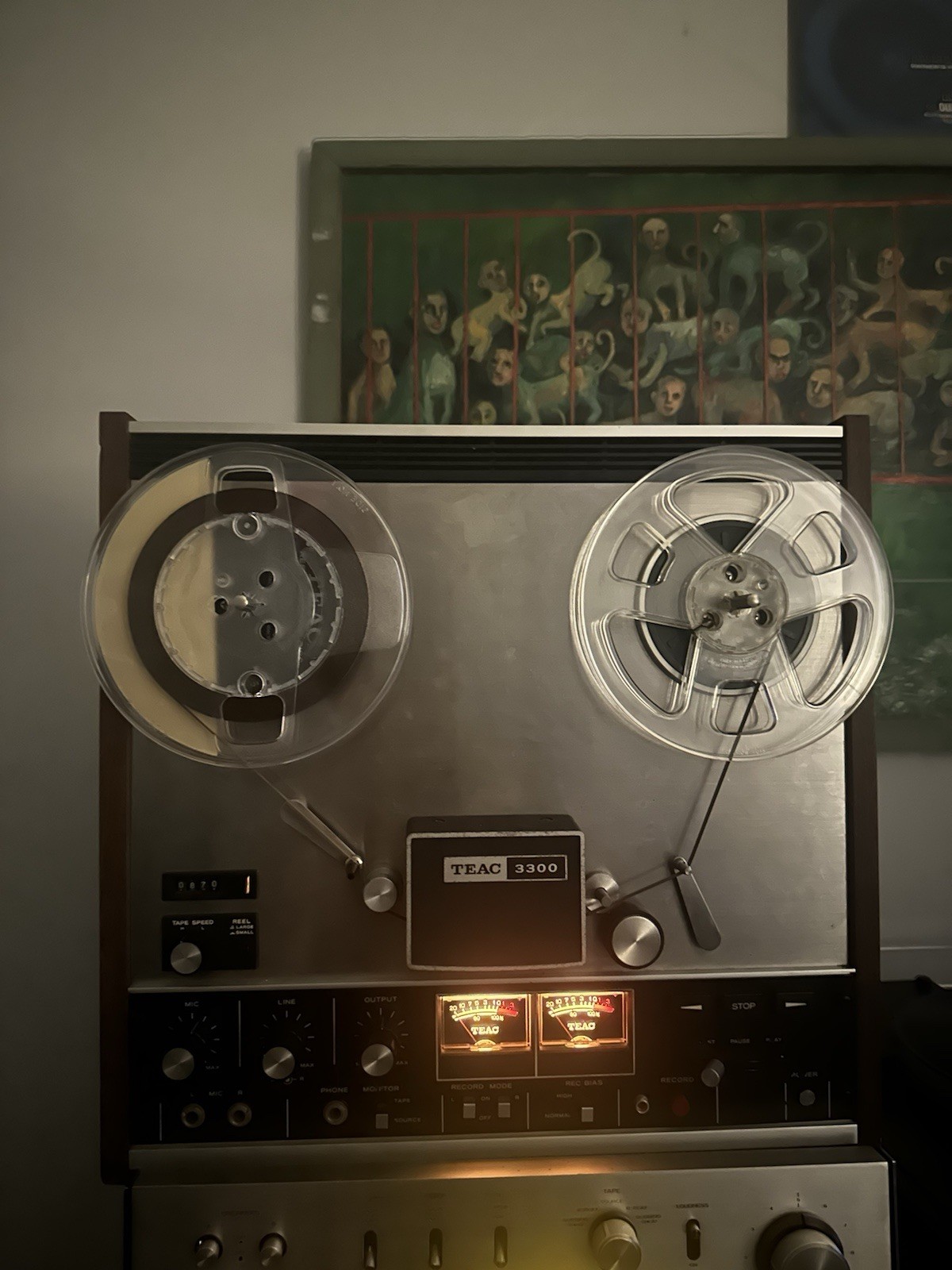
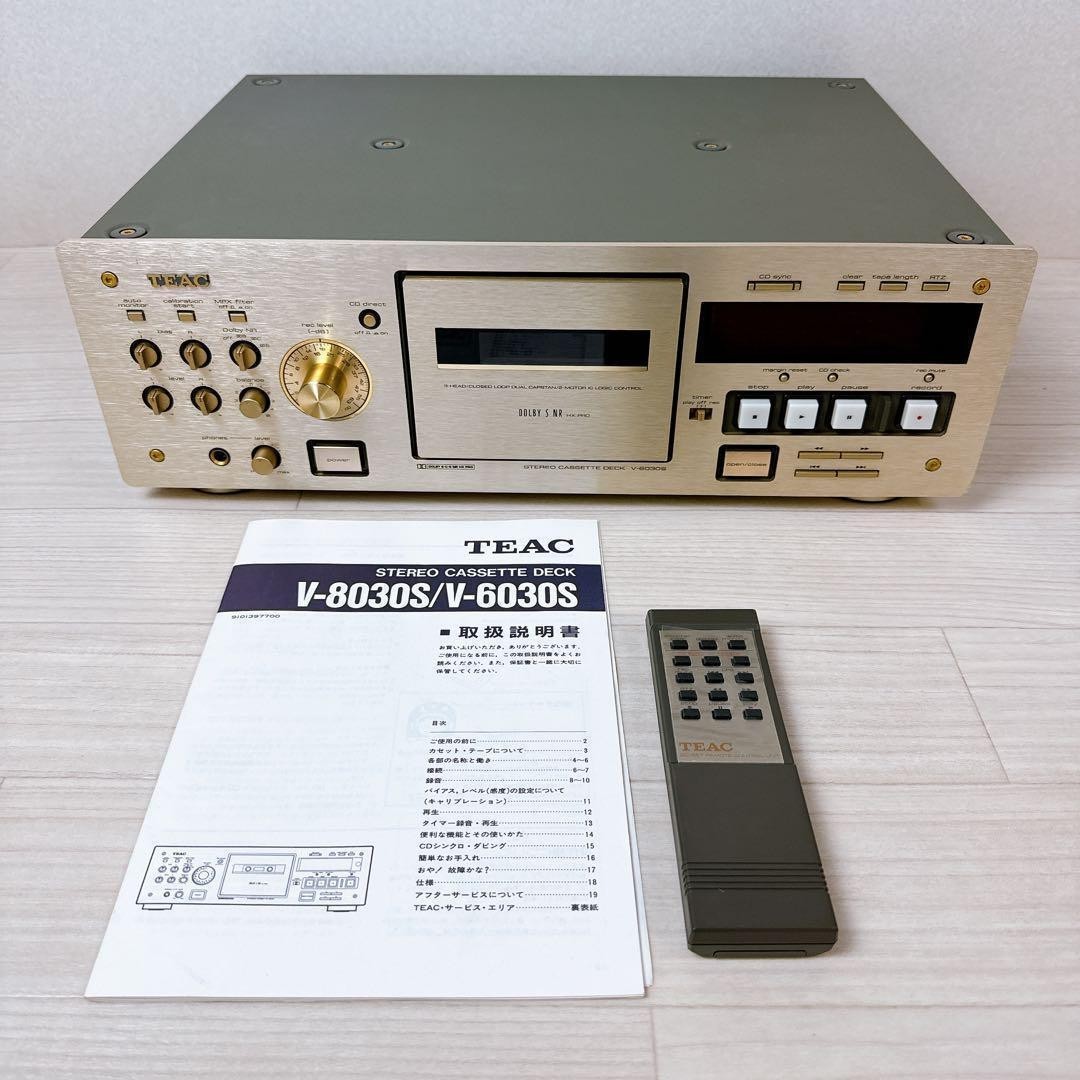
As an eBay Partner, we earn from qualifying purchases. This helps support our independent vintage technology research.
Related Models
- Teac A-2340R (1975)
- Teac V-30 (1975)
- Teac W-416 (1975)
- Teac A-108-SYNC (1978)
- Teac A-110 (1978)
- Akai AM-2850 (1975)
- Akai AP-206 (1975)
- Nakamichi BX-1 (1985)
- Acoustic Research research-ar-17 (1978)
- Acoustic Research AR-19 (1994)