Teac V-6030-S: The Professional-Grade Reel-to-Reel Workhorse of the Late 1970s
In the golden era of analog audio, when fidelity was measured in tape hiss and wow/flutter percentages, Teac stood out as a Japanese innovator that bridged the gap between professional studio gear and high-end consumer equipment. Among its most respected offerings was the Teac V-6030-S, a 1/4-inch open-reel tape recorder introduced in the late 1970s. Designed for serious audiophiles, semi-professional studios, and broadcast environments, the V-6030-S exemplified Teac’s commitment to precision engineering, durability, and sonic excellence.
While not as widely known today as some of its contemporaries from Studer or Revox, the V-6030-S earned a quiet but enduring reputation for reliability and musicality. It was part of Teac’s V-series lineup—machines built with broadcast and mastering applications in mind—and the “S” suffix denoted a version with enhanced stability, improved transport mechanics, and higher-grade components. The V-6030-S was often used in radio stations, educational institutions, and home studios where consistent performance and accurate tape reproduction were paramount.
Technical Specifications
The V-6030-S was engineered for versatility and precision, supporting both 7.5 and 15 inches per second (ips) tape speeds, with optional 3.75 and 30 ips configurations available on special order or through factory modification. It handled standard 10.5" reels and featured a three-motor direct-drive system, ensuring tight speed control and minimal wow and flutter—critical for both music recording and voice applications.
| Specification | Detail |
| Format | 1/4-inch open-reel, 2-track stereo |
| Tape Speeds | 7.5 ips, 15 ips (standard) |
| Reel Size | Up to 10.5 inches |
| Motors | 3-motor direct drive (capstan, supply, take-up) |
| Head Configuration | Separate record, playback, and erase heads |
| Recording Modes | Stereo, mono (switchable) |
| Equalization | 120 µs / 180 µs (switchable) |
| Frequency Response | 30 Hz – 20 kHz (±2 dB at 15 ips) |
| Wow & Flutter | < 0.15% WRMS (15 ips) |
| Signal-to-Noise Ratio | > 62 dB (Dolby B capable) |
| Inputs/Outputs | Line in/out (RCA, XLR optional), mic in |
| Power Supply | 110–120V AC, 60 Hz (region-specific) |
| Dimensions | 440 mm (W) × 145 mm (H) × 380 mm (D) |
| Weight | 14.5 kg (32 lbs) |
Built with a rigid steel chassis and a die-cast aluminum tape deck frame, the V-6030-S was designed to resist vibration and maintain head alignment over time. The heads themselves were typically made by TDK or another high-grade Japanese manufacturer, known for their durability and consistent performance.
Sound Characteristics and Performance
The Teac V-6030-S delivered a warm, detailed, and dynamically rich analog sound that many engineers and audiophiles still praise today. At 15 ips, the machine offered a frequency response that extended well into the high frequencies with minimal roll-off, capturing the air and presence of acoustic instruments and vocals with remarkable clarity. The bass response was tight and well-controlled, avoiding the flabbiness sometimes associated with consumer-grade reel-to-reel decks.
One of the standout qualities of the V-6030-S was its low noise floor and excellent channel separation—achieving over 50 dB between channels—making it suitable for critical stereo recording and mastering. When paired with high-quality tape (such as Ampex 456 or Sony UX-S), the V-6030-S could produce results that rivaled more expensive studio recorders of the era.
Its three-head configuration allowed for true post-recording monitoring, meaning users could hear exactly what was laid down on tape, a crucial feature for professional editing and overdubbing. The separate erase head minimized print-through and ensured clean tape resets.
Notable Features and Innovations
The V-6030-S was packed with features that set it apart from typical consumer reel-to-reel decks:
- Three-Motor Direct Drive System: Eliminated belt slippage and ensured precise tape tension and speed stability.
- Selectable Equalization: Users could switch between 120 µs and 180 µs time constants to match different tape formulations.
- Dolby B Noise Reduction Compatibility: Though not built-in, the V-6030-S was often paired with external Dolby units to reduce high-frequency tape hiss.
- Front-Panel Level and Balance Meters: Large VU meters provided accurate visual feedback for recording levels and stereo balance.
- Remote Control Capability: Some versions included a remote jack for start/stop and speed control, useful in broadcast or studio setups.
- Pitch Control: Fine speed adjustment (±6%) allowed for synchronization with other devices or tuning recordings.
The transport was robust and intuitive, with large, rubberized control knobs and a clear tape path that made threading easy—even for beginners. The machine’s build quality reflected Teac’s focus on longevity: metal gears, precision bearings, and high-quality potentiometers ensured years of reliable service.
Common Issues and Maintenance
Like all vintage reel-to-reel machines, the Teac V-6030-S requires regular maintenance to perform at its best. Over time, rubber parts such as idler tires and pressure pads can harden or degrade, leading to inconsistent tape tension or slippage. These should be replaced with modern equivalents during a full refurbishment.
The capstan and pinch roller should be cleaned regularly with isopropyl alcohol to prevent residue buildup, which can cause speed instability. Head alignment—especially azimuth—is critical for stereo imaging and high-frequency response; periodic demagnetization using a quality tape head demagnetizer is also recommended.
Another common issue is dried-up lubricant in the transport mechanism, which can cause noisy operation or sluggish tape movement. A full service by a qualified technician typically includes cleaning, relubrication, and calibration of all critical components.
Tape path wear is minimal on the V-6030-S due to its robust construction, but checking for head wear or scratches is wise, especially on heavily used units. Replacement heads are still available from specialty suppliers, though original-spec units are preferred for authenticity.
Current Market Value and Collectibility
The Teac V-6030-S is not as widely collected as some of Teac’s more famous models (like the A-2300S or X-1000), but it has a loyal following among reel-to-reel enthusiasts and analog purists. In working condition, a fully serviced V-6030-S typically sells for $400 to $700, depending on cosmetics, completeness, and geographic location. Units with original boxes, manuals, and accessories command a premium.
Its value lies in its professional pedigree, solid build, and excellent sound quality. While not a “trophy” piece like a Studer A80, the V-6030-S represents a smart acquisition for those looking to enter the world of analog tape recording without breaking the bank.
Conclusion and Legacy
The Teac V-6030-S stands as a testament to Japanese engineering excellence during the analog heyday. It may not have the name recognition of European counterparts, but in terms of performance, reliability, and value, it holds its own among the greats. For audiophiles who appreciate the tactile experience of threading tape and the warmth of analog recording, the V-6030-S offers a deeply satisfying window into a bygone era of audio craftsmanship.
Today, it serves not only as a functional recorder but also as a symbol of a time when sound was tangible—wound on reels, guided by precision heads, and preserved with care. For those who seek authenticity, durability, and true high-fidelity analog reproduction, the Teac V-6030-S remains a quiet legend worth rediscovering.
eBay Listings


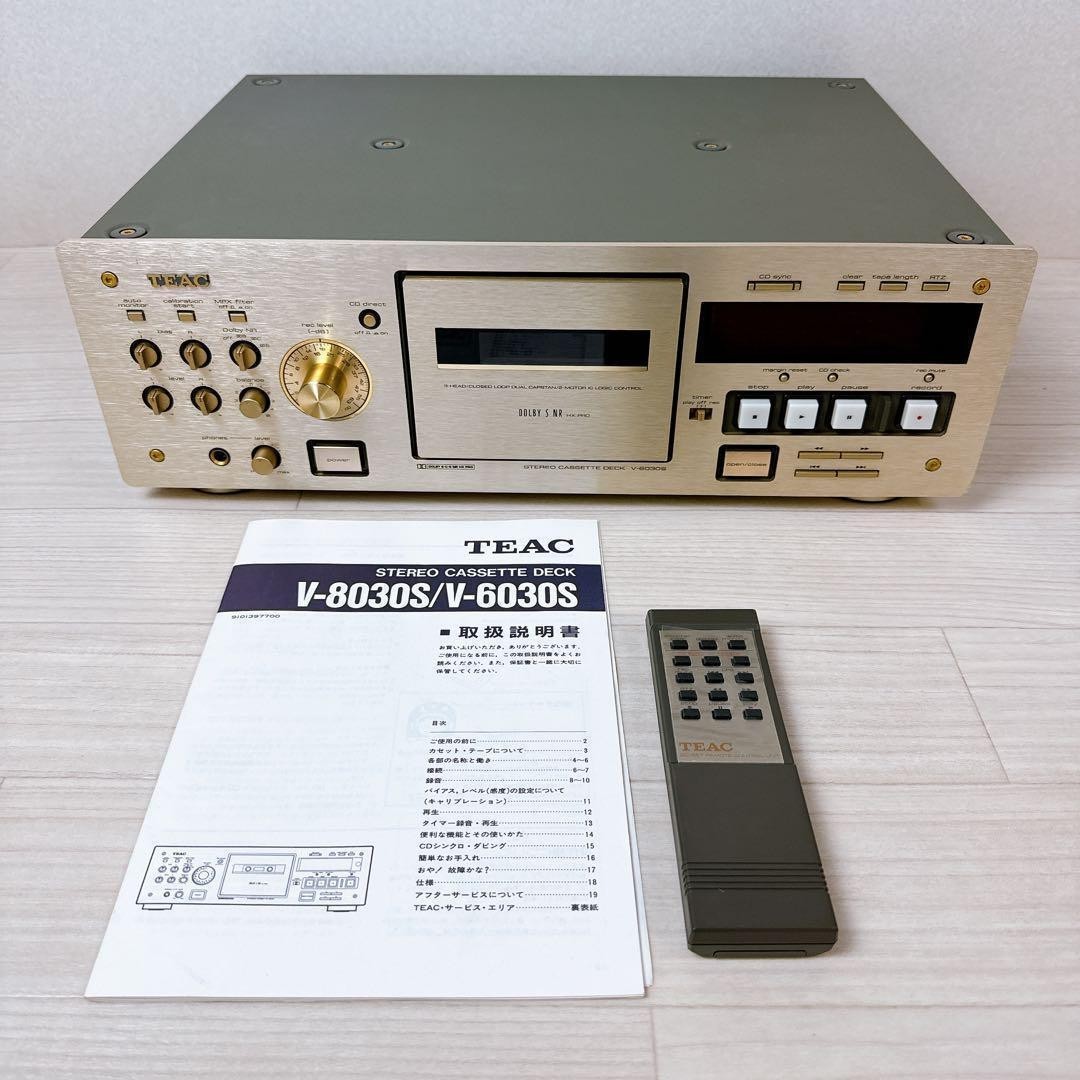

As an eBay Partner, we earn from qualifying purchases. This helps support our independent vintage technology research.
Related Models
- Teac A-2340R (1975)
- Teac V-30 (1975)
- Teac W-416 (1975)
- Teac A-108-SYNC (1978)
- Teac A-110 (1978)
- Akai AM-2850 (1975)
- Akai AP-206 (1975)
- Nakamichi BX-1 (1985)
- Acoustic Research research-ar-17 (1978)
- Acoustic Research AR-19 (1994)