Teac V-5010: The Pinnacle of Analog Tape Fidelity
In the late 1970s, when audiophiles were chasing the purest sound reproduction possible, few formats matched the fidelity of professional-grade reel-to-reel tape recorders. Among the elite offerings from Japanese manufacturers during this golden era of analog audio, the Teac V-5010 stood as a flagship model that bridged the gap between studio-quality engineering and high-end home audio. Released in 1979, the V-5010 was not merely a tape deck—it was a statement of Teac’s commitment to sonic excellence, mechanical precision, and innovation in magnetic recording.
Though less widely known today than some of its contemporaries from Nakamichi or Studer, the Teac V-5010 remains a prized possession among reel-to-reel enthusiasts and vintage audio collectors. It represents the culmination of Teac’s engineering prowess during a time when analog tape was still considered the ultimate medium for high-fidelity sound.
Technical Specifications
The Teac V-5010 was engineered to deliver reference-level performance, featuring a robust dual-capstan transport system, precision tape guidance, and advanced electronics designed for minimal wow, flutter, and distortion. Built for both recording and playback at the highest standards, it supported multiple tape speeds and was compatible with a wide range of professional and consumer tape formulations.
| Specification | Detail |
| Model | Teac V-5010 |
| Year of Release | 1979 |
| Format | 1/4" Reel-to-Reel (2-track, 1/2-track) |
| Tape Speeds | 7.5, 15, 30 ips (inches per second) |
| Tracks | 2-track stereo / 4-track (selectable) |
| Head Configuration | 3-head (record, playback, erase) |
| Transport System | Dual capstan, direct-drive motors |
| Wow and Flutter | < 0.07% (measured at 3.15 kHz, 15 ips) |
| Frequency Response | 30 Hz – 20 kHz (±2 dB at 15 ips) |
| Signal-to-Noise Ratio | > 68 dB (Dolby B/C compatible) |
| Input/Output | Line In/Out (RCA, XLR optional) |
| Equalization Settings | 120 µs, 180 µs, 250 µs (switchable) |
| Bias Adjustment | Manual, front-panel trim |
| Power Requirements | 120V AC, 60 Hz (region-specific variants) |
| Dimensions | 510 mm (W) × 175 mm (H) × 440 mm (D) |
| Weight | 24.5 kg (54 lbs) |
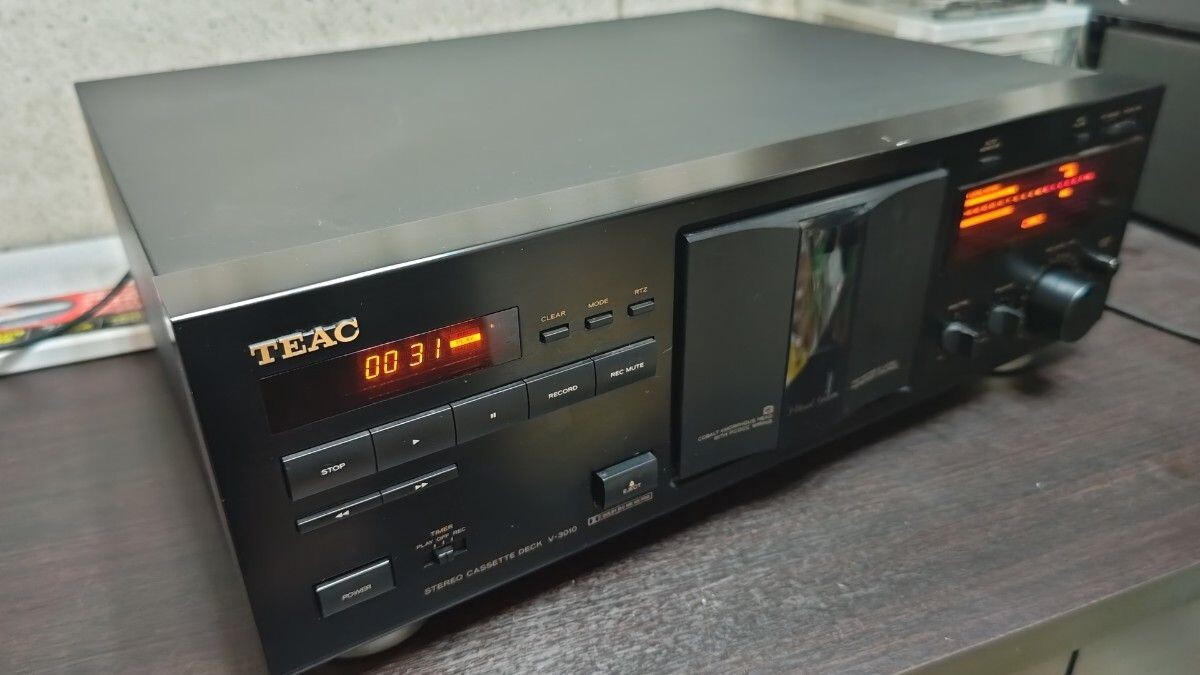
The V-5010 was typically offered in a sleek, brushed aluminum front panel with a minimalist control layout, emphasizing functionality over flash. Its heavy chassis was designed to minimize vibration and resonance, while the large, easy-to-read VU meters provided accurate level monitoring during recording sessions.
Sound Characteristics and Performance
The sonic signature of the Teac V-5010 is best described as transparent, dynamic, and richly detailed. Unlike cassette decks of the era, which were constrained by narrow tape and slow speeds, the V-5010 operated on 1/4" tape at up to 30 inches per second (ips), allowing for an exceptionally wide frequency response and a remarkably low noise floor.
At 15 ips—a common speed for high-end home use—the V-5010 delivered a soundstage that was expansive and three-dimensional. Instruments were precisely imaged, bass was tight and controlled, and high frequencies retained their natural air and sparkle. When used with low-noise tape formulations like TDK SA, Maxell XLI-S, or Ampex 456, the results approached the quality of early digital recordings—without the sterility some associate with early PCM.
The three-head design allowed for true separate record and playback heads, meaning you could monitor your recordings in real time with the same head that would be used for final playback. This eliminated the phase and frequency inconsistencies common in record-monitoring systems that used the record head for monitoring.
Dolby B and C noise reduction were supported, though many purists preferred to record and play back in the open-reel domain without noise reduction, relying instead on the inherent quality of the tape and transport.
Notable Features and Innovations
The V-5010 was packed with features that reflected Teac’s ambition to compete with the best in the field:
- Dual Capstan Transport: This eliminated tape slippage and ensured consistent tape-to-head contact, critical for maintaining speed stability and minimizing wow and flutter.
- Direct-Drive Motors: Both the supply and take-up reels used direct-drive motors, reducing mechanical wear and improving tension control.
- Selectable Equalization and Bias: Engineers and enthusiasts could fine-tune the recorder for different tape types, optimizing performance for everything from budget reels to professional mastering stock.
- Solid-State Electronics: The V-5010 used discrete transistor circuitry with minimal reliance on ICs, contributing to its warm, analog character.
- Professional Build Quality: With a rigid steel chassis, brass guide posts, and precision-ground heads (typically by TDK or Teac’s own division), the V-5010 was built to last.
One of the more subtle but significant design choices was the modular head assembly, which allowed for easy alignment and replacement. This made long-term maintenance more practical and preserved the machine’s performance over decades.
Common Issues and Maintenance
Like all high-performance reel-to-reel decks, the Teac V-5010 demands regular maintenance to perform at its best. After 40+ years, many units may suffer from:
- Deteriorated rubber parts: Pinch rollers and drive belts can harden or crack. These should be replaced with modern equivalents.
- Dirty or oxidized tape heads: Regular cleaning with isopropyl alcohol and demagnetizing are essential.
- Lubrication breakdown: The transport mechanism relies on precise lubrication, which can dry out over time.
- Capacitor aging: Electrolytic capacitors in the power supply and audio circuits may need replacement to prevent hum or channel imbalance.
A full service—often referred to as a "recap and refresh"—by a qualified technician is recommended before regular use. When properly maintained, however, the V-5010 can operate reliably for decades.
Current Market Value and Collectibility
The Teac V-5010 is not as commonly encountered as some of its peers, which contributes to its allure among collectors. Units in excellent working condition typically sell for $1,200 to $2,000, with pristine, fully serviced models commanding even higher prices, especially if accompanied by original boxes, manuals, or calibration tapes.
Its collectibility is driven by several factors:
- Rarity: It was a high-end model with limited production.
- Build quality: It rivals more famous brands in engineering and materials.
- Sound quality: It holds its own against Nakamichi and Revox equivalents.
- Nostalgia: For analog purists, it represents the peak of pre-digital home recording.
While not as flashy as some of the chrome-laden decks of the 1980s, the V-5010 appeals to those who value understated excellence and mechanical integrity.
Conclusion and Legacy
The Teac V-5010 is more than just a vintage tape recorder—it’s a testament to a time when audio fidelity was pursued with uncompromising dedication. In an age dominated by digital streaming and lossy compression, the V-5010 reminds us of the tactile beauty and sonic richness of analog tape.
Though reel-to-reel recording never became mainstream in the home, machines like the V-5010 ensured that a dedicated community of audiophiles and engineers could enjoy studio-quality sound in their living rooms. Today, it stands as a crown jewel in Teac’s analog legacy, a machine that combined Japanese precision with a deep respect for the art of sound.
For the collector, restorer, or analog enthusiast, the Teac V-5010 is not just a piece of equipment—it’s a portal to the golden age of high-fidelity audio.
eBay Listings


As an eBay Partner, we earn from qualifying purchases. This helps support our independent vintage technology research.
Related Models
- Teac A-2340R (1975)
- Teac V-30 (1975)
- Teac W-416 (1975)
- Teac A-108-SYNC (1978)
- Teac A-110 (1978)
- Akai AM-2850 (1975)
- Akai AP-206 (1975)
- Nakamichi BX-1 (1985)
- Acoustic Research research-ar-17 (1978)
- Acoustic Research AR-19 (1994)