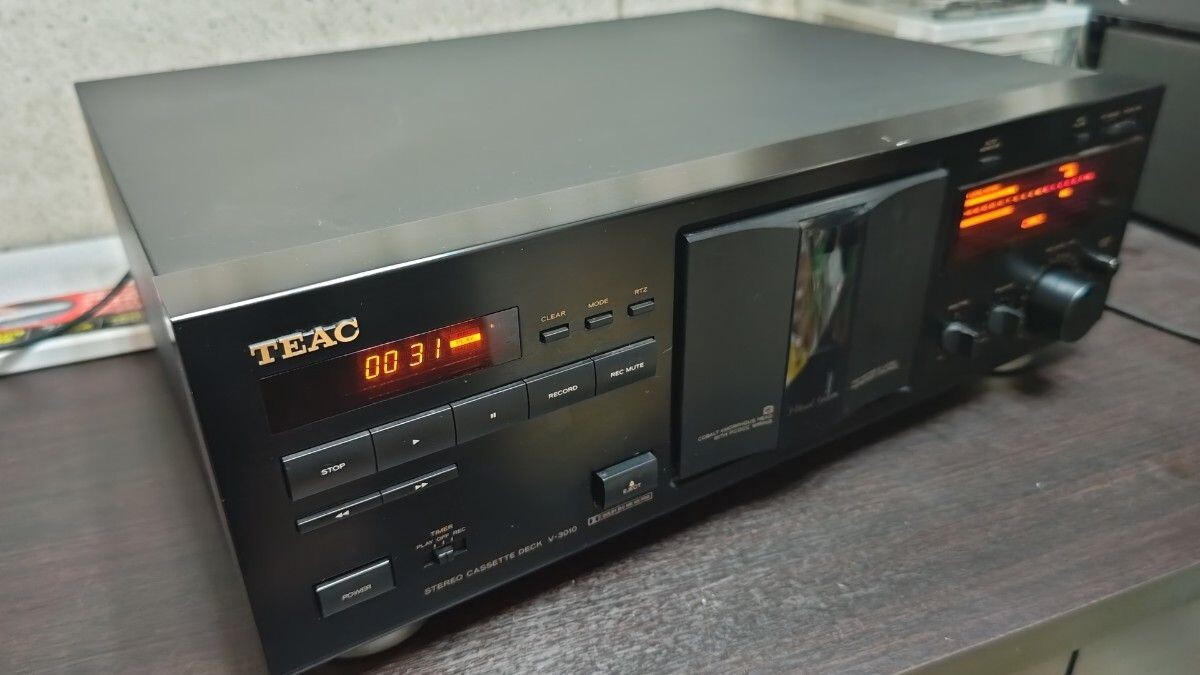
Teac V-3010: The Forgotten Gem of 1970s Reel-to-Reel Recording
In the golden era of analog audio, when magnetic tape ruled the recording world, Teac (Tokyo Electro-Acoustic Company) emerged as a major force in bringing professional-grade reel-to-reel technology into home studios and broadcast environments. Among their respected lineup of open-reel recorders, the Teac V-3010 stands out as a sophisticated, semi-professional tape deck that combined precision engineering with user-friendly design. Though not as widely celebrated as some of its contemporaries, the V-3010 earned a quiet reputation among engineers and audiophiles for its reliability, clean signal path, and broadcast-ready performance.
Introduced in 1975, the V-3010 arrived during a pivotal time in audio history. While cassette tapes were gaining popularity for portability and convenience, serious listeners and recording enthusiasts still relied on open-reel machines for their superior fidelity and editing capabilities. Teac, already known for its high-quality consumer and prosumer gear, positioned the V-3010 as a bridge between home recording and professional studio use—offering many of the features found in more expensive models at a more accessible price point.
Technical Specifications
The Teac V-3010 was designed as a 1/4-inch, 2-track stereo or 4-track mono recorder, capable of handling a range of tape speeds and configurations. It was often used in music production, field recording, and radio broadcasting due to its robust build and accurate transport.
| Specification | Detail |
| Format | 1/4-inch open-reel tape |
| Tracks | 2-track stereo / 4-track mono |
| Tape Speeds | 7.5, 15, and 30 inches per second (ips) |
| Heads | Separate record, playback, and erase heads |
| Motor Type | Dual capstan servo-controlled motors |
| Wow and Flutter | < 0.20% (15 ips, WRMS) |
| Frequency Response | 30Hz – 20kHz (±3dB at 15 ips, normal bias) |
| Signal-to-Noise Ratio | > 60dB (Dolby B optional) |
| Input/Output | Line in/out (RCA and XLR), mic in (XLR) |
| Equalization Options | 120µs, 180µs, 250µs (switchable) |
| Bias Adjustment | Front-panel variable bias control |
| Power Requirements | 120V AC, 60Hz (North American model) |
| Dimensions | 17.3" W × 6.3" H × 13.8" D |
| Weight | Approx. 38 lbs (17.2 kg) |
The V-3010 featured a three-motor transport system—one motor for each reel and a direct-drive capstan motor—ensuring precise tape tension and speed stability. This design minimized wow and flutter, critical for maintaining pitch accuracy during playback and recording. The inclusion of switchable equalization and bias settings allowed users to optimize performance for different tape formulations (e.g., normal, high-energy), making the V-3010 adaptable to a wide range of recording scenarios.
Sound Characteristics and Performance
The Teac V-3010 is prized for its clean, transparent sound with a slight warmth characteristic of well-designed analog tape decks. At 15 ips, it delivers a full frequency response and excellent dynamic range, capturing vocals and instruments with natural presence and depth. At 30 ips, the high-frequency extension becomes even more detailed, rivaling many professional studio recorders of the era.
One of the V-3010’s strengths lies in its low noise floor and minimal distortion. The separate playback and record heads allow for precise alignment and optimal signal reproduction. When properly maintained and calibrated, the V-3010 can produce results that stand up to modern digital recordings in terms of musicality and spatial imaging.
The machine supports Dolby B noise reduction as an optional feature, which further enhances the signal-to-noise ratio—especially useful when recording at 7.5 ips for longer runtime. However, many purists prefer to run the deck without noise reduction to preserve the full harmonic richness of the analog tape.
Notable Features and Innovations
While not as flashy as some high-end studio decks, the V-3010 incorporated several thoughtful design elements that set it apart:
- Front-Panel Bias and Level Calibration: Unlike many consumer decks, the V-3010 allows real-time adjustment of record bias and level via front-mounted controls, enabling users to fine-tune the machine for specific tape brands.
- Selectable Equalization: The ability to switch between 120µs, 180µs, and 250µs time constants made the V-3010 compatible with international broadcast standards and various tape types.
- Dual Speed Metering: Integrated VU meters with peak-hold functionality provide accurate level monitoring for both channels.
- Robust Chassis and Damping: The heavy-duty steel frame and rubber-isolated components reduce mechanical vibration and external noise interference.
- Professional Connectivity: XLR and RCA inputs/outputs ensure compatibility with microphones, mixers, and other studio gear.
These features made the V-3010 a favorite among independent producers, radio stations, and educational institutions during the late 1970s and early 1980s.
Common Issues and Maintenance
Like all vintage reel-to-reel machines, the Teac V-3010 requires regular maintenance to perform at its best. Common issues include:
- Deteriorated Rubber Components: Idler tires, pinch rollers, and drive belts can harden or crack over time. Replacement with modern equivalents is essential.
- Dirty or Worn Heads: Tape heads should be cleaned regularly with isopropyl alcohol and demagnetized to prevent signal loss and distortion.
- Capstan Bearing Dryness: Lack of lubrication can cause speed instability. A qualified technician should service the capstan and motor bearings.
- Oxidized Controls and Switches: Potentiometers and selector switches may develop crackling noises. Contact cleaner can help, but replacement may be needed.
- Tape Path Misalignment: Over years of use, the tape guides can shift, affecting tracking and frequency response. Realigning the heads and guides is crucial for optimal performance.
Owners are advised to have the V-3010 professionally serviced before regular use, especially if the machine has been in storage for decades. With proper care, however, the V-3010 can continue to deliver exceptional performance.
Current Market Value and Collectibility
The Teac V-3010 is not as widely collected as some of Teac’s more famous models (like the A-3340S), but it has a loyal following among reel-to-reel enthusiasts and analog purists. In working condition, the V-3010 typically sells for $400 to $700, depending on cosmetic condition, included accessories, and calibration status. Fully restored units with new belts and aligned heads may command higher prices, especially if sold with original documentation.
Its value lies not in rarity, but in practical utility. For musicians recording to tape, podcasters seeking analog warmth, or archivists transferring old reels, the V-3010 offers a reliable, no-nonsense platform with professional-grade features.
Conclusion and Legacy
The Teac V-3010 may not have the name recognition of a Studer or a Revox, but it represents the quiet excellence of Japanese engineering during the analog heyday. It was built for those who valued precision, durability, and sonic integrity over flash and marketing hype.
Today, as the analog revival continues to grow, the V-3010 stands as a testament to a time when tape was the gold standard. Whether used for mastering, restoration, or creative recording, it remains a capable and rewarding machine. For the vintage audio enthusiast, finding a well-maintained V-3010 is like uncovering a hidden treasure—unassuming in appearance, but rich in performance and character.
If you’re exploring the world of reel-to-reel, don’t overlook the Teac V-3010. It may just become your favorite tool for capturing sound the way it was meant to be heard—warm, alive, and utterly real.
eBay Listings



As an eBay Partner, we earn from qualifying purchases. This helps support our independent vintage technology research.
Related Models
- Teac A-2340R (1975)
- Teac V-30 (1975)
- Teac W-416 (1975)
- Teac A-108-SYNC (1978)
- Teac A-110 (1978)
- Akai AM-2850 (1975)
- Akai AP-206 (1975)
- Nakamichi BX-1 (1985)
- Acoustic Research research-ar-17 (1978)
- Acoustic Research AR-19 (1994)