Teac V-3000: The Analog Artisan of the Reel-to-Reel Era
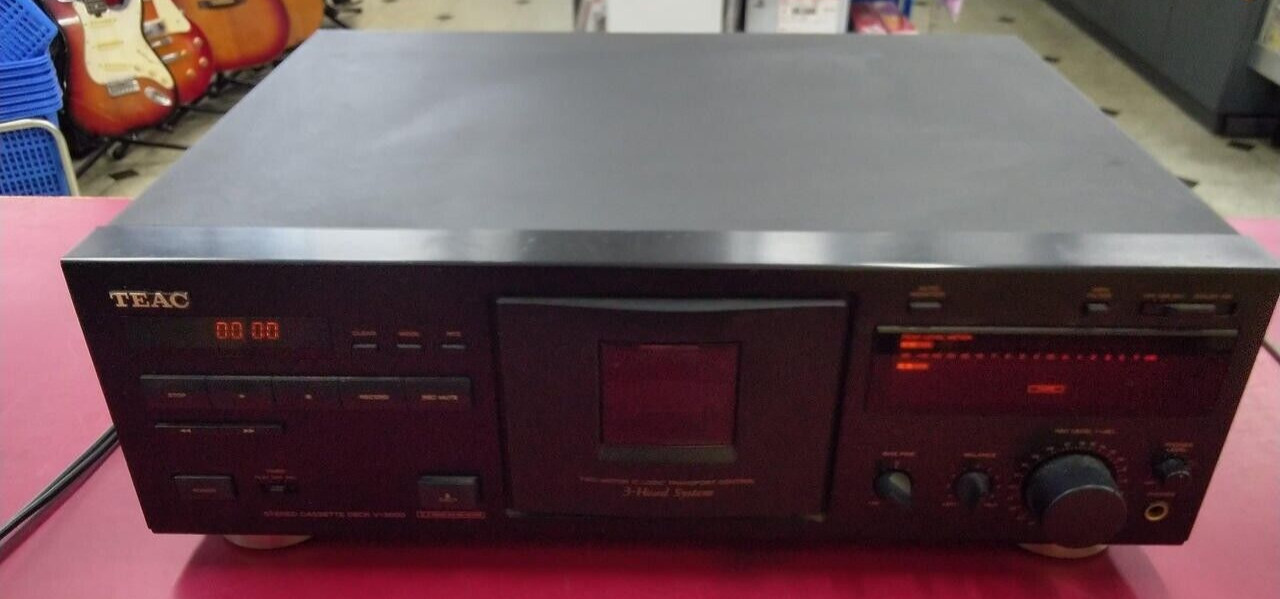
In the late 1970s, when high-fidelity audio was reaching new heights of precision and accessibility, Teac Corporation emerged as one of the most respected names in analog tape recording. The Teac V-3000, introduced in 1977, stands as a shining example of the company’s commitment to engineering excellence and audiophile-grade performance. Though not as widely recognized today as some of its contemporaries from Nakamichi or Revox, the V-3000 carved out a loyal following among home recording enthusiasts, studio engineers, and tape purists who valued its blend of professional features, mechanical reliability, and warm, musical sound.
Part of Teac’s esteemed V-series lineup—sister to the legendary X-1000 and R-500 models—the V-3000 was designed for serious listeners and semi-professional users who demanded more than what consumer cassette decks could offer. At a time when reel-to-reel was transitioning from studio dominance to niche audiophile status, the V-3000 represented the pinnacle of accessible high-end tape technology.
Technical Specifications
The Teac V-3000 was engineered with meticulous attention to mechanical and electronic detail. Built around a full three-motor direct-drive transport system, it offered exceptional tape stability and minimal wow and flutter—critical for high-resolution analog playback and recording. Its dual-capstan design ensured precise tape-to-head contact, reducing speed variations and improving high-frequency response.
| Specification | Detail |
| Model | V-3000 |
| Manufacturer | TEAC Corporation |
| Year Introduced | 1977 |
| Format | 1/4" Reel-to-Reel |
| Tape Speeds | 7.5, 15 ips (ips = inches per second) |
| Tracks | 4-track / 2-channel stereo (full-track mono also supported) |
| Heads | Separate record, playback, and erase heads (ferrite) |
| Transport System | Three-motor, dual-capstan, direct drive |
| Wow and Flutter | < 0.20% (15 ips, RMS) |
| Frequency Response | 30Hz – 20kHz (±3dB, 15 ips, with 150µs EQ) |
| Signal-to-Noise Ratio | > 60 dB (Dolby B optional) |
| Input/Output | Line In/Out (RCA), Mic In (¼" and XLR), Phones (¼") |
| Equalization | 120µs / 150µs switchable |
| Recording Bias | Adjustable (front panel trim pots) |
| Power Requirements | 120V AC, 60Hz (NTSC regions); 220–240V versions available |
| Dimensions (W×H×D) | 440 × 145 × 370 mm (17.3 × 5.7 × 14.6 in) |
| Weight | 13.6 kg (30 lbs) |
| Accessories | Tape guides, reel clamps, calibration tape (optional) |
Sound Characteristics and Performance
The Teac V-3000 is revered for its natural, full-bodied sound signature—a hallmark of well-designed analog tape decks from this era. At 15 inches per second (ips), the V-3000 delivers a remarkably open and detailed soundstage, with smooth highs, rich midrange, and tight, controlled bass. The separate playback and record heads allow for optimized signal reproduction, and the high-quality ferrite heads ensure excellent high-frequency extension without harshness.
One of the V-3000’s standout qualities is its low noise floor and excellent dynamic range, especially when paired with high-grade tape (such as Ampex 456 or BASF SM911). The inclusion of Dolby B noise reduction (switchable) further enhances its ability to deliver clean, quiet playback—though purists often prefer to run the deck in “flat” mode to preserve the unprocessed analog character.
The adjustable bias and level controls on the front panel give users fine-tuned control over recording optimization, allowing for calibration with different tape formulations. This level of user customization was rare in consumer-grade decks and placed the V-3000 firmly in the semi-professional category.
Notable Features and Innovations
The V-3000 was packed with features that reflected Teac’s engineering philosophy: precision, durability, and user control.
- Three-Motor Direct Drive System: Each function—capstan, supply, and take-up—was powered by its own motor, eliminating mechanical slippage and ensuring consistent tape tension. This design reduced wear on tapes and improved long-term reliability.
- Dual Capstan Transport: By using two capstans (one at each head position), the V-3000 maintained constant tape speed and minimized tape flutter, a critical factor in high-fidelity reproduction.
- Separate Record and Playback Heads: Unlike many consumer decks that used a combined record/play head, the V-3000 featured dedicated heads for each function. This allowed each head to be optimized for its specific task, improving both recording clarity and playback accuracy.
- Professional Connectivity: With both XLR and ¼" microphone inputs, balanced line outputs, and a robust headphone amplifier, the V-3000 could integrate seamlessly into studio setups or high-end home systems.
- Front-Panel Calibration Controls: The ability to adjust bias and record level in real time made the V-3000 a favorite among tapers and home recordists who wanted to squeeze the most performance out of their tapes.
Common Issues and Maintenance
Like all vintage reel-to-reel decks, the Teac V-3000 requires regular maintenance to perform at its best. Over four decades, rubber components degrade, lubricants dry out, and heads oxidize—issues that can degrade performance if ignored.
- Pinched or Dried Belts: While the V-3000 uses direct drive for the capstan, some internal idler wheels and brake mechanisms rely on rubber components. These should be inspected and replaced if cracked or stiff.
- Head Oxidation: The ferrite heads are durable but can corrode over time, especially if the deck was stored in a humid environment. Light demagnetization and cleaning with isopropyl alcohol are recommended before use.
- Capstan and Pinch Roller Wear: The pinch roller can harden or become glazed, leading to speed instability. Replacement with a modern equivalent is a common restoration step.
- Lubrication of Mechanical Parts: The transport mechanism includes precision gears and bearings that benefit from a professional-grade synthetic lubricant. Over-lubrication should be avoided.
- Demagnetization: Regular demagnetizing (using a non-metallic tape head demagnetizer) is essential to maintain high-frequency response and low noise.
Given its robust build and modular design, the V-3000 is generally considered restorable and reliable with proper care. Many units still in circulation have been professionally serviced and continue to deliver outstanding performance.
Current Market Value and Collectibility
The Teac V-3000 is not as widely collected as some of its flashier contemporaries, but it has a dedicated following among reel-to-reel enthusiasts. In recent years, interest in analog tape has surged, driven by the vinyl revival and a renewed appreciation for warm, organic sound.
As of 2024, a fully functional, well-maintained Teac V-3000 typically sells for $600–$1,000, depending on condition, included accessories, and provenance. Units that have been recapped, demagnetized, and calibrated command premium prices. Fully restored decks with new pinch rollers and cleaned heads are especially desirable.
While not a “holy grail” like the Nakamichi 1000ZXL, the V-3000 is increasingly recognized as a sleeper classic—offering 90% of the performance at a fraction of the price. Its understated design and lack of flashy branding make it a favorite among purists who value substance over show.
Conclusion and Legacy
The Teac V-3000 may not have the name recognition of some high-end European or Japanese rivals, but it stands as a testament to Teac’s mastery of analog tape technology. In an era when many manufacturers were cutting corners to meet consumer price points, Teac stayed true to its engineering roots, producing decks that bridged the gap between professional and home use.
Today, the V-3000 is more than just a vintage curiosity—it’s a functional piece of audio history that continues to deliver captivating sound. Whether used for archiving rare recordings, mastering analog tapes, or simply enjoying music the way it was meant to be heard, the V-3000 remains a compelling choice for anyone passionate about the art of analog.
For the discerning collector or audiophile, the Teac V-3000 is not just a machine—it’s a sonic time machine, preserving the warmth, depth, and soul of an analog era that continues to inspire.
eBay Listings


As an eBay Partner, we earn from qualifying purchases. This helps support our independent vintage technology research.
Related Models
- Teac A-6700DX (1980)
- Teac A-105 (1975)
- Teac A-106 (1975)
- Teac A-170 (1976)
- Teac A-2300 (1978)
- Sony TC-2050SD (1978)
- Aiwa AD-F990 (1993)
- Kenwood KX-3060 (1982)
- Sony TC-2130A (1974)
- Sony TC-2220 (1972)