Teac V-2030-S: A Benchmark in Reel-to-Reel Excellence
In the golden age of analog audio, few formats captured the imagination of audiophiles and recording enthusiasts quite like reel-to-reel tape. During the 1970s, Japanese manufacturers led the charge in bringing professional-grade tape technology into the home, and Teac (Tokyo Electro-Acoustic Company) stood at the forefront. Among their most respected models was the Teac V-2030-S, a dual-speed, 1/4-inch open-reel tape recorder that combined precision engineering, elegant design, and exceptional sound quality. Though not as widely recognized today as some of its contemporaries, the V-2030-S remains a cherished machine among analog purists and vintage audio collectors.
Historical Context
Introduced in 1975, the Teac V-2030-S arrived during a pivotal moment in audio history. The cassette format was gaining popularity for portability and convenience, but serious listeners and recording hobbyists still favored reel-to-reel for its superior fidelity and dynamic range. Teac had already built a strong reputation with earlier models like the A-2340 and the legendary A-3340S, and the V-2030-S was positioned as a high-end consumer model—offering many professional features at a more accessible price point.
The "V" in the model name signified Teac’s "Victory" series, a line designed to deliver premium performance with refined aesthetics. The "2030" denoted its place in the product hierarchy, while the "-S" suffix indicated a stereo configuration. Built in Japan during Teac’s peak manufacturing era, the V-2030-S exemplified the company’s commitment to quality control, robust mechanics, and musical transparency.
Technical Specifications
| Feature | Specification |
| Format | 1/4-inch open reel, 2-track stereo |
| Tape Speeds | 7.5 ips, 15 ips (with crystal-controlled option) |
| Heads | Separate record, playback, and erase heads |
| Motor System | Dual capstan, direct-drive with servo control |
| Frequency Response | 30Hz – 18kHz (15 ips), ±3dB |
| Signal-to-Noise Ratio | >60dB (Dolby B optional) |
| Total Harmonic Distortion | <1.5% @ 0dB, 1kHz |
| Input/Output | Line In/Out (RCA), Mic In (1/4") |
| Equalization Settings | 120µs (15 ips), 180µs (7.5 ips) |
| Power Requirements | 120V AC, 60Hz (NTSC regions) |
| Dimensions | 440mm (W) × 145mm (H) × 350mm (D) |
| Weight | 12.5 kg (approx. 27.5 lbs) |
| Build Origin | Japan |
The V-2030-S supported both 7.5 and 15 inches per second (ips) tape speeds, with the faster speed offering extended frequency response and lower noise—ideal for critical listening or master recording. The inclusion of crystal-sync speed control (on later production runs) ensured exceptional speed stability, minimizing wow and flutter to levels rivaling studio machines.
Sound Characteristics and Performance
The sonic signature of the Teac V-2030-S is often described as warm, detailed, and effortlessly musical. Its separate playback and record heads allowed for optimal alignment and reduced crosstalk, resulting in a clean stereo image with excellent channel separation. The frequency response is impressively flat for a consumer-grade machine, with a smooth roll-off in the high end that avoids harshness—characteristic of well-tuned analog tape.
When used with high-quality tape stock (such as Ampex 456 or BASF SM468), the V-2030-S delivers a rich, three-dimensional soundstage with natural decay and lifelike instrument placement. The inherent compression and harmonic saturation of analog tape add a pleasing “glue” to recordings, making the V-2030-S a favorite for mastering demos or creating warm, vintage-style mixes.
With optional Dolby B noise reduction, background hiss is significantly reduced—especially at 7.5 ips—making it practical for long play sessions or archival transfers. However, many purists prefer to run the machine in “flat” mode to preserve the full analog character.
Notable Features and Innovations
The Teac V-2030-S was packed with features that elevated it above typical consumer tape decks:
- Three-head configuration: Separate record, playback, and erase heads enabled real-time monitoring of recordings with zero latency—a must for musicians and engineers.
- Dual capstan transport: This design minimized tape flutter and ensured consistent tension, critical for maintaining pitch accuracy.
- Direct-drive motors: Unlike belt-driven systems prone to wear, the direct-drive mechanism offered long-term reliability and precise speed control.
- Front-panel level meters: Large VU meters provided clear visual feedback for input and output levels, essential for avoiding distortion.
- Professional-grade connectors: High-quality RCA jacks and a 1/4" microphone input ensured clean signal transfer.
- Manual tape threading: While automatic threading was becoming popular, Teac retained manual threading for greater control and reduced mechanical complexity.
The front panel featured a clean, minimalist layout with brushed aluminum finish and large, tactile knobs—hallmarks of 1970s Japanese industrial design. The transport controls were robust and responsive, and the tape reels spun with a satisfying mechanical precision that modern digital devices rarely match.
Common Issues and Maintenance
Like all vintage reel-to-reel machines, the Teac V-2030-S requires periodic maintenance to perform at its best. After decades of use (or disuse), common issues include:
- Deteriorated rubber parts: Pinch rollers and idler tires can harden or crack, leading to speed instability. These should be replaced with modern equivalents.
- Dirty or worn heads: Tape heads accumulate oxide buildup and may need demagnetizing and resurfacing.
- Lubrication of transport mechanisms: Old grease can gum up gears and bearings, requiring a full mechanical servicing.
- Capacitor aging: Electrolytic capacitors in the power supply and audio circuits may dry out, risking noise or failure.
For long-term reliability, a full recap and alignment by a qualified technician is highly recommended. Once serviced, the V-2030-S is remarkably durable and can provide decades of faithful service.
Current Market Value and Collectibility
The Teac V-2030-S is not as common on the vintage market as some of Teac’s more famous models, but it has a loyal following. Well-maintained units in good cosmetic and working condition typically sell for $400–$700, depending on accessories, original packaging, and provenance.
Collectibility is driven by several factors:
- Build quality: Japanese-made units from this era are prized for their craftsmanship.
- Analog resurgence: With renewed interest in tape saturation and analog warmth, reel-to-reel machines are back in vogue.
- Studio use potential: Musicians and producers seeking authentic vintage tones often seek out Teac models for tracking and mastering.
While not a “holy grail” like the A-3340S, the V-2030-S offers excellent value for those wanting a serious reel-to-reel experience without the premium price tag.
Conclusion and Legacy
The Teac V-2030-S stands as a testament to the golden age of analog audio engineering. It combines the precision of professional studio gear with the accessibility of a home audio product, delivering a listening and recording experience that remains unmatched in the digital era. For collectors, musicians, and audiophiles, it offers more than just functionality—it provides a tactile, immersive connection to the art of sound.
In an age of instant streaming and lossy compression, the V-2030-S reminds us of the beauty of physical media, the warmth of tape, and the joy of turning a reel by hand. It’s not just a machine—it’s a piece of audio history, spinning stories one tape at a time.
eBay Listings


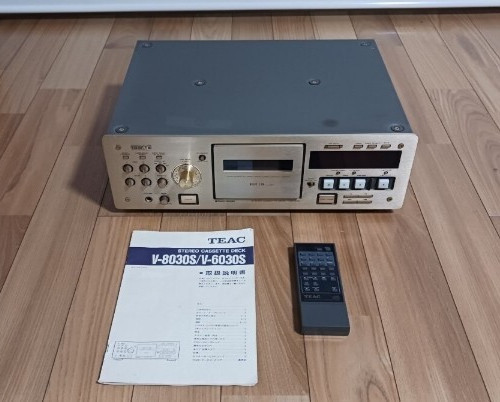

As an eBay Partner, we earn from qualifying purchases. This helps support our independent vintage technology research.
Related Models
- Teac A-2340R (1975)
- Teac V-30 (1975)
- Teac W-416 (1975)
- Teac A-108-SYNC (1978)
- Teac A-110 (1978)
- Akai AM-2850 (1975)
- Akai AP-206 (1975)
- Nakamichi BX-1 (1985)
- Acoustic Research research-ar-17 (1978)
- Acoustic Research AR-19 (1994)