Teac T-3600: The Pinnacle of Analog Tape Fidelity
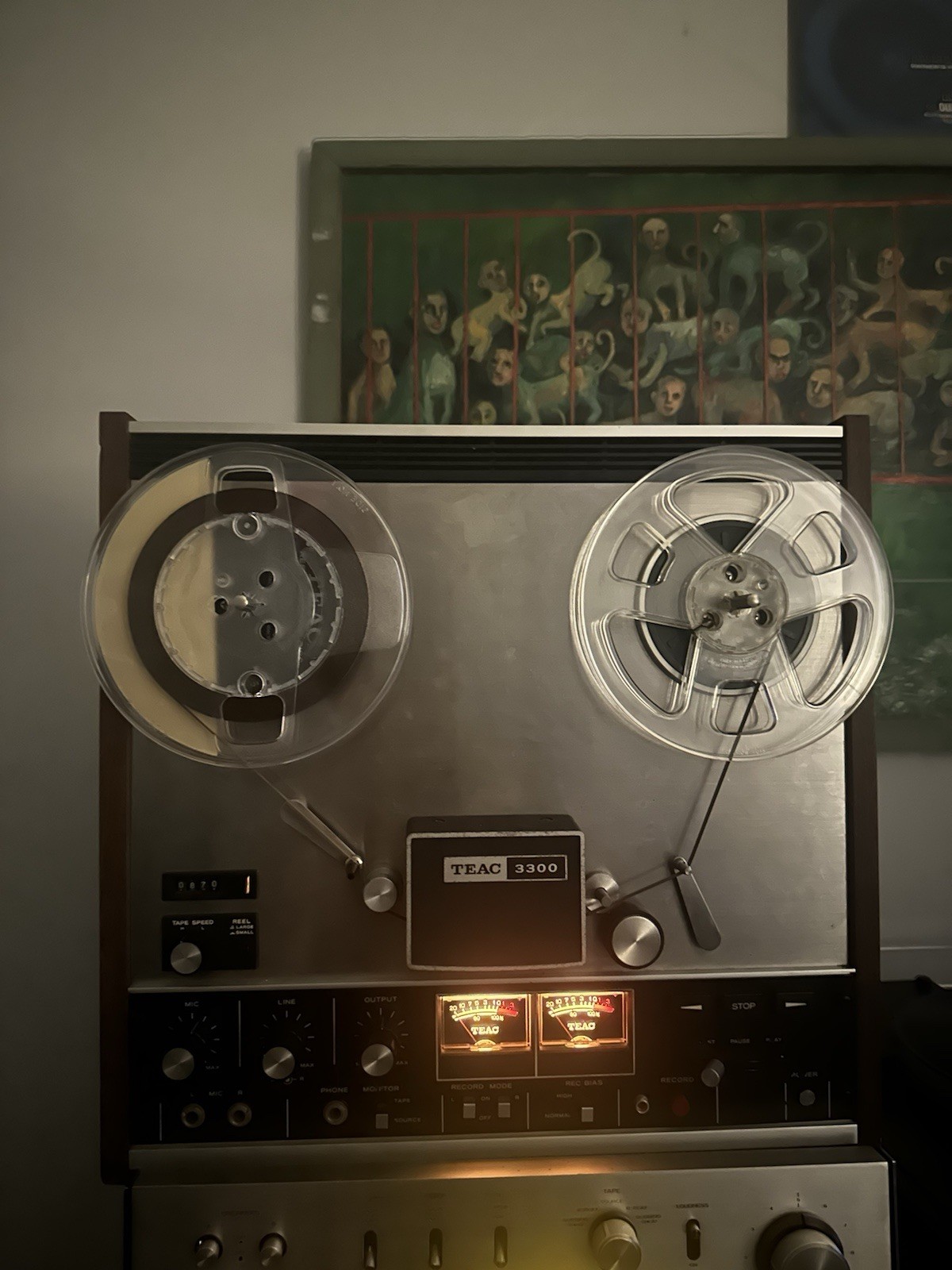
In the mid-1970s, Japanese audio engineering reached a golden age, producing some of the most refined and sonically transparent analog tape recorders ever made. Among these, the Teac T-3600 stands out as a flagship open-reel tape recorder that embodied the company’s commitment to high-fidelity sound reproduction, precision mechanics, and elegant industrial design. Though not as widely recognized today as some of its contemporaries from Nakamichi or Sony, the T-3600 remains a treasured machine among reel-to-reel enthusiasts and analog purists who value its musicality, build quality, and understated sophistication.
Born during a time when home audiophiles were increasingly seeking studio-grade sound in their living rooms, the Teac T-3600 was designed to deliver professional-level performance without the professional price tag. It arrived at a moment when cassette decks were gaining popularity for convenience, but serious listeners still regarded ¼-inch open-reel tape as the ultimate medium for audio fidelity. The T-3600 was Teac’s answer to that demand—a no-compromise recorder built for critical listening, music archiving, and high-resolution home recording.
Technical Specifications
The Teac T-3600 was engineered with meticulous attention to detail, featuring a dual-capstan transport system, quartz-locked speed control, and a fully discrete, low-noise electronics path. It supported both 7.5 and 15 inches per second (ips) tape speeds, allowing users to balance between extended recording time and maximum audio resolution. The machine was capable of handling ¼-inch tape on standard 7-inch or 10.5-inch reels, making it compatible with a wide range of pre-recorded and user-recorded tapes.
| Specification | Detail |
| Format | ¼-inch open-reel tape |
| Tape Speeds | 7.5 ips, 15 ips |
| Tracks | 4-track, 2-channel stereo (full-track mono also supported) |
| Heads | Separate record, playback, and erase heads |
| Transport System | Dual capstan with rubber pinch rollers |
| Speed Accuracy | Quartz-locked servo control (±0.1%) |
| Frequency Response | 30Hz – 20kHz @ 15 ips (±3dB) |
| Signal-to-Noise Ratio | >68 dB (with Dolby B noise reduction) |
| Total Harmonic Distortion | <0.8% @ 15 ips |
| Inputs/Outputs | Line-level RCA inputs and outputs, mic inputs with level controls |
| Equalization Settings | 120 µs (15 ips), 180 µs (7.5 ips) |
| Noise Reduction | Dolby B compatible |
| Power Requirements | 120V AC, 60 Hz (NTSC regions) |
| Dimensions | 440 mm (W) × 145 mm (H) × 350 mm (D) |
| Weight | 14.5 kg (32 lbs) |
Sound Characteristics and Performance
The sonic signature of the Teac T-3600 is best described as warm, detailed, and remarkably natural. Unlike some tape recorders that emphasize analytical precision at the expense of musicality, the T-3600 strikes a rare balance—offering clarity and resolution while preserving the organic texture of the original performance. Its discrete amplifier circuitry contributes to a low noise floor and wide dynamic range, especially when operating at 15 ips with Dolby B engaged.
One of the T-3600’s standout qualities is its excellent transient response. Percussive elements like piano strikes or snare drums are rendered with authority and precision, thanks to the quartz-regulated motor system that maintains unwavering tape speed. The separate playback and record heads allow for optimal alignment and minimal crosstalk, resulting in a wide, stable stereo image with deep soundstage depth.
Listeners often praise the T-3600 for its smooth high-frequency extension—a trait that avoids the harshness sometimes found in lesser tape decks. Bass response is tight and well-controlled, with minimal wow and flutter (measured at less than 0.06%), making it ideal for recording and playing back acoustic and classical music with authenticity.
Notable Features and Innovations
The Teac T-3600 was packed with advanced features for its time, many of which were borrowed from professional studio recorders:
- Quartz-Locked Speed Control: This system uses a crystal oscillator to maintain precise tape speed, eliminating pitch instability and ensuring consistent playback. It was a hallmark of high-end machines in the 1970s and a major selling point for the T-3600.
- Dual Capstan Transport: Unlike single-capstan designs, the dual capstan system reduces tape flutter and ensures even tension across the tape path. This contributes significantly to the machine’s low wow and flutter specs and long-term tape alignment stability.
- Discrete Electronics: The T-3600 avoids integrated circuits in favor of discrete transistor-based circuitry in both the record and playback amplifiers. This design choice reduces distortion and improves signal purity, especially during high-level passages.
- Three-Head Configuration: With dedicated erase, record, and playback heads, the T-3600 allows for accurate monitoring of the recorded signal in real time—a feature essential for home recording and mastering.
- Front-Panel Level and Bias Calibration: Serious users could fine-tune record levels and magnetic bias settings directly from the front panel, enabling optimization for different tape formulations (e.g., ferric, chrome).
Common Issues and Maintenance
Like all vintage reel-to-reel machines, the Teac T-3600 requires regular maintenance to perform at its best. After 45+ years, common issues include:
- Deteriorated Rubber Components: Pinch rollers and capstan tires can harden or become sticky over time. These should be cleaned or replaced to prevent speed irregularities and tape slippage.
- Worn Belts: While the T-3600 uses direct-drive motors for tape transport, some internal mechanisms (such as reel table brakes or tension arms) may rely on rubber belts that degrade with age.
- Dirty or Misaligned Heads: Oxide buildup from old tapes can affect frequency response and output level. Regular cleaning with isopropyl alcohol and demagnetizing are essential.
- Capacitor Aging: Electrolytic capacitors in the power supply and audio circuits may dry out, leading to hum, reduced output, or channel imbalance. A full recapping is often recommended for machines that haven’t been serviced in decades.
- Tape Path Alignment: Over time, mechanical shifts can cause head misalignment, resulting in poor stereo imaging or high-frequency loss. A professional alignment using alignment tapes is highly recommended.
Current Market Value and Collectibility
The Teac T-3600 is not as commonly encountered on the vintage market as some of its peers, but when one appears, it typically draws attention from analog audio collectors. Units in excellent working condition with clean cosmetics typically sell between $600 and $1,000, depending on accessories, included tapes, and provenance.
Its collectibility is bolstered by its reliability, sonic excellence, and historical significance as part of Teac’s high-end T-series, which also included the T-2600 and T-4600. While not as flashy as some Nakamichi models, the T-3600 appeals to purists who value understated engineering and long-term durability.
Conclusion and Legacy
The Teac T-3600 is more than just a tape recorder—it’s a testament to an era when analog audio reached its zenith. It represents a time when manufacturers believed that home audio equipment could rival studio gear in performance, and that meticulous engineering should serve the music, not overshadow it.
Today, the T-3600 continues to be used by audiophiles digitizing vintage tapes, musicians recording in analog, and collectors preserving the legacy of magnetic tape. Its combination of precision, musicality, and build quality ensures that it remains not just a functional machine, but a true heirloom of analog audio.
For those who appreciate the warmth and depth of open-reel tape, the Teac T-3600 is a quiet masterpiece—unassuming in appearance, yet profound in its ability to bring music to life.
eBay Listings


As an eBay Partner, we earn from qualifying purchases. This helps support our independent vintage technology research.
Related Models
- Teac A-2340R (1975)
- Teac V-30 (1975)
- Teac W-416 (1975)
- Teac A-108-SYNC (1978)
- Teac A-110 (1978)
- Akai AM-2850 (1975)
- Akai AP-206 (1975)
- Nakamichi BX-1 (1985)
- Acoustic Research research-ar-17 (1978)
- Acoustic Research AR-19 (1994)