Teac A-3300SX: The Open-Reel Workhorse of the 1970s
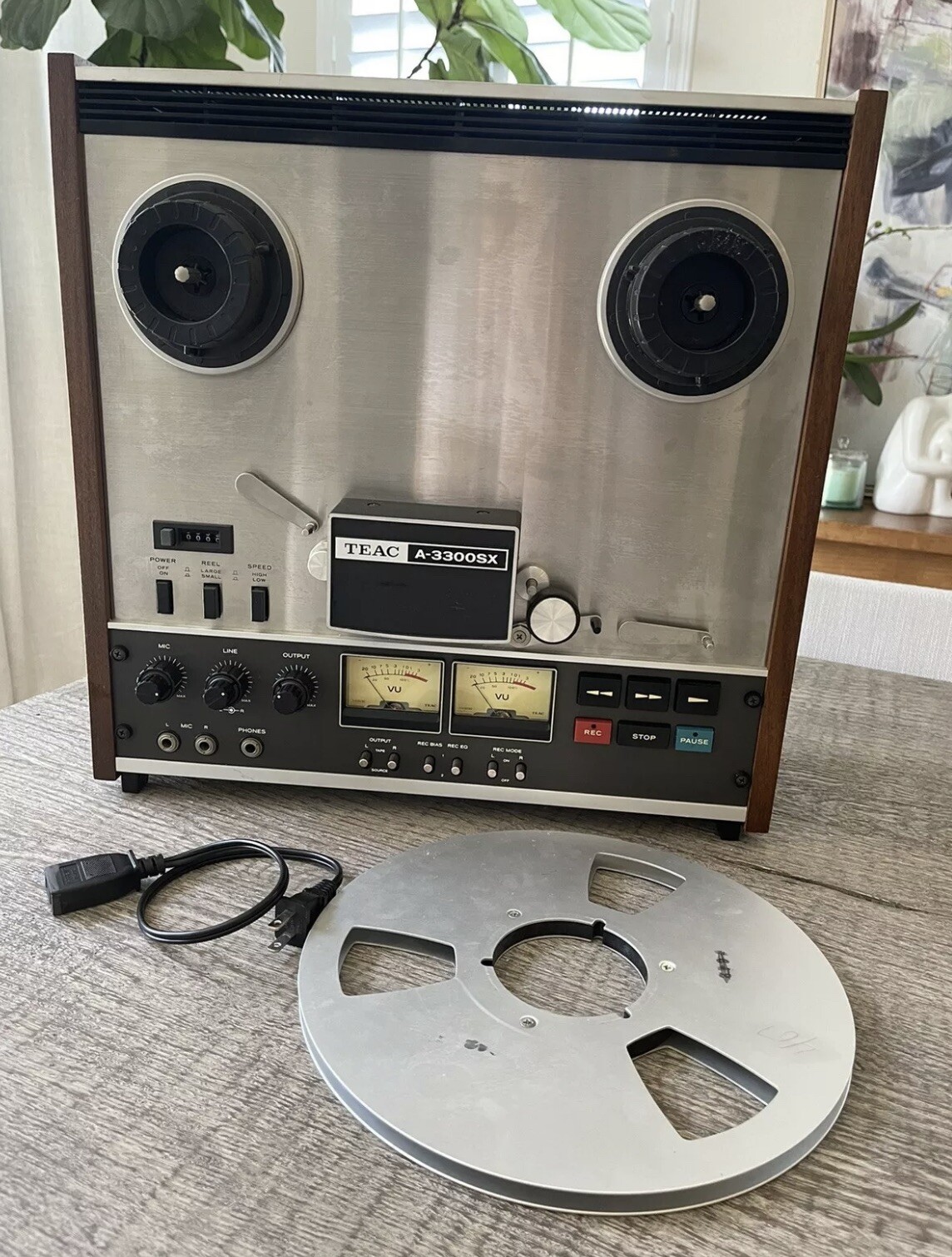
In the golden age of analog audio, when fidelity was measured in tape hiss and wow & flutter, Teac emerged as one of Japan’s most respected manufacturers of high-quality reel-to-reel tape recorders. Among their most celebrated models was the Teac A-3300SX, a professional-grade open-reel deck released in the mid-1970s that combined precision engineering, elegant design, and audiophile-grade performance. Though not as widely known today as some of its contemporaries from Nakamichi or Studer, the A-3300SX remains a favorite among vintage tape enthusiasts and collectors who appreciate its robust construction, musical character, and mechanical sophistication.
Historical Context
Introduced around 1975, the Teac A-3300SX arrived at a time when home audiophiles were increasingly seeking studio-quality sound reproduction. Reel-to-reel tape was still the pinnacle of consumer audio fidelity—offering wider frequency response, lower distortion, and greater dynamic range than even the best cassette decks of the era. Teac, already known for its reliable and well-engineered electronics, targeted the upper end of the market with the A-3300SX, positioning it as a semi-professional machine suitable for both serious home recording and critical listening.
Part of Teac’s “A-Series” line—known for its attention to detail and premium components—the A-3300SX was designed to compete with high-end offerings from brands like Sony, Tandberg, and Revox. It featured a dual-motor transport system, three-head configuration, and quartz-locked speed control, hallmarks of a truly high-fidelity machine. While Teac also produced more affordable models for casual users, the A-3300SX was built for those who demanded precision, durability, and sonic excellence.
Technical Specifications
| Feature | Specification |
| Year Introduced | 1975 |
| Format | 1/4" Open Reel |
| Tape Speeds | 7.5, 15 ips (standard), 3.75 ips (optional) |
| Heads | Three-motor, three-head system (erase, record, playback) |
| Motor System | Dual direct-drive motors (capstan and reel) |
| Speed Stability | Quartz-locked servo control |
| Frequency Response | 30Hz – 20kHz (±3dB at 15 ips, with 180µs EQ) |
| Signal-to-Noise Ratio | >60dB (Dolby B optional) |
| Total Harmonic Distortion | <1.5% at 0dB, 1kHz |
| Wow and Flutter | <0.15% (weighted, RMS) |
| Input/Output | Line In/Out (RCA), Mic In (RCA), Phones (1/4") |
| Equalization Settings | 180µs / 120µs (switchable for different tape types) |
| Recording Modes | Full-track stereo, half-track mono (switchable) |
| Build | Solid steel chassis, aluminum front panel, wood end cheeks |
| Dimensions | 440mm (W) × 145mm (H) × 380mm (D) |
| Weight | 14.5 kg (32 lbs) |
Sound Characteristics and Performance
The Teac A-3300SX is renowned for its warm, natural tonal balance and excellent imaging, hallmarks of well-designed analog tape decks from this era. When properly calibrated and maintained, it delivers a listening experience that many describe as “organic” and “engaging”—qualities that continue to attract audiophiles in the digital age.
At 15 inches per second (ips), the A-3300SX achieves its full potential, offering extended high-frequency response and tight bass control. The three-head design allows for true separation between record and playback functions, enabling accurate monitoring during recording sessions. This makes the A-3300SX not just a playback machine, but a capable tool for home recording—ideal for capturing vinyl rips, live performances, or studio sessions with analog charm.
The inclusion of quartz-locked speed control ensures exceptional speed stability, minimizing pitch variations and enhancing overall clarity. Combined with low wow and flutter, this results in a remarkably steady and accurate reproduction—critical for both music lovers and archivists.
While the deck supports Dolby B noise reduction (via an optional module or internal circuitry in later revisions), many purists prefer to run the machine in "flat" mode, embracing the gentle tape saturation and subtle harmonic richness that define its character.
Notable Features and Innovations
The A-3300SX stood out in its time due to several advanced features:
- Dual Direct-Drive Motors: Unlike belt-driven systems prone to wear and speed drift, the A-3300SX used direct-drive motors for both capstan and reel systems, ensuring consistent tension and precise tape handling.
- Three-Head Configuration: Independent erase, record, and playback heads allowed for superior editing and monitoring capabilities, a feature typically found in professional studio decks.
- Selectable Equalization: The ability to switch between 180µs and 120µs time constants made the deck compatible with a wide range of tape formulations (e.g., normal bias, high-bias tapes), enhancing flexibility.
- Solid Mechanical Construction: The heavy steel chassis, precision rollers, and tension arms minimized vibration and ensured long-term reliability.
- User-Friendly Layout: Large VU meters, clearly labeled controls, and intuitive transport buttons made operation straightforward, even for less experienced users.
Common Issues and Maintenance
Like all vintage reel-to-reel decks, the Teac A-3300SX requires regular maintenance to perform at its best. Common issues include:
- Deteriorated Rubber Components: Idler tires, pinch rollers, and drive belts (if present in certain sub-assemblies) can harden or crack over time. Replacement with modern equivalents is essential.
- Dirty or Worn Heads: Tape heads should be cleaned regularly with isopropyl alcohol and demagnetized to preserve frequency response and reduce noise.
- Capstan Shaft Buildup: Oxidation or residue on the capstan can cause speed irregularities. Light polishing and cleaning are recommended.
- Servo System Drift: The quartz-locked servo system is generally reliable, but aging capacitors or misaligned sensors can affect speed accuracy. A full calibration by a qualified technician is advised for optimal performance.
- Tape Path Misalignment: Over decades of use, guides can shift slightly, leading to azimuth errors. Periodic alignment ensures stereo imaging remains precise.
Given its complexity, it’s best to have an A-3300SX serviced by a specialist familiar with vintage tape equipment before regular use.
Current Market Value and Collectibility
The Teac A-3300SX is not as common on the vintage market as some of its peers, but it has developed a loyal following. Well-maintained units in good cosmetic and working condition typically sell for $600–$1,000, depending on accessories, original packaging, and provenance.
Its collectibility is driven by several factors:
- Strong build quality and longevity
- Excellent sound performance for both playback and recording
- Appeal to analog purists and tape archivists
- Relative rarity compared to mass-market models
Units with original manuals, remote controls (if applicable), and unmodified electronics command higher prices. As interest in analog formats grows—fueled by the vinyl revival and renewed appreciation for tape saturation—the A-3300SX is likely to appreciate in value among discerning collectors.
Conclusion and Legacy
The Teac A-3300SX represents the pinnacle of Teac’s open-reel engineering during the 1970s. More than just a tape deck, it is a statement of commitment to high-fidelity audio—a machine built for those who valued precision, durability, and musical truth.
While reel-to-reel technology has long since been eclipsed by digital formats, the A-3300SX endures as a testament to an era when audio equipment was crafted with care and designed to last. For today’s audiophiles, it offers a direct connection to the analog past, delivering a listening experience that is both technically impressive and emotionally resonant.
Whether used for archiving rare recordings, creating master tapes, or simply enjoying music with analog warmth, the Teac A-3300SX remains a worthy centerpiece in any vintage audio collection. For those who appreciate the art of magnetic tape, it’s not just a relic—it’s a living piece of audio history.
eBay Listings


As an eBay Partner, we earn from qualifying purchases. This helps support our independent vintage technology research.
Service Manuals & Schematics
Related Models
- Teac A-6700DX (1980)
- Teac A-105 (1975)
- Teac A-106 (1975)
- Teac A-170 (1976)
- Teac A-2300 (1978)
- Sony TC-2050SD (1978)
- Aiwa AD-F990 (1993)
- Kenwood KX-3060 (1982)
- Sony TC-2130A (1974)
- Sony TC-2220 (1972)