Teac A-303: The Understated Tuner That Defined 1970s Hi-Fi Simplicity
In the golden era of analog audio—when component separates ruled the living room and every audiophile proudly displayed their rack of gear—Teac quietly carved out a reputation for building reliable, well-engineered, and sonically satisfying equipment. Among their early offerings, the Teac A-303, introduced in 1974, stands as a modest yet significant piece of that legacy. Though not as flashy or powerful as the era’s high-wattage receivers, the A-303 occupies a special niche: a dedicated AM/FM stereo tuner designed for purists who valued clean signal paths, accurate tuning, and elegant industrial design.
While Teac would later become better known for their cassette decks and integrated receivers, the A-303 reflects a time when the company was expanding its footprint in the high-fidelity market, offering components that balanced performance with affordability. Positioned as a mid-tier tuner, the A-303 was often paired with preamps and power amps from Teac’s own lineup or used as a standalone upgrade in multi-brand systems. Its minimalist front panel, brushed aluminum finish, and precise tuning dial exude the understated elegance typical of Japanese audio gear from the 1970s.
Technical Specifications
Despite its compact size and relatively simple function, the Teac A-303 was engineered with care. It features a fully discrete FM front-end, a stereo decoder circuit, and a well-shielded chassis to minimize interference—a hallmark of Teac’s attention to detail even in budget-conscious models.
| Specification | Detail |
| Model | Teac A-303 |
| Year of Release | 1974 |
| Category | AM/FM Stereo Tuner |
| Tuning Bands | FM, AM (LW/MW) |
| FM Tuning Range | 87.5–108 MHz |
| AM Tuning Range | 150–1710 kHz (LW/MW) |
| Tuning Method | Analog dial with mechanical counter |
| IF Frequencies (FM/AM) | 10.7 MHz / 450 kHz |
| Output Level (FM) | 0.5 mV (100 mV input, 40 dB µV) |
| Output Impedance | 10 kΩ |
| Input Impedance (Ant.) | 75 Ω (FM), 300 Ω (AM) |
| Signal-to-Noise Ratio | 60 dB (typical) |
| Stereo Separation | >30 dB at 1 kHz |
| Power Requirements | 120V AC, 60 Hz, 15W |
| Dimensions (W×H×D) | 420 × 135 × 305 mm (16.5 × 5.3 × 12 in) |
| Weight | 5.8 kg (12.8 lbs) |
| Finish | Black or silver faceplate, brushed metal |
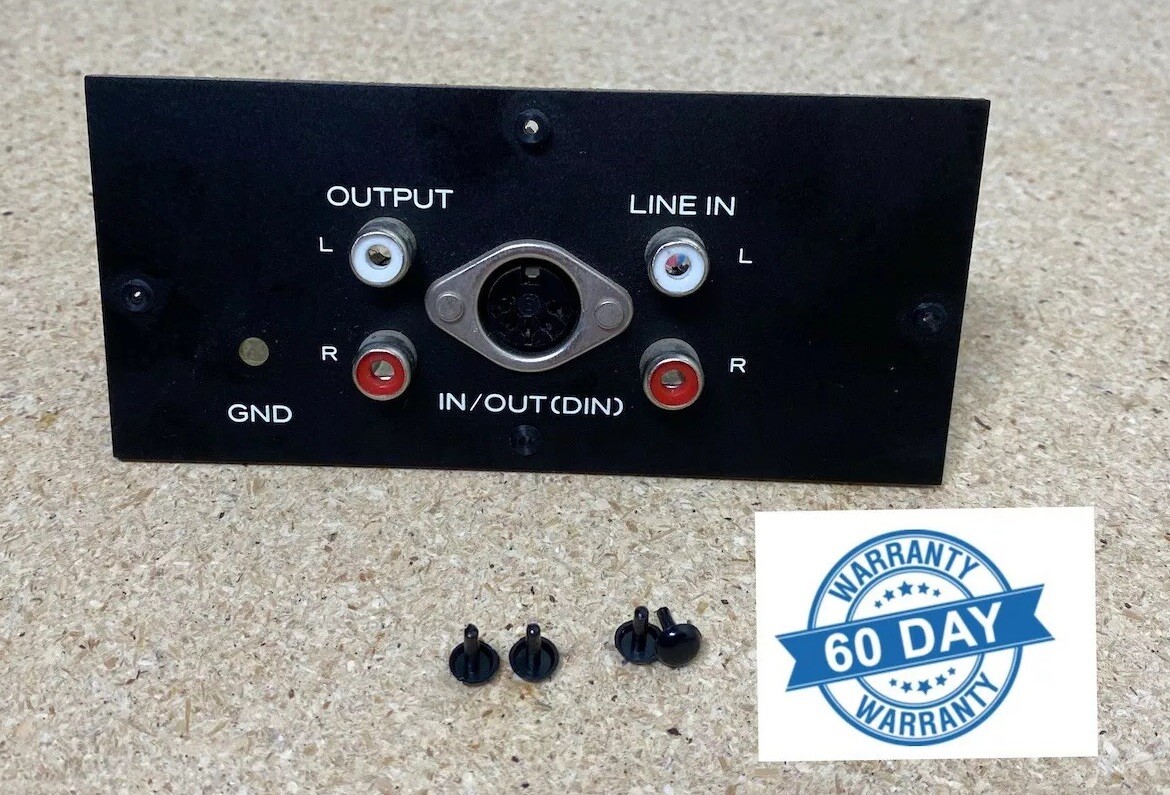
The A-303 lacks internal speakers or amplification—true to its role as a pure tuner—making it ideal for integration into a component-based stereo system. Its rear panel includes standard RCA audio outputs, AM and FM antenna terminals, and a ground post, ensuring compatibility with a wide range of preamps and receivers.
Sound Characteristics and Performance
The Teac A-303 delivers a sound profile that is best described as clean, balanced, and faithful to the broadcast source. While it doesn’t “color” the sound like some tube tuners of the era, its solid-state design ensures low distortion and excellent channel separation. FM reception is notably stable, with a sensitive tuner that captures weak signals without excessive noise—thanks to a well-tuned RF stage and effective AGC (Automatic Gain Control).
Stereo imaging is precise for its time, with a centered soundstage and clear differentiation between left and right channels. The stereo indicator lamp (a small red LED near the tuning dial) provides visual confirmation of lock, adding to the user experience. AM reception, while not as refined, is surprisingly listenable, with decent selectivity and reduced hum when properly grounded.
For vinyl and tape lovers who also enjoyed radio—whether for news, classical broadcasts, or FM rock stations—the A-303 offered a high-quality gateway to over-the-air audio without compromising system integrity.
Notable Features and Design
What sets the Teac A-303 apart from budget tuners of the 1970s is its attention to user experience and build quality:
- Mechanical Digital Tuning Indicator: Though not digital in the modern sense, the A-303 features a rotating mechanical counter that displays the tuned frequency with surprising accuracy—a feature more commonly found on higher-end models.
- Large Tuning Knob: Smooth and damped, it allows for fine-tuning, essential for pulling in weak FM stations without overshoot.
- Dual Antenna Inputs: Separate terminals for 75Ω coaxial (FM) and 300Ω twin-lead (AM) ensure optimal signal capture.
- Brushed Aluminum Faceplate: Available in black or silver, it gives the unit a premium look that blends well with other Teac or third-party components.
- Low-Noise Circuitry: Designed to minimize crosstalk and interference, especially important when placed near power amps or turntables.
The A-303 also reflects Teac’s philosophy of functional minimalism—no gimmicks, no excessive meters or flashing lights. Just a clear dial, a power switch, and band selector. It’s a tuner built for listening, not show.
Common Issues and Maintenance
Like any 50-year-old electronic device, the Teac A-303 can develop age-related issues, but most are manageable with basic maintenance:
- Tuning Dial Stiffness: Over time, the tuning capacitor can become sticky. A careful application of contact cleaner (non-residue type) can restore smooth operation.
- Capacitor Aging: Electrolytic capacitors in the power supply may dry out. Replacing them during a recapping service improves reliability and prevents potential damage.
- Oxidized Controls: The volume and balance pots (if present in later variants) or input selectors can develop crackling. Deoxit D5 is effective for cleaning.
- Antenna Terminal Corrosion: Especially on units stored in humid environments. Clean with isopropyl alcohol and inspect for broken connections.
- Weak FM Reception: Often due to degraded internal wiring or poor external antenna setup. Replacing internal signal cables with shielded wire can improve performance.
Given its relatively simple circuitry, the A-303 is a favorite among vintage audio restorers. Schematics are occasionally found in online archives, and parts are generally available due to the widespread use of standard components.
Current Market Value and Collectibility
The Teac A-303 is not a high-profile collector’s item like a Marantz 2270 or a Sansui G-3300, but it holds quiet appeal among vintage tuner enthusiasts and Teac collectors. In working condition, it typically sells for $75–$150, depending on finish, cosmetics, and functionality. Units with rare silver faceplates or original packaging may fetch slightly more.
Its value lies not in rarity, but in authenticity and usability. Unlike obsolete formats, FM radio is still widely broadcast, and many listeners appreciate the warmth and character of analog tuners. The A-303 remains a functional piece of audio history—perfect for restoring a period-correct 1970s system or adding a vintage tuner to a modern setup.
Conclusion and Legacy
The Teac A-303 may not have made headlines in its day, but it represents the quiet excellence of Japanese hi-fi engineering in the 1970s. It’s a no-nonsense tuner built for those who cared about signal purity, build quality, and seamless integration into a stereo system. While overshadowed by more powerful receivers, the A-303 exemplifies the modular philosophy that defined the era: each component does one thing well.
Today, it serves as a reminder that great audio doesn’t always come from flashy gear. Sometimes, it’s the simple, well-made pieces—like the Teac A-303—that deliver the most satisfaction. Whether you’re restoring a vintage rack or just want to experience FM radio the way it sounded in 1974, the A-303 is a worthy addition to any collection.
For Teac fans and analog purists alike, the A-303 is more than just a tuner—it’s a slice of sonic history, finely tuned.
eBay Listings



As an eBay Partner, we earn from qualifying purchases. This helps support our independent vintage technology research.
Related Models
- Teac A-107 (1975)
- Teac A-510 (1978)
- Teac V-909-RX (1978)
- Aiwa CS-250 (1978)
- Denon TU-1500RD (1995)
- Denon TU-280 (1976)
- Denon TU-501 (1977)
- Denon TU-550 (1978)
- Denon TU-750S (1975)
- Luxman R-1030 (1979)