Teac A-150: The Understated Classic of 1970s Preamp Design
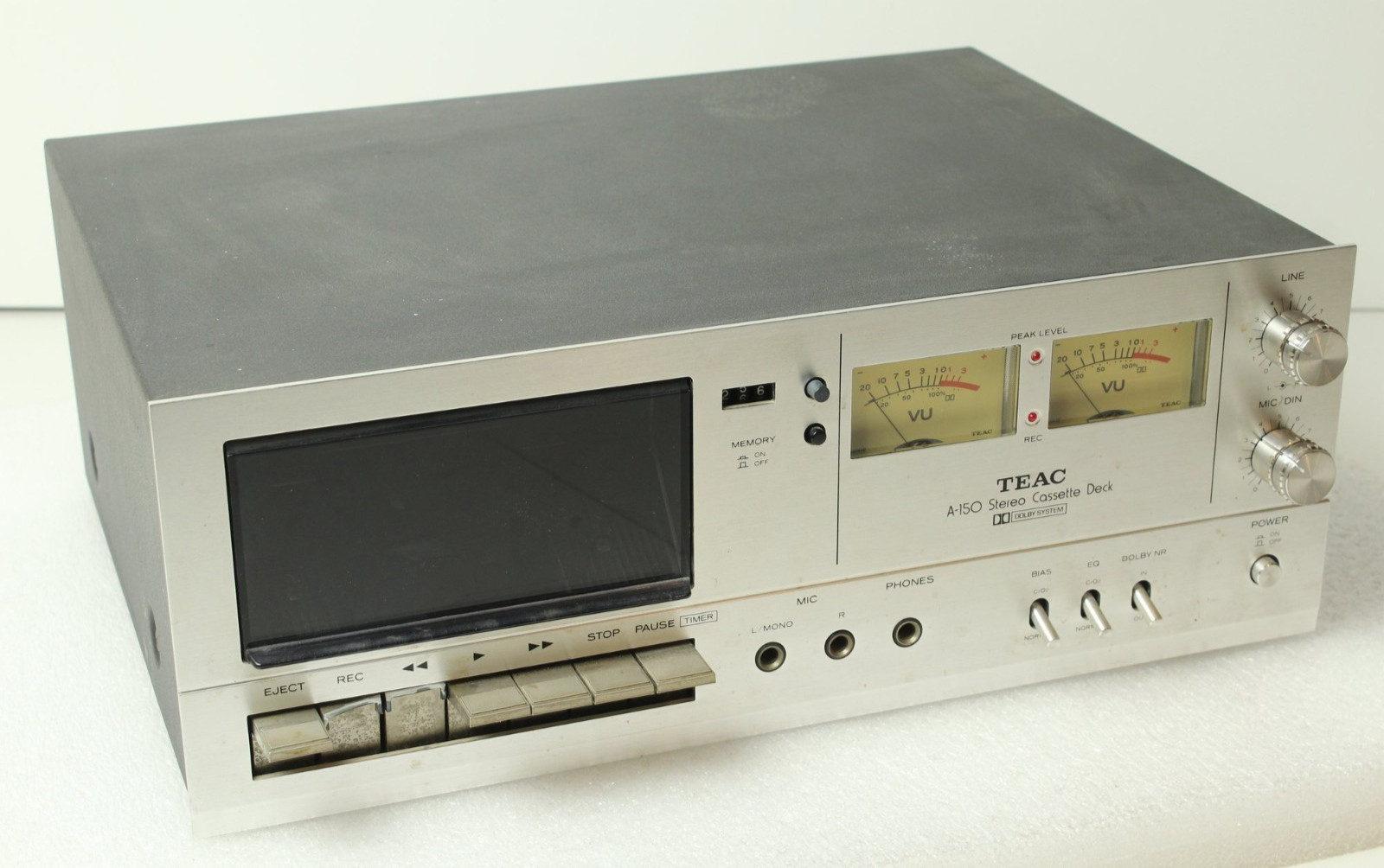
In the golden era of high-fidelity audio, when Japanese manufacturers like Pioneer, Denon, and Sansui were capturing global attention, Teac quietly carved out a reputation for precision engineering and understated elegance. The Teac A-150, introduced around 1975, stands as a testament to that philosophy—a compact, no-frills stereo preamplifier that prioritized signal integrity, build quality, and musicality over flashy features or excessive power. Though not as widely celebrated as some of its contemporaries, the A-150 has earned a loyal following among vintage audio enthusiasts who appreciate its clean design, reliable performance, and warm, natural sound signature.
Part of Teac’s broader push into the high-end consumer audio market during the mid-1970s, the A-150 was positioned as a companion piece to power amplifiers and integrated systems, offering precise volume control, source selection, and tone management. Unlike many all-in-one receivers of the era, the A-150 focused solely on preamplification duties, allowing audiophiles to pair it with discrete power amplifiers for a modular, high-performance setup. This separation of functions was a hallmark of serious audio systems at the time, and the A-150 delivered on that promise with quiet authority.
Technical Specifications
| Specification | Detail |
| Model | Teac A-150 |
| Year Introduced | 1975 |
| Manufacturer | TEAC Corporation, Japan |
| Type | Stereo Preamplifier |
| Inputs | 3 Line-level (RCA), 1 Phono (MM) |
| Outputs | 1 Main Out (RCA), 1 Tape Out (RCA) |
| Frequency Response | 20Hz – 20kHz (±1dB) |
| Total Harmonic Distortion | <0.05% (1kHz, rated output) |
| Signal-to-Noise Ratio | >80dB (A-weighted) |
| Tone Controls | Bass (±12dB at 100Hz), Treble (±12dB at 10kHz) |
| Volume Control | Dual-gang potentiometer, logarithmic taper |
| Power Supply | Internal transformer, dual rail (±18V) |
| Power Consumption | 25W |
| Dimensions (W×H×D) | 420 × 145 × 310 mm (16.5 × 5.7 × 12.2 in) |
| Weight | 6.8 kg (15 lbs) |
| Finish | Black or silver metallic faceplate |
Sound Characteristics and Performance
The Teac A-150 is not a preamplifier that shouts for attention—it whispers with clarity and composure. Its sonic signature is best described as balanced, transparent, and slightly warm, avoiding the clinical sterility that some solid-state designs of the era exhibited. Thanks to its high-quality internal components and well-regulated power supply, the A-150 delivers a low-noise floor and excellent channel separation, making it ideal for revealing subtle details in recordings.
The phono stage, designed for moving magnet (MM) cartridges, is particularly noteworthy. With a well-tuned RIAA equalization curve and low gain variance, it brings out the richness of vinyl without adding harshness or coloration. Jazz, classical, and acoustic recordings shine through the A-150, with a smooth midrange and extended highs that never become fatiguing.
Line inputs are equally well-implemented, with minimal crosstalk and excellent impedance matching. Whether driving a pair of high-sensitivity tube power amps or a modern solid-state amplifier, the A-150 maintains a stable, controlled signal path. The dual-gang volume potentiometer ensures smooth, precise level adjustments, and the logarithmic taper mimics the natural response of human hearing.
Notable Features and Innovations
While the A-150 may appear minimalist at first glance, it incorporates several thoughtful design elements that reflect Teac’s engineering expertise:
- Discrete Circuitry: Unlike budget models that relied on integrated circuits, the A-150 uses discrete transistor-based amplification stages, contributing to its clean, dynamic sound.
- Dual Rail Power Supply: The internal ±18V dual power supply reduces hum and improves transient response, a feature typically found in higher-end preamps.
- Tone Defeat Switch: A front-panel toggle allows users to bypass the tone controls entirely, ensuring a pure, uncolored signal path when desired—a rare and welcome feature in consumer-grade preamps of the 1970s.
- Tape Monitor Function: The A-150 includes a tape loop with a monitor switch, allowing users to record from any source and instantly switch back to playback without changing inputs.
- Solid Build Quality: Housed in a rigid steel chassis with a brushed aluminum front panel, the A-150 feels substantial and well-damped. The knobs are large, knurled, and offer satisfying tactile feedback.
Common Issues and Maintenance
Like any vintage electronic equipment, the Teac A-150 benefits from periodic maintenance to ensure optimal performance:
- Capacitor Aging: The electrolytic capacitors in the power supply and signal path may degrade over time, leading to increased hum, channel imbalance, or reduced bass response. Replacing these with modern equivalents is a common and recommended upgrade.
- Potentiometer Noise: The volume and tone pots can develop crackling or channel dropouts due to oxidation. Cleaning with contact cleaner (e.g., DeoxIT) often resolves minor issues, but replacement with high-quality audio taper pots may be necessary in heavily used units.
- Dust and Oxidation: Internal dust accumulation and oxidation on switches can affect performance. A thorough cleaning of selector switches and jacks is advisable during servicing.
- Fuse Check: The internal fuse should be inspected for continuity, especially if the unit fails to power on.
Despite these age-related concerns, the A-150 is generally reliable. Its conservative design and high-quality components mean that many units still function perfectly today with minimal intervention.
Current Market Value and Collectibility
The Teac A-150 is not a high-profile collector’s item like the Marantz 2270 or Sansui AU-717, but it holds steady appeal among vintage audio enthusiasts who value functionality and sound quality over brand hype. In working condition, the A-150 typically sells for $120–$200, depending on cosmetic condition, included accessories, and whether it has been recently serviced.
Fully restored units with replaced capacitors and cleaned controls may command slightly higher prices, especially when paired with matching Teac power amplifiers like the A-200 or A-300. Its compact size and understated aesthetics also make it a favorite for minimalist or retro-modern audio setups.
While not rare, original, unmodified A-150 units are becoming harder to find, particularly in silver finish. Collectors appreciate its role in Teac’s transition from tape recorders to full-fledged hi-fi systems, marking a pivotal moment in the company’s history.
Conclusion and Legacy
The Teac A-150 may not have the fame of a McIntosh or the cult status of a Yamaha CR-800, but it represents the quiet excellence of 1970s Japanese audio engineering. It’s a preamplifier built for those who care more about music than marketing—solid, musical, and dependable.
In an age where vintage gear is often judged by its visual flair or brand pedigree, the A-150 reminds us that true quality lies in the listening experience. Paired with the right power amp and speakers, it delivers a warm, engaging sound that continues to impress decades later.
For the discerning audiophile or the curious collector, the Teac A-150 is more than just a footnote in audio history—it’s a hidden gem waiting to be rediscovered.
eBay Listings


As an eBay Partner, we earn from qualifying purchases. This helps support our independent vintage technology research.
Related Models
- Teac A-103 (1975)
- Teac A-210 (1975)
- Teac A-2300S (Early) (1978)
- Teac A-250 (1975)
- Teac A-4010S (1978)
- Luxman L-530 (1975)
- Luxman R-404 (1975)
- Luxman RV-371 (1975)
- Luxman SQ-38U (1975)
- Luxman T-14 (1972)