Teac A-1340: The Quiet Master of Reel-to-Reel Fidelity
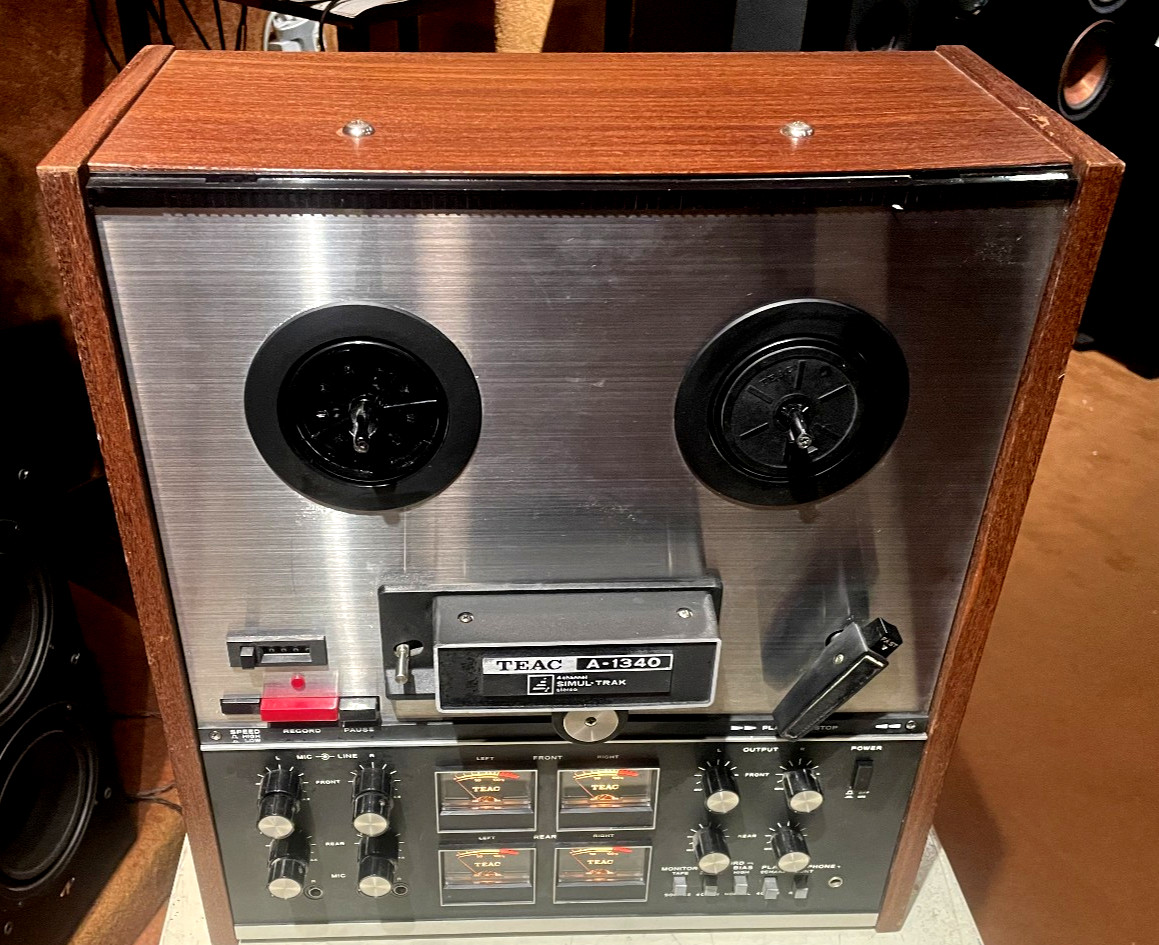
In the late 1970s, when cassette tapes were gaining popularity for portability and convenience, Teac stood apart by continuing to refine the art of open-reel analog recording. The Teac A-1340, introduced in 1977, is a testament to that commitment—a high-performance, 1/4-inch 3-motor reel-to-reel tape recorder designed for serious audiophiles, home recording enthusiasts, and semi-professional users who demanded studio-grade sound without the studio price tag.
Though not as widely celebrated as some of its contemporaries from Studer or Revox, the A-1340 quietly earned a reputation among those in the know for its precision engineering, robust build quality, and exceptional sonic transparency. It represents the peak of Japanese reel-to-reel craftsmanship during an era when analog tape was still the gold standard for high-fidelity audio reproduction.
Technical Specifications
The Teac A-1340 was engineered to deliver consistent, high-resolution playback and recording across multiple tape speeds and formats. Its dual-capstan, 3-motor design ensured exceptional tape stability, minimizing wow and flutter—critical for accurate audio reproduction.
| Specification | Detail |
| Format | 1/4-inch open-reel (2-track, 1/2-track mono capable) |
| Tape Speeds | 7.5, 15, and 30 inches per second (ips) |
| Tracks | 2-track stereo or 1-track mono |
| Motors | 3 DC motors (reel, capstan, supply) |
| Capstan System | Dual capstan with rubber pinch rollers |
| Head Configuration | Separate record, playback, and erase heads |
| Equalization | 120 µs (NAB), 180 µs (IEC) selectable |
| Input/Output | Line in/out (RCA), mic in (RCA and 1/4") |
| Frequency Response | 30Hz – 20kHz @ 15 ips (typical) |
| Signal-to-Noise Ratio | >60 dB (with Dolby B) |
| Wow and Flutter | <0.2% WRMS (15 ips) |
| Dimensions | 440 mm (W) × 145 mm (H) × 330 mm (D) |
| Weight | 12.5 kg (approx. 27.5 lbs) |
| Power | 120V AC, 60 Hz (NTSC region models) |
The A-1340 supported both NAB and IEC equalization curves, allowing users to properly play back tapes recorded on a variety of machines worldwide. This flexibility made it a favorite among collectors and archivists. The inclusion of selectable bias and equalization settings further enhanced its versatility for different tape formulations (e.g., normal, high-bias chrome).
Sound Characteristics and Performance
The sonic signature of the Teac A-1340 is best described as detailed, warm, and remarkably natural. Unlike some reel-to-reel decks that lean toward clinical precision, the A-1340 strikes a balance between clarity and musicality, making it ideal for both music listening and critical recording.
At 15 ips, the machine delivers a frequency response that extends well beyond the limits of consumer cassette decks of the era. The low end is tight and controlled, the midrange is transparent, and the highs are smooth without harshness—thanks in part to the high-quality playback head and precision tape guidance system. When recording at 30 ips with high-quality tape stock (such as Ampex 456 or Sony UX), the A-1340 can produce results that rival professional studio recorders.
Its dual-capstan transport system is a standout feature, virtually eliminating tape slippage and ensuring consistent head-to-tape contact. This results in lower modulation noise and improved high-frequency response. Combined with low wow and flutter, the A-1340 offers one of the most stable and accurate analog playback experiences available in a consumer-grade deck.
Notable Features and Innovations
The A-1340 was packed with features that were advanced for its time, especially in the consumer market:
- 3-Motor Direct Drive System: Each reel and the capstan are driven by independent motors, allowing for faster start-up, precise tension control, and smoother tape handling.
- Separate Record and Playback Heads: This allows for optimal alignment of each head for its specific task, improving fidelity and enabling real-time monitoring during recording.
- Selectable Equalization and Bias: Users could fine-tune the machine for different tape types (normal, chrome, metal), maximizing performance and minimizing distortion.
- Dolby B Noise Reduction: While not as advanced as Dolby C or professional-grade systems, Dolby B helped reduce tape hiss, especially on lower-speed recordings.
- Front-Panel VU Meters: Large, easy-to-read analog VU meters provide accurate level monitoring during recording, a feature often missing on lower-end models.
- Auto-Reverse Play (in some variants): While not universal, certain versions of the A-1340 offered auto-reverse functionality, allowing uninterrupted playback of both sides of a reel.
The front panel is cleanly laid out with tactile knobs and switches, reflecting Teac’s user-centric design philosophy. The transport controls are responsive, and the tape path is easily accessible for cleaning and maintenance.
Common Issues and Maintenance
Like all vintage reel-to-reel machines, the Teac A-1340 requires regular maintenance to perform at its best. Over time, rubber components such as pinch rollers and drive belts can harden or degrade, leading to speed instability or tape slippage. These should be inspected and replaced as needed—ideally by a technician experienced with analog tape decks.
The heads (record, playback, erase) are made of durable permalloy but can accumulate oxide buildup. Regular cleaning with isopropyl alcohol and a lint-free swab is essential. Demagnetizing the heads and tape path every few months is also recommended to preserve frequency response and reduce noise.
Another common issue is misalignment of the tape heads, which can occur due to physical shock or wear. Misalignment leads to loss of high frequencies and stereo imaging. A professional alignment using a calibration tape is necessary to restore optimal performance.
Lubrication of the mechanical transport system should be done sparingly and with the correct type of grease—over-lubrication can attract dust and debris, causing long-term damage.
Current Market Value and Collectibility
The Teac A-1340 is not as widely collected as some of its European counterparts, but it has a loyal following among reel-to-reel enthusiasts and analog purists. In good working condition, prices typically range from $400 to $800, depending on completeness, cosmetic condition, and whether it has been recently serviced.
Fully restored units with new belts, cleaned and aligned heads, and demagnetized transports command the higher end of the market. Machines still in original packaging with manuals and accessories are rare and may fetch premium prices from collectors.
While not yet a "blue-chip" vintage audio item like a Revox B77 or a Studer A80, the A-1340 is increasingly recognized for its build quality and sonic excellence. As interest in analog tape grows—driven by musicians, archivists, and audiophiles seeking authentic analog warmth—the A-1340 is poised for greater appreciation.
Conclusion and Legacy
The Teac A-1340 stands as a quiet achiever in the world of vintage audio. It may not have the flashy branding of some competitors, but beneath its understated design lies a machine of exceptional engineering and musicality. For those who value precision, durability, and true high-fidelity sound, the A-1340 delivers in spades.
In an age when digital dominates, the A-1340 reminds us of the tactile joy and sonic richness of analog tape. Whether used for transferring old recordings, mastering new ones, or simply enjoying music the way it was meant to be heard, the Teac A-1340 remains a worthy centerpiece in any vintage audio setup.
For the discerning collector or the passionate audiophile, the A-1340 isn’t just a relic—it’s a living piece of audio history, still spinning tape with grace and authority, more than 45 years after its debut.
eBay Listings


As an eBay Partner, we earn from qualifying purchases. This helps support our independent vintage technology research.
Related Models
- Teac A-2340R (1975)
- Teac V-30 (1975)
- Teac W-416 (1975)
- Teac A-108-SYNC (1978)
- Teac A-110 (1978)
- Akai AM-2850 (1975)
- Akai AP-206 (1975)
- Nakamichi BX-1 (1985)
- Acoustic Research research-ar-17 (1978)
- Acoustic Research AR-19 (1994)