Teac 3340S (circa 1976–1978)
A four-channel, Simul-Sync quarter-inch deck that put multitrack overdubbing within reach of the home recordist, and weighed nearly fifty pounds doing it.
Overview
The Teac 3340S is a semi-professional tape deck built in Japan. It does four-channel, stereophonic and monophonic recording and playback, and Simul-Sync is its headline feature. It runs quarter-inch oxide-coated tape at two speeds, 15 and 7½ ips, and takes reels up to 10½ inches. A 10½-inch reel at 15 ips gives you real session time, not a demo's worth. The original price, according to surviving dealer documentation, was $1,200.
Teac's own advertising leaned hard on affordability. A 1977 campaign ran in both Audio (July 1977, p.122) and High Fidelity (July 1977, p.12). It framed the A-3340S as the deck for anyone who had "ever dreamed of owning" a multitrack machine, pitched it at overdub sessions, demos and experimentation, and promised it was now priced lower than before. Studio Sound (March 1978, p.67) went further. It called the four-channel A-3340S far more than the world's most versatile quadraphonic tape deck and described it as a professional recording studio engineered into a 50-pound package at a fraction of the cost.
The 50-pound figure is close to the mark. The deck's net weight is listed at approximately 50 lbs, and the three-motor transport underneath is the reason. Two eddy-current motors handle reel drive. A hysteresis synchronous capstan motor sets tape speed. It is the same basic recipe Teac used across its semi-pro line, and it is why these machines, when maintained, still hold speed.
Key Features
Simul-Sync Overdubbing
Simul-Sync is the whole point of the 3340S. It lets the record head double as a playback head during recording, so a performer can monitor an already-recorded track off the tape while laying down a new one in sync with it. Without it, four-track recording is a one-pass affair. With it, the deck becomes a real overdubbing tool. Teac built the A-3340S around the feature, and the period advertising sold it that way, as an "imaginative tool for overdub sessions."
Quarter-Inch Tape at 15 and 7½ ips
The transport runs standard quarter-inch oxide-coated tape at 15 ips and 7½ ips. The fast speed is where the deck earns its keep. 15 ips is the speed owners consistently single out, and it is the setting the published frequency response figures are quoted against. The 7½ ips position is the economy setting, useful for long captures and for playing back material tracked elsewhere.
Three-Motor Transport and 10½-Inch Reels
Two reel motors plus a dedicated capstan motor, and reel capacity up to 10½ inches. The three-motor arrangement is what separates this class of deck from the single-motor consumer machines. Reel tension is managed by dedicated motors rather than a belt-and-idler compromise, which is why the service literature describes these transports as requiring a minimum of mechanical maintenance or adjustment. Teac's service documentation notes that readjustment should only be required after long periods of operation or component replacement.
Permalux Heads
The deck uses Teac's Permalux heads, promoted for extended frequency response, low distortion and resistance to wear. Teac later issued a service bulletin, dated January 19, 1976, announcing that the heads for the 3340S had been changed to a new type. Keep that in mind when buying replacement parts, because the old and new part numbers do not match and the wiring is the only thing carried over unchanged.
Specifications in Context
The published numbers are respectable for a semi-pro machine of the period, though the sources disagree on several of them.
Frequency response at 15 ips is most commonly quoted as 25 Hz to 24 kHz, a figure that appears across multiple spec listings. Other sources give 40 Hz to 22 kHz, 30 Hz to 15 kHz, and 40 Hz to 28 kHz. Given the spread, the deck's response at 15 ips reaches somewhere in the low-to-mid 20 kHz range at the top and extends well below audibility at the bottom. Treat any single number as approximate.
Wow and flutter is quoted at 0.15% at 15 ips (RMS), which is a good figure and consistent with the hysteresis-synchronous capstan motor. Signal-to-noise ratio is where the sources split hardest. 55 dB appears in the most detailed spec listings, with 58 dB and 60 dB also cited. Total harmonic distortion is listed at 1%. Crosstalk is given as 35 dB. Line input sensitivity is 100 mV, microphone input 0.25 mV.
None of these are laboratory-verified figures from an independent test report. No long-form lab review of the 3340S has surfaced in the material reviewed. They are manufacturer and dealer specifications.
Historical Context
The 3340S sits in Teac's 1970s multitrack lineup as a semi-professional four-channel deck, sold as a quadraphonic machine that could also work as a stereo or mono recorder. The company's advertising positioned it as the affordable entry into multitrack ownership, and the $1,200 original price fits that. It was serious money, but well below what a professional four-track machine cost at the time.
Teac's broader reputation in this era rested partly on the company's history of recording major events, including the 1962 Olympics, for both audio and video. That backstory was part of the brand's pitch to home recordists who wanted studio-adjacent gear without a studio budget.
Documentation for the 3340S specifically is thinner than for some of its stablemates. The service manual survives and covers general description, specifications, head alignment, mechanical and electrical adjustment, and troubleshooting, but no independent lab test report or detailed review has turned up. The deck is well known among tape enthusiasts. It is not well documented in print.
Collectibility & Value
Asking prices on the used market are all over the map. Recent eBay listings show a "Vintage TEAC 3340S Reel to Reel 4 Channel Tape Player/Record" at $900, a "TEAC A-3340S 4 Channel Simul-Sync Reel To Reel Tape Deck" at $950, and another example at $650. A listing for the variant designation "Teac A3340SL," described as rare, with 3.75 and 7 speeds, was asking $2,800. A broader marketplace range has been cited at $404.10 to $2,200.00.
Sort out the model designations before you buy. "3340S," "A-3340S" and "A3340SL" appear in listings interchangeably, and the sources do not establish whether these are the same machine or distinct variants. The A3340SL listing, with its different speed set, suggests at least one of them is not the same deck.
Condition matters a lot. Sellers call out original wood side panels in near-perfect condition as a value point. Units are also being parted out, with faceplates and other components showing up as separate listings, which suggests the supply of complete, working machines is finite and shrinking. The service manual includes troubleshooting guidance and covers playback of Dolby-encoded tapes, which helps if you intend to maintain one yourself.
Owner reports on working examples are positive. One seller described the sound quality as outstanding, particularly at 15 ips. A YouTube repair and demonstration video exists for the model. But no common-failure list, belt-change procedure, or capacitor-replacement guidance surfaced in the material reviewed, so if you are buying one, budget for a technician.
eBay Listings

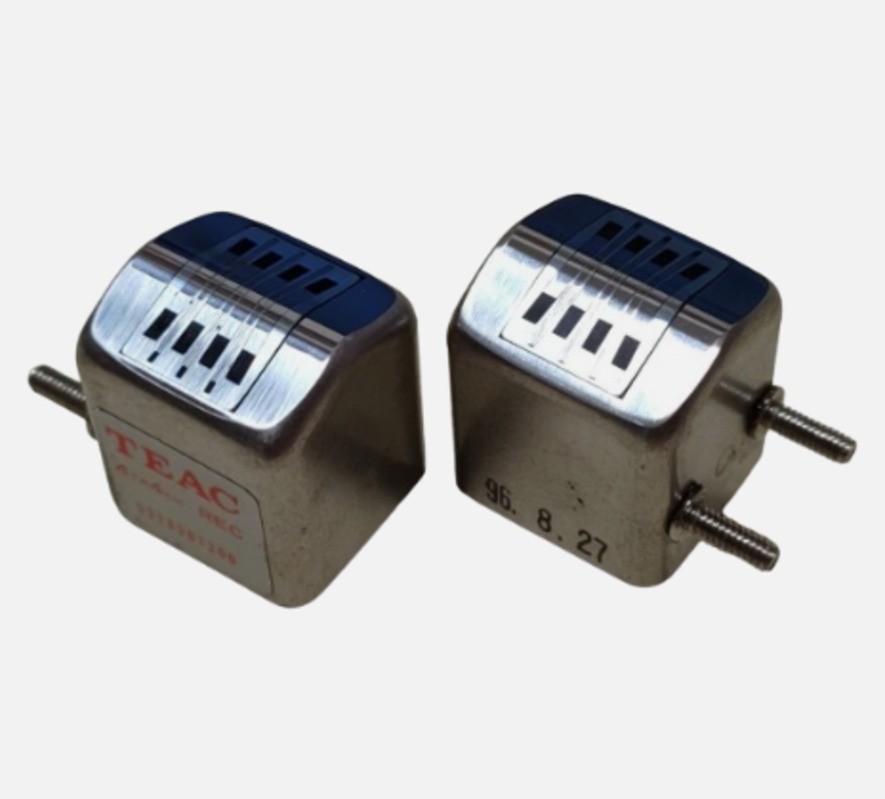


As an eBay Partner, we earn from qualifying purchases. This helps support our independent vintage technology research.
Related Models
- Teac X-1000 (1981–1986)
- Teac X-1000M (circa 1982)
- Teac X-1000R (1981–1986)
- Teac X-10R
- Teac X-2000
- Braun TG-1000 (1970–1975)
- Teac X-20R (1978)
- Teac X-300 (circa 1983)
- Akai GX-270D (1978)
- Braun TG-1000-4 (1968)