Tascam MSR-16
A half-inch sixteen-track that put a full studio on reels you could actually afford.
Overview
The key number is half an inch. Sixteen tracks on half-inch tape leaves each track a sliver barely wider than a fingernail. Getting usable audio out of that took heavy noise reduction and thirty years of multitrack manufacturing experience at Tascam. The MSR-16 runs 1/2-inch tape on 10-1/2 inch reels at 15 and 7-1/2 inches per second. The two speeds made it flexible for tracking and for work where tape economy mattered. Tascam's own full-page DB Magazine ad described the machine as everything the company had learned about multitrack recorders - "at least thirty years' worth," the copy claimed - boiled down into a half-inch format.
The format worked because of dbx. The MSR-16 has a built-in dbx noise reduction system split into two groups, channels 1-8 and 9-16, each with its own on/off switch and LED. Engage it and you get roughly 30 dB of noise reduction plus about 10 dB of additional headroom from the tape saturation increase. Together they push the dynamic range past 100 dB. That figure is what made engineers take a half-inch sixteen seriously, since it competes with formats that use considerably more tape. The catch is the same as with any dbx setup: the encoding is baked into the recording. Play a dbx-encoded tape back without decoding and it sounds squashed and unnatural.
Len Feldman's lab report in DB-Magazine (May 1989, p.50) lays out the basic design: a 16-track, 16-channel recorder using 1/2-inch tape on 10-1/2 inch reels, with an 8-bit microcomputer handling transport control. The same report notes the sync lock feature, which lets time code or FSK signals be recorded and played back without interruption. That is what you need for locking the deck to video or to another machine. The digital fluorescent tape counter is driven by a tachometer rather than by reel rotation guesswork.
Transport logic runs on an 8-bit microcomputer, the HD63701YOP, which handles all tape motion. A second micro, the µPD7554CS-100, runs the audio electronics. It decodes serial data from the control circuits and switches the monitor outputs, record bias, erase current, and the dbx system on and off. Gapless punch-in and punch-out timing depends on those record bias, record relay, erase current, and erase relay signals working together. There is also a sync crosstalk cancel circuit. It activates when one channel is recording and others are playing back, and it suppresses record signal leakage onto adjacent playback tracks.
Punching in is where the MSR-16 shows its professional intentions. The RHSL (Rehearsal) button runs the first stage of an automatic punch-in. The machine memorizes preroll, punch-in, and punch-out points from the counter. In Rehearsal mode it switches the outputs of record-ready tracks between tape and source at those points without recording anything, so you hear what the punch will sound like before you commit. Once the points are set, AUTO IN/OUT arms the real thing. Pressing PLAY or the RC-30P footswitch then runs the full preroll, punch-in, punch-out, and post-roll sequence. The auto locator section adds MEMO 1 and 2, CHECK, LOC 1 and 2, REPEAT, RTZ, and AUTO PLAY.
Speed control goes beyond the two fixed speeds. The Speed Mode selector has FIX and VARI positions. FIX locks to 7.5 or 15 ips as chosen by the tape speed switch, and a green LED shows it. VARI hands speed control to the pitch control, which gives stepless plus or minus 15 percent variation of the capstan motor in both record and play, shown by a red LED. The display switch toggles the digital counter between tape run time and percentage of speed change. The manual is honest about the tradeoffs. Speed the tape up to trim a long thirty-second spot and the pitch rises with it. If you record at the extreme of the pitch control's range, you can't correct further in that direction on playback. The manual also recommends running the machine in play for several seconds to let speed stabilize after a large change, and checking pitch with a short playback before recording again.
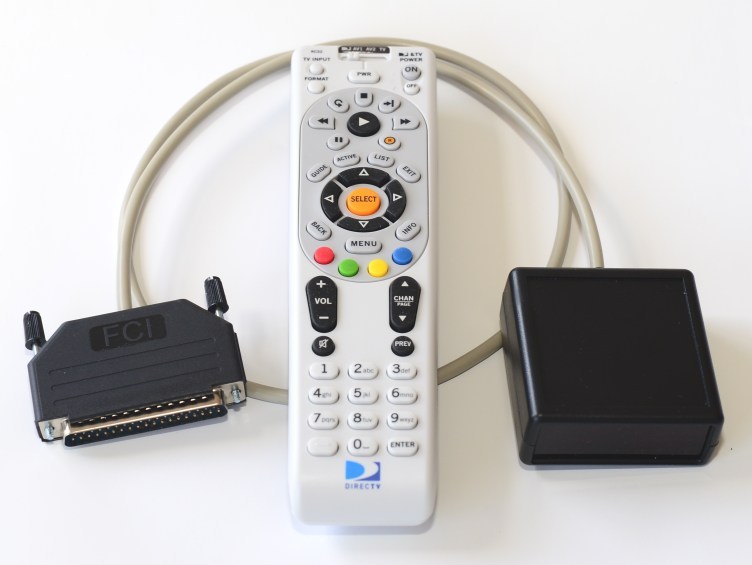
External control comes through two rear-panel ports. ACCESSORY 1 is a 37-pin D-sub parallel interface for SMPTE synchronizers and controllers. ACCESSORY 2 is a 15-pin D-sub serial port complying with RS-232C, for MIDI tape synchronizers or computers. When the capstan is under external control, the EXT LED lights steady yellow. If the control signal or the 9.6 kHz reference is interrupted, EXT flashes and FIX turns on solid, so the machine falls back to fixed speed rather than drifting. The 9.6 kHz reference is derived by dividing a crystal oscillator signal by 512.
I/O is all RCA, unbalanced, on the rear connector panel. The outputs carry either the tape signal or the source input, depending on front panel switching. There are no output level controls. Output level matches input level at -10 dBV (0.316 V), with an output impedance of 100 ohms. If your mixer's outputs conform to -10 dBV, 0 VU on the mixer reads 0 dB on the MSR-16's meters. The manual is blunt about mismatches: if the readings don't agree, trust the recorder. The peak level meters cover -20 dB to +8 dB. The AUTO INPUT button automatically switches record-ready track outputs to input during rewind, fast forward, or stop, so the control room can hear the talent through the tape monitor without touching the mixer.
Two features help with the ends of a reel. LOAD sets a memory point, pressed together with RESET, that stops the tape in rewind or fast forward. The point holds even if the counter is reset elsewhere. There is only one load point, not two, and the manual suggests setting it about thirty seconds from the beginning or end of the reel to allow for overshoot. The SPOOL mode gives a uniform tape pack. There are also various edit and spot erase functions. The head gate pushes down to give full access to the head block for threading and maintenance.
Installation is straightforward, but the manual is specific about environment. Nominal temperature is 5 to 35 degrees C, relative humidity is 30 to 90 percent non-condensing, and there should be no strong magnetic fields nearby. Leave at least four inches of clearance behind the rear fan grid for cooling airflow. The MSR-16 mounts in a standard EIA 19-inch rack such as the Tascam CS-607B. Before mounting, check that the rack isn't warped, because screwing the deck to a bent surface can misalign the transport.
For connections, the manual recommends shielded cables, as short as practical, low-capacitance, with quality connectors. Less shielding means more radio frequency interference, hum, and noise. On a machine relying on dbx to keep a half-inch sixteen-track quiet, noise getting in before the encode stage is a bad place to save money. Voltage conversion is possible only on general export models, not on units sold in the USA, Canada, UK, Australia, or Europe.
Sixteen tracks on half-inch tape is not the widest format, and dbx is not a transparent process. It's an encode/decode system that you either commit to or avoid entirely on a given project. But the package is a two-speed transport, a real autolocator, gapless punch-in with rehearsal, SMPTE and RS-232 synchronization ports, and over 100 dB of dynamic range with dbx engaged. That put multitrack production within reach of project studios that couldn't justify a wider format.
eBay Listings



As an eBay Partner, we earn from qualifying purchases. This helps support our independent vintage technology research.