Tannoy DU386 / K3828 (15") – The Workhorse of British Public Address
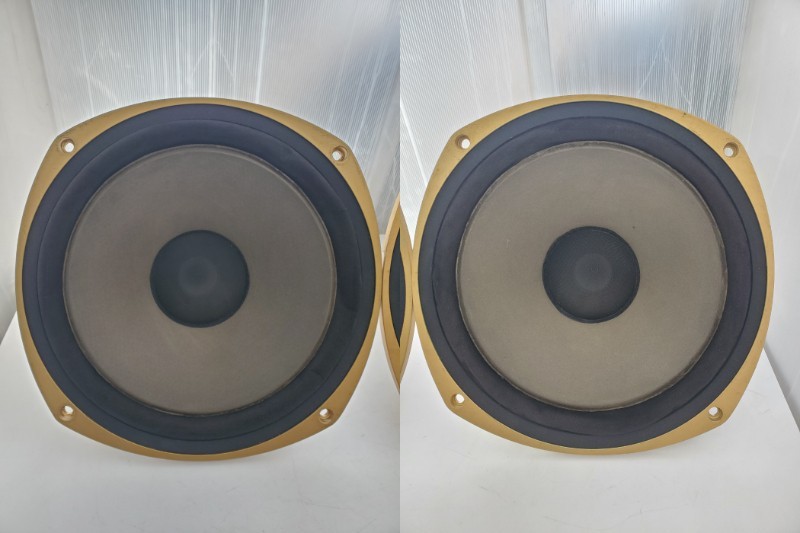
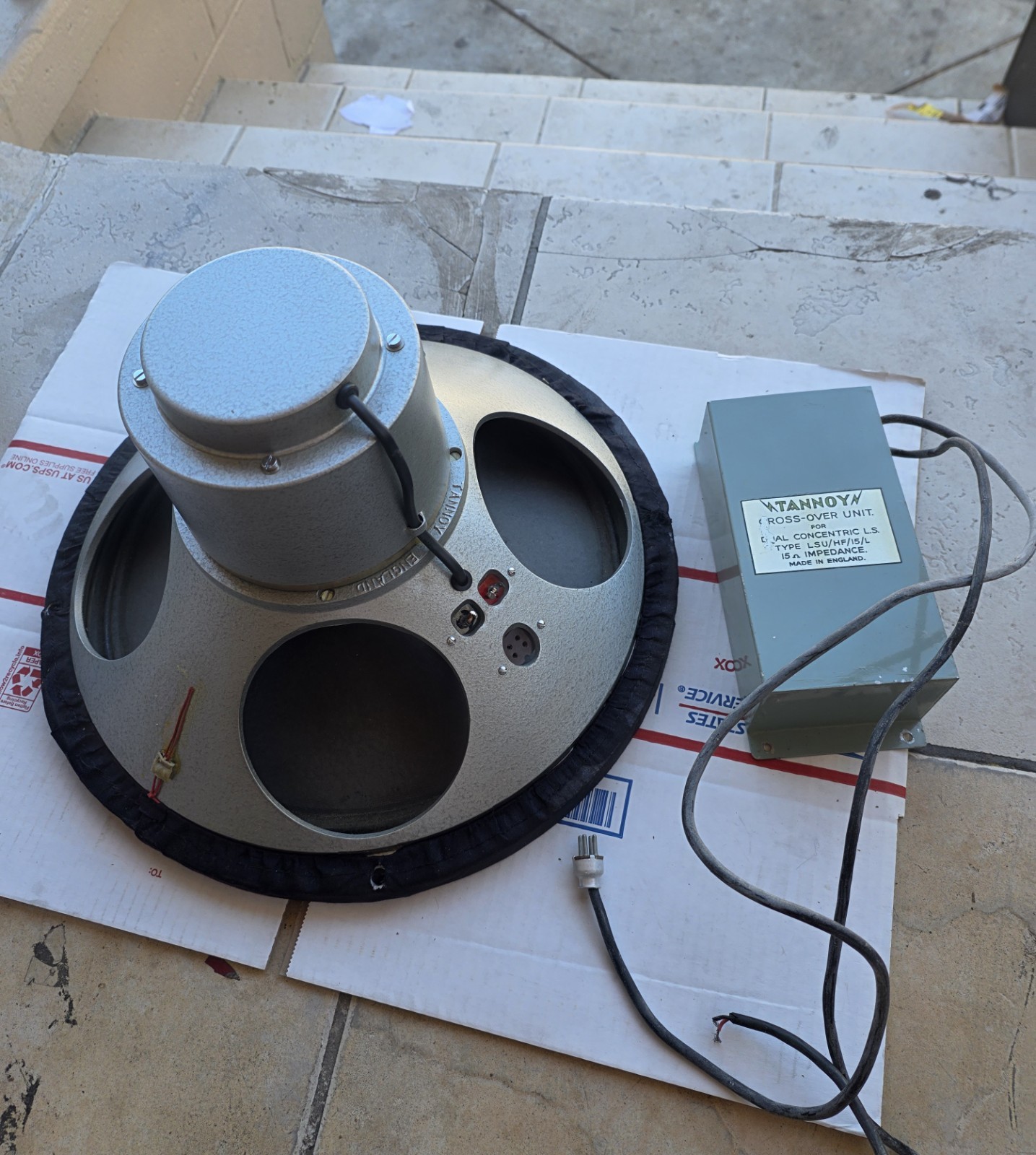
The Tannoy DU386 / K3828 (15") is not a receiver, amplifier, or complete speaker system — it is a singular, high-performance 15-inch bass driver engineered for professional audio applications. Yet, within the vintage audio community, especially among PA historians, restoration enthusiasts, and DIY speaker builders, this unassuming driver holds legendary status. Manufactured in the late 1960s through the 1970s at Tannoy’s Coatbridge, Scotland facility, the DU386 (also known by its internal Tannoy part number K3828) was designed for durability, high power handling, and exceptional clarity in demanding environments. It became a staple in British public address systems, railway stations, military installations, and even early studio foldback monitors.
While Tannoy is best known today for its dual-concentric studio monitors like the Classic Monitor Gold, the DU386 represents a different facet of the company’s engineering legacy — one rooted in rugged reliability and no-nonsense performance. This driver was never intended for home hi-fi use, yet its robust construction and musical character have made it a favorite among vintage audio tinkerers and horn loudspeaker aficionados.
Technical Specifications
The DU386 / K3828 was built to military-grade standards, reflecting Tannoy’s contracts with government and industrial clients during the mid-20th century. Its specifications reveal a focus on longevity and performance under stress.
| Specification | Detail |
| Driver Type | 15-inch (380mm) bass driver / woofer |
| Model Number | DU386 / K3828 |
| Nominal Diameter | 15 inches (380 mm) |
| Voice Coil Diameter | 2.5 inches (63.5 mm) |
| Power Handling (RMS) | 60 watts |
| Power Handling (Peak) | 120 watts |
| Nominal Impedance | 16 ohms |
| Sensitivity | 98 dB (1W/1m) |
| Frequency Range | 45 Hz – 3 kHz (typical in horn-loaded enclosures) |
| Magnet Type | Alnico (Aluminum-Nickel-Cobalt) |
| Basket Material | Cast aluminum |
| Cone Material | Impregnated paper with cloth surround |
| Voice Coil Former | Kapton (polyimide) |
| Mounting Hole Pattern | 4-hole trapezoidal (standard Tannoy industrial pattern) |
| Intended Use | Public address, studio monitoring, horn loading |
One of the most striking features is the use of Alnico magnet material, which was already being phased out in favor of ferrite in many commercial drivers by the late 1960s due to cost. Tannoy’s decision to retain Alnico in the DU386 speaks to its commitment to sonic quality and magnetic efficiency, even in industrial products. The large 2.5-inch voice coil and Kapton former were advanced for the era, allowing for excellent heat dissipation and reduced power compression — critical in continuous-use PA applications.
Sound Characteristics and Performance
Despite its utilitarian origins, the DU386 delivers a surprisingly musical and dynamic sound. When paired with appropriate horns or loaded into well-designed enclosures, it exhibits a tight, articulate bass response with a natural midrange presence. The Alnico magnet contributes to a smooth, slightly warm tonal balance that avoids the harshness sometimes associated with vintage PA drivers.
Its 98 dB sensitivity makes it highly efficient, capable of producing high sound pressure levels with modest amplifier power — a key requirement for public address systems before the era of high-powered solid-state amplifiers. In horn-loaded configurations (such as those used in Tannoy’s own Super Twin or Wide Range cabinets), the DU386 could project intelligible speech and music over long distances with minimal distortion.
While not a full-range driver, its upper limit of around 3 kHz allows it to blend seamlessly with compression drivers in two-way systems, particularly when crossed over at 800 Hz to 1.2 kHz. Vintage restorers often pair it with Tannoy’s own 1-inch HF drivers or modern equivalents for authentic retro PA builds.
Notable Features and Innovations
The DU386 / K3828 stands out for several engineering choices that were ahead of their time:
- Alnico Magnet System: Rare in industrial drivers of the period, offering superior magnetic field consistency and sonic refinement.
- Kapton Voice Coil Former: Resistant to heat and deformation, enabling sustained high-power operation.
- Cast Aluminum Basket: Provides excellent rigidity and heat dissipation, reducing resonance and mechanical fatigue.
- Reinforced Paper Cone: Treated for moisture resistance and long-term stability, crucial for outdoor or unheated environments.
- 16-Ohm Nominal Impedance: Designed for constant-voltage 100V line systems common in large-scale PA installations.
These features combined to create a driver that could endure decades of continuous use — and many original units still function today with minimal refurbishment.
Common Issues and Maintenance
While the DU386 is famously durable, age-related wear is inevitable. The most common issues include:
- Surround Deterioration: The cloth surround can dry out or become brittle after 50+ years. Replacement foam or butyl rubber surrounds are available from specialist restoration suppliers.
- Voice Coil Rub: Due to misalignment or debris, though rare thanks to the robust suspension design.
- Corrosion on Terminals: Especially in units used in coastal or humid environments. Cleaning with contact cleaner and dielectric grease helps.
- Magnet Weakening: Alnico magnets can lose strength if dropped or exposed to strong opposing fields, though this is uncommon.
Reconing services are available from vintage speaker specialists, and due to the driver’s popularity in restoration circles, parts are relatively accessible. Many enthusiasts recommend relacing the spider if the driver is to be used heavily, as the original adhesives can degrade over time.
Current Market Value and Collectibility
The Tannoy DU386 / K3828 (15") is not a mainstream collectible like a vintage receiver, but it holds strong niche appeal. A working original unit in good condition typically sells for $120–$200 on the secondary market, with prices rising for NOS (New Old Stock) or fully restored examples. Drivers with original labels intact and matching serial numbers are especially prized.
Its value is driven more by utility than nostalgia — many buyers are DIY audio builders seeking authentic components for period-correct PA restorations or high-efficiency horn projects. The driver’s compatibility with classic Tannoy enclosures (such as the 3010 or 3020 series) further enhances its desirability.
Conclusion and Legacy
The Tannoy DU386 / K3828 (15") may not have the glamour of a Dual Concentric monitor, but it embodies the same British engineering excellence that made Tannoy a global name. Built for function, yet imbued with sonic character, it represents a golden era when public address systems were expected to last decades — and often did.
Today, the DU386 lives on in restored railway station announcements, vintage PA rigs at retro music events, and high-sensitivity horn speakers in audiophile homes. It’s a testament to the idea that even the most utilitarian audio components can achieve legendary status when built with care, precision, and a touch of Alnico magic.
For the vintage audio enthusiast, the DU386 isn’t just a driver — it’s a piece of sonic history, forged in Scottish steel and still speaking clearly after half a century.
eBay Listings


As an eBay Partner, we earn from qualifying purchases. This helps support our independent vintage technology research.
Related Models
- Tannoy inch3128-(12 inch) inch (1980)
- Tannoy 3828-(15 inch) (1980)
- Tannoy 3858 (1990)
- Tannoy 4033 (1975)
- Tannoy chester-t165 (1989)
- Akai AM-2850 (1975)
- Akai AP-206 (1975)
- Nakamichi BX-1 (1985)
- Acoustic Research research-ar-17 (1978)
- Acoustic Research AR-19 (1994)