Spendor SP2/3: The Voice of British Hi-Fi
In the golden era of high-fidelity audio during the 1970s, few loudspeakers captured the hearts of audiophiles quite like the Spendor SP2/3. Revered for its warm, natural tonality and exceptional midrange clarity, this compact bookshelf speaker became a benchmark in British speaker design and remains a sought-after classic among vintage audio enthusiasts today. Though modest in size, the SP2/3 delivers a soundstage and musicality that belie its dimensions, earning it a permanent place in the pantheon of iconic loudspeakers.
Designed by Dudley Harwood, a former BBC engineer, the SP2/3 was developed under the Spendor brand, which Harwood founded in 1969. The name "Spendor" is a portmanteau of his parents’ names—SPencer and DORothy—and reflects the deeply personal commitment to quality that defined the company’s early years. Harwood applied his experience from the BBC’s research department, where he had worked on the legendary LS3/5A monitor, to create speakers that prioritized accurate, fatigue-free listening over clinical precision.
The SP2/3, introduced in 1973, was one of Spendor’s earliest commercial successes and built upon the philosophy of the BBC-designed monitors: neutrality, coherence, and long-term listening comfort. While not an official BBC monitor, the SP2/3 shared many design principles with the LS5/8 and other BBC reference speakers of the era, making it a favorite among broadcasters, recording engineers, and serious music lovers.
Technical Specifications
| Specification | Detail |
| Type | 2-way, sealed enclosure |
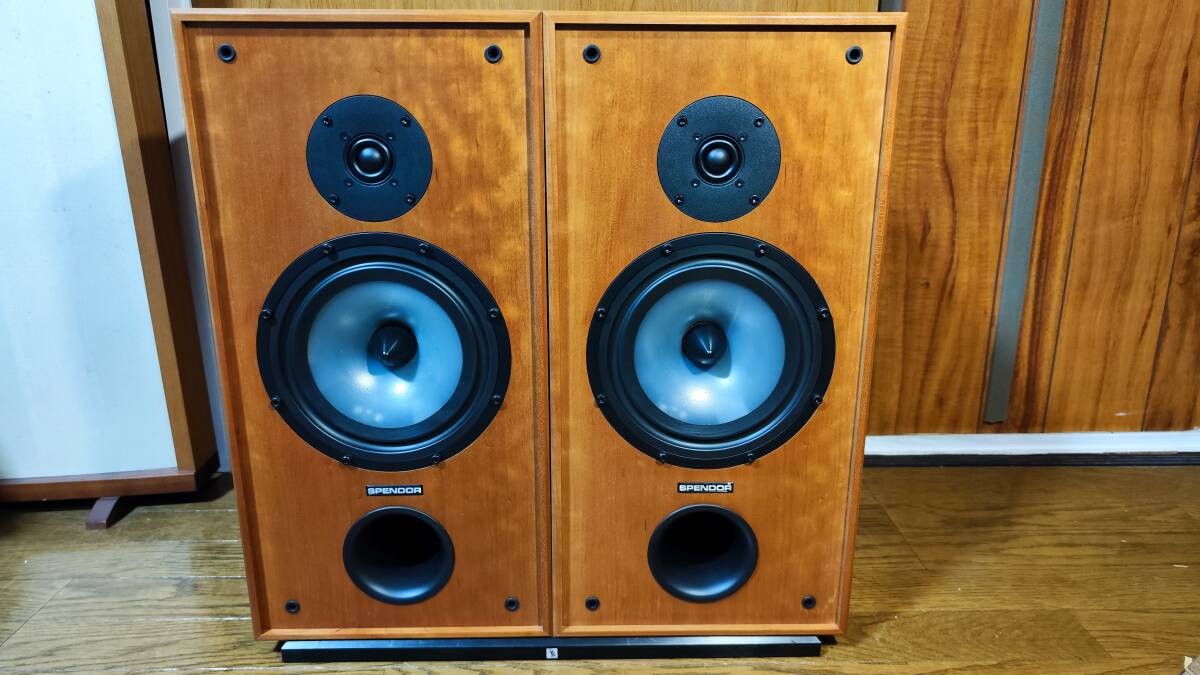
| Drivers | 7" polypropylene bass/mid, 1" fabric dome tweeter |
| Frequency Response | 60 Hz – 20 kHz (±3 dB) |
| Sensitivity | 86 dB (1W/1m) |
| Nominal Impedance | 8 ohms |
| Recommended Amplifier | 15–50 watts (tube or solid-state) |
| Crossover Frequency | 2.5 kHz |
| Enclosure Type | Acoustic suspension (sealed) |
| Dimensions (H×W×D) | 40 cm × 23 cm × 20 cm (15.7" × 9" × 7.9") |
| Weight | 10.5 kg (23 lbs) per speaker |
| Finish Options | Rosewood, walnut, or black vinyl veneer |
The SP2/3 features a carefully engineered two-way design with a 7-inch bass/midrange driver made from doped polypropylene—a material chosen for its excellent damping characteristics and low coloration. The 1-inch fabric dome tweeter is soft and smooth, avoiding the harshness sometimes found in early metal domes. The crossover, built with high-quality components, ensures seamless integration between drivers and contributes to the speaker’s coherent, phase-correct performance.
The cabinet is a sealed (acoustic suspension) design, which provides tight, controlled bass response and excellent transient accuracy. While the bass doesn’t extend deeply below 60 Hz, the trade-off is a remarkably clean and articulate low end, free from the resonance or port noise that can plague reflex designs. The internal bracing and constrained-layer damping reflect Harwood’s BBC-inspired attention to minimizing cabinet coloration.
Sound Characteristics and Performance
The Spendor SP2/3 is best known for its lifelike midrange—often described as "organic," "transparent," and "emotionally engaging." Vocals, in particular, are rendered with uncanny realism, making the SP2/3 a favorite for jazz, folk, and classical vocal recordings. Instruments like the piano, acoustic guitar, and cello are reproduced with natural timbre and body, avoiding the thinness or brittleness that can afflict smaller speakers.
Treble response is smooth and extended without being bright or aggressive. The fabric dome tweeter rolls off gently above 15 kHz, contributing to a relaxed, non-fatiguing presentation—ideal for long listening sessions. While the SP2/3 doesn’t deliver the sparkle of some modern tweeters, its refinement and lack of sibilance are highly prized.
Bass performance is tight and well-controlled, though not deep. The sealed cabinet design means the speaker rolls off gradually below 80 Hz, reaching -6 dB around 50 Hz. This makes the SP2/3 best suited to smaller to medium-sized rooms and listeners who value accuracy over sheer output. They pair beautifully with low-to-medium-powered amplifiers, especially tube amps in the 20–35 watt range, which complement their warm, analog character.
Notable Features and Innovations
The SP2/3 was ahead of its time in several ways:
- BBC-Inspired Engineering: Though not an official BBC monitor, it embodies the same design philosophy—accuracy, neutrality, and long-term listening pleasure.
- High-Damping Drivers: The use of doped polypropylene cones was relatively novel in the early 1970s and contributed to low distortion and excellent transient response.
- Minimalist Crossover: A simple first-order crossover on the tweeter and second-order on the woofer reduces phase distortion and preserves timing accuracy.
- Handcrafted Quality: Each SP2/3 was assembled in the UK with meticulous attention to detail, using high-grade components and real wood veneers.
Common Issues and Maintenance
As with any vintage speaker, aging components can affect performance. The most common issues with SP2/3s include:
- Aging Foam Surrounds: The original foam used on the bass/mid driver can degrade over time, leading to flaking and loss of bass response. Replacement with modern butyl rubber surrounds is a common and effective fix.
- Tweeter Diaphragm Fatigue: In rare cases, the fabric dome may sag or delaminate, though these tweeters are generally long-lived.
- Crossover Component Drift: Capacitors and inductors may degrade, altering tonal balance. Re-capping with modern audiophile-grade parts can restore original performance.
- Cabinet Scratches and Veneer Wear: While structurally sound, the wood veneers may show wear. Refinishing or professional restoration can enhance appearance.
Regular maintenance and proper storage (away from humidity and direct sunlight) can extend the life of a well-preserved pair for decades.
Current Market Value and Collectibility
Today, original Spendor SP2/3s in good condition are highly collectible. Pairs that have been professionally restored—especially with foam replacement and crossover refurbishment—can command $800 to $1,500 on the secondary market, depending on condition, finish, and provenance.
They are particularly prized by vintage audio collectors, BBC monitor enthusiasts, and those seeking a classic British sound. While not as ubiquitous as the LS3/5A, the SP2/3 occupies a similar niche as a reference-grade compact speaker from the 1970s.
Conclusion and Legacy
The Spendor SP2/3 stands as a testament to the enduring appeal of thoughtful, music-first loudspeaker design. In an age increasingly dominated by technical measurements and extreme specifications, the SP2/3 reminds us that the ultimate goal of hi-fi is musical engagement.
Its legacy lives on in modern Spendor speakers, which continue to emphasize natural tonality and coherence. But for many, the original SP2/3—hand-built, sonically refined, and steeped in British audio heritage—remains the gold standard.
If you're lucky enough to hear a well-restored pair, prepare to be moved. The Spendor SP2/3 doesn’t just play music—it invites you in.
eBay Listings


As an eBay Partner, we earn from qualifying purchases. This helps support our independent vintage technology research.
Related Models
- Spendor 7/1 (1975)
- Spendor 9/1 (1975)
- Spendor BC1/69 (1969)
- Spendor BC1 (1969)
- Spendor CLASSIC-1/2 (1979)
- Akai AM-2850 (1975)
- Akai AP-206 (1975)
- Nakamichi BX-1 (1985)
- Acoustic Research research-ar-17 (1978)
- Acoustic Research AR-19 (1994)